Please check out our discovery of a dwarf planet candidate that might challenge the Planet 9/Planet X hypothesis! Shout out to @SihaoCheng who discovered this object and Eritas Yang who really helped interpret its intriguing orbit.
🔭 RESEARCH NEWS: A small team, led by Sihao Cheng from the Institute’s School of Natural Sciences, has discovered a new trans-Neptunian object at the edge of our solar system that is potentially large enough to qualify as a dwarf planet, like Pluto: https://t.co/zjFnKtS1Ix
Lights, camera, action! 🎬
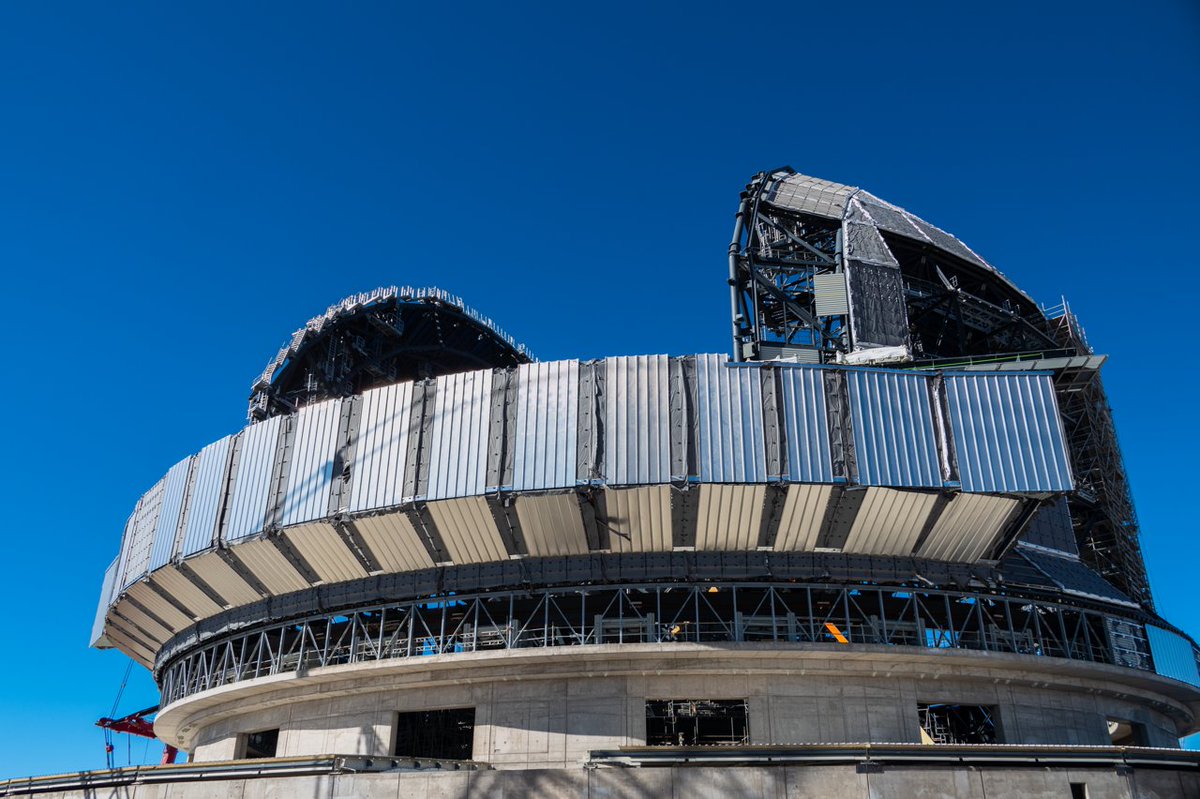
The world's largest digital camera has been installed at NSF–DOE Rubin Observatory! 🤩
The LSST Camera was the final major component of the observatory. With it in place, Rubin officially enters its final phase of testing!
🔗: https://t.co/xKrnenS2ie
Scrub a dub 🫧 ...except no scrubbing the delicate observatory optics!
We don't use cloths or lens cleaner to clean the giant camera lenses. Instead, our summit staff use a high-speed stream of carbon dioxide "snow" to push debris off of the glass surface.
I am happy to announce the conference Galactic Frontiers II: Dwarf Galaxies in the Local Volume and Beyond, taking place at @dartmouth from June 23-25, 2025.
For more information and registration, please see our website: https://t.co/BsCcZIvF7z
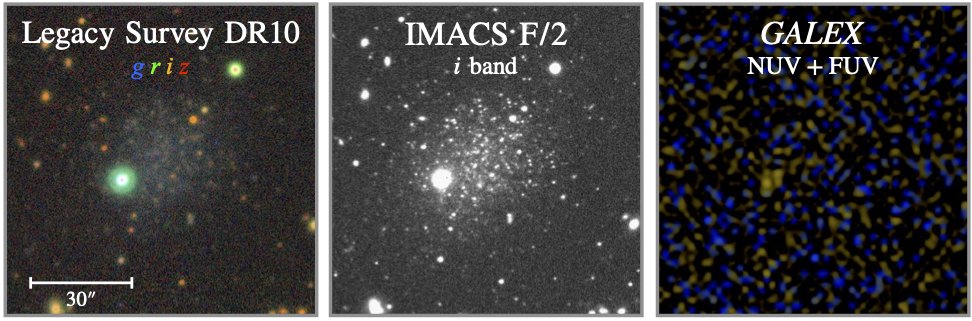
Discovery of a Lonely Galactic Hedgehog
The Hedgehog galaxy is one of the most isolated dwarf galaxies known — but despite its serene location, it might not have formed any new stars in the past 100 million years. https://t.co/hsfeU6wFkg @princetonideas@Princeton
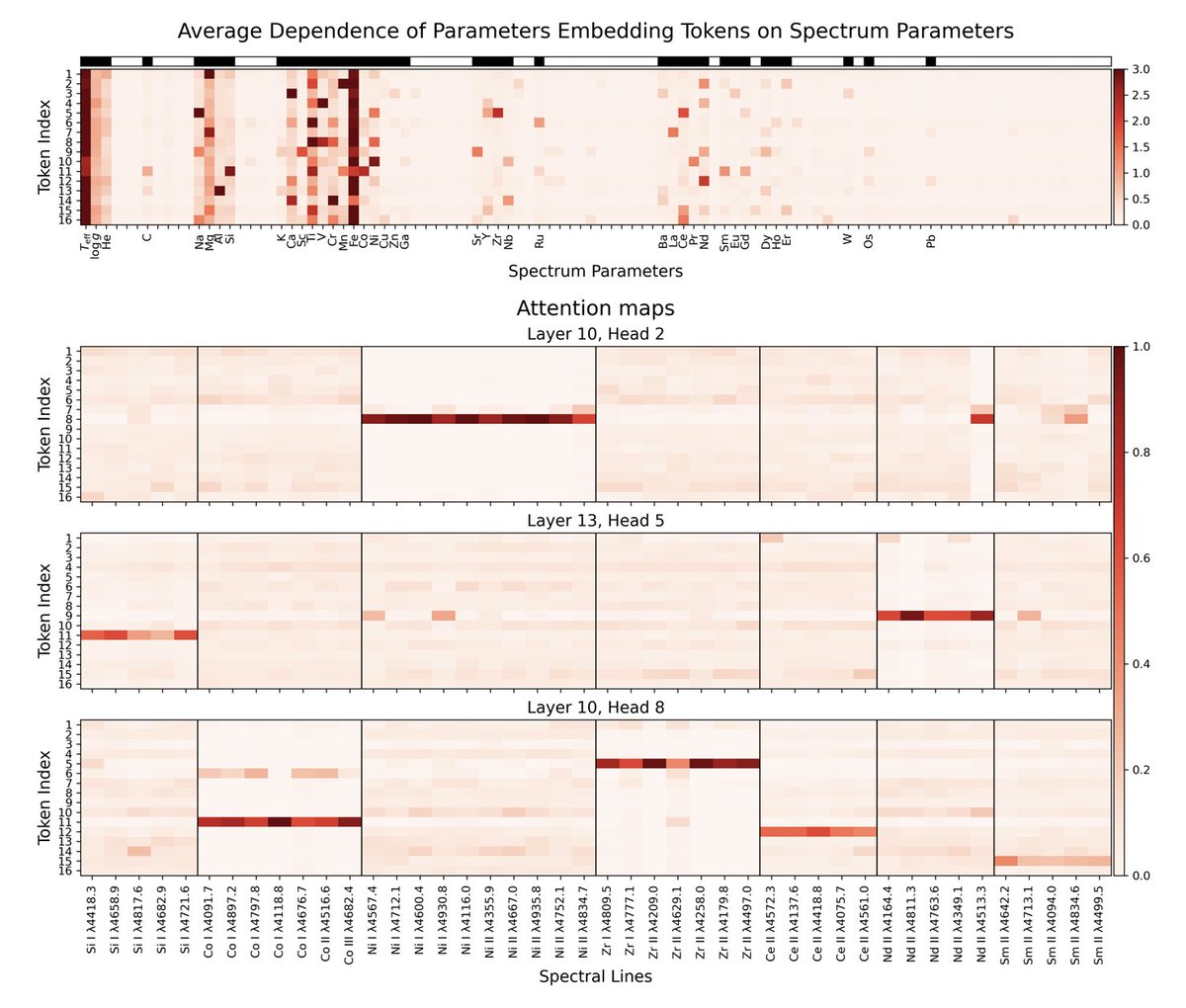
The Payne just got a major upgrade. Led by @rozanski_t and his heroic and painstaking effort, the verdict is final -- Transformer-based emulators significantly outperform existing methods by capturing long-range spectral information.
Bonus: We now include wavelength as input, allowing output spectra on any grid without predefined ranges—a game-changer for precision RV, binaries, or stellar mass black holes.
Like in NLP, our Transformer model boasts:
a) Better scaling with training steps and dataset size—more compute means continued improvement with no plateau in sight
b) Improved interpretability—attention between tokens reveals clean representations of elemental species, showing the model learned to focus on transitions from the same species for better emulation.
@rozanski_t has even more exciting ideas in the pipeline that didn't make it into this paper. Reach out to him and learn more!
@wcerny_astro Thanks for the idea! Actually we just got the g-band data with IMACS yesterday! I'll try to do a "standard" TRGB with those data and check the distance.
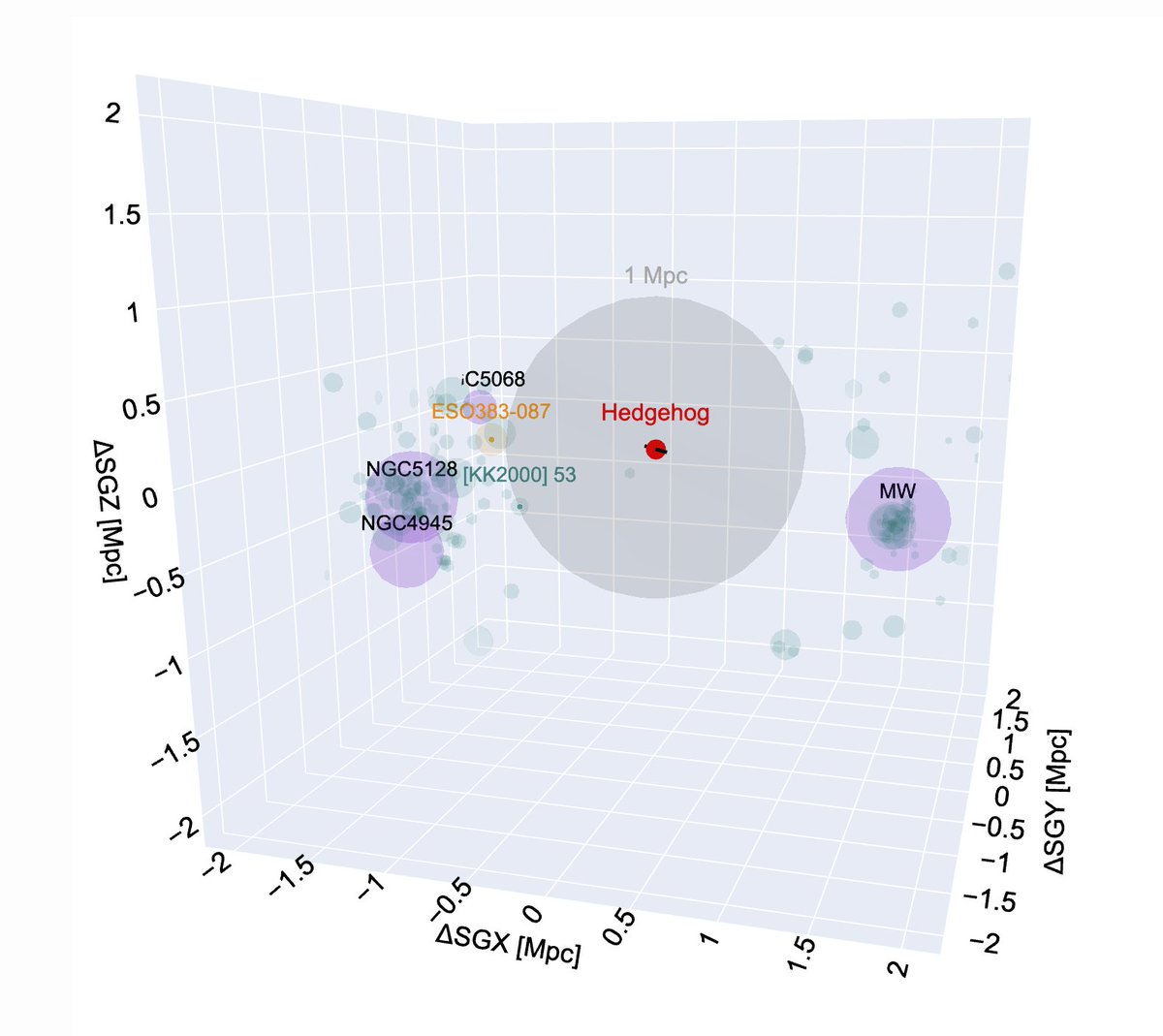
Paper day! We found a new quiescent dwarf galaxy that is very isolated. This galaxy "Hedgehog" has a stellar mass of ~10^6 Msun and is at a distance of 2.4 Mpc. This lonely little dwarf has *no neighbors* within 1 Mpc, and is not forming stars. 🌌✨ https://t.co/nU3ccAo4N8
This galaxy was discovered on May 1st, and the paper was submitted 30 days later! Thank you to Jenny, Scott, and @DanieliShany for making this happen! Thank you to the DELVE team whose data enabled this discovery, and @bmutlupakdil who generously helped us with follow-ups!
Hedgehog might be a backsplash galaxy from its nearest galaxy group CenA, but it could also be a reionization fossil. More observations (e.g., velocity, gas) are needed to pin down its origin and evolution history. Of course, it would be great to get SFH from HST or even JW!