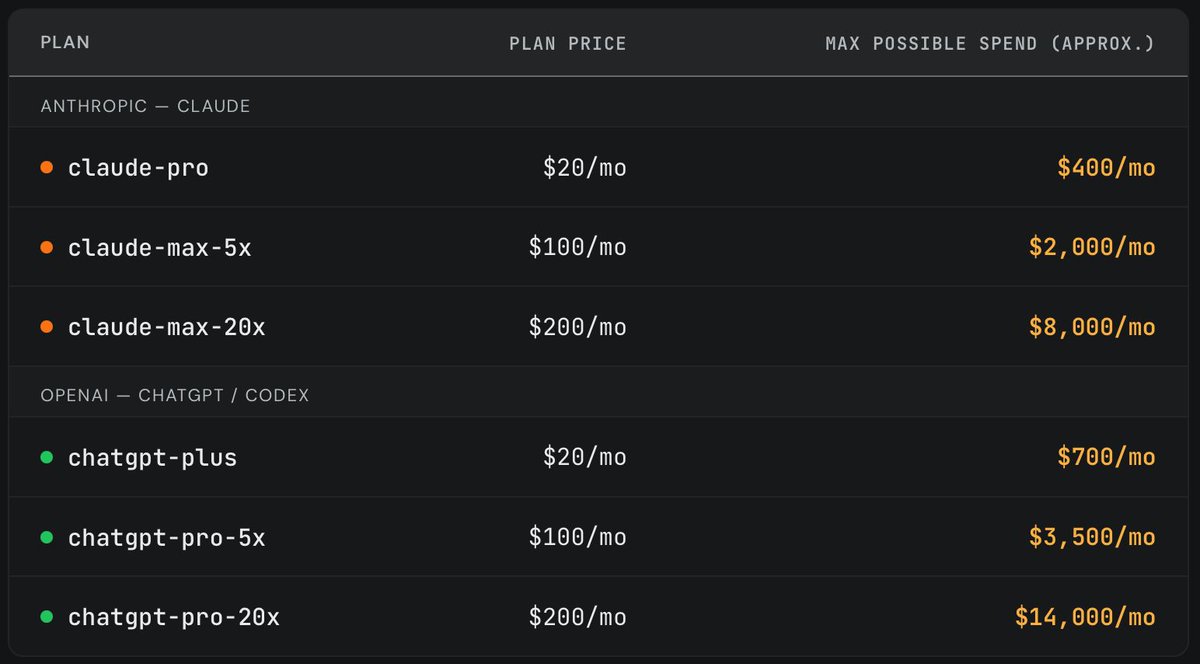
Recently, we purchased one of each Anthropic/OpenAI subscription plan and randomly ran long horizon coding tasks until we exhausted the weekly limit. It's widely believed that a $200/month plan maxes out at ~$2000/month worth of tokens (assuming API pricing). However, we found that the subscriptions are actually far more generous. (2/4)
@j_dekoninck Claude Opus scored near bottom on BrokenArXiv, but near top on the Bullshit Benchmark (https://t.co/XbXNKvcGPb). They appear to test similar skills. Any comments on this?
@TingAstro Very interesting work! I competed at the 8th IOAA in 2014 and recall the gold medal line was 90% of the top 3 scores averaged. Did this change recently?
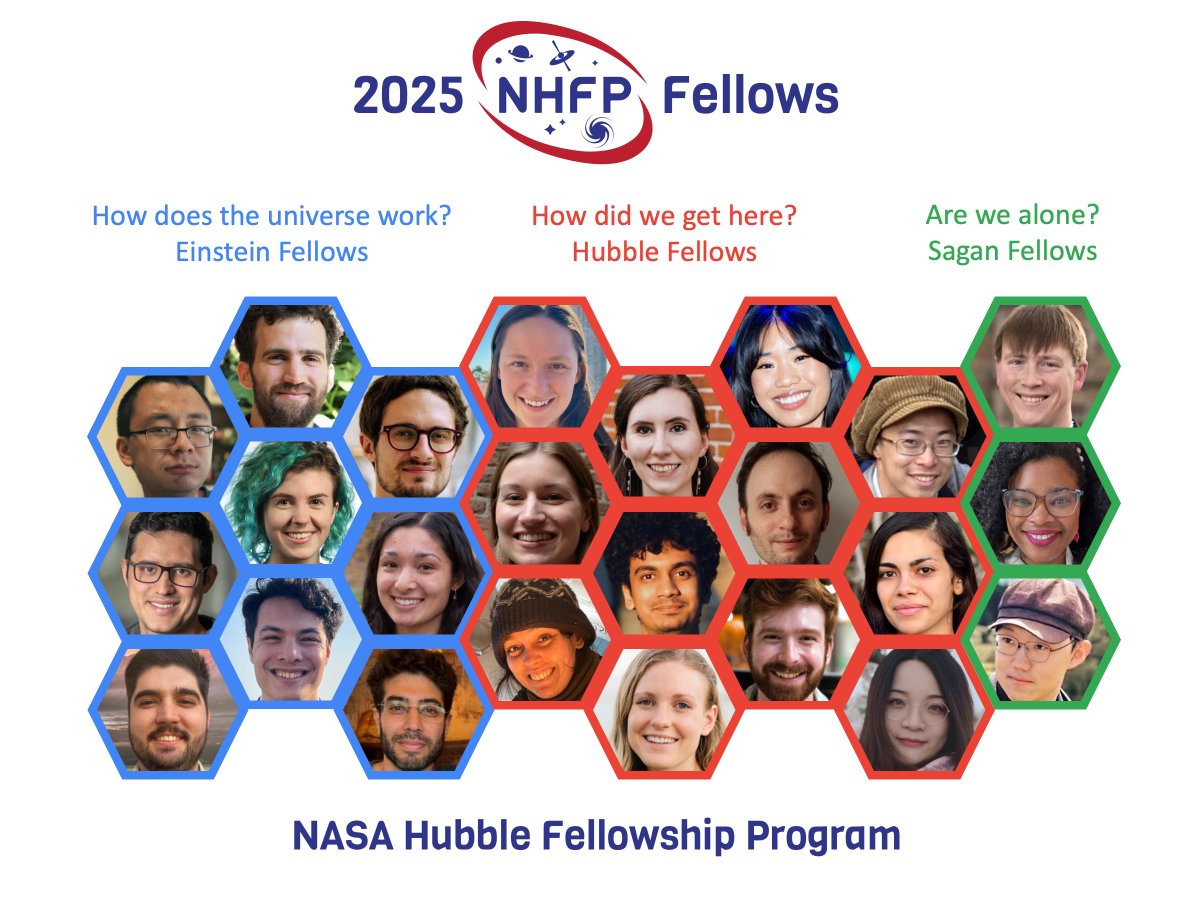
I’m excited to share that I’ll be starting as a NHFP Sagan Fellow at @MIT this fall! Look forward to connecting with new/old friends interested in everything Astro and AI.
Congratulations to the 2025 class of the NASA Hubble Fellowship Program!
This program enables outstanding postdoctoral scientists to pursue independent research in any area of NASA astrophysics.
Meet the fellows: https://t.co/mBP6LraBma
In six billion years the sun will expand into a red giant, consuming Mercury, maybe Venus and potentially Earth, too.
But astronomers spotted a rocky world orbiting a white dwarf, suggesting a future in which our planet outlives its star. https://t.co/v0USVSz6BZ
An Earth-mass planet is inferred to have a white dwarf host, suggesting that terrestrial planets in Earth-like orbits may avoid being engulfed during the red-giant phases of their host stars. @AstroKeming, Zang et al.: https://t.co/JBPYvyjaMT / https://t.co/ilXNsGjHEi @ucsdastro
The coolest paper on @arxiv today has to be this one, on the discovery of an Earth-mass planet and a brown dwarf orbiting a white dwarf.
It makes me think about what happens to a planetary system when its star goes red giant
(short thread)
https://t.co/bmgM8HjFy4
We have discovered a 1.9 Earth-mass planet orbiting a White Dwarf at ~2.1 au, around where you would expect to find planet Earth if it could avoid being engulfed by the Red Giant Sun. Also a bonus brown dwarf at ~30 au.
https://t.co/zqhzIFSzjE
Amazing observing with Keck laser adaptive optics last night! I guess that means I’m now officially an observer? A big shoutout to @jlu_astro @profjsb@seankterry Natalie and our amazing OA/SA Jim and Rita for your support! Guess what we were looking at? (hint: right image)
@AJamesMcCarthy Are the two images taken on the same night? If so, would you mind sharing the time stamp the supernova first became visible in your images? @profjsb