National Geographic photographer Paul John Bayfield photographed the recent solar eclipse with a herring gull from over Norwich, UK. A moment he described as "a sight I shall remember for a long time.”
See more photos from the 2026 total solar eclipse: https://t.co/9S73QvgbLM
Mars took such a battering from the same active region a week after us. Bet you're regretting not having an intrinsic magnetic field now, eh, dusty red cousin?
Yesterday’s near X-class #SolarFlare (M9.75-class) produced a clear CME and solar radiation storm (causing the fuzzy noise shown in the data). The CME is expected to arrive Monday, with a G2 geomagnetic storm currently predicted. #spaceweather#astronomy
Note how the proton storm starts soon after the CME is seen from the west limb. That means that the particles are traveling at near the speed of light - i.e., they have been accelerated to relativistic speeds by the flare.
☀️ The study of scintillation-causing ionospheric irregularities is important to mitigate their effects on satellite communications
🧐 L-band amplitude scintillation observed over the Eastern Arabian Peninsula
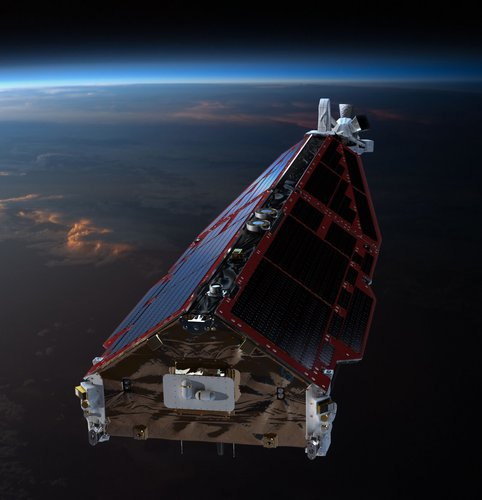
🆕 Paper draws on Swarm data 👇
👉https://t.co/M320b0FFPV
Another angle of that whopping storm...
📼 In this gif, courtesy of the Swarm team, you can see Earth's magnetic field measured over the course of the geomagnetic storm of 10 May.
🧲 The view at the top shows the massive strengthening of Earth's magnetic field at the poles!
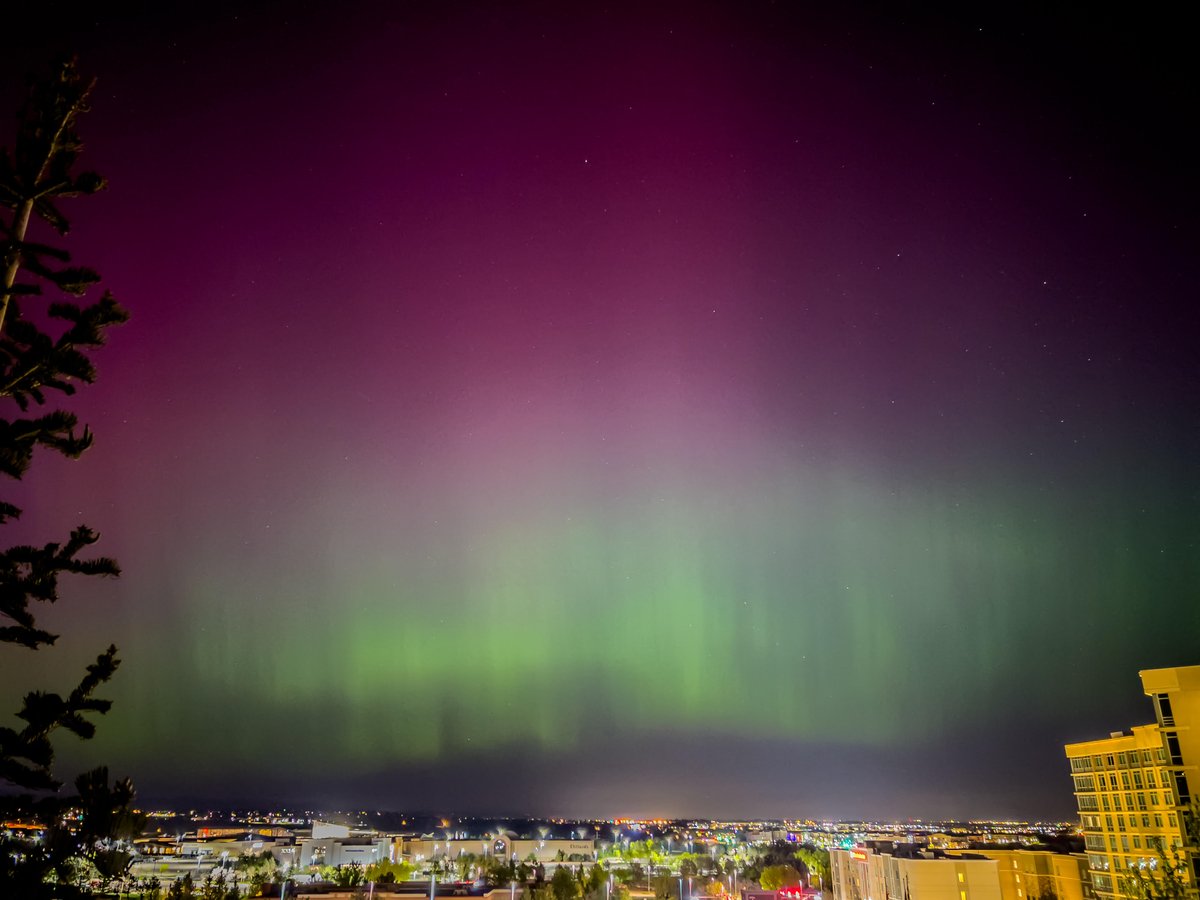
Did any of you capture the aurora last night? Some of our colleagues did. It was caused by several major flares and filament eruptions as observed by NSF GONG earlier this week.
1. @KellerCU 2. Craig Gullixson 3. Alin Paraschiv 4.@RyanJFrench
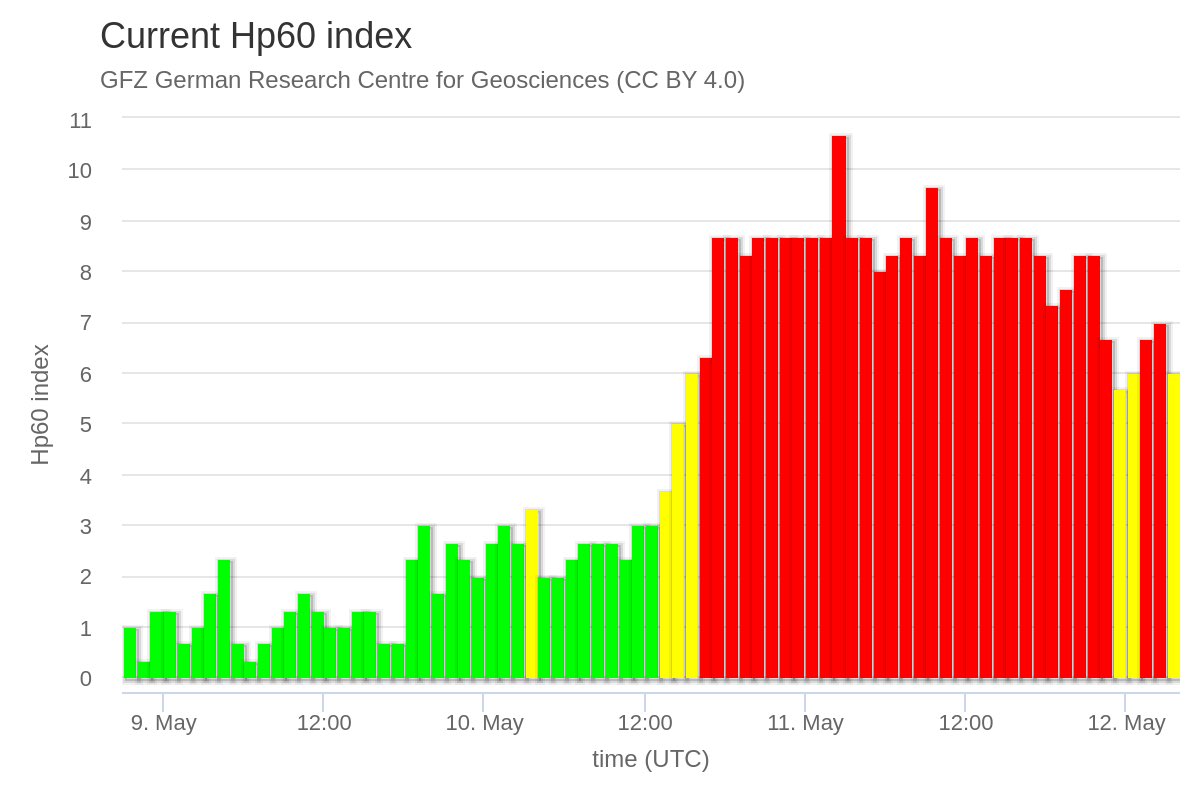
Geomagnetic activity has been calming for the past three hours, but we don’t expect things to be done yet. There are still further solar eruptions en route, which could result in auroral conditions picking up again! #spaceweather#northernlights
Nature is full of wonders. The feeling of experiencing one of them is unparalleled, especially when you study it and analyze its causes. The Aurora is one of the marvelous phenomena that captured my heart ...
#aurora#ireland#dublin#nightsky#northernlights#spaceweather
AniMAIRE is a Python package for calculating radiation dose rates due to cosmic rays and other incoming particles due to any incoming particle distribution (even directional). It's Github homepage is at https://t.co/Kddtbeg6XY , which contains instructions on installation and use
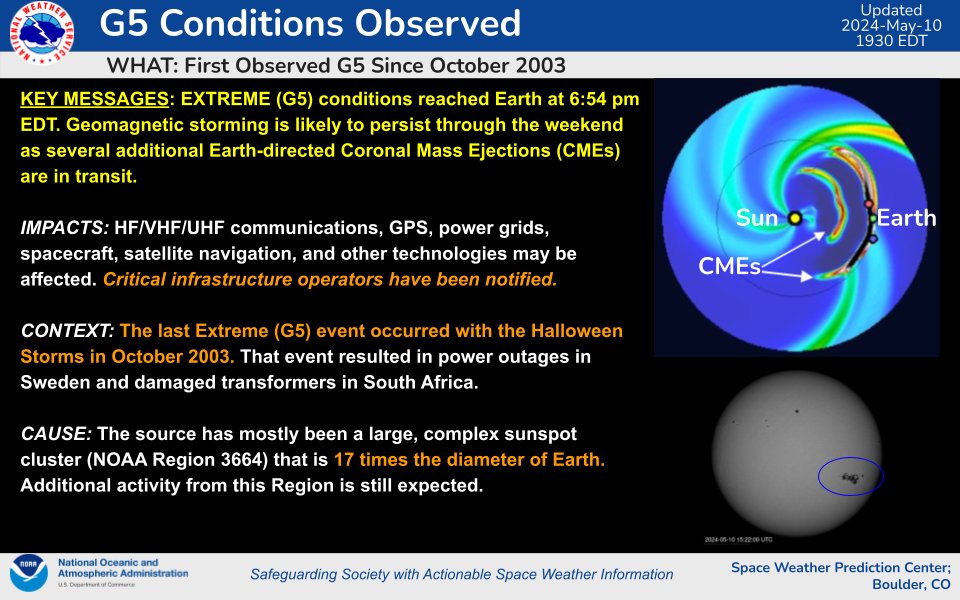
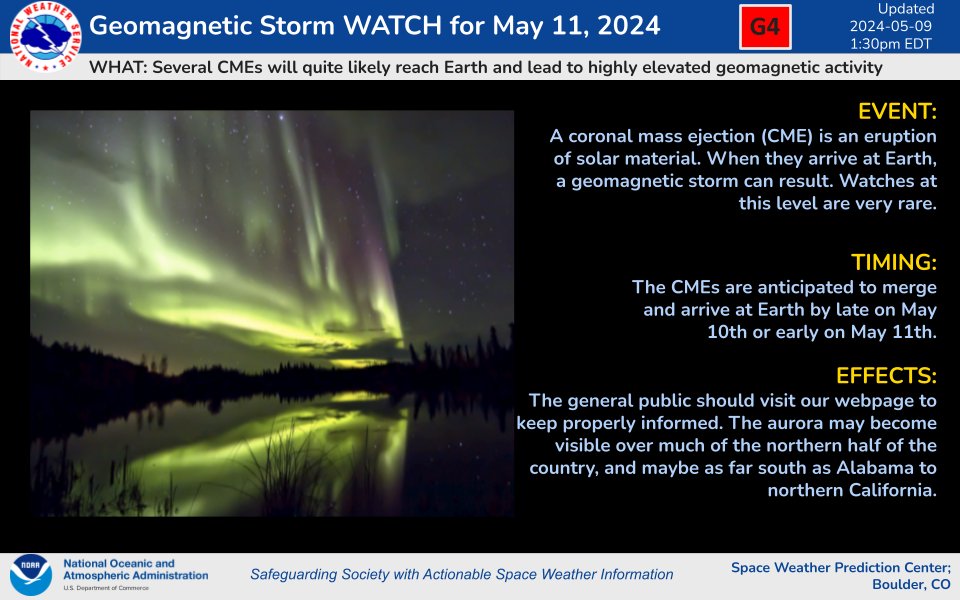
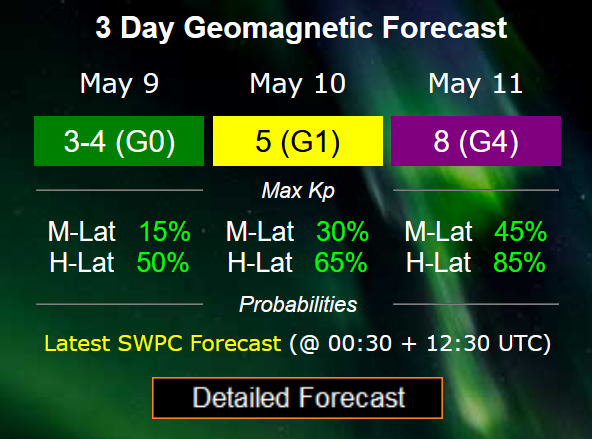
With our (experimental) ELEvo model we get CME arrivals at Earth starting Friday May 10 at 16 UT +/- 7 hours, arrival speeds 600-900 km/s.
All CMEs in DONKI are shown. The 4 halo CMEs are the wide and fast ones towards Earth on May 8/9. Others go to high/low latitudes.
AGATA is happy to announce the AGATA mentoring programme aiming to bring students and ECS together, provide them with guidance, and support their travel to the @SCAR_Tweets Open Science Conference.
https://t.co/WXRUYxu2KO
A moderate G2 geomagnetic storm watch has been issued for this Monday and Tuesday by the NOAA SWPC. This is due to the anticipated arrival of a coronal mass ejection launched yesterday morning from an eruption near sunspot region 3557. High and upper middle latitude sky watchers should be alert for possible aurora displays in the next 24 to 72 hours.
2023 was a busy year on the Sun (and as a result, a busy year for my account!). This thread contains my favourite highlights of all the extreme-UV solar observations I posted this year. Combined, giving over 10 minutes of #SolarFlares, eruptions, and more! 1/8
The X5.0 solar flare from sunspot region 3536 is the strongest solar flare since Sep. 2017. The resulting coronal mass ejection is impressive but based on the latest LASCO imagery and the location of the eruption, unlikely to impact Earth.