@yajnshri Alternatively, dedicate paths for exit and entry. Renovate and beautify all walk ways with proper footpaths, shades and covered drains. Buildings close to pathways may also be renovated. With the best quality of maintenance and renovations the existing place can be great
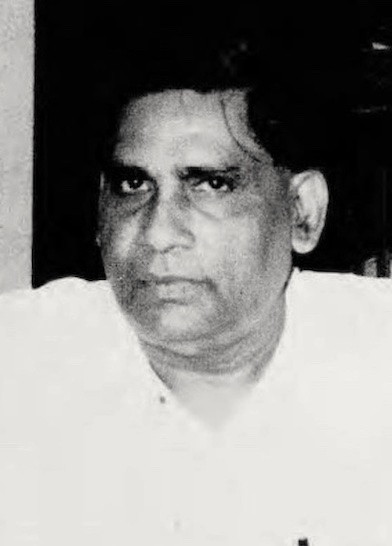
In 1913, 3 boys sat in a classroom at Presidency College, Calcutta, competing to top their mathematics exams. Today, the 1st boy is celebrated globally for creating "Bose-Einstein Statistics." The 2nd boy is a household name for mapping the temperature of stars (the Saha Ionization Equation). But the 3rd boy, the 1 who actually beat them both to top the postgrad exams, traveled straight into the heart of Berlin, stood before Albert Einstein's closest circle & became the 1st Indian to mathematically unlock general relativity. Yet, while his classmates became immortal legends, he became a ghost whose foundational blueprints built India’s modern defense and aerospace tech from the shadows.
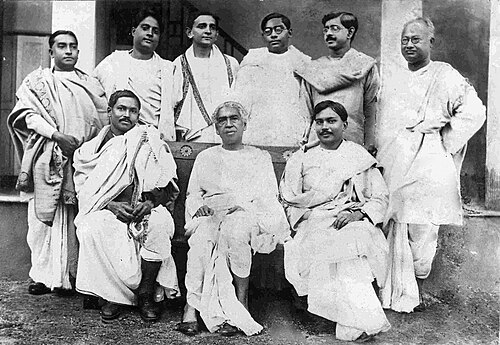
Born in Dhaka in 1894, Nikhil Ranjan Sen grew up as a quiet prodigy. When he entered Presidency College, he found himself surrounded by giants: Satyendra Nath Bose & Meghnad Saha were his daily desk-mates & Jagadish Chandra Bose was his teacher. In this clash of titanic minds, Nikhil did not just survive; he shattered the 1916 MSc Mixed Mathematics exam, topping the entire university ahead of his peers.
But while Bose & Saha focused on light & quantum states, Nikhil’s mind was locked onto the fabric of the universe itself: gravity. In 1921, he caught a ship to Germany, arriving at the Humboldt University of Berlin. This was the golden age of physics & Nikhil’s PhD advisor was none other than Nobel Laureate Max von Laue, Einstein’s most trusted confidant.
Nikhil threw himself into a mathematical nightmare that even the greatest European minds were avoiding: What happens to Einstein’s smooth eqns of spacetime when matter suddenly stops/breaks/collapses at a boundary?
His 1923 doctoral thesis solved the boundary conditions for gravitational fields at surfaces of discontinuity. He had mathematically proven how Einstein's laws held true even when cosmic space cracked/hit a hard wall of matter. He was the very 1st Indian to secure a doctorate in relativity, validated in the elite rooms of Berlin.
When Nikhil returned to India in 1924 as the Ghosh Professor of Applied Mathematics at Calcutta University, he did not seek personal fame. He chose to build. He founded the Calcutta School of Relativity Theory.
If we look at the greatest breakthroughs of Indian physics in the mid-20th century, we will find Nikhil Ranjan Sen's invisible fingerprints everywhere.
When his student, A.K. Raychaudhuri, created the world-famous Raychaudhuri Equation (which Stephen Hawking & Roger Penrose later used to mathematically prove the existence of Black Holes), he was using the exact mathematical foundations laid by Prof. Sen.
When India needed to understand how fluids rip apart at high speeds, Sen built the nation's very 1st Fluid Dynamics Lab.
When the newly independent nation secretly needed to calculate how missiles cut through air & how explosives detonate, Sen pioneered the study of military ballistics.
He was a mathematical polymath who could map the internal pressure of a burning star, model the expansion of the entire universe w/o Einstein's cosmological constant & calculate the trajectory of a missile, all with a fountain pen.
So why is his name missing from our text-books?
Nikhil Ranjan Sen suffered from the unique curse of the "Applied Mathematician." In the hierarchy of science, the world awards its ultimate glory to pure theoretical physicists who discover a single, catchy particle/an elegant cosmic law. Sen, however, was the builder. He was the man who took the messy, impossible theories of geniuses & forged them into practical, mathematical tools that institutions, engineers & defense labs could actually use.
He did not market himself. While his contemporaries traveled the world giving high-profile lectures, Prof. Sen spent his late yrs writing astronomy books like Soura Jagat (Solar World) in native Bengali, desperately trying to make complex astrophysics accessible to poor rural schoolchildren.
He passed away quietly on 13th Jan, 1963. Today, every time an Indian missile launches safely into the upper atmosphere/a physicist calculates a fluid pipeline's turbulence, they are using the mathematical math-models carved out by this 1 man.
His classmates' names are permanently etched into the stars & the quantum universe, but the man who taught India how to mathematically calculate the heavens died in absolute silence. We built an entire nation's aerospace & defense matrix on his back, but we left Nikhil Ranjan Sen to remain a ghost standing at the boundary line of his own eqns.
@Raniisa_ Undoubtedly a nonsense and confused film. Director was not sure whether he wanted a comedy, tragedy, satire or raise the flag of woke culture