Join Digicore as a Product Manager
Are you passionate about building products that solve real customer problems?
Do you enjoy working at the intersection of technology, business, and customer experience?
Apply: https://t.co/c22J68Rgqa
Dear Supply Chainers,
I hope y'all are fine. Let's get to learn about Supply Chain today using another relatable story caption.
Story Caption: "𝐈𝐦𝐚𝐠𝐢𝐧𝐞 𝐲𝐨𝐮 𝐚𝐫𝐞 𝐩𝐥𝐚𝐧𝐧𝐢𝐧𝐠 𝐟𝐨𝐫 𝐚 𝐛𝐢𝐫𝐭𝐡𝐝𝐚𝐲 𝐩𝐚𝐫𝐭𝐲 𝐚𝐧𝐝 𝐭𝐡𝐞 𝐜𝐞𝐥𝐞𝐛𝐫𝐚𝐧𝐭 𝐰𝐚𝐧𝐭𝐬 𝟓𝟎 𝐠𝐮𝐞𝐬𝐭𝐬, 𝐛𝐮𝐭 𝐭𝐡𝐞 𝐯𝐞𝐧𝐮𝐞 𝐜𝐚𝐧 𝐨𝐧𝐥𝐲 𝐟𝐢𝐭 𝟑𝟓 𝐚𝐧𝐝 𝐭𝐨 𝐦𝐚𝐤𝐞 𝐢𝐭 𝐰𝐨𝐫𝐬𝐞, 𝐡𝐞𝐫 𝐛𝐮𝐝𝐠𝐞𝐭 𝐜𝐚𝐧 𝐨𝐧𝐥𝐲 𝐟𝐞𝐞𝐝 𝟑𝟎 𝐠𝐮𝐞𝐬𝐭𝐬"
Even if you have never been an event planner, I'm most certain you can relate to people wanting something done but do not have enough to finance the work or in some cases, how to bring everything together to achieve success. This happens in Supply Chain too and this is where Sales and Operation planning comes in, popularly called 𝐒&𝐎𝐏 .
𝐒&𝐎𝐏 is like the 𝒄𝒐𝒏𝒕𝒓𝒐𝒍 𝒕𝒐𝒘𝒆𝒓 𝒇𝒐𝒓 𝒔𝒖𝒑𝒑𝒍𝒚 𝒄𝒉𝒂𝒊𝒏. It's a regular meeting where teams from sales, supply chain, finance, marketing and operations come together to look at the demand at hand, check the supply they have and align their business goals accordingly. It's more of the executive level deliberation. Here, there is no guesswork, it's real planning!
𝐒&𝐎𝐏 is so important and central because without it chaos can happen. Sales department, for example, can overpromise, operations can under-deliver, inventory can piles up and so on. If this happens, your guess is as good as mine, customers will lose trust in the Company. On the other hand, if 𝐒&𝐎𝐏 gets it right, everything will work out almost fine, risks will be foreseen, trade-offs are made earlier before it's late and profitability will be good for the company while service level is optimum for the customers.
Most often than not, common challenges that occurs are; teams working in silos i.e working independently off each other, lack of good data, lack of clear-decision from the authority standpoint and conflicting goals among various department involved.
Note that in S$OP meetings, products are discussed at aggregate level. What do I mean by that? Discussions and decisions are made from product families standpoint. This is done for orderliness and alignment purpose and for more conciseness. From there, teams go on to trickle down deliberation outcome to each child in the product families.
If you like turning chaos into clarity, bringing people together, bridging gaps, then I think S&OP is a good career path for you. Since it comprises of many departments, you can work as a demand planner, S&OP analyst, supply planner, integrated business planning personnel and so on. Common tools used in this field are; Excel, Power BI, Oracle, SAP IBP and many other S&OP platforms. For pictorial view, see the carousel below(source: ChatGPT)
I hope you have learnt about one big aspect of supply chain today. Enjoy the rest of your day!
#DearSupplyChainers
#Storytelling
#S&OP
#SalesandOperations
#supplychain
Dear Supply Chainers,
Today's episode is a sequel to what I shared on #DearSupplyChainers yesterday about make-buy analysis. The decision made at the end of the day after the core competence thing, most time is related to cost so let's talk about it.
𝐓𝐨𝐭𝐚𝐥 𝐂𝐨𝐬𝐭 𝐨𝐟 𝐎𝐰𝐧𝐞𝐫𝐬𝐡𝐢𝐩 (𝐓𝐂𝐎) 𝐚𝐧𝐝 𝐥𝐚𝐧𝐝𝐢𝐧𝐠 𝐜𝐨𝐬𝐭 are very crucial in Make-buy Analysis. 𝑻𝑪𝑶 is the all the cost involved in all you did to get the product to market. It entails all of the costs I will be define below. 𝑳𝒂𝒏𝒅𝒊𝒏𝒈 𝑪𝒐𝒔𝒕 on the other hand, is just the cost to get your product into your warehouse, not the invoice, but everything you spent to get your items into your warehouse.
Other Costs are;
1. 𝐃𝐢𝐫𝐞𝐜𝐭 𝐜𝐨𝐬𝐭: This is the actual cost of making or buying a product. If you choose to make it; you will take labor, material, production into account, if you choose to buy; purchase price and quality from the supplier will be looked into.
2. 𝐈𝐧𝐝𝐢𝐫𝐞𝐜𝐭 𝐜𝐨𝐬𝐭: This is like the background cost that comes into play. It is the overhead costs that support production but it is not tied to any specific item that is been made. For instance; electricity, salaries, rent, utilities etc.
3. 𝐒𝐞𝐭-𝐮𝐩 𝐂𝐨𝐬𝐭: It is a one time cost that has to be paid to start the production. One thing that comes to mind will be buying of equipment or training your staff.
4. 𝐓𝐫𝐚𝐧𝐬𝐩𝐨𝐫𝐭𝐚𝐭𝐢𝐨𝐧/𝐋𝐨𝐠𝐢𝐬𝐭𝐢𝐜𝐬 𝐂𝐨𝐬𝐭: Cost to move materials or finished products and this comes to play in whichever decision you choose to opt for.
5. 𝐈𝐧𝐯𝐞𝐧𝐭𝐨𝐫𝐲 𝐇𝐨𝐥𝐝𝐢𝐧𝐠 𝐜𝐨𝐬𝐭: Cost for storing products or raw materials. Don't forget that long inventory ca lead to spoilage or obsolesce depending on the product.
6. 𝐐𝐮𝐚𝐥𝐢𝐭𝐲 𝐂𝐨𝐧𝐭𝐫𝐨𝐥 𝐂𝐨𝐬𝐭: This is the cost of inspecting, testing and ensuring the products meet quality standard. If you took the buy route, this cost could be high because your Company reputation is at stake not the supplier's. Hence, the scrutiny.
Others are 𝒉𝒊𝒅𝒅𝒆𝒏 𝒄𝒐𝒔𝒕; what happens when something goes wrong? you've got to fix it right?, 𝒄𝒐𝒔𝒕 𝒐𝒇 𝒍𝒐𝒔𝒕 𝒐𝒑𝒑𝒐𝒓𝒕𝒖𝒏𝒊𝒕𝒚, 𝒄𝒐𝒏𝒕𝒓𝒐𝒍 𝒄𝒐𝒔𝒕.
There are the cost you look into during make-buy analysis, trade-offs are always present in big or minute measures, no option is perfect. You are constantly weighing some many things together but the most important things are quality, cost and speed.
I hope you learnt something today! Thank you for sopping by. RT for others to learn. See you next time.
#DearSupplyChainers
#Costanalysis
#SupplyChain
#Storyelling
RT!
Dear Supply Chainers,
Welcome to another day to get to know your Supply Chain on #DearSupplyChainers and how you can get into the industry with little or no experience, notwithstanding your educational background too! Grab a seat and let's dig in.
On today's episode, I will be taking about an analysis every company does to decide if there product will be made in house or otherwise. It's called the 𝐌𝐚𝐤𝐞-𝐁𝐮𝐲 𝐀𝐧𝐚𝐥𝐲𝐬𝐢𝐬.
Story Caption: "𝑯𝒆𝒚! 𝑰 𝒘𝒂𝒏𝒕 𝒕𝒐 𝒔𝒕𝒂𝒓𝒕 𝒎𝒂𝒌𝒊𝒏𝒈 𝒔𝒌𝒊𝒏𝒄𝒂𝒓𝒆 𝒑𝒓𝒐𝒅𝒖𝒄𝒕𝒔, 𝑰'𝒎 𝒏𝒐𝒕 𝒔𝒖𝒓𝒆 𝒊𝒇 𝑰 𝒔𝒉𝒐𝒖𝒍𝒅 𝒎𝒂𝒌𝒆 𝒆𝒗𝒆𝒓𝒚 𝒊𝒏𝒈𝒓𝒆𝒅𝒊𝒆𝒏𝒕 𝒎𝒚𝒔𝒆𝒍𝒇 𝒐𝒓 𝒃𝒖𝒚 𝒇𝒓𝒐𝒎 𝒆𝒙𝒊𝒔𝒕𝒊𝒏𝒈 𝒎𝒂𝒓𝒌𝒆𝒕 𝒐𝒓 𝒆𝒗𝒆𝒏 𝒈𝒆𝒕 𝒂 𝒄𝒐𝒎𝒑𝒂𝒏𝒚 𝒕𝒐 𝒎𝒂𝒌𝒆 𝒎𝒚 𝒇𝒐𝒓𝒎𝒖𝒍𝒂 𝒐𝒏 𝒎𝒚 𝒃𝒆𝒉𝒂𝒍𝒇"
This is a very crucial decision to make because of many hidden costs buried in the process. On the surface level, the business owner would think making it will be prestigious whereas outsourcing a part or the whole pie should do.
𝑴𝒂𝒌𝒆-𝑩𝒖𝒚 𝑨𝒏𝒂𝒍𝒚𝒔𝒊𝒔 𝒊𝒔 𝒂 𝒔𝒕𝒓𝒂𝒕𝒆𝒈𝒊𝒄 𝒂𝒏𝒂𝒍𝒚𝒔𝒊𝒔 𝑪𝒐𝒎𝒑𝒂𝒏𝒊𝒆𝒔 𝒅𝒐 𝒕𝒐 𝒆𝒊𝒕𝒉𝒆𝒓 𝒑𝒓𝒐𝒅𝒖𝒄𝒆 𝒊𝒏𝒕𝒆𝒓𝒏𝒂𝒍𝒍𝒚 𝒐𝒓 𝒔𝒐𝒖𝒓𝒄𝒆 𝒊𝒕 𝒇𝒓𝒐𝒎 𝒂 𝒗𝒆𝒏𝒅𝒐𝒓 𝒐𝒓 𝒄𝒐𝒏𝒕𝒓𝒂𝒄𝒕 𝒎𝒂𝒏𝒖𝒇𝒂𝒄𝒕𝒖𝒓𝒆𝒓. This decision happens across almost every role in supply chain. From procurement, to supply planning to operations and all.
Some of the most important questions to ask among many others during a make-buy analysis are;
1. How important is this product to our company?
2. How quickly can we get it done both internally and externally?
3. What are the cost involved in whichever route we choose to go?
This is why companies like Apple build a part of their iphone in the US and get China to finish it up, you know why? there is a tooling skilled labor in China that US does not have expertise for. Knowing your business strengths and weaknesses can also tell which route to take. More importantly, is the 𝒄𝒐𝒓𝒆 𝒄𝒐𝒎𝒑𝒆𝒕𝒆𝒏𝒄𝒆 part of your product- this is a part companies guide very jealously because if you outsource it flimsily, the future of your business is at stake. Hence, some companies can make important part of their products internally, and if they still do not have the internal capacity, they go into what we call strategic alliance which is a story for another day.
I hope you learnt something today? I'll cover the costs involved in make-buy analysis in our next episode, thank you for stopping by. Bye!
#DearSupplyChainers
#MakeBuyAnalysis
#SupplyChain
#Stroytelling
RT!
@_ManLikeAJ I’m interested sir.
Studied Agricultural Science Education.
Currently working as a procurement officer and also working towards diving into Supply Chain fully.
Thank you sir.
Dear Supply Chainers,
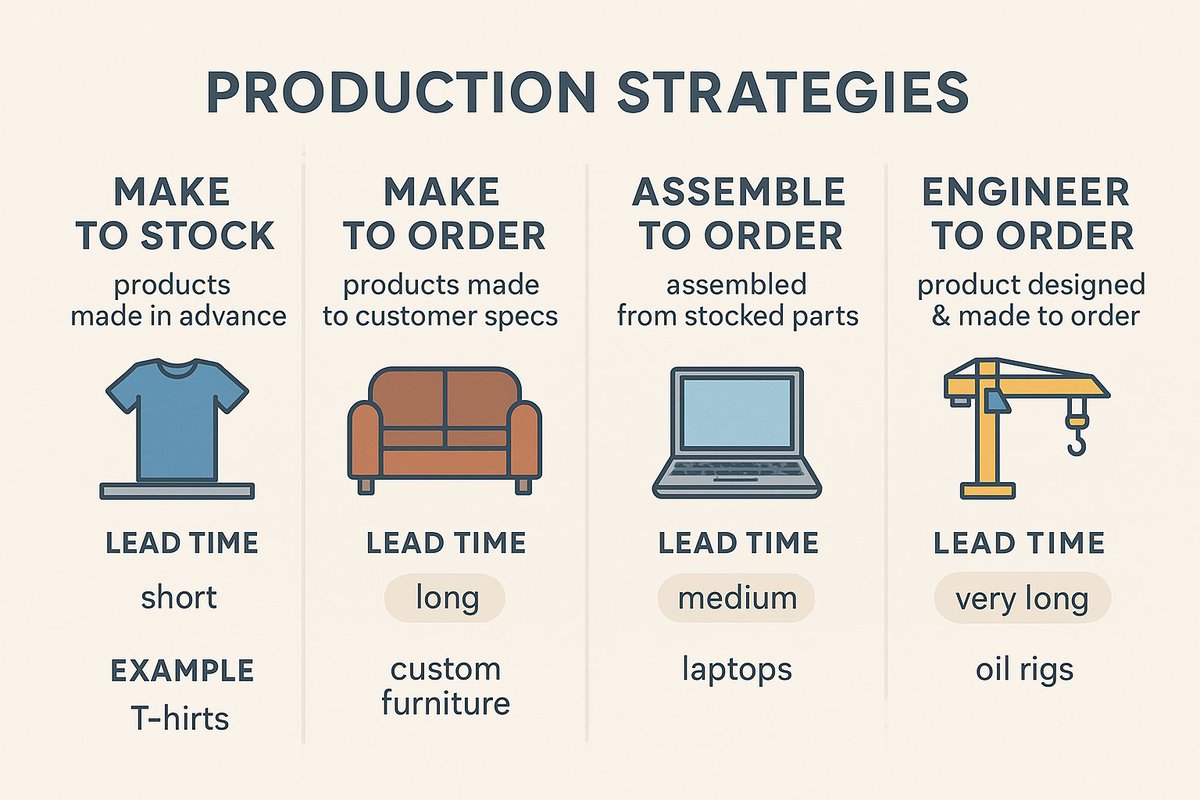
On today's story, I will be defining some terminologies commonly used in supply chain to decipher ordering models. This provides structure for you to understand how products are made in all companies or industries.
Story Caption: "𝑰 𝒏𝒆𝒆𝒅 𝒂 𝒑𝒍𝒂𝒊𝒏 𝑻 𝒔𝒉𝒊𝒓𝒕 𝒕𝒐𝒎𝒐𝒓𝒓𝒐𝒘, 𝒃𝒖𝒕 𝒂 𝒄𝒖𝒔𝒕𝒐𝒎 𝒎𝒂𝒅𝒆 𝒘𝒊𝒍𝒍 𝒕𝒂𝒌𝒆 3 𝒘𝒆𝒆𝒌𝒔"
𝐌𝐚𝐤𝐞 𝐭𝐨 𝐎𝐫𝐝𝐞𝐫(MTO): it's a process of ordering, where nothing starts until customer places an order. It can take a long lead time but it will be tailored to the customer's need.
𝐌𝐚𝐤𝐞 𝐭𝐨 𝐒𝐭𝐨𝐜𝐤 (𝐌𝐓𝐒): products are made in advance and stocked so customers will buy from the inventory. Examples that comes to mind will be toothpaste, pasta, noodles, tomato pastes etc.
𝐀𝐬𝐬𝐞𝐦𝐛𝐥𝐞 𝐭𝐨 𝐎𝐫𝐝𝐞𝐫(ATS): Standard parts are already kept in stock, final products is assembled when ordered. Dell Inc was part of the companies that started this model back in the early days of computers. Other examples are fast-food combos, cars etc.
𝐄𝐧𝐠𝐢𝐧𝐞𝐞𝐫 𝐭𝐨 𝐎𝐫𝐝𝐞𝐫 (𝐄𝐓𝐎): This process involves designing from scratch for you. Examples are aircrafts, medical devices and equipment.
You might be wondering how these information are important, these models are not just how things are made but more important is that, they influence 𝒊𝒏𝒗𝒆𝒏𝒕𝒐𝒓𝒚 𝒔𝒕𝒓𝒂𝒕𝒆𝒈𝒚, 𝒄𝒐𝒔𝒕, 𝒍𝒆𝒂𝒅 𝒕𝒊𝒎𝒆𝒔, 𝒄𝒖𝒔𝒕𝒐𝒎𝒆𝒓 𝒆𝒙𝒑𝒆𝒓𝒊𝒆𝒏𝒄𝒆. Smart companies balance all four models depending on the targeted market audience, product and demand patterns. The next time your order is delayed, you might want to ask or search which model the company is operating to gain understanding of what is going on. Each of the above model has its individual complexities that can not be covered in this post. See the picture below;
#productionmodel
#Supplychain
#DearSupplyChainers
Dear Supply Chainers,
On today's episode of supply chain storytelling. We will be making comparison on two key sides of supply chain and let you see if any side interests you to pitch your tent in. Grab a seat, let's dig in!
Story Caption: "𝐈 𝐩𝐥𝐚𝐧𝐧𝐞𝐝 𝐭𝐨 𝐦𝐚𝐤𝐞 𝐚 𝐧𝐞𝐰 𝐫𝐞𝐜𝐢𝐩𝐞 𝐭𝐨𝐝𝐚𝐲!𝐀 𝐟𝐞𝐰 𝐦𝐨𝐦𝐞𝐧𝐭𝐬 𝐥𝐚𝐭𝐞𝐫, 𝐭𝐡𝐢𝐬 𝐟𝐨𝐨𝐝 𝐝𝐨𝐞𝐬𝐧'𝐭 𝐭𝐚𝐬𝐭𝐞𝐬 𝐠𝐨𝐨𝐝 𝐚𝐬 𝐦𝐮𝐜𝐡 𝐚𝐬 𝐈 𝐰𝐚𝐧𝐭, 𝐈 𝐭𝐡𝐢𝐧𝐤 𝐦𝐲 𝐢𝐧𝐩𝐮𝐭𝐬 𝐚𝐫𝐞 𝐰𝐫𝐨𝐧𝐠."
This is a typical illustration of when you plan something but execution went south. This also happens in supply chain. A real live scenario would be when Planning says: "Here is the best route", and Execution says: "There's delay, let's reroute". You can plan the perfect route but if the road is blocked, the plan must change or adapt. That's the difference between supply chain planning and supply chain execution.
𝑺𝒖𝒑𝒑𝒍𝒚 𝑪𝒉𝒂𝒊𝒏 𝒑𝒍𝒂𝒏𝒏𝒊𝒏𝒈 is deciding what to make, when, where and how much while 𝑺𝒖𝒑𝒑𝒍𝒚 𝑪𝒉𝒂𝒊𝒏 𝑬𝒙𝒆𝒄𝒖𝒕𝒊𝒐𝒏 is making it happen; producing, shipping, delivering, adjusting. Your planning is like google map while your execution is the driver. Planning looks ahead by using data to recommend the most efficient route and tries to prevent problems. On the other hand, execution focuses on navigating real-world issues, make quick decisions as soon as issues come up and deliver the goods as soon as it can. Both parties are important and can't do one without another.
Both Planning and Execution are evolving in the supply chain world. Planning does so by using 𝐴𝐼-𝑑𝑟𝑖𝑣𝑒𝑛 𝑓𝑜𝑟𝑒𝑐𝑎𝑠𝑡𝑖𝑛𝑔, 𝑠𝑐𝑒𝑛𝑎𝑟𝑖𝑜 𝑚𝑜𝑑𝑒𝑙𝑖𝑛𝑔 𝑎𝑛𝑑 𝑖𝑛𝑡𝑒𝑔𝑟𝑎𝑡𝑒𝑑 𝑏𝑢𝑠𝑖𝑛𝑒𝑠𝑠 𝑝𝑙𝑎𝑛𝑛𝑖𝑛𝑔 like S&OP we discussed two days ago. Execution on its own side is evolving by using 𝑠𝑚𝑎𝑟𝑡 𝑤𝑎𝑟𝑒ℎ𝑜𝑢𝑠𝑒𝑠, 𝑟𝑒𝑎𝑙-𝑡𝑖𝑚𝑒 𝑣𝑖𝑠𝑖𝑏𝑖𝑙𝑖𝑡𝑦 𝑡𝑜𝑜𝑙𝑠, 𝐼𝑜𝑇-𝑒𝑛𝑎𝑏𝑙𝑒 𝑡𝑟𝑎𝑐𝑘𝑖𝑛𝑔 𝑎𝑛𝑑 𝑙𝑎𝑠𝑡-𝑚𝑖𝑙𝑒 𝑓𝑙𝑒𝑥𝑖𝑏𝑖𝑙𝑖𝑡𝑦(you remember we discussed this sometime ago)
In the future, these two parties will become even more connected, more like identical twins. If you are thinking of a career in either of them here is something to think through.
If you like analysis, forecasting, making long-term decision, see into planning roles/jobs.
If you prefer operations, hands-on, solving problems as soon as they occur/happens, then explore execution roles. Note that whichever path you choose both sides lead to leadership, strategy and real time business impart.
I hope you learnt something to do on your supply chain story journey, till next time, bye!
#SupplyChain
#DearSupplyChainers
#planning
#storytelling
RT!
Dear Supply Chainers,
Welcome to an exciting snowy day from my end! I hope your day is going well. On today's episode of #DearSupplyChainers, we will be talking about a part of supply chain that plays a strategic role in every company's supply chain. It's the 𝐒𝐚𝐥𝐞𝐬 & 𝐎𝐩𝐞𝐫𝐚𝐭𝐢𝐨𝐧𝐬 𝐏𝐥𝐚𝐧𝐧𝐢𝐧𝐠 (𝐒&𝐎𝐏).
Story caption: "𝑺𝒂𝒍𝒆𝒔 𝒅𝒆𝒑𝒂𝒓𝒕𝒎𝒆𝒏𝒕 𝒑𝒓𝒐𝒎𝒊𝒔𝒆𝒅 𝒖𝒔 𝒕𝒉𝒆𝒓𝒆 𝒘𝒊𝒍𝒍 𝒃𝒆 𝒈𝒓𝒐𝒘𝒕𝒉" 𝒃𝒖𝒕 𝑺𝒖𝒑𝒑𝒍𝒚 𝒔𝒊𝒅𝒆 𝒔𝒂𝒊𝒅 "𝒘𝒆 𝒄𝒂𝒏'𝒕 𝒅𝒆𝒍𝒊𝒗𝒆𝒓 𝒕𝒉𝒂𝒕 𝒎𝒖𝒄𝒉!". 𝑭𝒊𝒏𝒂𝒏𝒄𝒆 𝒅𝒆𝒑𝒂𝒓𝒕𝒎𝒆𝒏𝒕 𝒕𝒉𝒆𝒏 𝒂𝒔𝒌𝒆𝒅, " 𝑯𝒐𝒘 𝒎𝒖𝒄𝒉 𝒘𝒊𝒍𝒍 𝒊𝒕 𝒄𝒐𝒔𝒕 𝒖𝒔 𝒕𝒐 𝒈𝒆𝒕 𝒕𝒉𝒆 𝒘𝒐𝒓𝒌 𝒅𝒐𝒏𝒆?'" 𝒂𝒏𝒅 𝒐𝒏 𝒂𝒏𝒅 𝒐𝒏.
This above scenario is called 𝑺&𝑶𝑷 𝒎𝒆𝒆𝒕𝒊𝒏𝒈."
Clearly, everyone was right in their stance. Sales department had a great campaign lined up to pitch to the customers, supply knew that production line was already at some percentage and finance saw the margins dropping with every expedited shipment. Hence, the numbers did not match. What's going on?
Is everyone really working from the same plan or just going in different directions?
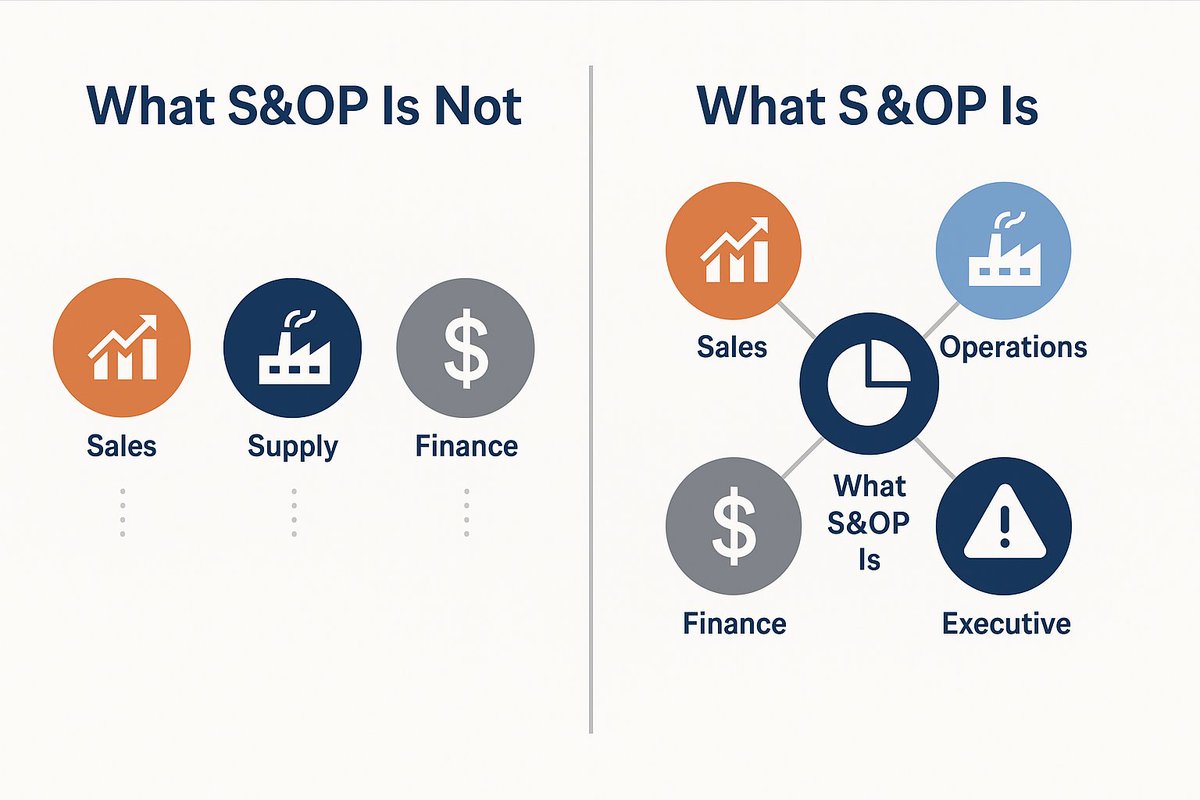
𝐒&𝐎𝐏 is a regular process where teams from various department comes together to align demand, supply and financial goals. It's all about agreeing on what we should sell, what we can make and how much it will cost and adjusting before things go wrong.
Without 𝐒&𝐎𝐏, sales department might overpromise, supply may runs out, finance may worry about money and customers might end up being disappointed. On a flip side, if S&OP is well-aligned and collaborated, risks can be noticed and flagged early and business will run smoothly. S&OP is where data meets dialogue/conversation.
If you ever run or a business or seen someone who runs one, you will know that if there is a misalignment between what you sold vs what you should be delivered, you will see why sales and Operation planning matters. Every business owners practice S&OP knowingly or not.
Note that S&OP decision may not always be true to the market reality, but it plays a strategic role in preventing the company from running into a stretched out losses provided each unit are well aligned as much as possible.
Companies are able to run a S&OP smoothly by;
𝑼𝒔𝒊𝒏𝒈 𝒓𝒆𝒂𝒍-𝒕𝒊𝒎𝒆 𝒅𝒂𝒕𝒂, 𝒄𝒓𝒐𝒔𝒔-𝒇𝒖𝒏𝒄𝒕𝒊𝒐𝒏𝒂𝒍 𝒂𝒍𝒊𝒈𝒏𝒎𝒆𝒏𝒕, 𝒔𝒄𝒆𝒏𝒂𝒓𝒊𝒐 𝒑𝒍𝒂𝒏𝒏𝒊𝒏𝒈, 𝒔𝒕𝒓𝒖𝒄𝒕𝒖𝒓𝒆𝒅 𝒎𝒐𝒏𝒕𝒉𝒍𝒚 𝒄𝒚𝒄𝒍𝒆(𝒆𝒔𝒑𝒆𝒄𝒊𝒂𝒍𝒍𝒚 𝒇𝒐𝒓 𝒔𝒂𝒍𝒆𝒔 𝒑𝒓𝒆𝒅𝒊𝒄𝒕𝒂𝒃𝒍𝒆 𝒑𝒓𝒐𝒅𝒖𝒄𝒕𝒔), 𝑲𝑷𝑰𝒔, 𝒄𝒍𝒐𝒖𝒅-𝒃𝒂𝒔𝒆𝒅 𝒄𝒐𝒍𝒍𝒂𝒃𝒐𝒓𝒂𝒕𝒊𝒐𝒏 𝒕𝒐𝒐𝒍𝒔 𝒂𝒏𝒅 𝒎𝒂𝒏𝒚 𝒐𝒕𝒉𝒆𝒓𝒔.
Below is an image letting you see the role of S&OP, what it is and what it is not.
I hope you have learnt something today, till next time!
Bye!
#DearSupplyChainers
#SupplyCahin
#S&OP
#Supplychainstorytelling