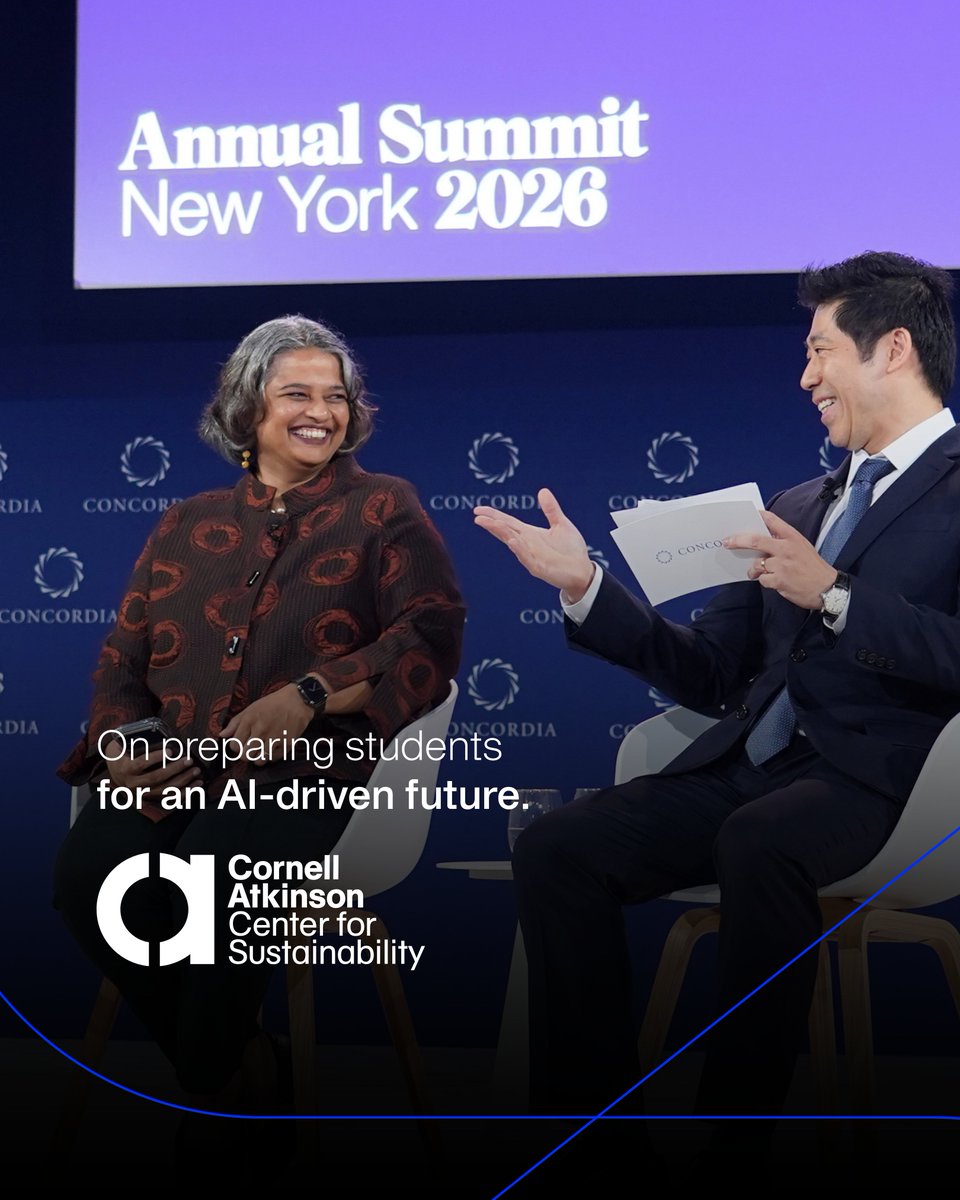
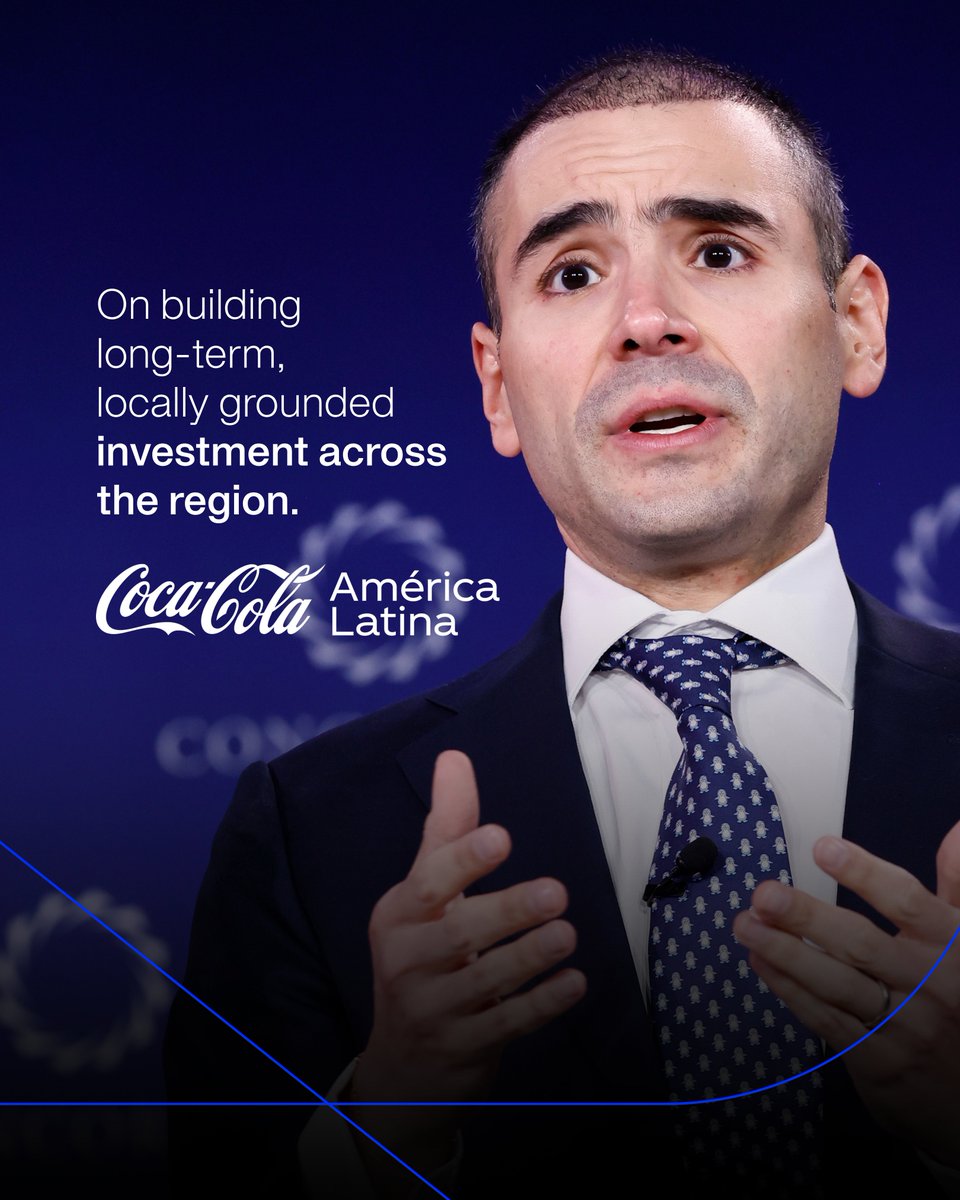
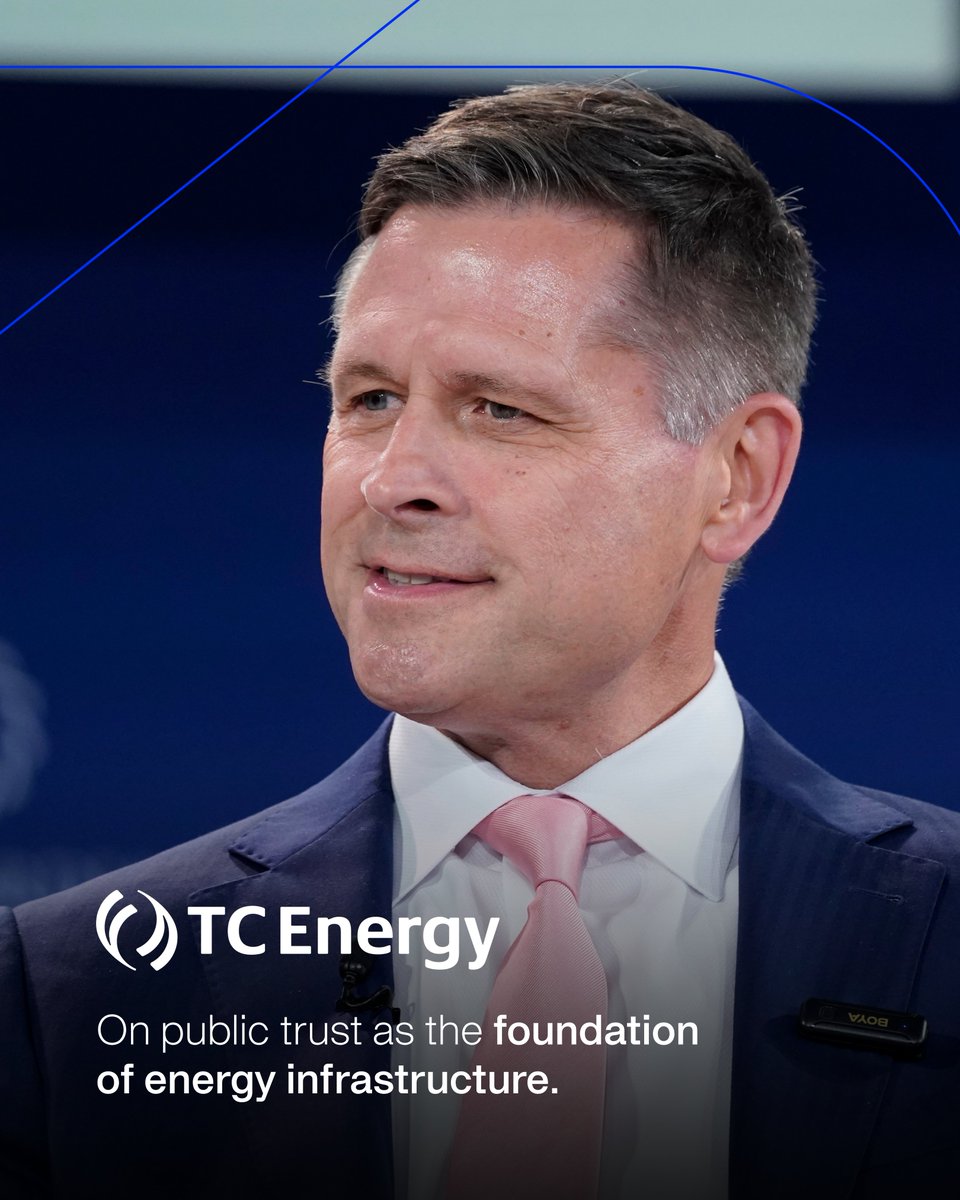
Five organizations, five perspectives from this year's Summit. Thank you to Coca-Cola Latin America, @TCEnergy, and the Cornell @AtkinsonCenter for Sustainability for shaping conversations on regional investment, energy infrastructure, and education. (1/2)
What should the next generation of climate assessments address?
Five Cornell researchers are helping shape that conversation in a new, 175-author commentary identifying research priorities for future U.S. climate assessments @theAGU@ametsoc https://t.co/8yaTmMf9UO
Why hasn't electromicrobial production broken out of the lab yet? In a new preprint with @ds_sci we rank six formate-assimilation pathways on thermodynamic efficiency. The reductive glycine pathway, serine variant, is the practical sweet spot. More efficient and enginerable than the Calvin cycle, and oxygen-tolerant unlike the Wood-Ljungdahl pathway.
https://t.co/RgH4zFxAMI
@Cornell@CornellCALS@CornellEng@AtkinsonCenter
#ClimateWeekNYC 2026 is almost here ⭐️
In just a few days, the @Cornell delegation will lead and engage in conversations on AI, climate finance, critical minerals, nuclear energy, circularity & more.
📌 Your guide to Cornell at Climate Week NYC: https://t.co/O74OgF37nq
Are you a DVM (or equivalent) interested in pursuing a PhD in wildlife health? Now accepting applications for the Cornell K. Lisa Yang Center for Wildlife Health Graduate Fellowship!
Apply by Dec 1, 2026.
Please share! @wildlifecornell
Learn more: https://t.co/fhwbqfLya8
Climate Week NYC: @Cornell and global leaders will gather at Climate Week NYC, Sept. 20-27, to discuss some of the world’s most pressing #sustainability challenges, including harnessing AI’s power while mitigating its negative impacts. @AtkinsonCenter https://t.co/V9fqNs9Njm
Today Emily Bernhardt joins @Cornell as the new Director of the Cornell Atkinson Center for Sustainability and professor in @CornellCALS! Welcome, Emily! 🎉
Learn more about Emily and her background: https://t.co/OfmaCuCBHb
📍Your guide to @Cornell at Climate Week NYC 2026
From AI and climate finance to energy, critical minerals, circularity and more, we are convening researchers and partners at events across NYC Sept 20-27.
📌 Browse the full agenda: https://t.co/O74OgF37nq
Bipartisan legislation introduced this month by the co-chairs of the U.S. Senate Oceans Caucus relies on environmental DNA techniques pioneered by retired @AtkinsonCenter director David Lodge. @NOAA@CornellEEB https://t.co/X1nMlkcai3
Researchers at Cornell have created an interactive map identifying 1.8 million individual trees in New York City, with a new approach that could optimize the placement of trees for cooling in cities around the world.
In the study, researchers identify the types of trees using satellite imagery as well as on-the-ground datasets and 3D data collected with lidar, short for light detection and ranging. The approach was 82% accurate overall and higher for common types of New York City trees.
It’s the first “wall-to-wall,” citywide map identifying trees in natural areas and other unsurveyed areas, which together constitute an estimated 65% of the city’s canopy and have not been accounted for on previous maps.
The research team will use the map to determine which trees are best for cooling, and the data could inform a host of other planting decisions where the type of tree makes a difference, from reducing allergens to managing invasive pests.
Read more: https://t.co/hDOxDy2kpB
Join us at Scaling Global Climate Solutions through Culture and Heritage @ #ClimateWeekNYC 2026 🗽
🗓️ Friday 9/25 | 8-11:30 a.m.
📍 Cornell Tech | Gensler Family AAP NYC Center
→ Open to the public, registration required: https://t.co/YY0wc4zoeX
How is AI reshaping the institutions that shape us? Cornell Atkinson Center for Sustainability joins the 2026 Concordia Annual Summit to explore what leading, teaching, and learning look like for higher education in the age of AI.
Save your seat: https://t.co/4RHbxAEaYj
@Cornell@AtkinsonCenter
#Concordia26
Join us at Finance for the Future!
@ #ClimateWeekNYC 2026 🗽
📍570 Lexington Avenue, NYC
🗓️ Monday 9/21 | 8-11:30 a.m.
→ Open to the public, registration required: https://t.co/aHqNUamhkM
New study: World off-track on nearly every food system goal, latest assessment reveals
For the first time, the research measures how food systems are actually performing, and how much more needs to improve to meet globally set targets.
📌 https://t.co/DvfjQBPyYg
Our Climate Week NYC 2026 agenda is live! 🗽
From Sept 20-27 in NYC, @Cornell researchers & partners will bring research, ideas & collaboration to the conversations shaping a more sustainable future.
⚡ Explore our agenda: https://t.co/O74OgF37nq
Satellite-derived maps of defoliation caused by European spongy moths – a devastating U.S. forest pest that consumes the leaves of a wide variety of trees – offer a promising solution for tracking where and when to spray, and for identifying large scale trends and conditions that lead to pest outbreaks, according to a new study from @CornellCALS and @CornellCAS funded in part by the @AtkinsonCenter.
https://t.co/jRTtqVYi52