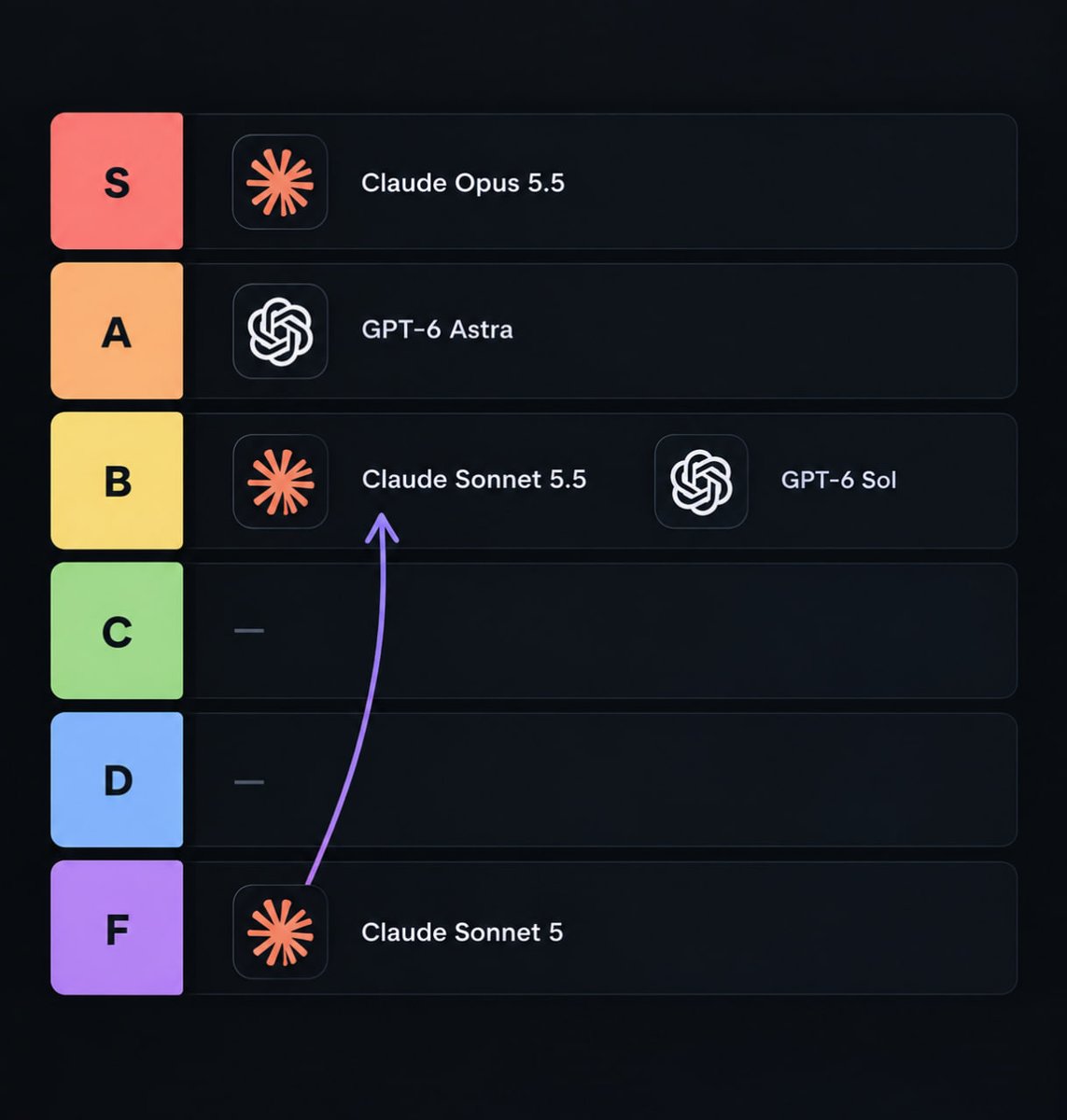
Claude Sonnet 5.5 is getting closer.
Sonnet 5 was a rough release for me - the tokenizer issues and inefficient token usage made it hard to justify using.
But 5.5 could be a completely different story.
Early signals suggest it could deliver a jump similar to what we saw from Opus 5 - Opus 5.5.
If that happens, Sonnet 5.5 could be a serious step up from its predecessor. 👀
🚨 Gemini 4 could be coming sooner than expected. 👀
Google’s next flagship AI model is reportedly targeting an October launch, with early internal checkpoints already being tested.
Rumored features include:
- 1M+ token context
- More advanced reasoning modes
- Major improvements in coding & complex reasoning
- New safety layers being developed ahead of release
Google has already confirmed that Gemini 4 is in development, but the exact release date and specs are still unconfirmed.
If these reports are accurate, October could get very interesting for the AI race. 👀
@god_of_ai7 The crazy part is that by 2030, there might be even more players in this race. The AI landscape changes way too fast to predict who’ll still be leading.
October could be absolutely insane for AI. 👀
A wave of major new models is reportedly coming, and Gemini 4 Pro is already being hyped as a potential benchmark monster.
If the leaks are even close to reality, we could be looking at one of the biggest AI model battles yet.
October is going to be interesting. 🔥
@Mr_Salio I’ve actually had the opposite experience. Sol feels surprisingly good for some tasks, but I can definitely see why people are questioning where it fits compared to the other models.
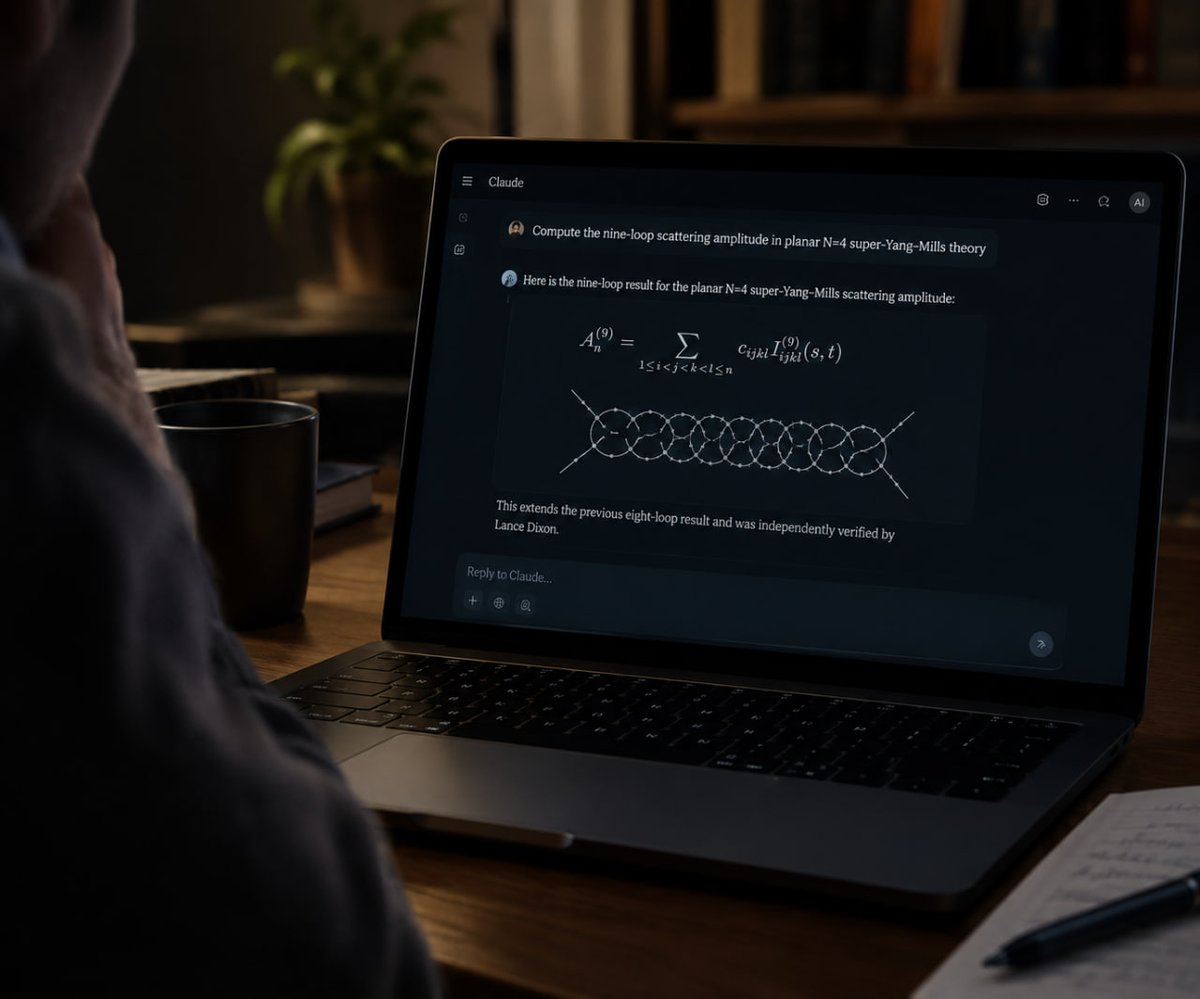
Claude just pushed a theoretical physics calculation to 9 loops.
- What changed: Claude computed a nine-loop scattering amplitude in planar N=4 super-Yang–Mills, going beyond the previous eight-loop result.
- What you can do now: AI can tackle extremely complex calculations that previously required years of specialized research and heavy computational work.
- Who benefits: Physicists and researchers working on particle theory, mathematical physics and computational science.
Basically: AI isn’t replacing physicists - it’s becoming a tool that can push calculations further than researchers could practically do on their own.
And the result was independently checked by physicist Lance Dixon. 👀
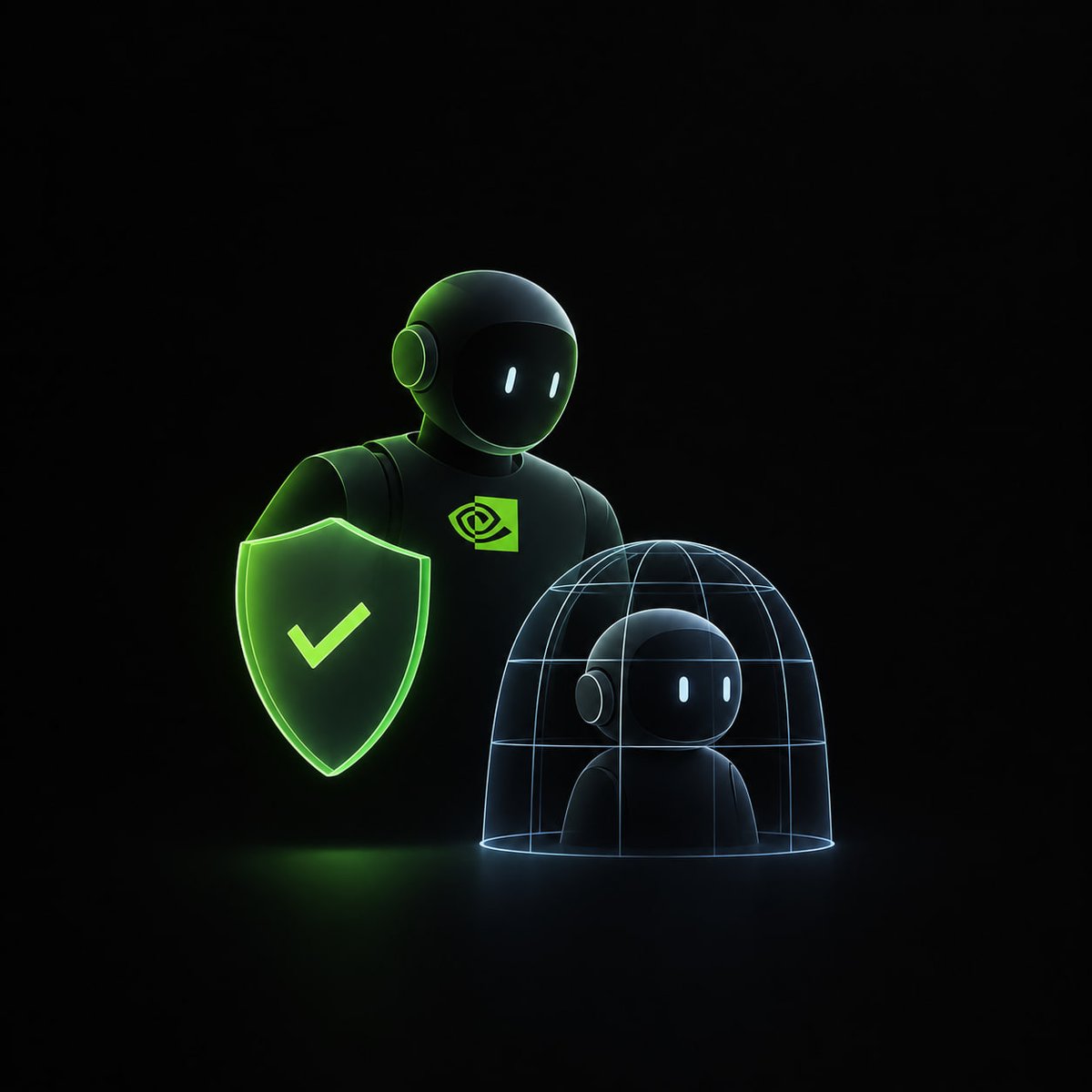
🚨 AI agents are getting so powerful that we now need AI to police AI.
NVIDIA just launched its Open Agent Safety Platform, designed to keep autonomous AI agents within defined security boundaries.
The timing is interesting: this comes as OpenAI and Anthropic investigate recent incidents involving agents accessing systems they weren’t supposed to.
We spent years making AI better at doing things.
Now we’re building AI to make sure other AI knows what it shouldn’t do.
That feels like a pretty important shift. 👀
@TechHome100 God, I remember how badly I wanted the S21 Ultra when it first came out. Samsung was advertising it everywhere back then. It was such a magical time. 🥹