@polymarket proposal: “Will any of the six unsolved Clay Millennium Prize Problems be formally solved in Lean and merged into official mathlib by Dec. 31, 2028?” Resolve YES only for a complete kernel-checked solution, with no sorry and only standard mathlib axioms.
@polymarket market proposal: “Will the Riemann Hypothesis be formally proved in Lean and merged into the official mathlib repository by Dec. 31, 2028?” Resolve YES only if the theorem formalizes RH for ζ(s), contains no sorry, and uses only mathlib-standard axioms.
Router Nitro Now Supports Swaps on Solana! 🪅
Start swapping on Solana today: https://t.co/ruyXzVXgaN
It took longer than expected (we hit a few bumps along the way), but the wait is over. You can now use your favourite bridge to send and receive tokens to/from @solana and other chains in the most cost-effective way.
What Makes Solana Special?
Solana has established itself as a top blockchain thanks to its -
✅High Throughput: Thousands of transactions per second.
✅Low Fees: Near-instant confirmations without breaking the bank.
✅Massive Ecosystem: A hub for memecoin trading and high-volume activity.
Whether you’re chasing the next memecoin or need efficient asset transfers, Solana delivers the speed and affordability you crave.
What Makes This Integration Special?
- 35+ chains: Effortlessly transfer assets between Solana and other chains, including EVM-chains like Ethereum, Base, Arbitrum, Polygon, and non-EVM chains like Tron, Sui, and more.
- One-step Memecoin Trading: Buy your favorite Solana tokens, like $TRUMP or any other memecoin, in just one step from any chain.
- Speed + Affordability: Just like Solana, Nitro by Router Protocol enables lightning-fast transactions with ultra-low fees for smooth, frequent swaps.
With this integration, @NitroByRouter makes cross-chain swaps to Solana easier, faster, and more cost-effective than ever.
Stay tuned—there’s more to come. In the meantime, give Solana swaps a try and experience the Nitro difference firsthand.
Redefining DApp Interactions with Router Pay!
Introduction -
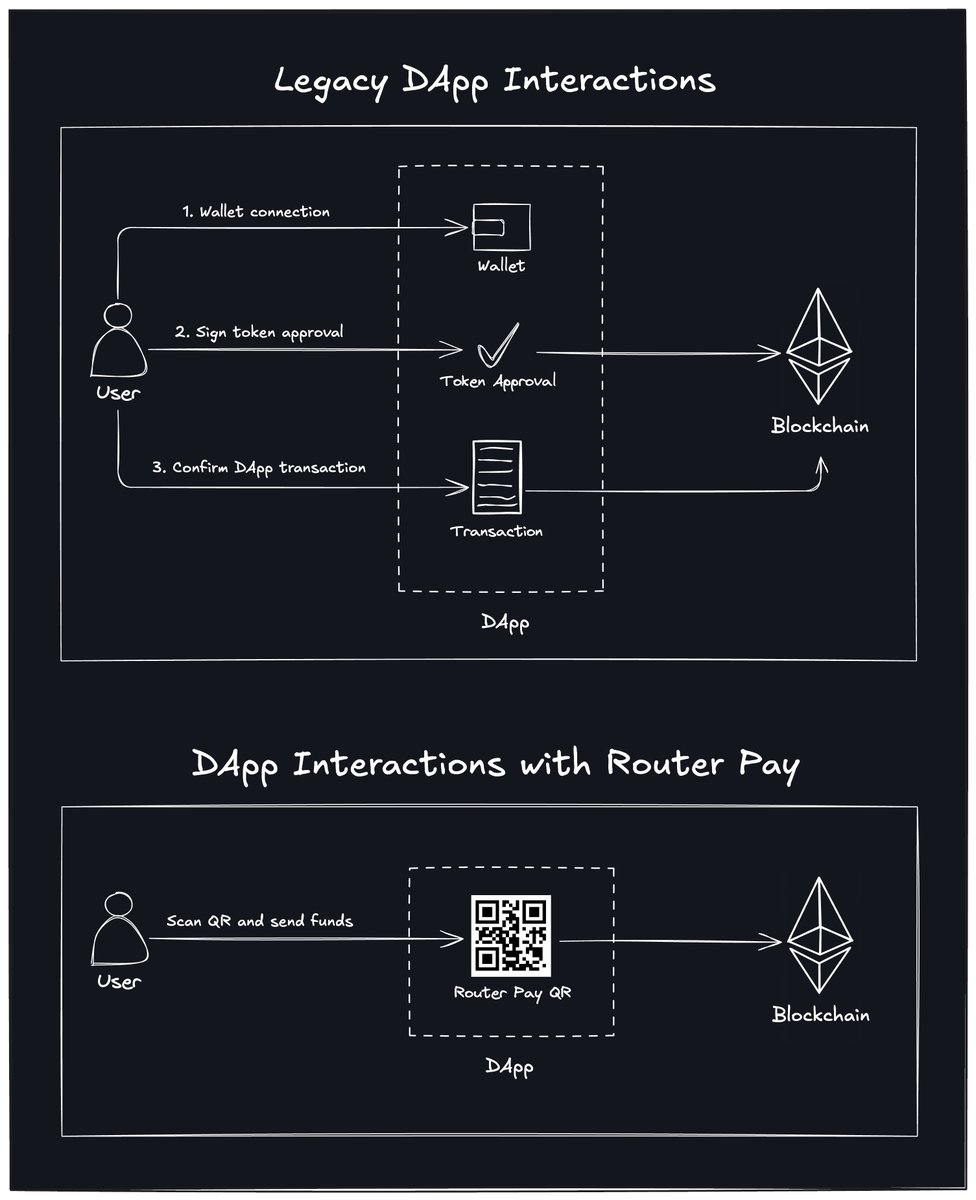
Router Pay, an implementation of the Instruction Specific Address (ISA) framework, is going to change how users interact with decentralized applications. Using Router Pay, users will soon be able to interact with DApps and perform actions on them without the need to connect their wallet or sign approval transactions. With Router Pay, users will only need to transfer assets to a unique address created for each interaction. This approach will support both single-chain and cross-chain transactions, offering a simplified and secure experience. By minimizing the complexities often associated with DApp interactions, Router Pay is poised to deliver a workflow similar to that of Web 2.0 payment systems, making blockchains more accessible for everyday use.
The Problem: Legacy DApp User Journey -
Imagine a user who holds funds in a centralized exchange (CEX) wallet and wants to interact with a DApp. The process is cumbersome and includes multiple steps:
1⃣ Creating a Non-Custodial Wallet: The user needs to create a separate wallet to access the DApp.
2⃣ Withdrawing Funds: Funds are withdrawn from the CEX wallet to the newly created wallet.
3⃣ Acquiring Gas Tokens: To facilitate transactions, the user must acquire blockchain-specific gas tokens.
4⃣ Granting Approvals: Interaction with the DApp requires multiple transaction approvals, adding complexity and security risks.
5. Performing the Desired Action: Finally, the user completes their intended interaction, such as token swaps or liquidity additions.
This traditional workflow is not only time-consuming but also creates potential vulnerabilities, such as phishing attacks and risks associated with granting transaction approvals.
The Solution: How Router Pay Simplifies the Process -
Router Pay will reduce user friction by simplifying the user journey:
1⃣ Creating a Non-Custodial Wallet: The user creates a wallet just like before.
2⃣ Direct Interaction: Instead of approvals and gas token management, the user receives an Intent Specific Address (ISA) for their interaction.
3⃣ Seamless Payment: Users can simply scan a QR code or send funds directly to the ISA using their wallet of choice.
4⃣ Automated Execution: The transaction is executed automatically without requiring further user involvement.
This streamlined approach eliminates unnecessary steps, enhances security, and delivers a user experience comparable to Web 2.0 payment systems.
Why Router Pay Matters -
Router Pay addresses core challenges in Web 3.0 user interactions by:
📌Simplifying Complex Workflows: Reducing multi-step processes to a single scan-and-pay interaction.
📌Improving Security: Removing the need for approvals reduces the risk of vulnerabilities.
📌Facilitating Adoption: By mimicking familiar Web 2.0 experiences, Router Pay lowers the barrier for new users to explore decentralized applications.
At Router, we are committed to building products that pave the way for mainstream Web 3.0 adoption and open new possibilities for blockchain ecosystems. Router Pay, built on the ISA framework, is one such innovation. As we gear up for the launch of Router Pay, we’re excited to share it will redefine user experiences in the decentralized world. Stay tuned for more updates!
Router Pay is something we’ve been quietly developing in stealth mode. While we’ve shared glimpses of it along the way, the details about what Router Pay is and how it works remain unclear to much of the community. Recently, we unveiled the ISA framework whitepaper, which serves as the foundation of Router Pay. However, given the highly technical nature of the whitepaper, we felt it necessary to break down how Router Pay works in simpler terms as we prepare for its upcoming launch.
What is Router Pay?
Built on the Instruction Specific Address (ISA) framework, Router Pay is a product designed to bring the intuitive user experience of Web 2.0 payments to the secure and trustless environment of Web 3.0. In Web 2.0, payments are simple, often as seamless as scanning a QR code for instant transactions with minimal user interaction. Router Pay replicates this simplicity in Web 3.0 by eliminating the need to connect wallets and grant approvals, and delivering a familiar “Scan. Pay. Done.” experience.
Let’s consider a scenario:
Alice wants to invest in a meme coin on Solana, but her funds are in her Base wallet. The most optimized way to do this is through Router Nitro. Here’s how it works:
1. Alice defines her intent by selecting the source and destination chains and entering the amount he wants to transfer.
2. Nitro optimizes and provides him with a competitive rate.
3. He clicks “Approve and Swap,” approves the transaction in MetaMask, confirms the swap, and waits for the intent confirmation.
While this process is efficient, it still involves multiple steps and wallet interactions, which can be cumbersome for users accustomed to Web 2.0 simplicity.
To reduce the number of user steps required to execute an action, we will soon be integrating Router Pay into Nitro. With Router Pay, the first step, i.e., defining the intent remains the same, however, the difference lies in the quote process. When Alice receives the quote, she also gets a deposit address. Now, she can simply send the defined source asset to this address—either through MetaMask or by scanning the address’s QR code using a mobile wallet or a CEX account. That’s it. Nitro seamlessly executes the transaction in the background. No approvals. No wallet connections. Just simplicity.
How Does Router Pay Work?
The cornerstone of Router Pay’s innovation lies in the Instruction Specific Address (ISA) framework. When a user receives a deposit address in their quote, this address is not just a static destination - it’s dynamically generated using the CREATE2 opcode, allowing for the deployment of a contract at a pre-determined address. Here’s how it works:
- Dynamic Deployment: The contract tied to the deposit address is not deployed until the user sends funds to it.
- Self-Destructing Contracts: Once the user’s funds are received, the contract is deployed, executes the specified transaction, and then self-destructs.
- Relayer Mechanism: A factory contract, initiated by a relayer, oversees this deployment process. The factory contract incorporates safeguards against malicious relayers. If a relayer attempts to tamper with the user’s intent, the address of the deployed contract will change, ensuring that the funds can only be utilized by a contract that matches the user’s exact intent.
This robust mechanism ensures that Router Pay delivers both security and convenience, while opening up new possibilities like allowing CEX users to directly participate in DeFi without requiring complex integrations. Users simply send funds to a specified address, and the process is handled automatically.
For more technical details, refer to the ERC-7838 proposal. If you have concerns or suggestions, join the discussion and contribute to the proposal.
Stay tuned for more updates as we gear up for the Router Pay launch.
Close to 40 partners have tinkered with and approved of Router Chain as their choice infrastructure to go cross-chain!
Don't miss this early bird opportunity to unleash the power of interoperability to your dApp.
Visit: https://t.co/V1R2cRqRMf
#RouterChain
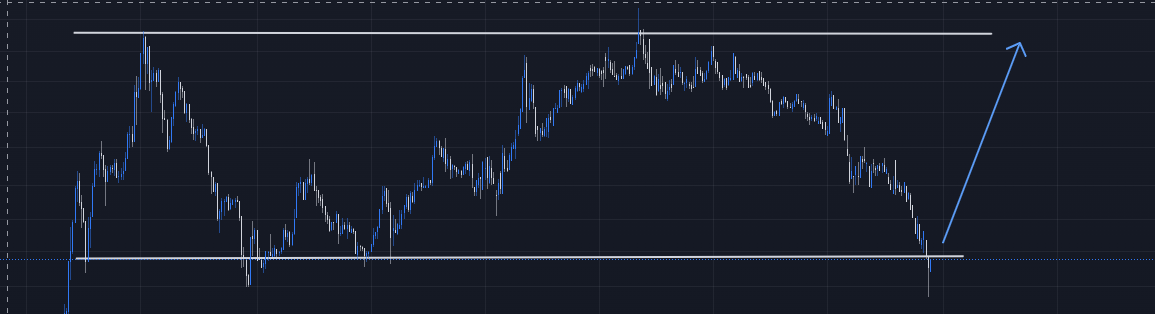
I think the #ETH / #BTC collapse is over (or nearly over) and it should go higher over the next 6-12 months.
I said my worst case scenario was 0.03 and #ETH / #BTC went to 0.03187.
Historically #ETH / #BTC usually starts going up in either December/January.
So if it's December this time, then the low for #ETH / #BTC could already be in.
If it is January, then always possible it sweeps the prior low.
So I would argue that 0.03187 is either the cycle bottom for #ETH / #BTC or *extremely* close to it.
In a few months it likely won't matter either way.
Sui is Live on Router Nitro Cross-chain Bridge! 💧
For the first time ever in the industry, you can go cross-chain between @SuiNetwork and 30+ EVM chains, powered by Router Nitro—with speed and cost-efficiency that remain unmatched!
Start now and earn 0.015 $SUI on every swap: https://t.co/0clAajSMxY
Why This Integration Matters:
1️⃣ Get Any Token of Your Choice on Sui Using Any Token on EVM Chains:
For the first time ever, you can effortlessly swap assets between Sui and EVM networks like Polygon, BNB, Ethereum, and more.
2️⃣ Earn Free Rewards:
To make your entry into the Sui ecosystem even smoother, we’re giving you 0.015 $SUI for every cross-chain transfer to Sui.
3️⃣ Blazing-Fast and Cost-Efficient Transfers:
With Nitro, your transactions are completed in record time at an incredibly low cost and high speed while bridging to Sui.
And this is just the start! We’re also building Cross-chain Intent Adapters to make interacting with Sui-based protocols even easier. We’re talking single-click liquidity provision, staking, and more—from any chain using any asset.
Read more about this integration here: https://t.co/sV1QZNXviB
Stay tuned—there’s so much more to come!
Can AI solve all of humanity's problems? @sama (Sam Altman) thinks so, but not everyone agrees.
Here are some key points from the debate:
🔸Utopian Vision: Altman believes #AI will fix major issues like climate change and even help us build space colonies.
1/3
To support our acceleration phase, and provide the conditions required for our token to thrive, we are introducing 5 key measures starting today:
• Reduce the Total Supply
• Add a 1 year cliff for advisors, team, and private sale investors
• Diversify the Liquidity Pools
• Reduce the supply inflation
• Increase user daily rewards
For further details on these initiatives and how they’ll benefit our community, please read our latest blog post https://t.co/lpb7AlcGJC
While we can’t dictate market outcomes, we’re taking steps to support stronger alignment between our progress and our token's potential.