Vivaldi's “Winter,” visualized in a fascinating way, so that the auditory experience is even more intense; one can literally “see” the music, so to speak
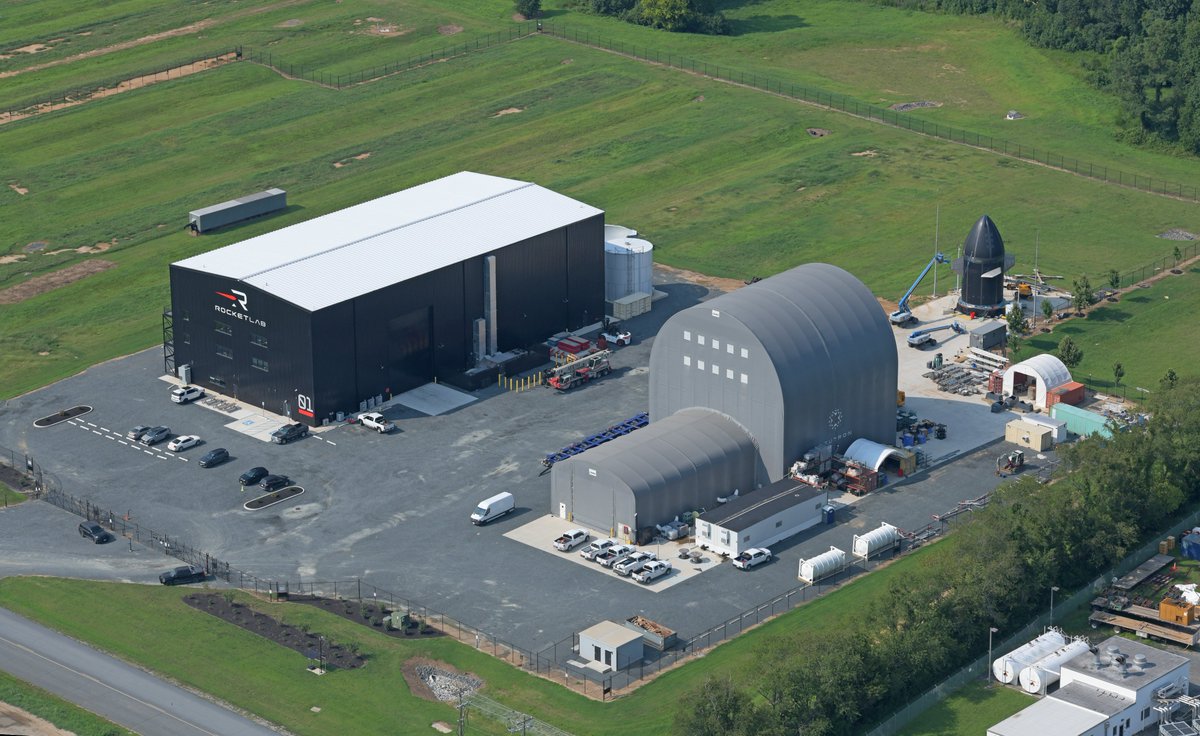
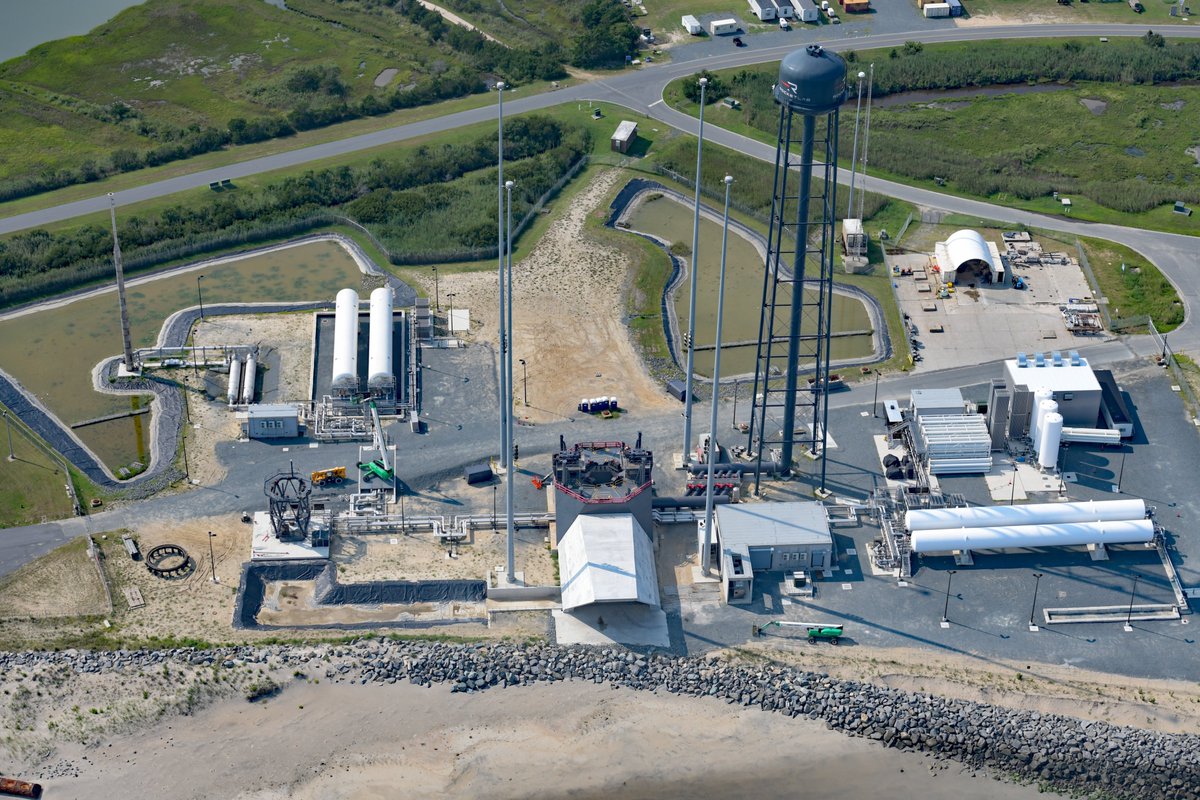
Neutron operations are busy on Virginia's Eastern Shore. Our Hungry Hippo fairing has wrapped up pre-flight testing at our Assembly and Integration Complex while down the road at Launch Complex 3, we've completed installation of the ~10m test stand for Neutron's second stage. Neutron's thrust module will be directly tested on the launch mount itself, to verify rocket-to-launch mount interfaces ahead of full vehicle tests on the pad.
Fintech is perhaps best positioned in this SaaS sell-off narrative
You can't vibe code:
1. Brand/trust
2. Distribution
3. Regulatory licenses
4. Capital markets relationships
5. Underwriting data
etc.
@Wealthsimple@Revolut https://t.co/YR1GViT6hv @get_aspora
I’ve made a short film.
Look at the things around you: doors, bins, staircases, furniture, railings, doorhandles, windows.
Do you like how they look, or not?
Modern design has become boring, but it doesn’t have to be this way.
The word “beautiful” is overused. We don’t need “beautiful” lamps, bus stops, and water fountains – we just need lamps, bus stops, and water fountains that are interesting, that actually mean something.
Or, at the very least, not boring.
Because the aesthetics of architecture and urban design aren’t just a bonus; they totally change how we think, feel, and behave.
Boring environments make us more stressed and less productive; they erode our sense of community; they make us sadder, less trusting, and lonelier.
A boring world is one where we spend even more time online and where our addictions are even harder to battle.
The Problem
There is global, widespread dissatisfaction with how the world looks. In this film, and the series it will lead to, we want to investigate that feeling and give it a voice.
The point isn’t that we should return to the past or get rid of modernism. It’s about learning from the past in order to improve the present, and about giving the public what they very clearly want, which isn’t the eradication of modernism but the co-existence of modernism AND traditionalism.
Just look where tourists go, where they take their photos, and that tells you everything you need to know about what most people find interesting or beautiful.
And look at where people go on holiday. It’s always to cities filled with old architecture and design, with churches and mosques and palaces, with charming little alleyways and stone staircases and wrought-iron railings.
Of the world’s fifty most visited buildings, only four were made in the 20th century, and they’re all museums or memorials.
There’s a reason why posts about this go viral online all the time. Regardless of why the change happened, it is clearly the case that we no longer make things how we used to.
People are rightly confused by the fact that old lamp posts (to take the example we focus on in the film) are usually so pretty, while modern ones are usually so boring.
Some people say this is just an example of survivorship bias… and they’re mostly correct. But that’s the whole point!
Saying old buildings are usually prettier than modern buildings is not to say that architecture used to be better, or that the past was better.
It is simply to say that certain kinds of buildings, because they have been preserved, are good examples of what people like most.
In which case... shouldn't we try to design at least some buildings in a way that we know people like?
A Unifying Cause
Everybody, from all sides of the political spectrum and all backgrounds, stands to benefit from a world that is designed more thoughtfully and imaginatively. The world could be such a colourful, meaningful, and thrilling place!
So this isn’t about left versus right or conservatism versus progressivism; it’s about making our world a more interesting and meaningful place to live in. This should be a unifying cause, because everybody loses out when our homes and cities are badly designed.
I want this film to unite people who think they’re on opposite sides, and to create a consensus that we need to change our approach to how we design our buildings and the objects – benches, bus stops, bins, lamp posts, aircon units – that fill our cities.
The Importance of Details
We are incredibly rich and have a sprawling choice of shows to stream, phones to buy, or shoes to wear… but everything feels more and more generic all the time.
If you want to understand a society, don’t listen to what it says about itself – look at what it creates. You can learn everything about the Victorians – the good and the bad – just by looking at their lamp posts.
And what do the ordinary details of the modern world say about us?
That we are technologically advanced, very efficient… and care more about making money, about making things as quickly and cheaply as possible, than making our world an enjoyable place to actually live in.
It’s important to learn about why and how things have changed, but that’s for another time. The first step is establishing that the public aren’t happy with modern architecture and design, and that something needs to be done.
But what we need isn’t a total revival of so-called ‘traditionalism’; the truth is that traditionalism and modernism can (and should) co-exist.
The trouble right now is that we only have one, and that people are tired of it.
The Power of Noticing
But this film (and the series it will, all being well, lead to) is about more than the specific argument it presents. Above all it’s about a way of seeing the world around us, a way of noticing and thinking.
“How you do anything is how you do everything.” That is probably true, and it also applies to whole societies, not just individuals; a single doorbell implies everything else about the whole socio-economic and political system that gave rise to its creation.
And, beyond being merely “useful”, the ability to notice details makes the world a richer place to live in, and life a richer thing to lead. This is what the film is about, more than anything: the power and joy of noticing.
A Bigger Project
This short film is just the beginning. We want to make a full series about the history of art and architecture, both for their own sake and also to see what we can learn about life in the twenty-first century and how to improve it. To keep updated you can join our email list over at our website, linked in the reply below.
Final Words
You can watch the film here on X, or over on YouTube, also linked in the reply below.
So… this is where the dream begins, the dream of a new series and the dream of a more charming, more interesting, more meaningful modern world.
Spread the word.
Help us build the world we all want to see – one beautiful, walkable block at a time.
We’re closing the final $1M for Townsend. DM me for the deck; introductions welcome.
Let’s set a higher bar for American neighborhoods!
Why do LLMs struggle with decision-making? LLMs often perform sub-optimally due to greediness, frequency bias, and a knownledge gaps. A new paper from @GoogleDeepMind shows how Reinforcement Learning Fine-Tuning (RLFT) on self-generated Chain-of-Thought (CoT) can improve exploration and decision-making.
RLFT Implementation:
1️⃣ Set up the LLM to interact with a decision environment (e.g., bandit, Tic-Tac-Toe).
2️⃣ Prompt the LLM to generate a thinking process (CoT) and an action.
3️⃣ Extract and execute the action in the environment to get a reward.
4️⃣ Use the reward to fine-tune the LLM (via RL) based on the generated CoT and action.
5️⃣ Repeat interactions and fine-tuning to improve the LLM's decision policy.
Insights:
💡LLMs act greedily, sticking to early successful actions and failing to explore potentially better options.
📉 Smaller LLMs tend to repeat actions common in the prompt history.
🤔 LLMs can often articulate or calculate the correct strategy, but fail to execute
✨ Simple Reward bonuses (e.g., +1 for exploring a new action) or penalties (e.g., -5 for an invalid action format) guide LLM towards desired behaviour.
⏳ Thinking Time Matters, allowing more tokens for generation improves performance
⛰️ Larger models suffer less frequency bias but are still prone to greediness
The popcorn cannon
In the pressure vessel, the temperature in the kernels is above 100°C. When the pressure is released suddenly, the moisture that has been created by the cooking, turns into steam, making the kernels puff up.
[📹 Mr Popcorn]
After launch, our SPHEREx telescope will map the whole sky and help us answer some big questions about the universe. Watch to learn how SPHEREx’s wide field of view and the ability to measure over 100 colors will give us a big-picture view of the cosmos like none before.
Transcription is the process by which the information in DNA is copied into messenger nRNA (mRNA) for protein production.
This is a visualization of how it takes place.
[🎞️ dnalearningcenter]