HomeBox is an inventory and organization system built for home users. It allows you to categorize items, track purchase and warranty details, and upload images for easy identification. Written in Go, it uses SQLite and maintains low memory usage.
https://t.co/EgwAvMSrUz
Since nobody called it out in the comments, this “new way” to show 3D Gaussian splats is a basic 19th century construction, studied by Jakob Steiner and others, called a “sphere inversion” or “Möbius transformation”:
https://t.co/R2t6Kho3TP
It looks good because it is an example of a so-called conformal map, which preserves angles, but distorts scales. However, when you look at something up close, it doesn't really matter what its absolute scale is (whereas angular distortion is far more noticeable).
Conformal maps, namely the 16th century Mercator projection (old as it is) remains the projection of choice in Google Maps and other mapping tools, since it is the unique map that (i) preserves angles, and (ii) keeps north pointing "up" everywhere on the globe.
The 3DGS scheme shown here is just bumping up the usual approach up one dimension: apply a conformal projection; keep the "up" direction fixed. The specific choice of conformal maps (inversions in the sphere) are in fact the only choice available in 3D, due to Liouville's theorem on conformal mappings.
[Orange illustration below is from my PhD thesis on conformal geometry: https://t.co/5yANJzFfjD]
10 Must-Know Time Complexity Patterns for Interviews:
1. 𝐇𝐚𝐬𝐡 𝐋𝐨𝐨𝐤𝐮𝐩 - 𝐎(1) 𝐚𝐯𝐞𝐫𝐚𝐠𝐞
A lookup usually takes constant time, regardless of input size. In the worst case, it can degrade to O(n).
2. 𝐇𝐚𝐥𝐯𝐢𝐧𝐠 𝐋𝐨𝐨𝐩 - 𝐎(𝐥𝐨𝐠 𝐧)
The input size is divided by a constant factor in every step, such as in binary search.
3. 𝐒𝐢𝐧𝐠𝐥𝐞 𝐋𝐨𝐨𝐩 - 𝐎(𝐧)
Each element is processed once.
4. 𝐒𝐞𝐪𝐮𝐞𝐧𝐭𝐢𝐚𝐥 𝐋𝐨𝐨𝐩𝐬 - 𝐎(𝐧 + 𝐦)
You iterate over two separate inputs one after another, not with one loop nested inside the other.
5. 𝐋𝐨𝐨𝐩 + 𝐁𝐢𝐧𝐚𝐫𝐲 𝐒𝐞𝐚𝐫𝐜𝐡 - 𝐎(𝐧 𝐥𝐨𝐠 𝐧)
A loop runs n times, and each iteration performs O(log n) work.
6. 𝐃𝐢𝐯𝐢𝐝𝐞 & 𝐂𝐨𝐧𝐪𝐮𝐞𝐫 - 𝐎(𝐧 𝐥𝐨𝐠 𝐧)
The problem is divided across roughly log n levels, with O(n) total work at each level. Merge sort is a common example.
7. 𝐍𝐞𝐬𝐭𝐞𝐝 𝐋𝐨𝐨𝐩𝐬 - 𝐎(𝐧²)
For every element, you iterate over all elements again.
8. 𝐓𝐫𝐢𝐚𝐧𝐠𝐮𝐥𝐚𝐫 𝐋𝐨𝐨𝐩 - 𝐎(𝐧²)
The inner loop performs fewer iterations each time, but the total is still roughly n(n − 1) / 2, which is quadratic.
9. 𝐁𝐫𝐚𝐧𝐜𝐡𝐢𝐧𝐠 𝐑𝐞𝐜𝐮𝐫𝐬𝐢𝐨𝐧 - 𝐄𝐱𝐩𝐨𝐧𝐞𝐧𝐭𝐢𝐚𝐥 𝐓𝐢𝐦𝐞
When each recursive call creates multiple new calls, the work can grow exponentially.
10. 𝐏𝐞𝐫𝐦𝐮𝐭𝐚𝐭𝐢𝐨𝐧𝐬 - 𝐎(𝐧!)
There are n! possible orderings, and producing or copying each complete permutation can take O(n) time.
♻️ Repost to help others in your network.
From your first buffer overflow to kernel exploitation. Free.
https://t.co/3SLFBf602R takes you from basic Linux commands all the way through reverse engineering, shellcoding, ROP chains, heap exploitation, format strings, race conditions, and kernel module exploitation. All hands-on. All in a browser-based workspace.
Reverse engineering with IDA, Ghidra, Binary Ninja, and angr. User-mode exploitation through every modern mitigation bypass. Kernel exploitation covering stack overflows, heap corruption, and race conditions in kernel modules.
One of the places I spent a long time on and still do. If you are serious about exploit development and vulnerability research, this is where you sharpen the fundamentals.
YouTube lectures, live Twitch streams, and a Discord community to get unstuck.
Free. No paywall. No signup wall.
Pwn: https://t.co/FI7ZrT8OfJ
YouTube: https://t.co/9j59tIK1El
Created by @Zardus (Yan Shoshitaishvili), kanak (Connor Nelson), mahaloz (Zion Basque), Erik Trickel, Adam Doupé, Pascal-0x90, and frqmod at Arizona State University.
#ExploitDevelopment #ReverseEngineering #InfoSec
Computer Networking 101: Sockets 🛠️
The best way to understand what sockets are and how they work is to write a few simple client-server programs. The good news is that it's only a few lines of Python or Go. Or if you feel courageous, try C - the code will be more verbose, but it's as close as it gets to the actual system API.
A few problems to practice (in a friendly, controlled environment with helpful hints):
- Write a simple TCP Echo server https://t.co/yZTvQoId63
- (simpler) Write a client for a telemetry server https://t.co/OH9JHuE81i
- (harder) Write a client for a chat server https://t.co/ukwPsC9bCb
- Make one server work with both TCP and Unix sockets https://t.co/D2ot5e7tJn
Happy hacking!
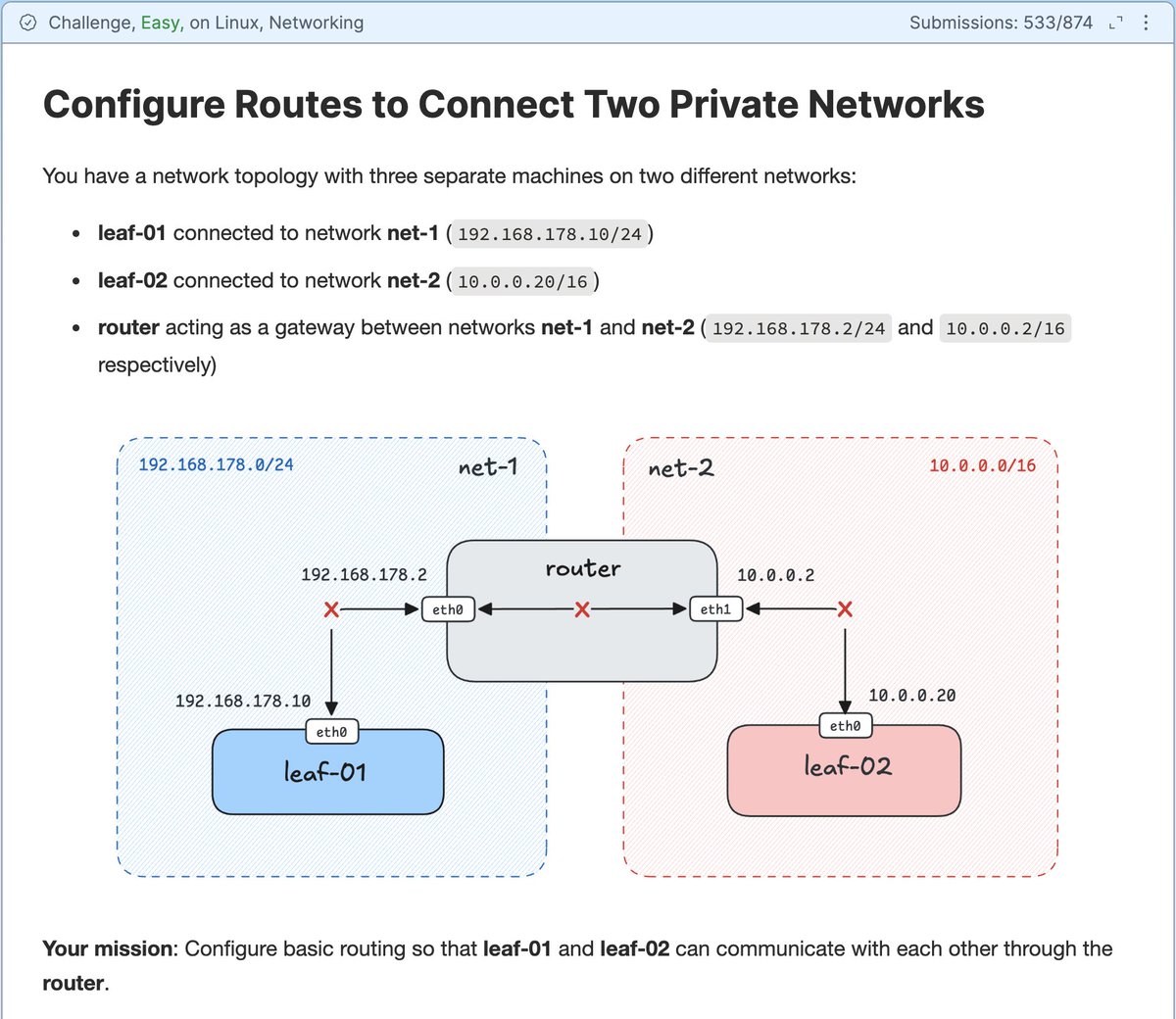
Networking 101: Routing 🧙♂️
Learning networking by doing - can you configure a Linux server to work as a router? An easy task that will take your understanding of Linux networking to the next level if you haven't done it before.
Practice: https://t.co/k2seN25Ewe
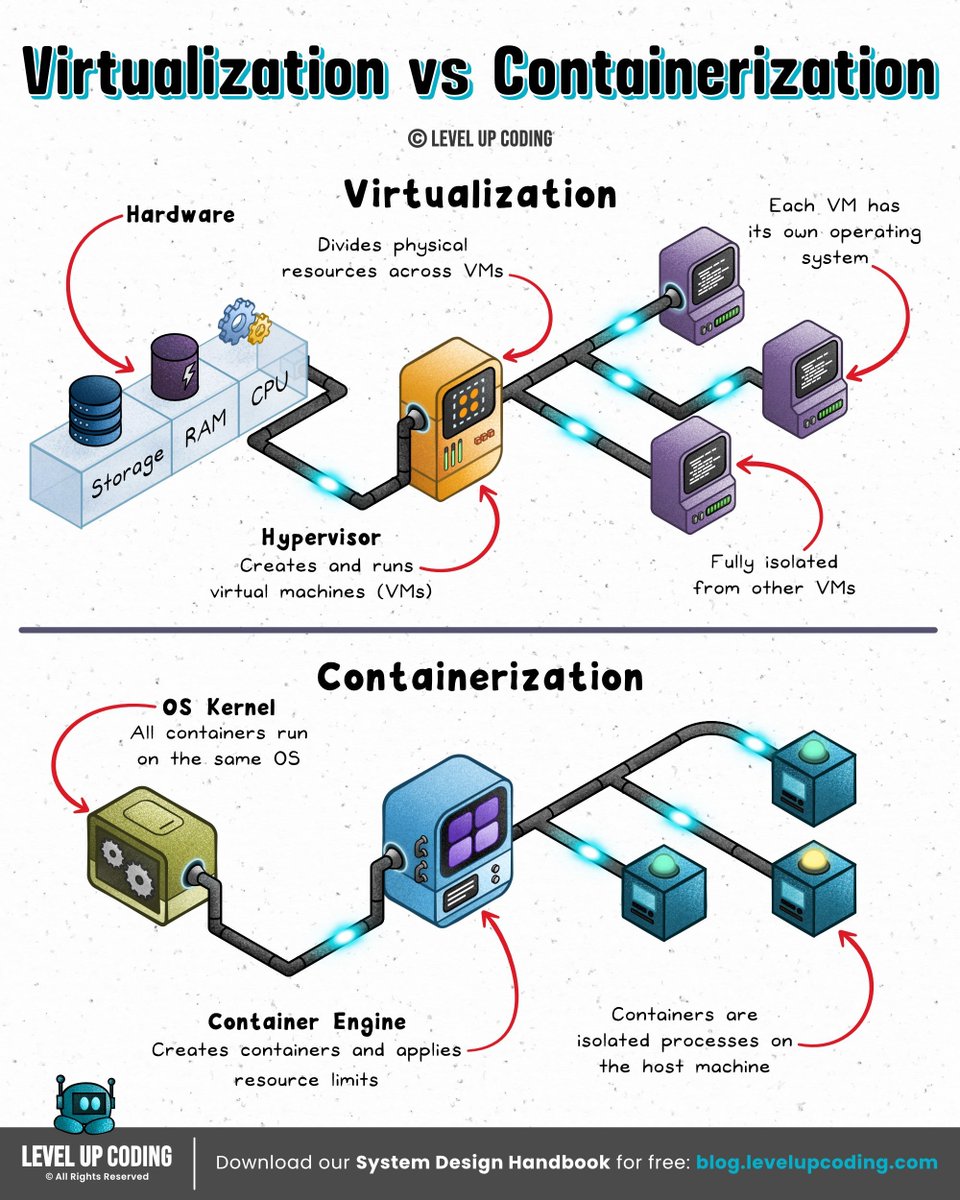
China has open-sourced a sandbox that:
→ boots in 60ms (docker takes 200ms)
→ uses 5MB of RAM per instance
→ runs thousands of AI agents on one machine
→ isolates every agent at the hardware level
→ drops into your E2B code by swapping one URL
It’s called CubeSandbox, a hardware-isolated sandbox for AI agents that cold-starts in under 60ms with just 5MB of memory overhead.
It's a drop-in E2B replacement. Swap one URL. Keep your code. Kill the bill.
no Docker. no shared kernel. no cold start tax.
100% open source.
🔒 Secure Bits 💡
𝗬𝗼𝘂𝗿 𝗥𝗗𝗣 𝘀𝗲𝘀𝘀𝗶𝗼𝗻 𝗺𝗶𝗴𝗵𝘁 𝗹𝗲𝗮𝘃𝗲 𝗮 𝘃𝗶𝘀𝘂𝗮𝗹 𝘁𝗿𝗮𝗶𝗹…
Did you know that Remote Desktop Protocol (RDP) 𝗰𝗮𝗰𝗵𝗲𝘀 𝗳𝗿𝗮𝗴𝗺𝗲𝗻𝘁𝘀 of your screen on the client?
🖼️ These bitmap caches are stored locally to improve performance — but they 𝗰𝗮𝗻 𝗮𝗹𝘀𝗼 𝗿𝗲𝘃𝗲𝗮𝗹 𝘄𝗵𝗮𝘁 𝘄𝗮𝘀 𝘀𝗲𝗲𝗻 𝗱𝘂𝗿𝗶𝗻𝗴 𝘆𝗼𝘂𝗿 𝘀𝗲𝘀𝘀𝗶𝗼𝗻. For forensic investigators (or attackers), that means possible insight into screen content from previous RDP activity.
📁 𝗙𝗶𝗹𝗲 𝗹𝗼𝗰𝗮𝘁𝗶𝗼𝗻:
%UserProfile%\AppData\Local\Microsoft\Terminal Server Client\Cache\*.bin
🧰 𝗪𝗮𝗻𝘁 𝘁𝗼 𝗲𝘅𝘁𝗿𝗮𝗰𝘁 𝗮𝗻𝗱 𝗿𝗲𝗰𝗼𝗻𝘀𝘁𝗿𝘂𝗰𝘁 𝘁𝗵𝗲𝗺?
Check out: bmc-tools-py — it can turn the cache into a full image collage.
Did you know about this "feature"?
#CyberSecurity #Windows #Hacking #Forensics #RemoteDesktop #SecureBits #HorizonSecured @BlueTeamDave








![keenanisalive's tweet photo. Since nobody called it out in the comments, this “new way” to show 3D Gaussian splats is a basic 19th century construction, studied by Jakob Steiner and others, called a “sphere inversion” or “Möbius transformation”:
https://t.co/R2t6Kho3TP
It looks good because it is an example of a so-called conformal map, which preserves angles, but distorts scales. However, when you look at something up close, it doesn't really matter what its absolute scale is (whereas angular distortion is far more noticeable).
Conformal maps, namely the 16th century Mercator projection (old as it is) remains the projection of choice in Google Maps and other mapping tools, since it is the unique map that (i) preserves angles, and (ii) keeps north pointing "up" everywhere on the globe.
The 3DGS scheme shown here is just bumping up the usual approach up one dimension: apply a conformal projection; keep the "up" direction fixed. The specific choice of conformal maps (inversions in the sphere) are in fact the only choice available in 3D, due to Liouville's theorem on conformal mappings.
[Orange illustration below is from my PhD thesis on conformal geometry: https://t.co/5yANJzFfjD]](https://pbs.twimg.com/media/HNcykLnasAA5M9Y.jpg)