New paper alert ⚠️
Simple techniques for a complex problem: sampling malaria vectors in Africa. @JDerekCharlwood @EntoMohamed@Fredros_Inc. Here we describe a set of approaches to monitor malaria vectors using a torch as the only source of energy.
https://t.co/ZLcrcmjO5Y
Published today: @AyuboKampango and others The Shockwè trap: a human-baited exposure-free device for surveillance and behaviour studies of anthropophilic vectors" has just been published
https://t.co/pDnd8SjkLc
Not just another mosquito trap!!
Published today in PNAS Nexus: could this method improve on TIRS making DIY-IRS vs. dengue, Zika, CHIK possible using hand held cans to protect your own home? https://t.co/Rulb1CPjsg
Thought ticks were terrifying? They just got worse. Turns out they can use static electricity ⚡️ to launch through the air onto hosts, including you! Here's a thread about our new paper w/ @Katie__Lihou, Daniel Robert, out today in @CurrentBiology https://t.co/Z6Pz080YeD 🧵👇
Just published!
Time series analysis of survival and oviposition cycle duration of Anopheles funestus. Anopheles funestus remains amongst the most neglected, albeit highly competent, malaria vectors.
Please have a look and comment! @thePeerJ https://t.co/xF8lKSfnNE
An early version of our article on human exposure to malaria and arbovirus mosquito vectors biting indoors and outdoors in Mozambique has just come out. Thanks to all authors, most twitter less, @philipmccall11
https://t.co/MckGqoIOFV
Please have a look and comment!!
#Malaria is increasing in Indigenous and artisanal mining areas in the Brazilian Amazon, impacting the Yanomami people.
Correspondence from @marciacastrorj@HarvardChanSPH and Cassio Peterka, Ministry of Health, Brazil
#WorldMalariaDay
https://t.co/UJMCjQLBdV
Our article is sitting among #topdownloadedarticles published in the journal Medical and Veterinary Entomology.
https://t.co/YmWyLcH8jt
Proud to lead this work supported by a great team.
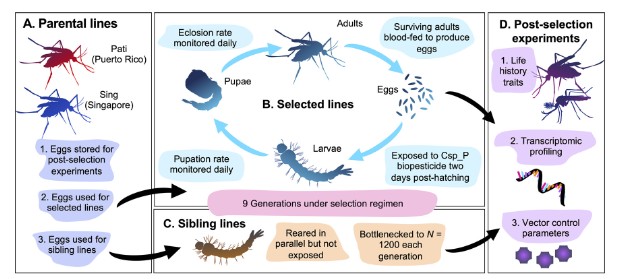
#MicrobiologyMonday: Researchers developed a bacterial biopesticide w/ strong mosquitocidal activity. Sublethal doses did not select for resistance, nor did they influence mosquitoes' susceptibility to dengue virus or chemical insecticides. @mbiojournal: https://t.co/dFgKEbWsAv
Mosquito larvae can breathe under water for months, contrarirly the classical belief that they only breathe atmospheric air. We need to rethink the potential effectiveness of mosquito management by larval asphyxiation.
Study by Costa et al. 2023.
https://t.co/bcuMXYjf1l
A postdoc in medical entomology is available @create_neo. Based at UTMB, will work in partnership w/ Brazilian collaborators for mosquito collections in various urban and forest habitats and participate in wildlife capture, sampling, and release.@ASTMH@ACAV_ASTMH@CREID_Network
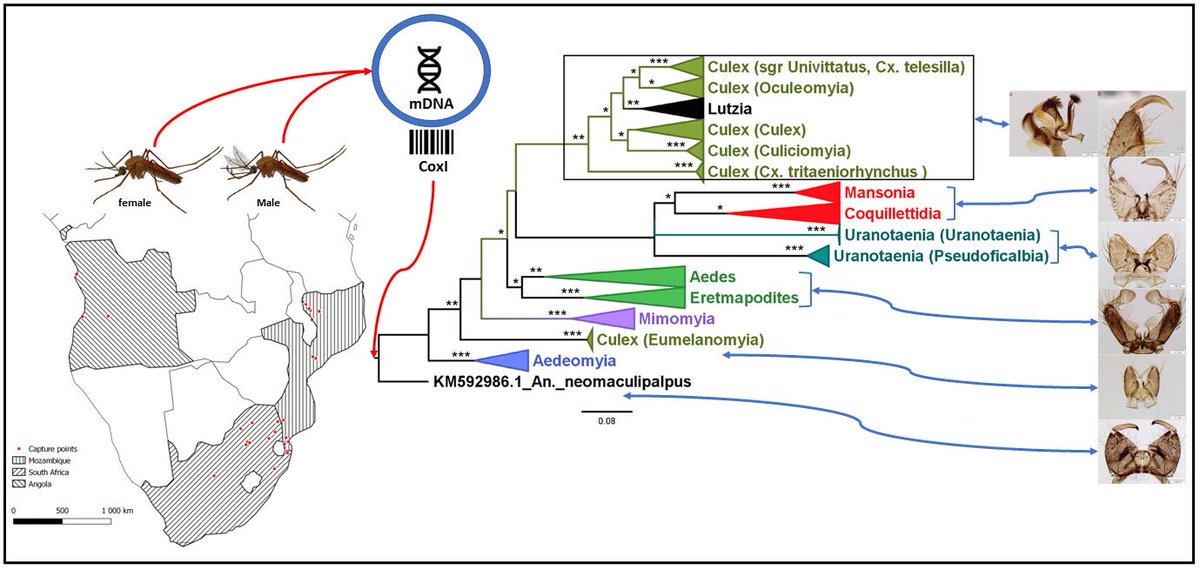
#DiversityMDPI, New publication "#Morphological and #Molecular Characterization Using Genitalia and CoxI Barcode Sequence Analysis of Afrotropical Mosquitoes with Arbovirus Vector Potential" at the link: https://t.co/B7c5LbBqry
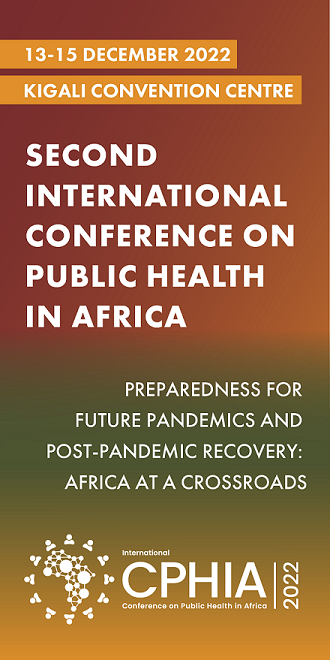
📢 Calling all African researchers, scientists, & public health professionals! 📢
#CPHIA2022, is coming this December 2022. It will forge a new path forward for pan-African public health
Register @ https://t.co/JpKdxVq04i
#PublicHealthinAfrica#AfricanLeadership