We're going back to space in around a week! Exactly one year after our first launch.
If you've been wondering what we've been up to these last months, this video is for you.
Want your code in space? Visit https://t.co/OEZjtne9A2
🚀 Next stop: OmniSat!
We’ve completed the structural and thermal model vibration test campaign, validating our design for launch.
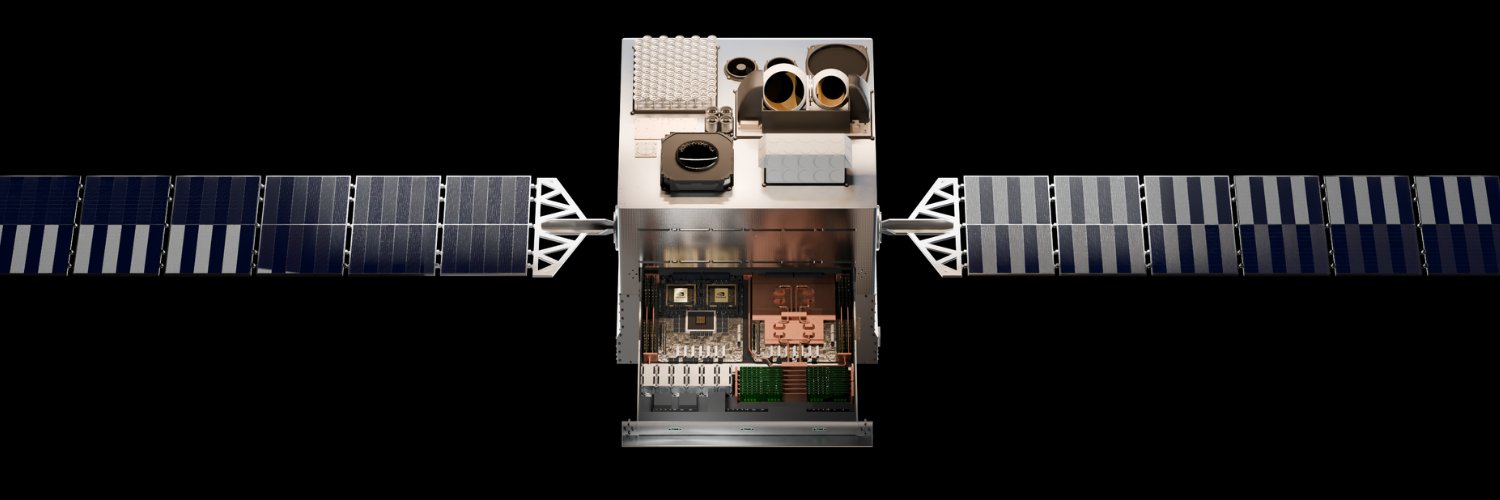
At just under 200 kg, OmniSat is two orders of magnitude heavier than Clustergate-2, bringing onboard GPU computing and optical sensors to orbit.
@peer_rich@calcom the tool suddenly stopped syncing to outlook when booking calls. It does so in troubleshooting mode and not in call links. Can anyone assist please?
Yet another language model on our mini orbital server!
We’re proud of https://t.co/a5RZPtOfNA for bringing and running their own version of @googlegemma 3 in space.
This is a great example of a fast team connecting end-users to our in-orbit compute infrastructure.
Congratulations to the winners of the AI in Space hackathon we co-hosted with @liquidai!
our team had the pleasure of reviewing the creative submissions, and we can’t wait to see them turn into real applications as we push more compute into satellites.
@luthiraabeykoon@karpathy We have an Ultrascale+ on a satellite, that can speak to cpu and jetson. Any fun ideas we can help you build out of this world?
🚀🛰️🇨🇭🌐DPhi opens access to space beyond traditional players. Congrats to Aziz Belkhiria and his team at @unlimitrust 🙌 Read article to learn more: https://t.co/gIPGADoQ0j via @startuptickerCH#TrustValleyCH
Swiss startup @DPhiSpace hosted @liquidai's large language model to analyze an EO image—without first transmitting the image to the ground.
https://t.co/mdMQSkspmu
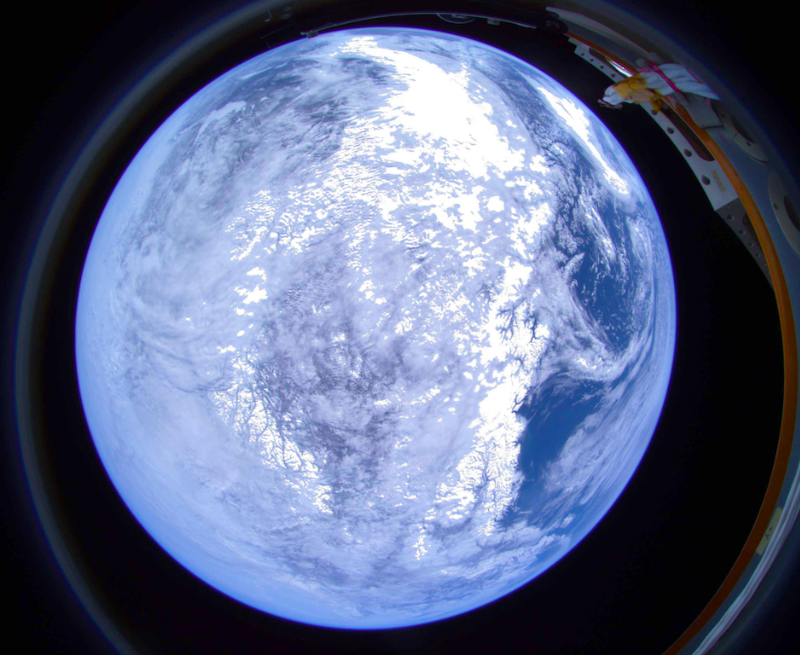
Proud the share the successful commissionnig of our mini orbital server. We celebrated by running an inference from @liquidai LFM2:3b in space to describe our beautiful planet!
We ran an LLM onboard a satellite to describe Earth! The response comes from @liquidai LFM2 - marking the successful commissioning of our mini orbital server.
Read the full story: https://t.co/AoaYXeHZ5b
Run your own software in space: https://t.co/Rfbyyifbyv
9 days into the AI for Earth Observation hackathon with @liquidai
Here,@lorebottelli showcases an example of an agentic VisionLanguage Model that investigates maritime anomalies: picks where to look, interprets the imagery, reasons to an answer.
Code: https://t.co/X5cJR42djj
Wanna learn with me how to build a wildfire prevention system using a Small Vision Language Model?
Next week I am hosting a 60-minute technical deep dive.
Where? 🧵(1/3)
Today the AI in Space Hackathon kicks off with @LiquidAI.
What would you build if your satellite AI could see, think, and decide?
$20K+ in prizes up for grabs! You can still join now: https://t.co/IvtY6r9Avr
Fair questions, and honestly not our expertise at @DPhiSpace to answer all of them. That's what the hackathon is for. Our job is breaking the compute bottleneck. We're building satellites with NVIDIA Blackwell GPU clusters and just flew our mini-server demonstrator last month running 13B models in orbit. When server-class compute lives close to the sensor, the tradeoffs change: developers can annotate datasets, create ground truth, and make satellites agentic. Happy to give you a look into our satellite compute infrastructure and explore what we can achieve on the edge!
Think about cases where NDVI shows reduction in vegetation. The VLM’s job becomes spotting this + figuring out why. If it has access to high res Umbra SAR then it can correlate this with nighttime activity where logging might be happening. The goal is to replace the human observation + reasoning step so we get deeper understanding of the situation before any data gets downloaded and looked at. You can always make an object detector with a CNN of course. It’s a tradeoff on the flexibility + autonomy.
@mouthofmorrison@mouthofmorrison saw you guys published some open data - happy to explore if we can add this to our hackathon and see what people will daetect once these satellites carry serious compute capabilities!
@MaziyarPanahi@Prince_Canuma Once you do please join our hackathon with @liquidai https://t.co/Zct9ApiP7U
Win $5k cash + $15k in credits to run AI on our compute server already in space by @DPhiSpace