10 GITHUB REPOS THAT SHOULD BE ILLEGAL TO HAVE.
all free. all open-source. bookmark this for later.
1️⃣ recordly — the free screen studio.
open-source screen studio. auto-zoom, smooth cursor, webcam overlay, styled backgrounds, polished demos without an editor. (AGPL-3.0)
🔗: https://t.co/tTuHC644ah
2️⃣ stirling-pdf — your entire pdf toolkit
self-hosted. merge, split, sign, redact, OCR, convert, compress, 50+ tools, runs locally, nothing leaves your machine. (MIT)
🔗: https://t.co/9E4Jh3N8KS
3️⃣ photogimp — turns GIMP into photoshop. photoshop shortcuts, layout, and splash screen patched right on top of GIMP 3+.
🔗:https://t.co/6HUSyxLxqI
4️⃣ open notebook — self-hosted notebooklm.
drop in pdfs, urls, youtube links — chat with them, summarize, even generate podcasts. bring your own model (18+ providers). (MIT)
🔗: https://t.co/LKf9nDFrrR
5️⃣odysseus — pewdiepie's self-hosted AI workspace.
chat, agents, deep research, docs, email, memory — local-first, your hardware, your data. (MIT)
🔗: https://t.co/hyi9PbcL0M
6️⃣freedomain — free domain names for everyone.
register a domain, point it at cloudflare or any DNS, ship your site without paying for the name. (AGPL-3.0)
🔗: https://t.co/TAVxK1wuZp
7️⃣ hyperframes — write HTML, render video.
heygen's engine that turns html/css + animations into deterministic mp4s. built for AI agents. (Apache-2.0)
🔗:https://t.co/IOSYW0jVZc
8️⃣ web-to-app — turn any website into an android app, on-device.
configurable webview, apk signing, even node/php/python runtimes — no remote build.
🔗: https://t.co/M1R5PGFLKS
9️⃣ reclip — self-hosted video + audio downloader.
paste a link from youtube, tiktok, x, ig — 1000+ sites — grab it as mp4 or mp3. powered by yt-dlp.
🔗: https://t.co/tWyOxIGEKQ
🔟 excalidraw — the infinite whiteboard that replaces miro, figjam and lucidchart. hand-drawn diagrams, wireframes, real-time collab, end-to-end encrypted. 120k+ stars for a reason. (MIT)
🔗: https://t.co/FMX3oCY1ny
most people pay monthly for tools that already exist for free. you don't have to.
Maskerede betjente uden kendelse smadrer min dør pga yndlingstals- og journalisme-kriminalitet.
I morges kl 0947, da jeg var på vej i bad hørte jeg først ét højt brag. Derefter kiggede jeg i dørspionen og så en gruppe sortklædte og maskerede mænd (mundbind og mørke solbriller) på vej op af trappen.
De begyndte straks at hamre på lejlighedens dør med en rambuk uden på noget tidspunkt at ringe på eller give sig til kende.
Kort efter var de inde i lejligheden (det er ca. her videoen starter) og de lagde mig promte i håndjern.
Næsten alle 8-10 betjente var iført mundbind og mørke briller - helt klart maskering som højst sandsynligt er ulovligt.
De kunne ikke fremvise nogen kendelse og ville ikke sige, hvad jeg var sigtet for. "Det ville tilgå".
Lejlighedens overvågning blev herefter pillet ned af betjentene af "sikkerhedsmæssige hensyn".
Kort efter blev jeg kørt på Bellahøj Politistation, mens lejligheden blev endevendt.
Her blev jeg fotograferet, rullet fingeraftryk og DNA skrabet - uagtet at politiet har det hele i forvejen.
Først til sidst (ved 16 tiden) blev jeg informeret om, hvad jeg var sigtet for: at have det forkerte yndlingstal og at forsøge at interviewe statsministeren om afviklingen af danskernes privatliv gennem forbud mod kryptering og permanent PET-overvågning af alle danskere.
Jeg blev løsladt kl 1640 og kunne begive mig hjem til fods.
Selve anholdelsen betragter jeg som ulovlig. Man må ikke anholde til afhøring - det følger af retsplejelovens paragraf 750. De har allerede både fingeraftryk, foto og DNA - og sagen har intet som helst at gøre med fysiske spor.
Det er også stærkt tvivlsomt, om den helt uvarslede smadring af døren har levet op til proportionalitetsprincippet i dansk ret. Jeg har simpelthen svært ved at se, hvordan nogle opslag på nettet kan retfærdiggøre det. Beviset er opslagene - ikke noget i lejligheden. Det virker mere som ren straf uden fagligt belæg.
Jeg er også ret sikker på, at politiet har tiltvunget sig adgang til min kærestes telefon og derigennem slettet størstedelen af den optagede video. For der gik et par minutter, før de tog kameraerne ned (og tog dem med(!)).
Hvorfor nedenstående video som den eneste ikke blev slettet, ved jeg ikke.
Jeg har det godt, men er en anelse chokeret over politiets helt uproportionale og brutale fremfærd.
🦊 A baby desert fox in the Algerian Sahara Desert.
🇩🇿 These adorable foxes are the national symbol of Algeria, and the Algerian national football team is proudly nicknamed 'Les Fennecs' (The Desert Foxes).
I’ve had a number of conversations with folks inside and outside government about the current situation with Anthropic, and here is what I believe to be true:
— As we know, Anthropic publicly released its Mythos class models earlier this week under the commercial name Fable.
— Fable is Mythos with guardrails. But if those guardrails fail, then you’ve exposed Mythos and its advanced cyber capabilities to people who shouldn’t have them. (Keep in mind that Anthropic itself widely promoted the idea that Mythos was a cyberweapon and needed to be regulated as such. They asked for government regulation of Mythos and championed the guardrails on Fable. If there is a vulnerability — big or small — it is Anthropic’s responsibility to patch.)
— A highly credible trusted partner of both Anthropic and the USG who was testing Fable came forward with a jailbreak of those guardrails. The Admin asked Dario to fix the jailbreak or de-deploy the model. Dario refused.
— In their blog post, Anthropic defended its decision by saying the jailbreak isn’t serious. That is not what the trusted partner and the USG believe; nor is that kind of minimizing language consistent with Anthropic’s brand as the AI safety company. It’s difficult to fathom how they could claim a jailbreak allowing operability of a cyber weapon could be defined as not “serious.”
— In the past, Anthropic has always said that safety must be top priority and taken super seriously. In this case, Anthropic prioritized the continued offering of the consumer model over safety.
— In reaction, the Admin issued the export control. The Admin did this reluctantly. It’s been very surprised that Anthropic hasn’t wanted to cooperate with a reasonable safety request (ie fixing the jailbreak issue). Anthropic’s reaction is very much at odds with their branding and ethos as a safe AI research community.
— The Admin’s hope now is that Anthropic remediates the safety issue, the export control is lifted, and Fable goes back into general release. The Admin wants all of this to happen as soon as possible. It is frankly bewildered that Anthropic hasn’t wanted to comply with safety requests that it previously said were its highest priority.
— Those trying to misdirect and tie this action to the prior DoW/Anthropic issues are wrong. The Admin values Anthropic’s technical capabilities and feels that this issue, while serious, should be easily resolved. The ball is in Anthropic’s court.
After 25 years of brave & brilliant work by hundreds of scientists in my lab to understand then safely reverse aging for the first time, it was moving to witness the first human dose being delivered 🥹 https://t.co/veQsyUEORz
YouTube deleted 16.7 million videos in six months.
Gone.
Channels you subscribed to.
Tutorials you bookmarked.
Music you saved for later.
Creators you supported for years.
Gone.
So one engineer named Simon, originally from Switzerland, now living in South East Asia, built a tool that ends this forever.
It is called TubeArchivist.
Nearly 8,000 stars on GitHub. GPL-3.0. Free.
It downloads any YouTube channel you subscribe to, stores every video on your own server, and gives you a Netflix-style library you fully own.
No ads.
No "this video is no longer available."
No algorithm.
No Premium subscription.
Then YouTube did the unthinkable.
July 18, 2024. They rolled out the "Sign in to confirm you're not a bot" wall.
October 29, 2024. They started IP-banning entire data centers. Hetzner gone. OVH gone.
Coincidence.
Here is the wildest part.
TubeArchivist did not fold.
March 28, 2026. Simon shipped v0.5.10. New release. Same one engineer. 17x more commits than anyone else on the repo.
It still works.
It still downloads.
It still restores the dislike count YouTube deleted in November 2021.
One Swiss engineer vs. a trillion-dollar ad machine.
YouTube Premium costs $13.99 a month. $167.88 a year. Forever.
TubeArchivist costs zero. Forever.
But DO NOT install it. We should all keep paying Google $168 a year to watch the videos we already chose to watch.
100% Open Source. (Link in the comments)
A Russian psychologist spent 10 years proving that the act of talking to yourself out loud is one of the most powerful cognitive tools the human brain has, and almost nobody outside his field has read the work.
His name was Lev Vygotsky.
He worked in Moscow in the 1920s and died of tuberculosis in 1934 at the age of 37. He had no laboratory, no funding, almost no English readers, and a body of work that the Soviet government suppressed for two decades after he died.
He produced the foundational theory of how human cognition actually develops, and the central piece of that theory was a behavior almost every adult is faintly embarrassed about.
Vygotsky noticed that young children talk to themselves constantly. They narrate their own actions, they argue with imaginary opponents, they instruct themselves through tasks out loud.
The dominant theory at the time, from the Swiss psychologist Jean Piaget, said this was a sign of cognitive immaturity that children would eventually grow out of as they learned to think properly.
Vygotsky said the exact opposite.
He argued that this self-directed speech was the most important cognitive event in the entire developmental window, because it was the moment a child first started to use language as a tool to control their own mind. The child was not failing to think. The child was learning how to think by externalizing the process and listening to themselves do it.
He predicted that as children matured, this out-loud self-talk would not disappear. It would go underground. It would become silent inner speech, which is the running monologue every adult has inside their own head for the rest of their life.
The voice you hear when you read this sentence is the direct descendant of a four-year-old narrating their own block tower.
For 50 years almost nobody outside Russia had access to his work, and the few researchers who did pick it up could not get funding to test it. Then in the early 2000s the experiments finally started to pile up, and what they found was that Vygotsky had been right about something even more important than he knew.
The first major study came from Gary Lupyan at the University of Wisconsin and Daniel Swingley at the University of Pennsylvania in 2012. They ran a simple visual search experiment. Participants were shown 20 images at once and asked to find a specific object, like a banana or a chair. In one condition they searched silently. In the other condition they were told to say the name of the object out loud to themselves while looking for it.
The participants who spoke the target name out loud found the object significantly faster, with higher accuracy, than the participants who searched in silence. The effect was strongest when the spoken word matched a familiar object the brain already had a strong category for.
Saying the word out loud literally tuned the visual system to detect that thing better. The researchers called it the label feedback effect, and the implication was that the act of vocalizing a goal physically changes how the brain processes the world while pursuing it.
The second major study came out of the University of Michigan and Michigan State in 2017. The lead researchers were Ethan Kross and Jason Moser, and they used both EEG and fMRI to record what happens inside the brain when people talk to themselves while emotionally upset.
They asked participants to recall painful autobiographical memories and reflect on them in two different ways. Some used the first person, saying things like "why am I feeling this way." Others used the third person, referring to themselves by their own name, saying things like "why is John feeling this way."
The brain scans showed that the simple act of switching from first person to third person, even silently, decreased activity in the medial prefrontal cortex, the region responsible for rumination and self-referential pain. Within a single second of using their own name instead of the word I, participants showed measurably lower emotional reactivity. The shift required no extra cognitive effort. It cost the brain nothing. And it worked.
Kross described the mechanism in his interviews. Talking to yourself by name creates a small amount of psychological distance from your own experience. Your brain processes the situation more like a problem belonging to someone else, which means it can analyze it instead of drowning in it.
What Vygotsky had intuited in 1934 turned out to be even more powerful than the developmental theory he built it into. The voice you use to talk to yourself is not background noise. It is one of the most precise cognitive tools the brain has, and you can change how it works just by changing the pronoun you use.
People who talk through problems out loud are not anxious or unstable. They are running an externalized version of a process the rest of us are running silently and worse. The kindergartener narrating their block tower, the surgeon muttering through a procedure, the engineer pacing a hallway describing a bug to nobody, the athlete repeating a cue to themselves before a free throw, they are all using the same ancient mechanism that builds and steers human thought.
You can run the experiment yourself the next time you are stuck on something hard. Stop trying to solve it silently in your head. Say it out loud. Describe what you are seeing. Walk yourself through the steps as if you were explaining it to a colleague who is not in the room.
And when something genuinely upsets you, switch to your own name. Ask why this person is feeling this way, instead of why I am feeling this way.
The voice you have been told to keep quiet your entire life is one of the oldest pieces of cognitive technology you own.
Most people are still embarrassed to use it.
🩺 Canadian Scientists Build a Rice-Sized Robot That Breaks Kidney Stones — With Almost No Pain
Canadian researchers have developed a tiny magnetic robot—no bigger than a grain of rice—that can travel inside the body and break kidney stones safely, gently, and without surgery.
Instead of shock waves or invasive tools, this mini-robot uses precise magnetic guidance from outside the body. Doctors can steer it through the urinary system in real time, allowing it to reach tight areas normal instruments can’t. Once it reaches the stone, it delivers focused micro-vibrations that shatter it into fine pieces the body can pass naturally.
💡 Why this matters:
◽ Minimal pain
◽ No cuts, no incisions
◽ Faster recovery
◽ Avoids healthy tissue entirely
◽ More precision than traditional treatments
Early tests show patients experience far less discomfort because the robot targets only the stone—and nothing around it. This approach could transform kidney-stone treatment and open the door to a new era of soft, gentle, internal robotic medicine.
If upcoming trials confirm the early success, this tiny device could help millions of people avoid painful procedures every year.
Reading glasses might be done.
The FDA just approved a once-daily eye drop called VIZZ that sharpens near vision in about 30 minutes and keeps it sharp for up to 10 hours.
One drop. Each eye. Per day.
That's it.
The active ingredient is aceclidine, a compound first used back in 1975 to treat glaucoma. Scientists figured out it could be repurposed to gently shrink the pupil, creating a "pinhole effect" that pulls close-up text back into focus, the same trick your eye does when you squint.
Unlike Vuity, the 2021 drop that came before it, VIZZ doesn't mess with your focusing muscles. So no blurry distance vision. No brow ache. No weird zoom effect.
It was tested across more than 30,000 treatment days with no major complications.
Cost is roughly $2 a day.
This matters because presbyopia, the age-related slide that hits most people between 40 and 45, already affects more than 120 million Americans. By 2030, the World Health Organization expects around 2 billion people worldwide to have it.
LENZ Therapeutics, the maker, started rolling out samples in October.
The squint era is ending.
Source: Ynetnews, FOX 26 Houston, Yahoo News
🚨 BREAKTHROUGH: Scientists at the University of Nottingham have developed a new enamel-repairing gel that starts restoring teeth in just 2 WEEKS.
This could replace fillings and change dental treatment worldwide, with use expected around 2026–2027.
A new experimental approach is showing early promise in reversing Alzheimer’s-related changes by helping the brain restore its own natural waste-clearing function.
Researchers from an international team led by the Institute for Bioengineering of Catalonia have developed nanoscale, engineered compounds described as “supramolecular drugs.” Instead of acting like traditional medication, these particles interact with systems that regulate the blood-brain barrier, a protective layer that can become impaired in dementia.
The goal of the treatment is to help repair transport mechanisms so the brain can more effectively remove harmful amyloid-beta proteins, which are strongly linked to cognitive decline.
In laboratory results, researchers reported a rapid reduction in toxic protein levels of up to 60 percent within an hour after treatment. In longer-term animal studies involving aged mice, multiple doses were associated with improved cognitive performance comparable to much younger animals.
Rather than directly targeting plaques, the strategy focuses on restoring vascular and cellular clearance systems within the brain, which could represent a shift in how neurodegenerative diseases are approached in future therapies.
source: Chen, J., Battaglia, G., et al. (2026). Nanotechnology Reverses Alzheimer’s in Mice via Blood-Brain Barrier Restoration. Signal Transduction and Targeted Therapy.
Someone built a free PDF editor that does everything Adobe does, in 20MB.
RevPDF runs entirely on your device. Edit text and images, sign, redact, compress, convert to Word.. no internet, no account, no subscription.
100% Free. 100% Offline.
You're using Claude wrong (again).
Here's the 1-page checklist that fixes everything:
1. Save this image. It's 9 sections, 81 checkboxes.
2. Print it. Pin it next to your screen.
3. To copy my exact setup: https://t.co/psB7XxB2Y4
4. Don't pay anything. It's free in the welcome email.
---
1. Setup (the foundation).
☑ Pay for Pro at $20/month. Worth every cent.
☑ Download the desktop app. Not the browser.
☑ Opus 4.7 with Adaptive Thinking for complex task
☑ Claude 101: https://t.co/HNa5MrCLVU
2. Build your Context Folder.
☑ Create a folder called "Claude Cowork" on Mac.
☑ Add 3 subfolders: About me, Outputs, Templates.
☑ Write your about-me .md under 2,000 words.
☑ Master Claude Cowork: https://t.co/uWTpOI3Woc
3. Prompt like the top 1%.
☑ State what you want & what success looks like.
☑ Prompt "Use AskUserQuestion before you start."
☑ Edit messages instead of sending a follow-up.
☑ Better prompting: https://t.co/j1LATSJiat
4. Connect your tools.
☑ Settings → Connectors → Browse → click "Add."
☑ Gmail, Drive, Slack, Notion, Granola, Gamma.
☑ Turn off connectors you don't need for the task.
☑ Claude 101: https://t.co/jw2qdIcjnh
5. Create Skills with /commands.
☑ Add: "Use skill-creator to build a skill for [task]."
☑ Claude interviews you. Generates. You upload it.
☑ Add "do NOT use for" to every skill description.
☑ Build your first Skill: https://t.co/6cHYYfjXEA
6. Run Projects with memory.
☑ Create one Project per recurring deliverable.
☑ Upload one gold-standard example per Project.
☑ Save winning outputs as templates in a folder.
☑ Cowork + Projects: https://t.co/Q7AN9CZAbO
7. Design & Code without designers.
☑ Open claude .ai/design for landing pages.
☑ Upload a DESIGN .md brand file.
☑ Connect a free GitHub account for deployment.
☑ Claude Design 101: https://t.co/ZY8Fg5D2ea
8. Research like a pro.
☑ Turn on Web Search inside the prompt bar.
☑ Ask it to do 5 varied searches & identify gaps.
☑ Use Grok for real-time news Claude misses.
☑ Start here: https://t.co/77BmjbJREy
9. Master the token economy.
☑ Plan in chat first. Build in Cowork second.
☑ Convert PDFs & screenshots to markdown format
☑ Restart conversations every 20 messages.
☑ Stop hitting limits: https://t.co/j5fEzSH5br
♻️ Repost this to help someone stop using Claude wrong.
The mother of a teen who brutally attacked a girl on video is now calling HER SON the "victim"
She is quoted by the New York Post as saying her son is a "humble Christian," a "quiet boy," and that the girl he sent to the hospital was "being a bully to him, that’s it"
She said her son “doesn’t provoke nobody,” and that the attack caught on video was "retaliation because she pushed him first"
The lack of accountability is STAGGERING
NEW: New York City teen arrested after he body slammed a girl before stomping on her head because she didn't give him her number.
The 15-year-old girl was seen trying to avoid the thug in East Harlem as he pushed her, harassed her, and assaulted her.
The 14-year-old thug was later arrested and charged with assault.
The girl was sent to the hospital. She suffered a concussion and is in stable condition.
Never let this freak out of prison.
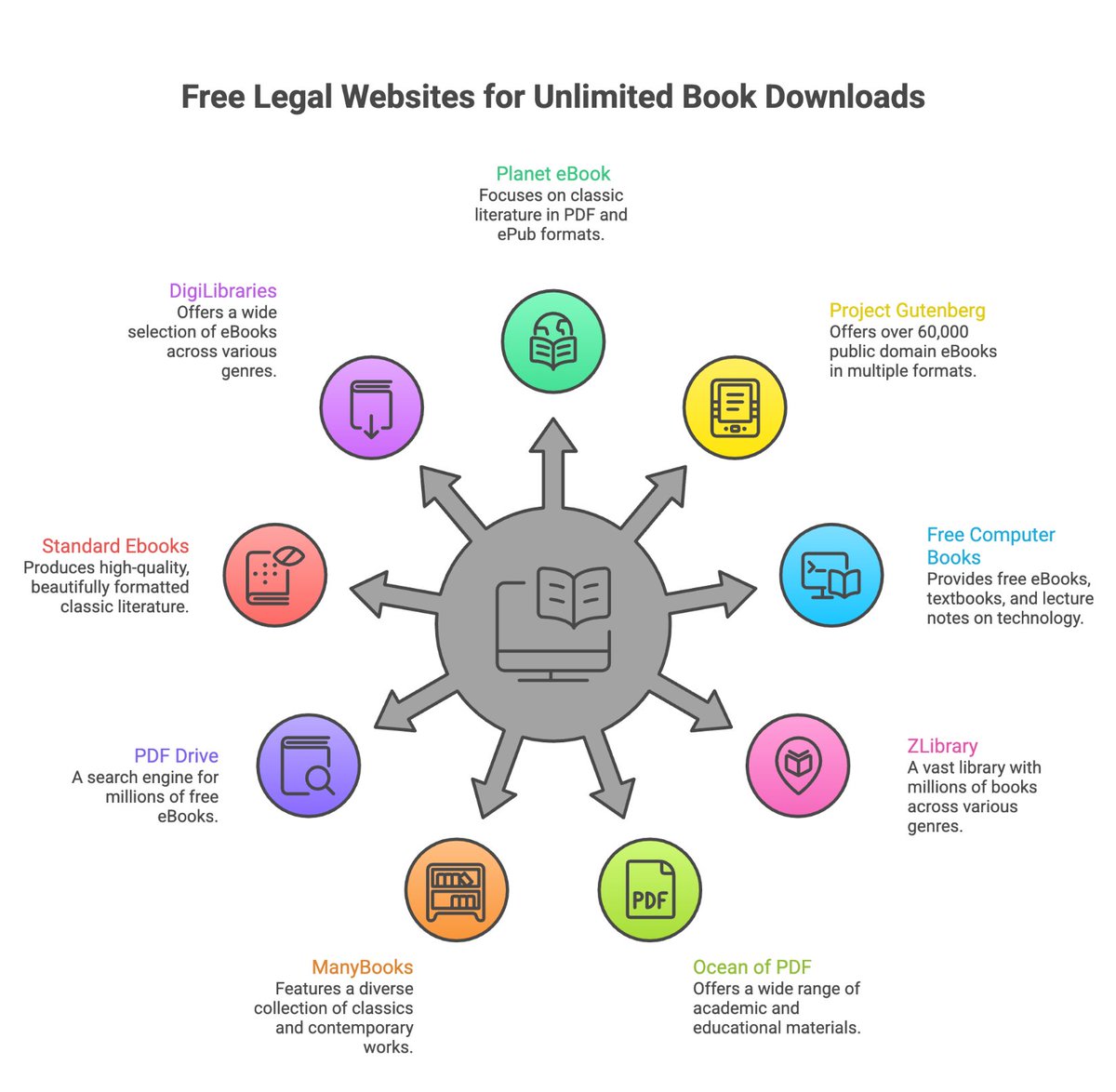
9 websites where you can download unlimited books for free (completely legal):
1. planetebook. com
2. gutenberg. org
3. freecomputerbooks. com
4. zlibrary. to
5. oceanofpdf. com
6. manybooks. net
7. pdfdrive. com
8. standardebooks. org
9. digilibraries. com
CAUTION: As these are free sites, you may see Ads. Don't click on the links if you are not fully sure. Close the window if you notice any unwanted pages opening.
Atlanta residents react to the new robot dogs patrolling their apartment parking lot
They speak to the dog and there seems to be a live operator talking back
The person speaking very clearly is likely in India based on the accent
There are plenty of videos of these dogs calling the police on people, so that means someone sitting in India is patrolling our streets and calling the police on Americans
These robotic dogs are equipped with 360° cameras, thermal imaging, headlights, sirens, speakers, and sensors
Despite this they are not fully autonomous, they typically have a live human operator monitoring the feed remotely








![rubenhassid's tweet photo. You're using Claude wrong (again).
Here's the 1-page checklist that fixes everything:
1. Save this image. It's 9 sections, 81 checkboxes.
2. Print it. Pin it next to your screen.
3. To copy my exact setup: https://t.co/psB7XxB2Y4
4. Don't pay anything. It's free in the welcome email.
---
1. Setup (the foundation).
☑ Pay for Pro at $20/month. Worth every cent.
☑ Download the desktop app. Not the browser.
☑ Opus 4.7 with Adaptive Thinking for complex task
☑ Claude 101: https://t.co/HNa5MrCLVU
2. Build your Context Folder.
☑ Create a folder called "Claude Cowork" on Mac.
☑ Add 3 subfolders: About me, Outputs, Templates.
☑ Write your about-me .md under 2,000 words.
☑ Master Claude Cowork: https://t.co/uWTpOI3Woc
3. Prompt like the top 1%.
☑ State what you want & what success looks like.
☑ Prompt "Use AskUserQuestion before you start."
☑ Edit messages instead of sending a follow-up.
☑ Better prompting: https://t.co/j1LATSJiat
4. Connect your tools.
☑ Settings → Connectors → Browse → click "Add."
☑ Gmail, Drive, Slack, Notion, Granola, Gamma.
☑ Turn off connectors you don't need for the task.
☑ Claude 101: https://t.co/jw2qdIcjnh
5. Create Skills with /commands.
☑ Add: "Use skill-creator to build a skill for [task]."
☑ Claude interviews you. Generates. You upload it.
☑ Add "do NOT use for" to every skill description.
☑ Build your first Skill: https://t.co/6cHYYfjXEA
6. Run Projects with memory.
☑ Create one Project per recurring deliverable.
☑ Upload one gold-standard example per Project.
☑ Save winning outputs as templates in a folder.
☑ Cowork + Projects: https://t.co/Q7AN9CZAbO
7. Design & Code without designers.
☑ Open claude .ai/design for landing pages.
☑ Upload a DESIGN .md brand file.
☑ Connect a free GitHub account for deployment.
☑ Claude Design 101: https://t.co/ZY8Fg5D2ea
8. Research like a pro.
☑ Turn on Web Search inside the prompt bar.
☑ Ask it to do 5 varied searches & identify gaps.
☑ Use Grok for real-time news Claude misses.
☑ Start here: https://t.co/77BmjbJREy
9. Master the token economy.
☑ Plan in chat first. Build in Cowork second.
☑ Convert PDFs & screenshots to markdown format
☑ Restart conversations every 20 messages.
☑ Stop hitting limits: https://t.co/j5fEzSH5br
♻️ Repost this to help someone stop using Claude wrong.](https://pbs.twimg.com/media/HHJhLBia4AEAXAp.jpg)