@mtgassr "Average age is more than a human lifespan"! Hahah we think they live at most 40 years (but more like 20-30). I'm on board 100% with the idea though. I know a turtle guy.
This resonated: "But in our culture, phrases like “I didn’t know,” “there was so much going on,” and “mistakes were made” are common ways to frame terrible patterns of behavior, many of which are the result of terrible *decisions*, not the work of the disembodied hand of fate."
There are great lessons in this cautionary tale not just for Hollywood but for anyone trying to build an inclusive team culture.
https://t.co/gpK8Uad4nB
@jupin +1 to the group that has never uttered those misnomers. WLMs get to be more directly about what makes movies enjoyable. Everything doesn't *need* to be funny, but y'all are always funny anyway.
@WhySharksMatter Came here to say I defended the same month you did and still feel "early career." Glad to see there's a big table for all of us feeling the occasional moments of arrested development from science.
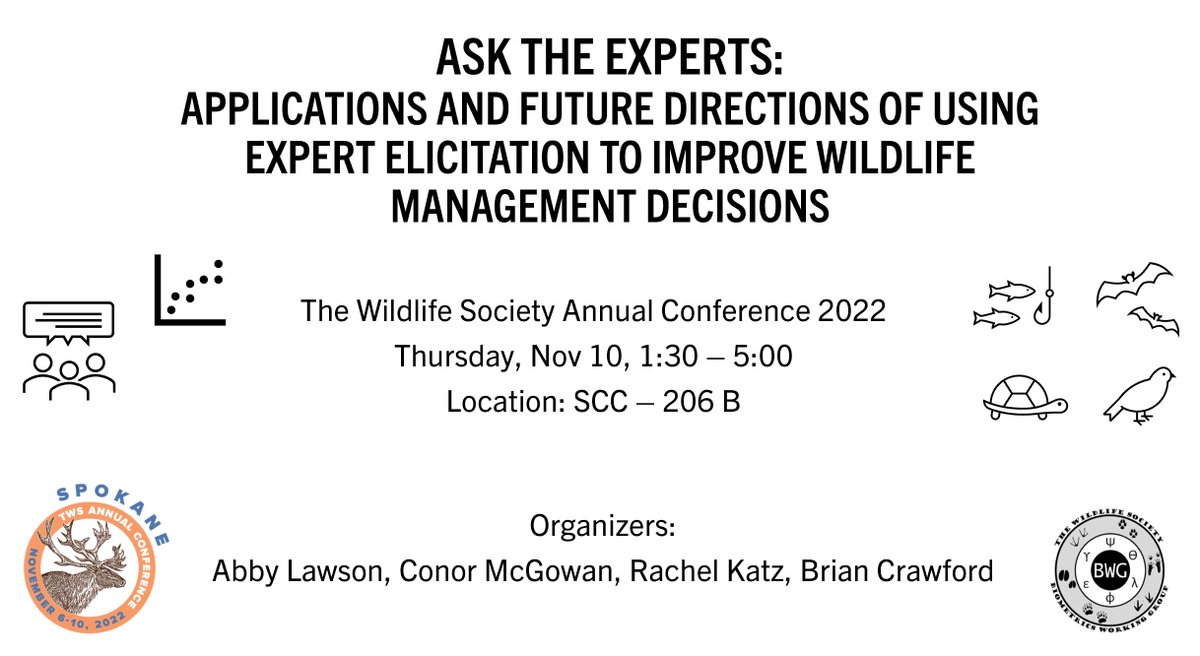
Need to build a model, but don't have enough data? Ask the experts!
Check out our #TWS2022 symposium on expert elicitation in wildlife management on Thursday 9/10, sponsored by @BiometricsTWS
We have an excellent lineup of speakers!
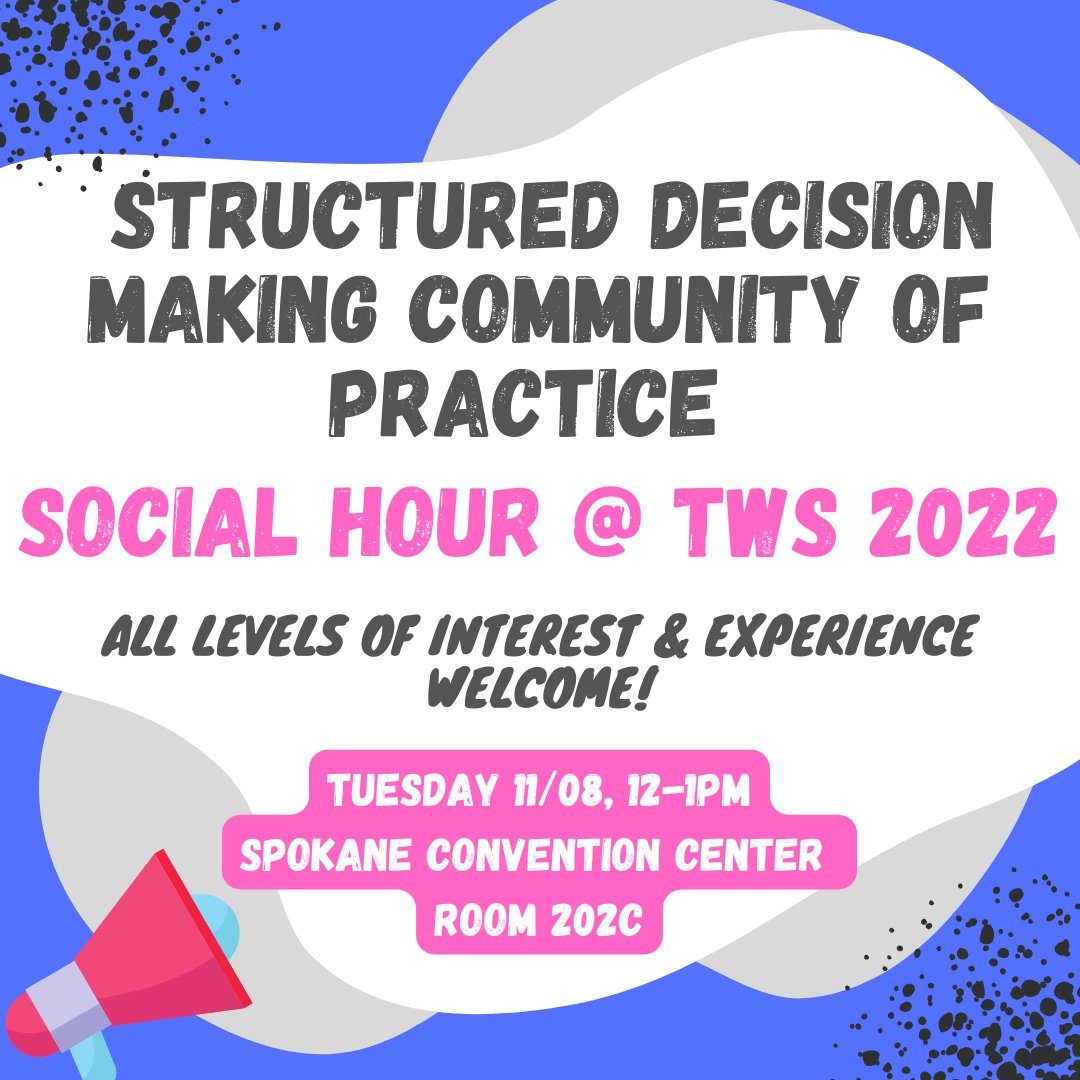
@wildlifesociety TUESDAY NOV 8, 12-1pm JOIN US for a #sdmCoP#structureddecisionmaking#decisionanalysis social hour at the 2022 TWS conference in Spokane! Come chat with us about how decision science can help improve conservation & wildlife management! All are welcome!
New 🐸gopher frog🐸 paper out now, with @MaerzLab and Clint Moore!
We built a population viability model and tried to predict the future for this at-risk species under different, plausible drought scenarios in the Southeast US.
https://t.co/cvz1bEn3fz
@AmphibiArik@MaerzLab You could totally run with this idea. The model's on a year time step, so coarse data would work. And with a lot of the PVAs we do with at-risk species, you could combine any data you have with expert judgement as a start to simulate changes in survival from potential outbreaks.
Code and data to replicate the PVA is provided, and we hope others can use/adapt the model to inform the upcoming @USFWS Species Status Assessment and other conservation decisions to aid species recovery.