In press @OrganizationSci with Natalie Croitoru and @BA_Helgason .
Employees want to act in ways they see as morally appropriate, but legal regulations don’t always align with personal moral preferences.
Hi Twitter -- I've been quiet for a while! Here's something that (high level) explains some of what I've been up to. I think it is making, and will make, a meaningful and unique contribution to AI safety. I'm hiring -- join me. https://t.co/rEr3u86Ykc
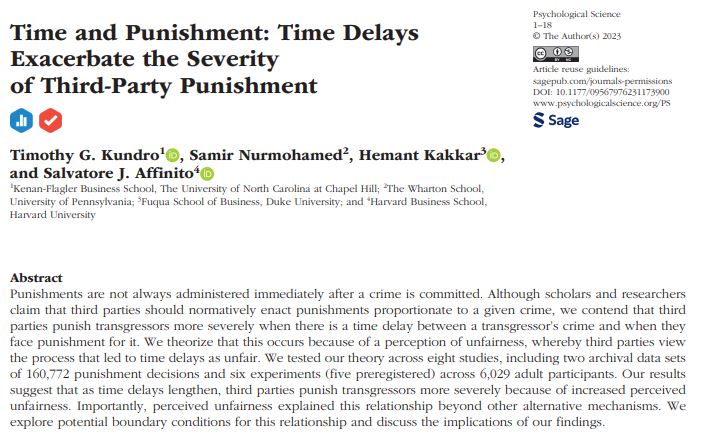
Our Psych Science is in press (@snurmo@SalAffinito)
Across two archival samples and six experiments, we investigate how and why time increases third-party punishment severity.
@roy_schulman I could (foolishly) argue that it’s not inconsistent for me to condemn a politician for lying on a Monday and then condone the same lying on Saturday. Weekdays and weekends are different situations! But most people would consider this inconsistent.
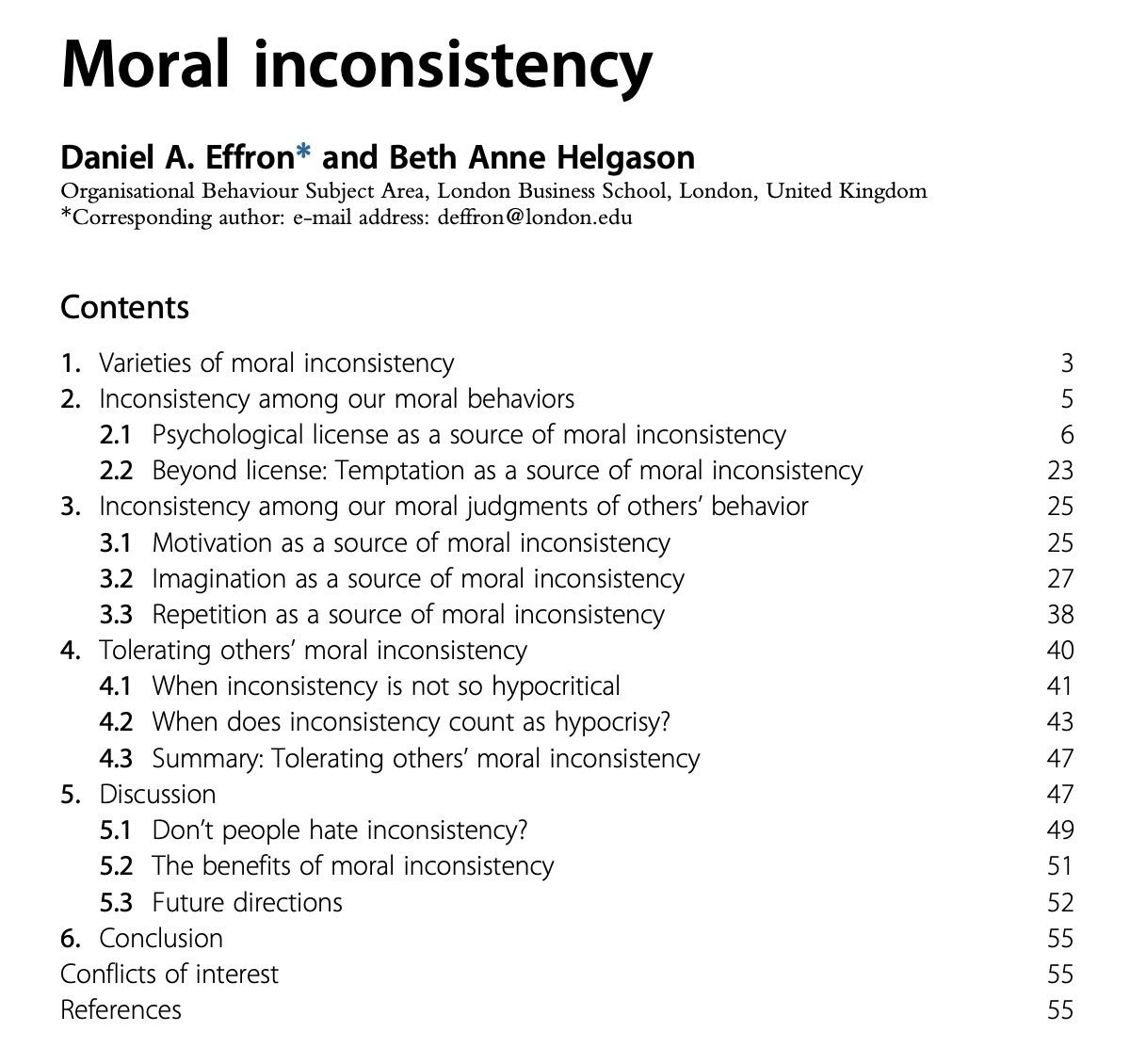
Why are people so inconsistent in their moral behaviors? And in their moral judgments of others? When and why do we excuse others' moral inconsistency?
Our review on "Moral Inconsistency" weaves together research on moral licensing, dishonesty, prejudice, hypocrisy, and more.
@roy_schulman Apparent inconsistency is probably more accurate. We don’t try to make philosophical claims about what ought to count as inconsistency or not. We consider the descriptive question of why it seems people are so often inconsistent in their moral judgments and behavior
@roy_schulman It’s a good question. We mostly focus on the kinds of inconsistencies that a dispassionate observer wouldn’t think are justified, e.g. moral licensing, word-deed misalignment
Truth-seeking, belief-speaking, & fostering understanding of the truth. #Honesty is more than the absence of lies. New multidimensional framework of honest behavior in Academy of Management Annals. @BinyaminCooper @EmmaELevine @elhuppert https://t.co/0anJzcB5Fa