Our Psych Science is in press (@snurmo@SalAffinito)
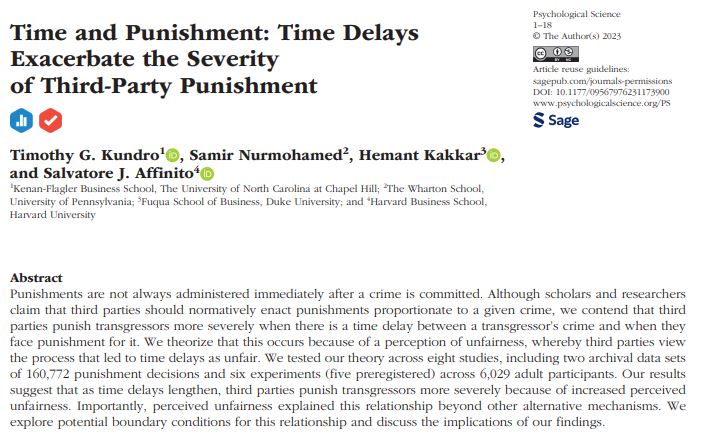
Across two archival samples and six experiments, we investigate how and why time increases third-party punishment severity.
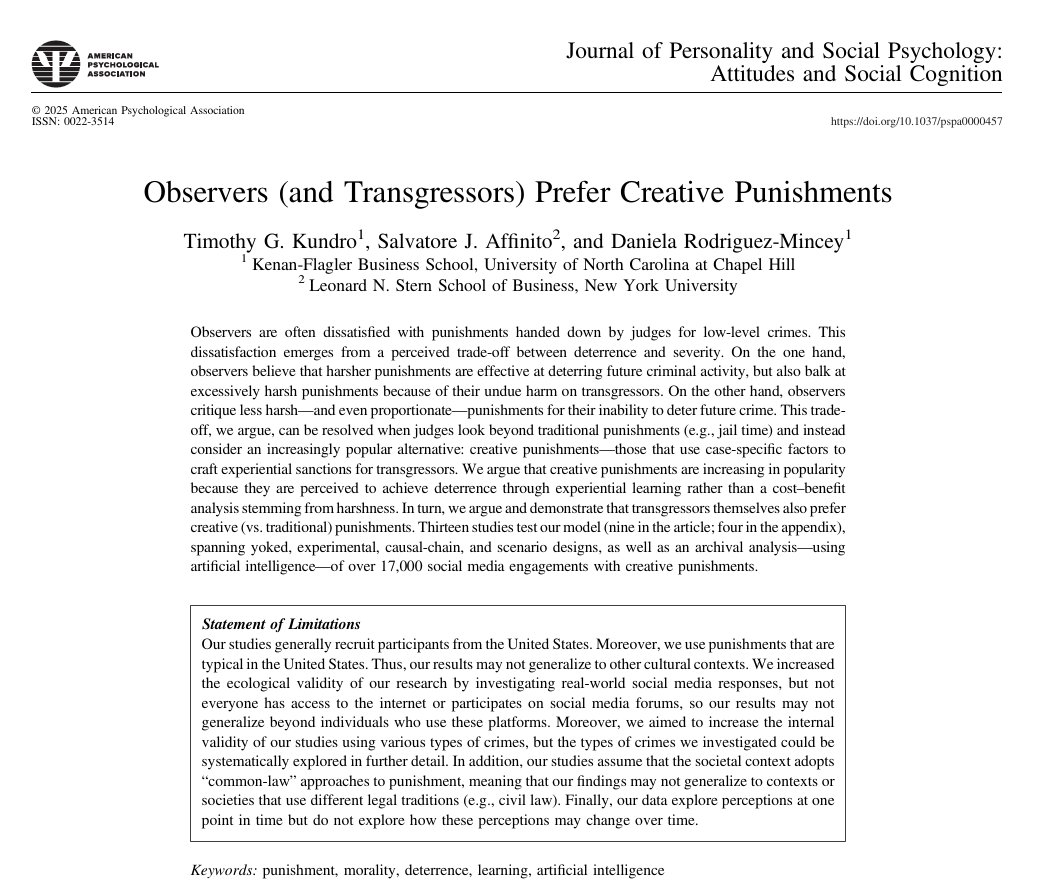
🚨👩⚖️New paper out in #JPSP@APA_Journals! 13 studies (archival+lab) unpack why observers (and transgressors) prefer experiential, "creative" sentences (e.g., vandal cleans graffiti) over traditional ones (e.g. go to jail). Led by @timkundro, w/ @SalAffinito & yours truly! 1/12 🧵
Our work in @HarvardBiz (with @LesliePerlow & @MentserSari) on how to make time for joyful moments — even when life is really busy — is officially out!
🚨 New paper alert 🚨
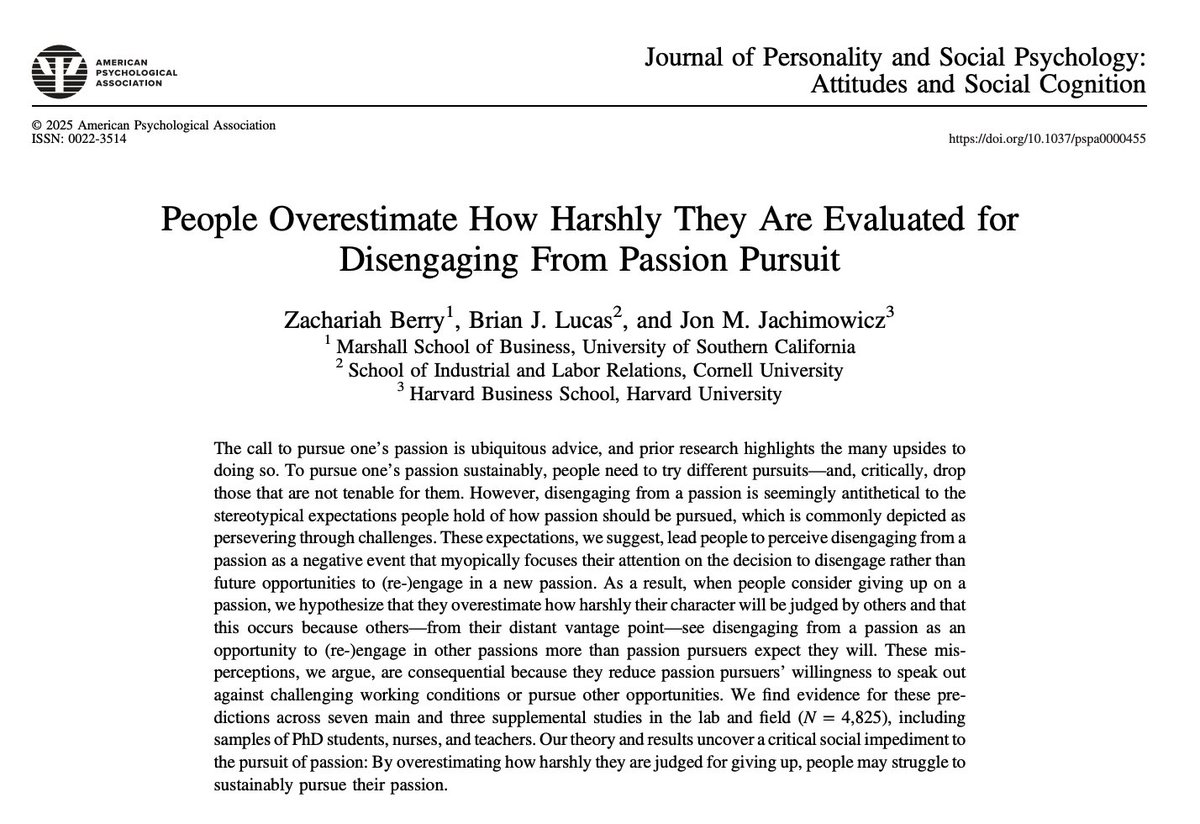
In my new paper out now in JPSP (w/@brianjlucas & @jonj), we show across 10 studies (including w/nurses, teachers, & PhD students) that people considering giving up a passion pursuit overestimate how harshly others will judge them 🧵 https://t.co/JOBeibug6p
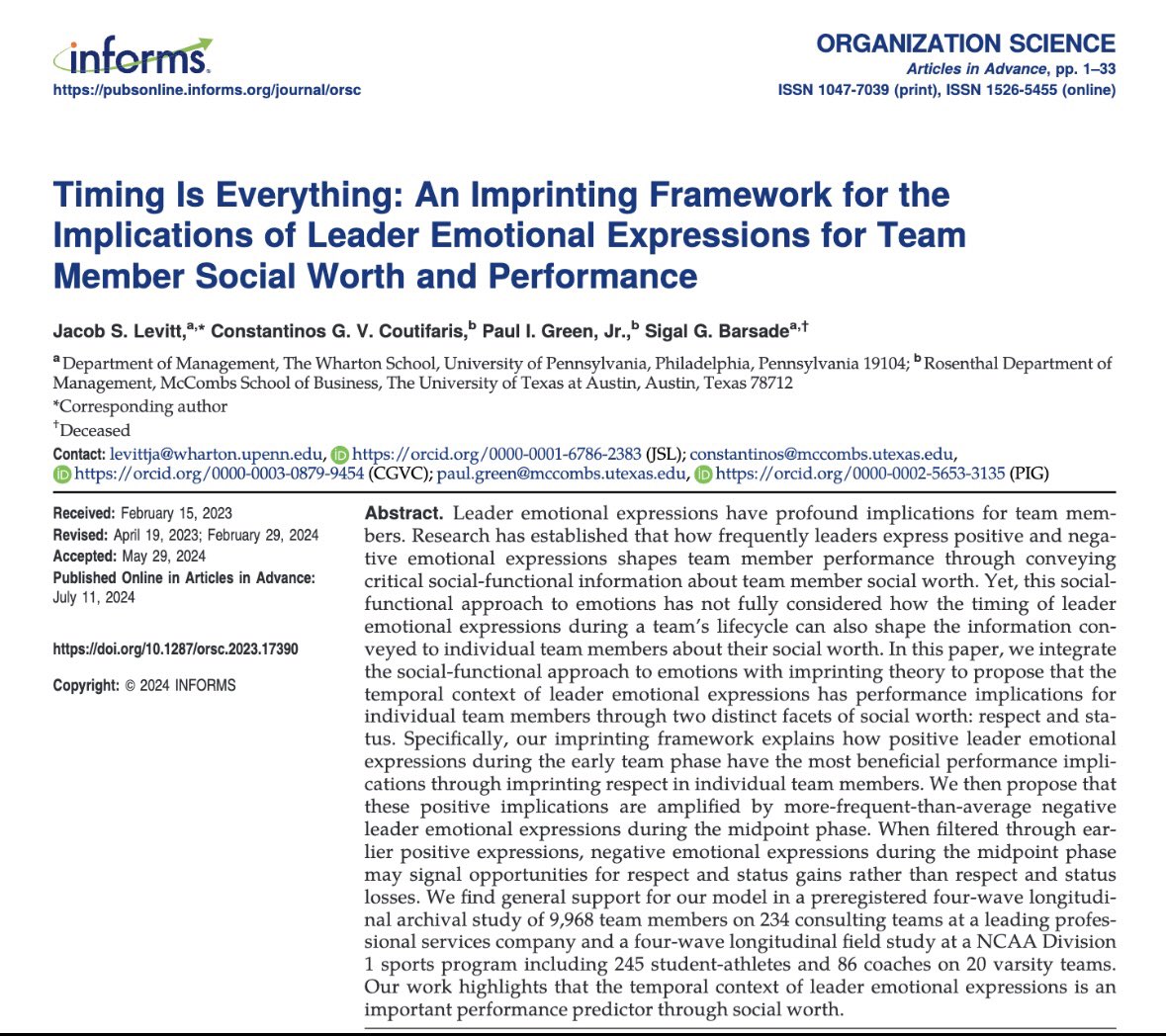
NEW @OrganizationSci with @coutifaris, @paulgreenjunior, and @BarsadeSigal
For leader emotions, timing is everything
We find that WHEN a leader expresses an emotion may be as important as which emotions they express for team member social worth and performance
🚨THRILLED to share new preprint for a project I have been working on for 4+ years.
In this work we do a deep-dive into the internet's most fascinating repository of everyday morality: Reddit's Am I the Asshole? (AITA).
🧵
https://t.co/2SdpJBOnfG
In press @OrganizationSci with Natalie Croitoru and @BA_Helgason .
Employees want to act in ways they see as morally appropriate, but legal regulations don’t always align with personal moral preferences.
Interestingly, these effects were offset when employees construed the law as a necessary evil; an imperfect but important solution to a difficult problem. We discuss when this could be helpful and when this may be normatively undesirable.
🚨 my first, first-authored paper!
I'm so proud of this paper that has taught me how to be a better helper/networker.
TLDR: When seeking for help, ask "Can you *or someone you know* help me" to mitigate referral aversion! Shout-out to 🏆collaborators! https://t.co/l9VAxf6mqv
Our work in @WSJ on why people struggle to unplug from work is out!
We (@timkundro@casherbelinda@michhristian) argue that pressure to be “always on” leaves those who detach feeling ashamed - not replenished - and offer a few ideas to try to fix this. https://t.co/pYGgcOpSZq
The double-edged sword of loyalty in the wild! Thanks @FT and @AnjliRaval for this great write up of our 2021 paper on how loyalty, an important moral value with many benefits for organizations, can lead to unethical behavior.
Victims of criminal activity support less severe punishments over time, studies suggest, but judges, case review boards, and other third parties show the opposite response, said behavioral scientist @timkundro. #CriminalJustice#Incarceration
https://t.co/5bS3zsQxaS
🚨 New paper alert 🚨
Excited to share new work with @IkeMDSilver1 and Alex Shaw accepted at JEP:Applied (postprint: https://t.co/fl3xjD39ci)
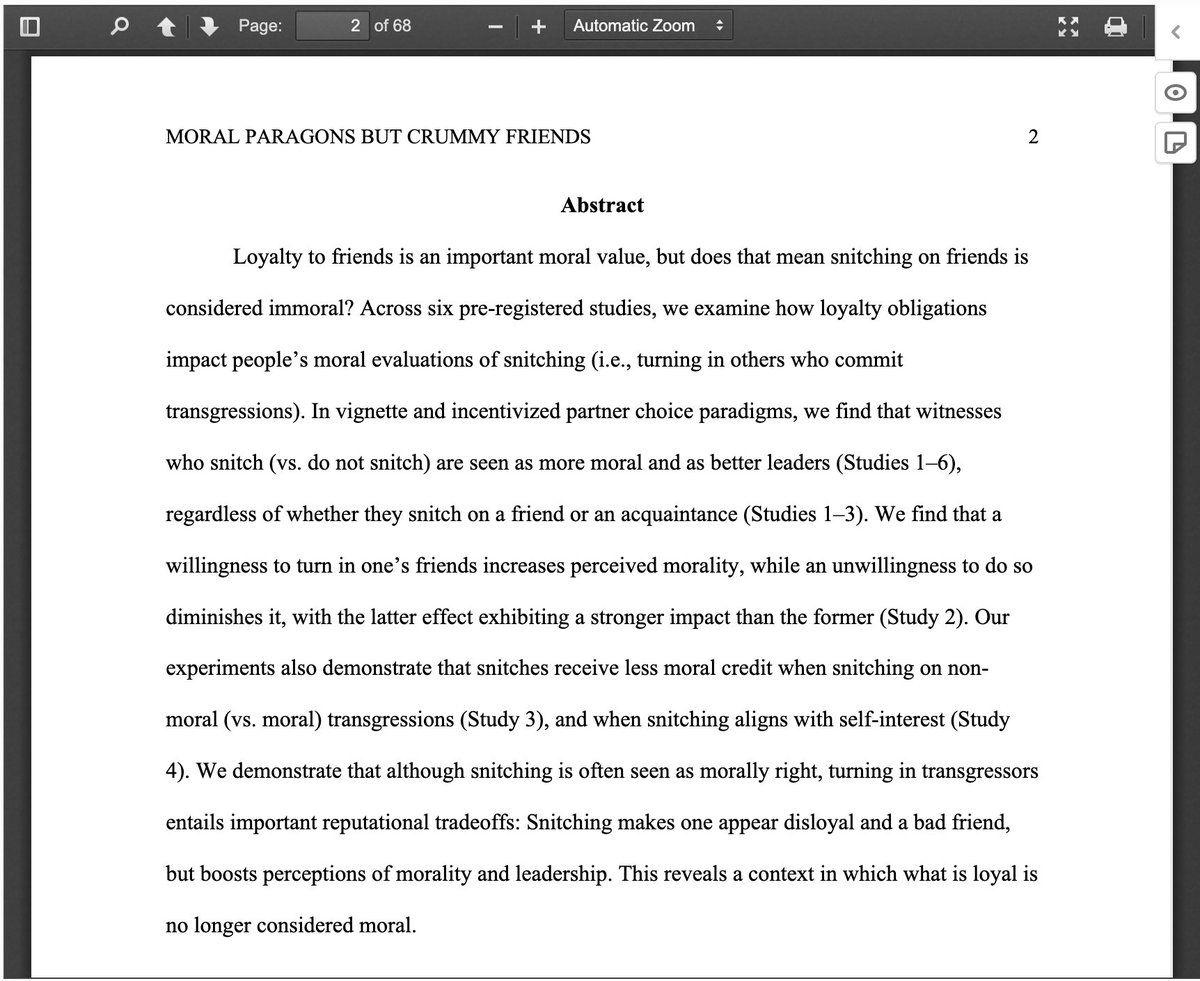
Being loyal has long been considered moral, but... 1/7🧵
We expect our bosses to see through flattery. But what happens when they don’t?
In a new paper in JPSP, we (@ovulsezer, #NadavKlein) find that rewarding flattery makes leaders seem like they have naively “fallen for flattery,” harming their reputation and their organization. 🧵
If you’re interested in learning more, the paper is open access here. https://t.co/bqdxlgaj55. Thanks to the review team and others who gave us feedback along the way! (end)
Our Psych Science is in press (@snurmo@SalAffinito)
Across two archival samples and six experiments, we investigate how and why time increases third-party punishment severity.
In six experiments, we find that perceptions of unfairness drive these effects. Specifically, observers see the process that led to the time delay as unfair, which in turn increases punishment severity.