Investor in fast growing companies at Vitruvian Partners. White board addict. Future Fifty, TechNation (‘17-‘23). Independent NED, Oxford University Innovation
Premodern societies tended to be rent by terrible wars. In the early modern period, tens of millions died in wars in Europe, India and China. Just one society found a kind of solution: Japan. Between 1603 and 1853, Japan enjoyed near-perfect peace. The ruling Tokugawa family achieved this through creating what might be seen as the largest prison in the history of the world, the city of Edo (modern Tokyo).
https://t.co/29RvgozjUc
Most of Japan was governed by about 260 nobles, called ‘daimyo’ (see first map). To secure their loyalty, the government required that the daimyo leave their families permanently in Edo, essentially as hostages to the state. Most daimyo women thus never saw the domains over which their husbands and sons ruled. The daimyo were also required to alternate years in Edo personally.
The result was that most of the surface area of Edo was given over to daimyo palaces, or to accommodation for the hundreds of thousands of samurai retainers they brought with them (see second map). This was arranged through an elaborate zoning system, probably the largest use of zoning before modern times.
Edo was extraordinarily top-heavy socially: about half of its population were samurai. Samurai were theoretically a warrior class, but since Japan was at peace, they did little real work apart from gentlemanly occupations like calligraphy. Their main income came in the form of tiny hereditary stipends from their daimyos or the government.
These stipends were fixed in perpetuity around 1600, declining gradually with inflation over the next quarter of a millennium. Most samurai thus lived in dignified but extreme poverty, their income determined by the favour in which one of their ancestors had stood centuries earlier.
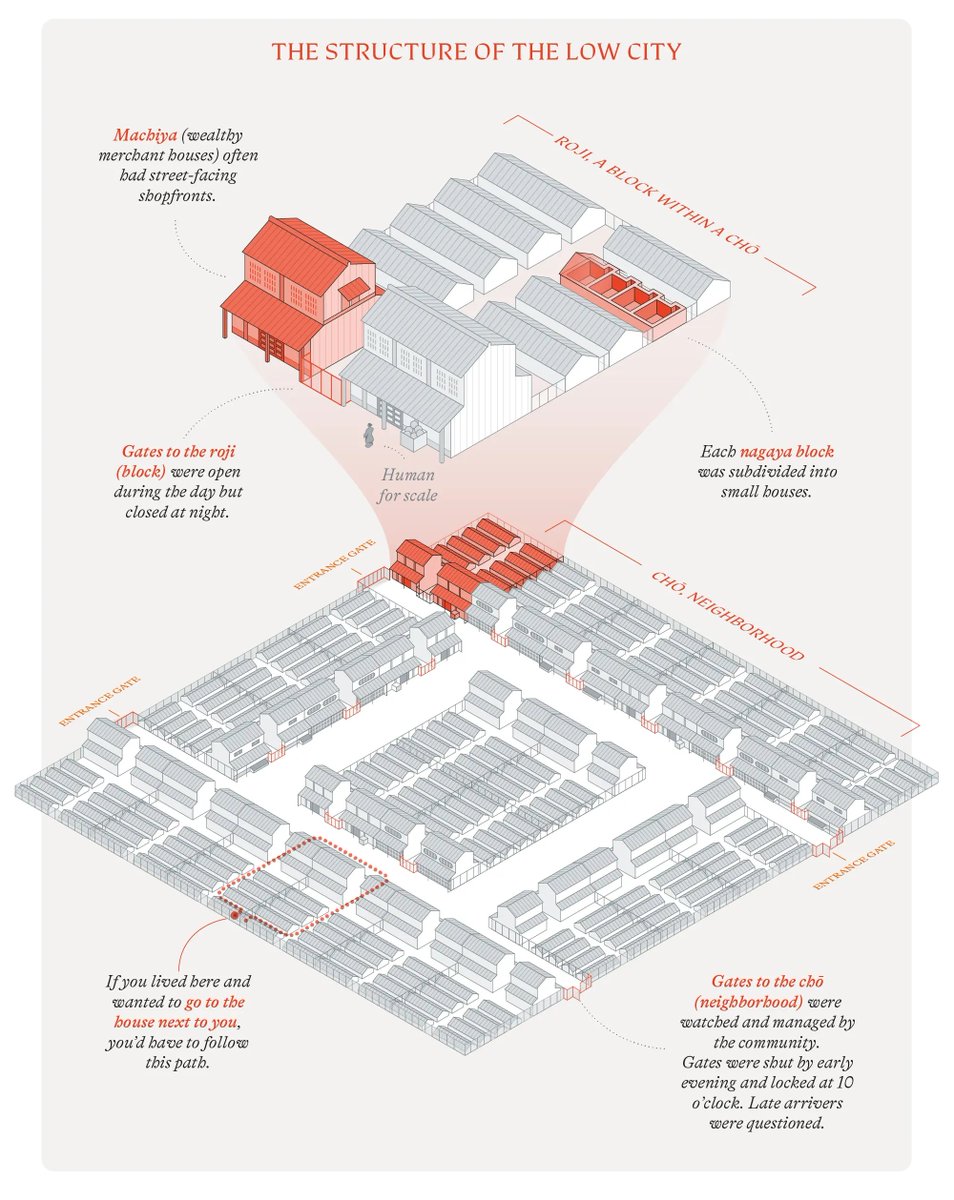
The commoner population was also tightly controlled. Commoner Edo was divided into some 1,500-2,000 fenced and gated blocks. These were then subdivided into gated alleys lined with small houses (see third map). The Low City was thus divided up by tens of thousands of internal checkpoints, all of which closed at night. Edo was not under threat of attack in the Tokugawa period and the city as a whole was not fortified. The purpose of this immense labyrinth of walls and gates was to control and monitor the movement of the population.
Prisons are useful things, and the Tokugawa system was a kind of success, making Japan the most peaceful society on earth. But it is also a disconcerting reminder of the power of rent-seekers, and how a whole city can be warped by the political exigencies they create. Edo is a particularly striking case of this, but it is far from alone.
This is the time of year when a lot of investment firms welcome interns. While our work is geared toward institutional investors, a lot of it can be useful for learning about markets and the investment process. Here are a handful of reports and how they can guide interns:
Carlotta Perez’s work reminds us you have to differentiate between genuine Technological breakthroughs that compound through industry for decades, and the “investment bubble” that may or may not occur. Rail etc similar. Don’t confuse the two! This is real. (For those interested it’s Technological Revolutions and Financial Capital: The Dynamics of Bubbles and Golden Ages by Carlota Perez, published in 2002)
Easy to be gloomy about the state of the nation, but this inspiring read reminds us some people are still deeply interested in ideas and offering solutions for the current malaise. Chapeau.
I wrote an incredibly navel-gazing essay for the Institute of Economic Affairs about what I think, where my views come from, and how they have developed over time.
I actually wrote it a year ago, but it has come out today and I am so old that I have barely changed in that 12 months.
Learn:
- How I became a wild-eyed obsessive as a teen
- What ideology I consider myself to have
- Why I don't think that the difference between 'state' and 'market' matters all that much
- The reason I am obsessed with the infrastructure delivery mechanisms of the 1600s, 1700s, and 1800s
https://t.co/4e4tdauA7a
@spectator Caro’s books are daunting in scale but an utter delight. Audible has a very good reading of them. Totally hooked. Finishing book 3 currently. It’s the best thing I’ve ever read on America from 1850.
@jo3hill “Our recommendations aim to ensure that regulation is used more sparingly and only where it is appropriate; that lawmakers have access to robust analysis when deciding whether to introduce new rules; and that regulation is regularly reviewed and removed where appropriate.” 100%
@Ned_Donovan@metpoliceuk Unacceptable and repeated basic failures from the Met. Callous. Incompetent. Cynical. If this is the professional standards and decency a serving officer is treated with when attacked what can the rest of us hope for. We expect more.
As someone who has lived not far away for 25 years the disruption and knock on effects of NO ACTION in 7 years is hard to describe on families and residents. How can it be so hard to make progress? What do local politicians do if not solve local problems? Do your jobs or resign
7 years ago, Hammersmith Bridge was SHUT for repairs.
Today, it STILL hasn't reopened to motorists.
Instead, the Government set up a "taskforce" that didn't meet for THREE years.
No more delays. The Government must RESTORE the bridge���🧵
The Prime Minister did a great thing commissioning John Fingleton’s nuclear review - and John has delivered a radical, detailed and grounded recipe for reigniting growth. We now need to implement all its recommendations asap. Pleased to sign this letter of support👇
@TheGoBetween32 @Birdyword Indeed. I was making a related point in a more laconic way. Talking about the Fisher Equation hasn’t the same cut through on social media! (But of course I agree. As an ex leveraged financier there is always a last resort financier. Until there isn’t)
@s8mb Proud that our country can still produce bold policy documents that offer a chance of leadership and economic growth in a field we can and need to aspire to be a global leader
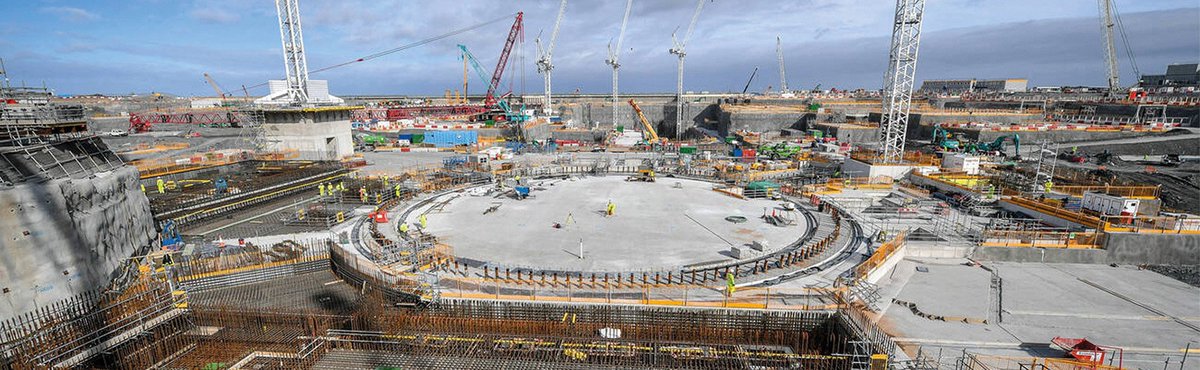
NEW: Britain is the most expensive place in the world to build a new nuclear power station. Here's how to change that.
Backed by industry and senior politicians from across the spectrum (including a former SoS and a former nuclear minister), @BritainRemade have launched a plan to fix that.
From 80,000 page environmental impact assessments and 'fish discos' to pointless safety features to prevent us being exposed to a Banana's worth of radiation, Britain makes a safe and green technology far more expensive than it needs to be.
France and Finland built the same design as Hinkley Point C for around half the cost.
South Korea can build reactors for one-sixth the cost as us.
If we change the rules to make planning and safety rules more proportionate - while opening up new routes to market for private investment in SMRs, Britain can have a new golden age for nuclear.
Every recommendation in our plan was reviewed by top experts. People who have run major nuclear projects and navigated our planning system.
This week saw deals announced to build reactors in Teesside, Essex, and Nottinghamshire to power heavy industry and AI.
The opportunity is absolutely massive.
Lower bills, less exposure to gas shocks, and a grid that can power heat pumps, industry and AI around the clock. In short, clean energy abundance.
Nuclear is safe, clean and reliable. In other countries, it’s affordable too.
Britain can get there — if we change how we regulate, how we plan and how we finance.
Here's our plan to do just that.
https://t.co/E2l8nRyS28
On Dan Wang's new book: Breakneck
This essay assesses the book's big idea: China is an engineering state facing off against America, a lawyerly society. The book is well-informed and packed with wit.
But I wanted more data. So I assembled some.🧵
https://t.co/gNFVzmkHod
@andrew_lilico@afneil I assumed that the water and electric regulators differing on whether they paid an unlevered or levered WACC return drove debt / equity substitution in water - didn’t happen in electric (if you had a higher equity component in the cap structure you rewarded with a higher return)