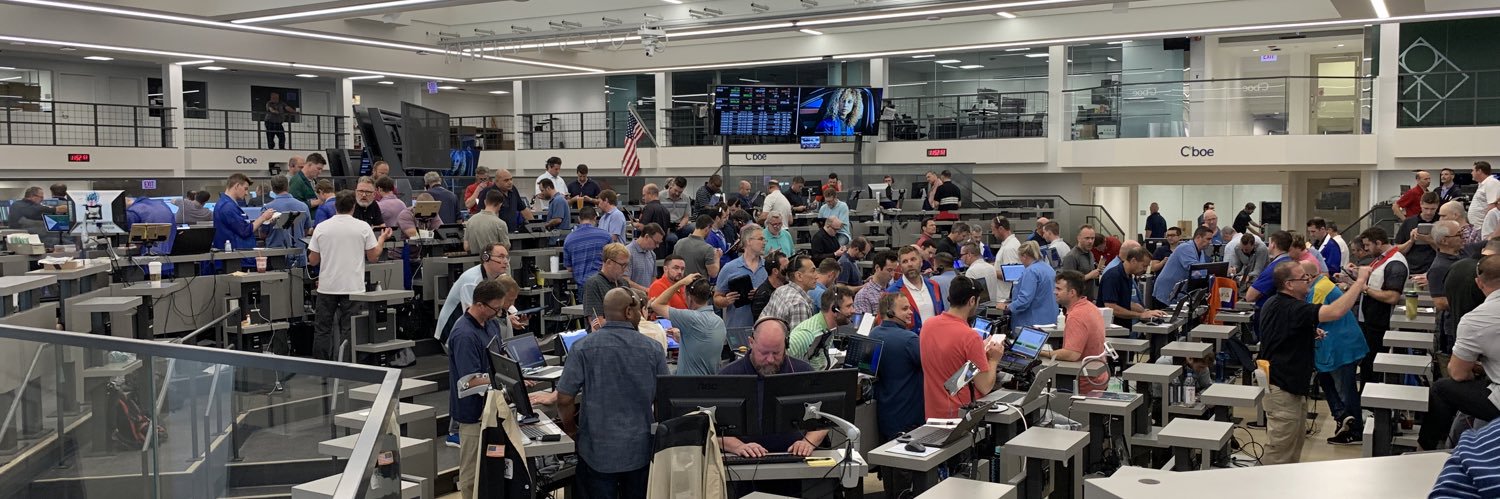
I ran a 4:17 mile when I was in high school, which was good at the time, but gave me a great perspective shift when I realized just how far the tails were in that domain
This can extrapolated to any domain (finance, academics, etc), so let me explain:
There were a couple hs guys up to that point who had run sub 4... An 18 second difference when I had already trained consistently for 7 years prior was absurd, regardless of the mindset/beliefs/training/coaching I applied
If you extrapolate even further, 3:42 is quite literally worlds away from what I did - The difference of a couple seconds at 3:40's level is oftentimes years of training if you are even lucky enough to have the genetics capable of running that. Many normal people would tell me "wow! 4:17 is so fast, are you going to the Olympics one day?" with zero idea just how wide the spreads are
Btw: In D1 athletics, you could be a 3:56 miler in 2025 and would still not qualify for indoor Nationals
After high school is when I started to understand:
1. The average person has absolutely no idea how far the tails are in any domain
2. You MUST find what you are inherently gifted at. I was not 'gifted' in athletics - I was really good - but not Great enough to get to the next level beyond D1 (.0001% of world)
3. You have no idea who you are dealing with. You have to constantly be aware of who you're in the room with, because there are such substantial deviations in regards to intelligence that the average person cannot even begin to comprehend how smart the person across from them could actually be (When you meet these people, humble yourself)
4. In regards to 3. Just because someone is turbocharged in one domain does NOT make them balanced. Extremes on one end tend to develop inefficiencies elsewhere. There's always value to be exchanged between parties if you feel out what their strengths/weaknesses are (most ppl are oblivious of this and prefer to sit in their own curated worlds of delusion)
5. Once you truly max yourself out in a domain for a decade+, you start to naturally pattern match for absolute talent elsewhere. There are quite a few characteristics that make someone great or give them the potential to become great. I am convinced you need to experience that journey yourself and be surrounded by literal greatness to fully feel it in others - Unfortunately, it is not something you can just learn in a book
I don’t think people realize how absurd this is. Scottish runner Josh Kerr just broke the mile world record in 3:42.66, an average speed of 16.2 mph. Most people couldn’t even briefly reach that speed, let alone sustain it for an entire mile.
Something the OG online business guys like @IAmAlenSultanic understand that isn’t talked about much is how/why different cycles play out in business AND in all structures
And cycles probably isn’t even the right word. I’m talking about the chronology of how systems develop, where the incentives and the people capturing the value change as the system matures
Take social media for example. Initially, the priority is getting as many users and creators onboarded as possible. We’re seeing the same thing with AI labs right now. They’re willing to subsidize usage and push prices down because the priority is user acquisition and getting people locked into the ecosystem
But eventually the economics have to make sense. With social platforms, that meant more moderation, changes to organic distribution, and eventually a much bigger emphasis on paid traffic. You move from a period where the platform is incentivized to give everyone reach to one where distribution is increasingly rented. The highest bidders have the advantage, especially with algorithms as sophisticated as Meta’s
And this happens at EVERY level. You could be an influencer who captured a lot of attention early on X or Instagram, but as the platform matures, your reach declines. There are bigger players competing for the same attention, the platform’s incentives change, and there’s no reason it needs to give you back the distribution you once had
But the social platform itself isn’t the top of the hierarchy. It’s operating inside a much larger economic system, with advertisers, capital allocators, corporations, governments, and global economic interests all influencing its incentives. And those systems are themselves contained within even LARGER systems
It’s almost like Russian nesting dolls. You’re operating within one system, which is contained within another, and you might understand the dynamics of your particular environment without having any idea what’s influencing it from the next level up
There’s always a bigger fish, as Qui-Gon Jinn says in The Phantom Menace
And this applies to pretty much everything: business, spirituality, emotional intelligence, health, intelligence, pattern recognition, etc. You can become exceptionally good at one level and still have very little understanding of the level above it
Which makes you wonder… if this recursive structure seems to exist across every domain, why would we assume we’re at the top of the hierarchy simply because we’re at the top of the animal kingdom? Maybe the same structure continues well beyond our current understanding of the universe (topic for another day haha)
Anyways, the prerequisite to getting to another level is first being open-minded enough, and having the humility to recognize that there even is another level you’re currently unaware of
This humility and curiously is the key that allows you to unlock the next level
Sad seeing YouTube machine gun ban so many accounts today. Like 5 or 6 guys I watch in the space had their accounts taken down
Any time I see platforms moving in this direction I come back to this clip
I agree with Chamath here, but it’s more nuanced than he’s making it
Yes, the wealth gap is enormous, and it hits young people hardest right now. If you’re under 30, you haven’t had the time to let assets compound for you. Anyone who graduated in the last couple of years, or is graduating soon, is walking into a job market being reshaped by AI and labor displacement. Then you add home prices that are frankly ridiculous because of asset inflation, and the same dynamic applies to equities. The timing is objectively worse for young people than it was for previous generations. I’m not going to argue with that
What I will argue with is the expectation that any of this is going to be handed to you, since that’s just a mind virus
Look at millennials and Gen Z, broadly speaking, people from college age through their late twenties. There’s an enormous amount of frustration about their economic position, and a corresponding expectation that the government should do something about it. That’s increasingly reflected in what people vote for. And I think there’s a fundamental mismatch between that expectation and how the world actually works
First, the government doesn’t care about you. It’s a power structure with competing interests. It doesn’t matter which side you vote for or what they tell you they’re going to do. Watch what they actually do
Second, the economy doesn’t care about you either. You’re a very small participant in a system dominated by much larger interests. There are institutions, capital allocators, corporations, political incentives, financial markets, etc… all interacting with one another. The younger you are, the less likely you’ve had enough exposure to understand just how little of that system is organized around your interests
And I don’t think there’s some obvious policy solution that’s going to reverse all of this. Even when stimulus is introduced, the money doesn’t necessarily end up where people imagine. It circulates through the existing system, often finding its way back into asset prices and corporate revenues
You can see how markets respond to expectations of more stimulus. Consumer and retail stocks saw a big boost post-midterms. But that doesn’t mean the underlying affordability problem has been fixed. If the additional demand pushes up prices without expanding supply, you’ve potentially made the problem worse
The wealth gap can keep widening because the system itself rewards ownership of assets, and people who already own assets have a structural advantage over people trying to acquire them for the first time
And now we’re introducing another variable that could make the divergence substantially larger, which is access to intelligence.
Take someone with a 130 IQ and someone with a 100 IQ. There was already a difference in what those two people could potentially accomplish. But now give both access to the same AI models. The person who can better turn intelligence into action has an enormous amount of leverage
And that advantage compounds too btw
However, I will also say that if you grew up in the US, you still have access to an extraordinary amount of opportunity relative to most of the world. I’m saying that after spending the past two years actually living in more than 20 countries, and meeting many people from places I haven’t even visited. Other countries can offer things America often doesn’t, particularly socially and relationally. But in terms of access to capital, business infrastructure, and the ability to build something, the US remains an exceptionally strong place to be
Maybe the American Dream that was sold to boomers in the 1970s isn’t available in the same form anymore. But expecting the economic conditions of one generation to persist indefinitely was never realistic. Things get easier, then harder, then easier again. Economic and technological cycles move on, and every generation has to adapt to a different set of conditions
Chamath Palihapitiya admits his blind spot on America's broken two-tier economy
PALIHAPITIYA: "I got it totally totally totally wrong. I got it totally wong."
"I'll go through all the ways in which I got it wrong, but I just want to first acknowledge what my blind spot is. Like most people's blind spots, but I can just speak for myself, it is through the lens of my own lived experience and very narrowly what is in my best interests. And I think what we had was a move away from the culture wars that was very much in my best interest, but I think it was in everybody else's best interests as well. I don't think that was on the ballot. But what I don't think I understood clearly enough, and I think that this election has made extremely clear, is that since COVID, we have moved past political ideology. And I want to say this again: I do not think Democrats or Republicans matter. That is my real takeaway after this election. There is a central block of people that vote the prescient issues of our time."
"It was a gargantuan win for Biden, then it was a gargantuan win for Trump, and then it was a gargantuan win for the Democrats in these midterms. What are these people voting for? I think what they are shouting now—they were trying to signal and now they are shouting—is a broad-based belief that the economy has completely decoupled from reality and is broken. The economic reality in America is broken."
"There is a small percentage of people, the four of us on this pod and all of our friends, who are the asset owners of America. And we have benefited in every weather condition. When rates were zero, we benefited because we were able to build our businesses with very cheap capital. When rates were high, we benefited because we had pricing power. And in every condition in between, whether there were tariffs, whether there were not tariffs, whether there were subsidies, whether there were not subsidies, we've all managed to continue to accumulate and grow assets, but we are few and far between."
"And then there's everybody else who are wage earners, and the structural capacity of the American economy to support and grow wage earners is broken. It's clear. Why do I say that? I do not think, and I disagree with Freeberg, I don't think this has anything to do with socialism. I don't think the far left won particularly more than they were expected. I don't think the far right won particularly more than was expected. This is a complete and total repudiation about the state of the economy. The economy is broken. I have a few charts to support my point of view. Number one, if this was ideological and if ideology mattered, money in politics would have had a more direct impact on the election."
@Iamgas2020 Not in the above clip. But, broadly, yes this is what they are doing with the podcast - more-so related to planting narratives to seed down into capital allocation that benefits them
@growth1956 Yes, but it does become a systemic problem that needs to be addressed at critical mass
If the majority of people make poor choices, you simply cannot waive it off like you would at an individual level, because the structure is still heavily intertwined with them
Attention alchemy is such a fascinating rabbit hole
Internally generating certain states is basically what everyone wants deep down, yet most people spend their lives grabbing for external things to fulfill them
This isn't to say you should become some hippie or monk-type, but this kind of thing can certainly be applied in your daily life to increase your quality of experience
The interesting part is realizing that a lot of what you're chasing externally isn't necessarily the thing itself, but the internal state you associate with having it
And once you start understanding how attention, 'impressions,' and your own internal state interact, you can begin to generate some of those states without needing the external world to cooperate first
You can still pursue money, relationships, experiences, business, etc. The difference is that you're no longer unconsciously dependent on them to feel a certain way
This is incredibly freeing and only seems to compound over time. Truly priceless.
@thebeautyofsaas@Thzer0r Read it a couple months ago and have found myself coming to realizations from the book to this day
The book is very dense - far more than you will initially think
I’ve just recently started to understand and embody the attention alchemy (impressions) concepts
In the self-help world, you constantly hear people talk about throwing yourself out there, trying new things, nothing to lose, etc. I think there’s something much deeper to this than people give it credit for
The way I look at it is that you should be extremely conservative about tail risk and extremely liberal about experiences
By tail risk, I mean things that can permanently alter the trajectory of your life: death, serious disability, financial consequences that could take decades to recover from, etc… Those are worth thinking through carefully. But once you’ve accounted for those risks, the amount of freedom you actually have to experiment with your life is enormous
And yet most people operate as if embarrassment, rejection, looking stupid, or having someone think differently about them are risks of the same magnitude. They’re not. Those are emotional costs, and while they can feel incredibly real in the moment, they rarely have any lasting consequence
The problem is that these fears gradually become part of your identity. You decide you’re not somebody who dances, or fights, or approaches strangers, or tries something where you might be visibly incompetent. Eventually you stop even considering those experiences. Your pool of possible lives then gets smaller, because you’ve built an identity around avoiding the emotions that come with them
I’ve been trying to reverse that over the past couple of years. I have an endurance running background, and for a long time that was the kind of sport I understood myself to be good at. But last year I started combat sports. I used to be apprehensive about getting hit, falling down, and looking inexperienced. Then you actually do it and realize it’s not nearly as big a deal as you imagined. You get hit, you fall, you get back up. And in a proper training environment, the people around you generally respect the fact that you’re willing to put yourself in that position
I also got into trapeze. Salsa dancing is another recent one. Im going to learn surfing next. I’ll probably be terrible at first, and I’m completely fine with that. I can tell someone upfront that I have no idea what I’m doing, have a laugh, and learn something
A few years ago, some of these experiences wouldn’t even have registered as options. I’d have found reasons not to do them, whether that was embarrassment or some arbitrary idea about what kind of person I am
Take dancing, for example. A lot of guys have some preconceived idea that it’s somehow incompatible with being masculine. But why? You can be completely comfortable in your masculinity and still be willing to put yourself in a position where a woman is far more capable than you, where you’re learning from her, and where you might look ridiculous for a while. In fact, being comfortable enough with yourself to do that is often more attractive than trying to maintain some image of competence at all times
This also goes much deeper than just trying new activities, the above are basic examples of the dynamic
At the end of the day, you don’t actually know what you’re capable of or what parts of yourself you might develop if you never give yourself permission to experience them
Again, the goal isn’t to become reckless. Protect yourself from the things that can genuinely take your future away, but don’t let the possibility of looking stupid dictate what you’re willing to experience
Especially when you’re young, the upside of expanding that range is enormous
You then end up with a much larger set of possible lives to choose from. And that’s a pretty incredible return for being willing to feel embarrassed for an hour
This is incredibly bullish for $META, $TSLA / $SPCX long term (asymmetric side bet $HOOD)
One of the second-order effects of AI that people are underestimating is what happens to the economics of distribution
AI kills the click. If people can get answers directly from an agent, Google sends less traffic, Reddit loses some of its discovery value, and the open web gets squeezed because fewer people need to navigate through websites to find what they're looking for
People open Instagram, FB, etc. because that's where their attention, relationships, content and interests already live
This distinction becomes increasingly important as AI makes the production of content and software cheaper. When everyone can produce more, the scarce resource becomes access to the user, as i've been writing a lot about on here recently
The companies that own the relationship with the user don't have to win every search or every AI query. They already have the distribution. They can plug in whichever models/agents they need. Plus, in META's immediate case, poor Google ad economics only benefits their biz
Everyone else is effectively renting access to the customer, and that rent gets harder to justify when AI can route around the intermediary
Reddit's earnings call has exposed the new reality for thousands of companies.
"AI mode does not drive traffic. Not for us and not to anybody as far as I know. It used to be a traffic driver. Now it's not." - Reddit CEO.
The reality is that AI is fundamentally changing the way that humans access the internet.
Just 24 hours prior to this statement, Google's stock erased -$480 billion on the same issue: AI is disrupting the traditional search model.
For decades, the internet operated on a simple model. Search engines directed users to websites, and those websites monetized the traffic.
AI is destroying this business model, and it's happening at an accelerating pace.
The traditional model of internet traffic is rapidly becoming outdated.
The internet has entered a new era.
Will Manidis and Joe Roberts just put out "The Commanding Heights", and it aligns with most of my own macro bet. A few weeks ago, I wrote the below article. Interestingly, we approached the same problem from opposite ends and yet still landed on a similar conclusion
Here's how it all connects, and the stocks I'm holding for the next decade:
Their argument is that intelligence gets commoditized. Every lab eventually catches up, China puts a price floor on models, and the companies spending hundreds of billions to build them end up competing away their own margins. The value then migrates to whoever owns the infrastructure everyone else has to use
Also, they mentioned how the state can't let the line go down. They claim that Washington will continue to back the markets, puts citizens into equities through Trump Accounts, eventually holds yields down, and pushes the dollar worldwide through stablecoins
I agree with most of that in my article and even took it a step further
My argument started with trading. Commissions went to zero because the trade itself was never the most valuable part of the business. The brokers that win are the ones that monetize the customer, their assets, and the financial relationship around them
I see this as the same principle playing out across different industries. As the cost of producing something collapses, the value shifts to whatever remains scarce. The mistake is looking at the layer creating the most value and assuming it's the layer capturing the most value, which is what most ppl seem to be doing right now
Where my article takes their thesis further, and would appreciate your thoughts @WillManidis, is custody and records
Their Neo-Dollar runs on stablecoin reserves and Treasuries, and all of it has to sit on somebody's books. Everyone is focused on the models and applications, but someone still has to maintain the ledger that establishes ownership. I think a Neo-Dollar setup makes the most sense for an immediate (3-5yr) transition, however, I think this all ends (10yr+) with tokenized equities. If equities become tokenized and people can borrow against their portfolios instead of selling, the value is in the infrastructure that makes the asset usable as collateral
And this connects to something I've been tweeting about with equity recently. All equity is NOT created equal. If AI makes it increasingly easy to build businesses, then owning equity in a business isn't enough on its own. You have to understand whether that business is capturing the value created by technological progress or getting commoditized by it
The interesting possibility is that equity itself becomes more useful as the financial infrastructure around it improves. You hold the asset, borrow against it, and retain exposure to its future upside. That's already how wealthy people operate under Buy Borrow Die. Tokenization could make more of this accessible to normal people, while increasing the importance of the institutions that custody and record those assets
So my bet is on the layers that remain valuable regardless of which model wins
Custody/records: $BNY & State Street $STT sit in the middle of BOTH systems
Exchanges/hedging: $CME & $ICE are positioning for this
Payment rails: Visa $V
Distribution: I think $HOOD here at 90 is an asymmetric side bet with Trump accounts and distribution moat
Other winners: Tesla/SpaceX $SPCX , based on robotaxis, Optimus, and the broader Musk ecosystem
I'm avoiding businesses whose margins depend on the model itself, correlated AI private credit and data-center debt
Obviously, valuation still matters, and we can definitely see a large market correction while everything inevitably gets repriced. I think this moat survives the rebalancing though and ownership of these + variants is essential in the future economy
Great read so far, Will. I wrote about this recently from the equity side and got to a similar point, which is reassuring to see. As production gets cheaper and businesses get commoditized faster, the value of equity increasingly depends on whether the company owns something scarce that others have to pay to access
Custody and records are an interesting extension of that thesis and I think this is where names like $BNY / $BR fit really nicely. If tokenization makes assets easier to borrow against, the businesses that control the ledgers and infrastructure underpinning ownership could capture more value than the companies whose equity is actually being traded https://t.co/wpFvELcStq
A lot of people who own equity could actually get poorer during the biggest economic boom of their lifetime
Because all equity is NOT created equal
Even a lot of intelligent people who understand why equity beats wages or holding fiat still don't fully appreciate how much commoditization is about to change the value of the equity they own
The traditional argument for equity is you build something, keep ownership, and eventually get paid a multiple on the cash flow. That's ofc still valid. The problem is that the feedback loops in the economy are getting so fast that you can't assume the business you're building today will hold its value long enough for you to realize that upside
Software is a great example. These companies grew incredibly fast, built what looked like defensible businesses, and then watched LLMs commoditize their models. The product still works and the revenue might still be there for now. BUT the economics underneath are changing, because the cost of replicating what they do is collapsing
Most ppl don’t seem to realize that the entire value chain is consolidating toward whoever owns the models, the compute, the distribution, and increasingly the data that makes those models more capable
Think about what happens when a frontier lab pays a software company for its data like we see every day on the TL. The software company sees a nice check for an asset it already owns. The lab now has something far more valuable tho, which is domain knowledge that can go into models and agents that eventually do the underlying work cheaper
The software company is monetizing its data today while helping train the system that commoditizes it tomorrow
Ofc, not every data deal works this way, and data doesn't automatically become a moat for the buyer. But the incentive is clear to me. If your business exists because you've accumulated expertise in a workflow, and that expertise can be transferred into a model, you need to think hard about how much of your value survives
Historically, you could build a software company, establish a position, and reasonably expect years to monetize it. Now the window between finding a profitable niche and having it commoditized is dramatically shorter
And even if you build it and exit at a great multiple, you're STILL not done. You've converted equity into fiat.
If the economy is consolidating around a small number of companies that own the infrastructure, models, data, distribution, and energy, then sitting in cash after your exit might mean slowly handing your ownership of productive assets back to the system you were trying to get ahead of
Look at the buildout around SpaceX, the frontier labs, and the businesses positioned around energy. Where is the value accumulating, and who owns the assets everyone else will have to depend on?
The future might produce an enormous number of successful businesses yet that doesn't mean their owners capture an equal share of the value. You can have thousands of companies generating revenue while a concentrated set of infrastructure providers captures most of the profit
There’s a lot more alpha to this that dives into how I’m positioning for this future world right now, but I’ll save that for another day