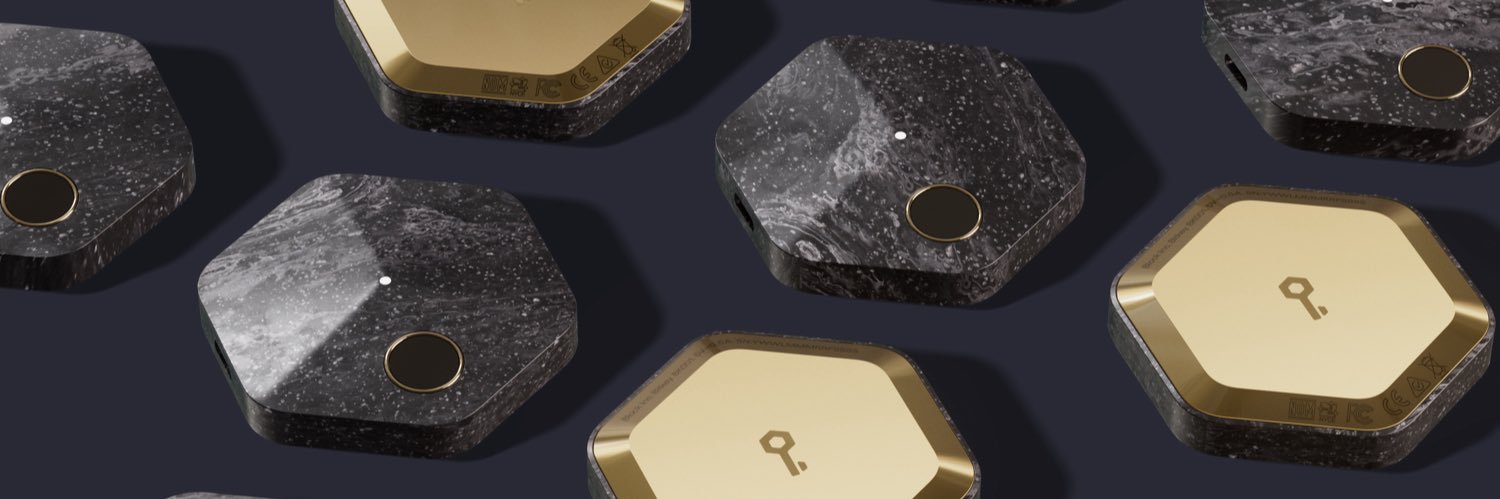
Seed phrases were a breakthrough for Bitcoiners. But they also handed users the hardest part of the problem: securing them.
Bitkey takes a different approach.
https://t.co/zRUJKXiCIR
AGENT WARS
We asked 5 top AI models to design, engineer and 3D print a bridge to with the goal of holding the most possible weight.
🇺🇸 Anthropic: Claude Opus 5.5 (High)
🇨🇳 Kimi: Kimi K3 (High)
🇺🇸 Meta: Muse Spark 1.3 (High)
🇺🇸 OpenAI: GPT 6 Astra (High)
🇺🇸 SpaceXAI: Grok 4.7 (High)
Each bridge had specific parameters. It had to span 2 feet, use a maximum 500 grams of filament, and it had to be under 18 hours of printing time. We specified what type of weight and where we would place it on the bridge.
The Score:
• Claude Opus 5.5 held an estimated 130 lbs! It took 9 hours and 11 minutes to print 17 parts and used 441 grams of filament.
• Meta Muse Spark 1.3 held 26.5 lbs. It took 13 hours and 12 minutes to print 49 parts and used 478 grams of filament.
• OpenAI GPT-6 Astra held an estimated 17.5 lbs. It took 15 hours and 44 minutes to print 29 parts and used 442 grams of filament.
• SpaceXAI Grok 4.7 did not finish. On assembly it could not stand up by itself. It took 12 hours and 22 minutes to print 29 parts and used 460 grams of filament.
• Kimi K3 did not finish. It wasn’t engineered correctly so the bridge could not even be assembled. It took 11 hours and 19 minutes to print 35 parts and used 446 grams of filament.
That means our champion for this episode is Claude Opus 5.5. Not only did it hold the most weight (by FAR) it also took the least time to print, used the least amount of parts and used the least amount of filament.
This was episode 02 of Agent Wars, stay tuned for episode 03.
This is a better way to visualize Columbus’ voyages than the traditional way (that shows him traveling through a modern map)..
It looks a lot crazier and more daring when you see it as a trip into the unknown.
Yeah, we thought a lot about how to do this, and there are some tricky trade-offs.
The important context is that Bitkey uses private multisig. Even though Block holds one key, Block has no visibility into your wallet and can’t generate receive addresses for it. So the trivial solution, have Block’s servers give Cash App a fresh address for each auto-withdrawal, doesn’t work.
That leaves a few options:
1. Export your descriptor from Bitkey to Cash App.
This works, but basically undoes Bitkey’s private-multisig privacy model by giving an exchange visibility into your wallet.
2. Have Cash App ask the Bitkey app for a new address every time.
Also works, but the app can’t do this silently in the background. You’d need to acknowledge it on your phone each time, which takes the “auto” out of auto-withdrawal.
3. Pre-generate a batch of addresses and give them to Cash App.
This works reasonably well, but the number you can safely pre-generate is constrained by wallet gap limits. Go too far and other wallet software may fail to discover some of your Bitkey transactions. In practice, you might only get ~20–50 withdrawals before needing to refresh the batch. Not terrible, but again, not really set-it-and-forget-it.
4. Give Cash App a dedicated sub-derivation path.
This was actually my favorite solution. Cash App could generate unlimited receive addresses without gaining visibility into the rest of your wallet.
The problem is that it’s very non-standard. Other wallet software wouldn’t know to look at that derivation path, so those transactions could effectively become invisible when importing your wallet elsewhere. For a self-custody wallet, that interoperability downside is pretty significant.
5. Give Cash App a single receive address.
This has the two downsides you called out: it correlates those withdrawals on-chain, and the address can eventually belong to an old keyset (eg a recovery or hardware upgrade).
Bitkey does have mitigation for this scenario. If funds arrive at an address from an old keyset, Bitkey can detect that and, in many cases, prompt you to sweep them into your current wallet. The server and app retain their old keys, and an old hardware device can potentially provide the third key, so as long as two keys remain available, those funds can still be recovered.
That gets more tenuous as time passes and old key material is lost, but it also gives us a natural opportunity to tell you, “Hey, you’re still withdrawing to an old Bitkey address—you should update it.”
So after looking at all of these, we landed on the single address as the best overall set of trade-offs. It’s not perfect, but every alternative either compromises private multisig, breaks interoperability, or meaningfully compromises the “automatic” part of auto-withdrawal.
What’s your take on how to manage these tradeoffs?
Lots of people have been asking for a demo of Bitkey's Emergency Exit Kit. So here it is!
This is the way you can move your funds if access to the official Bitkey app ever becomes unavailable to you for any reason.
Below is a FAQ about the Emergency Exit Kit. There's also step-by-step information in the eek.pdf itself.
The TLDR is that you have one key in your hardware, and a second key encrypted in the eek.pdf.
To make a transaction without Block or the Bitkey app, you need to (1) decrypt the eek.pdf with the hardware, (2) prepare a transaction, (3) sign it with both keys, (4) broadcast.
We provide an app to do this hosted on github, but it's all open source so you can vibe code your own. I've been able to one-shot it with both Opus-5 and GPT-5.6.
To do this flow on your phone, you need to side load an app, which means andriod only (iphone limitation), but you can also use an NFC dongle to do it on a computer.
https://t.co/E4uQae75tQ
Bitkey got so much unfair hate from people who had a very poor understanding of it's tradeoffs.
They broke every self custody rule:
- seedless
- cloud backups
- fingerprint unlock
- no screen (for rev 1)
In isolation many of those decisions seem bad. When you step back and reason about the properties of the system as a whole, it achieves a level of UX not seen before, while still retaining very strong security properties.
You often have to break the rules to innovate and come up with something better. These absolute chads willed an entirely new category of self custody solutions into existence.
It does have tradeoffs, and it's maybe not the perfect solution for everyone. But it's damn fine engineering. Like 50% of the tricks in Anzen's design are yanked straight from Bitkey.
(v glad rev 2 got the screen though!)
Today, we're taking another big step forward with transparency at @Bitkey. Introducing Bitkey Security Updates. Going forward we'll keep a persistent, public log of every relevant security-related bug we fix in the Bitkey system.
For each update, we'll describe the bug, its impact, its fix and any required customer actions. We'll also include information about who found the bug, whether it be our own security teams at Bitkey/Block or by external researchers.
We believe this type of visibility is in line with the Bitcoin ethos. It's what customers deserve, particularly with the advancements in the ability of LLMs to find critical security vulnerabilities.
We hope this gives our customers clarity and peace of mind. We'll work hard to keep you in the loop as we continue to build.
https://t.co/8wCthBPCVZ
Great writeup @opchecksig I'm really impressed with the thoroughness and nuance you captured. Just a couple of corrections.
6.5) Trusted contacts and inheritance beneficiaries are identifiable (subpoena-able) and individually coercible humans holding key shares.
There's no identity associated with TCs and Beneficiaries beyond the nickname entered into the mobile client.
7.2.1) Store the Emergency Exit Kit PDF offline, separated from the hardware device. EEK plus hardware is a quorum; their separation is the control. (4.2, 5)
You should be sure to update the physical copy after key rotations (recovery)
7.3.1) Generate the Emergency Exit Kit now. It covers loss of the phone without any cooperation from Block. (4.2).
The EEK is generated automatically during onboarding and updated every key rotation.
7.3.3) Archive the emergency APK and its embedded hash while things are calm, and know how to sideload it before you need it. (4.4)
You can also do an exit with your own custom built software, I was able to one-shot it with an LLM prompt I plan to share publicly.
Finally
One other thing the report is missing is that when you buy the hardware, you can pay in bitcoin and deliver to a public pickup point, removing identity information associated with payment method or address. I think this is relevant to points 1.7, 4.3 and 7.1.6
You discover Bitcoin on a Tuesday. At first, it sounds incredible – hard money, fixed supply, no government can print more of it. You spend a couple of hours reading about it, buy a little, and start wondering how you somehow missed the most interesting financial idea of your lifetime.
Then a friend tells you the real education happens on X. “Follow the Bitcoin people. You’ll learn fast.” So you make an account, follow a few important names with laser eyes and Roman statues in their profile pictures, and for roughly four minutes everything is fine.
Then someone announces that Coldcard has been hacked. You don’t know what Coldcard is, but apparently this is very bad. Before you can figure that out, someone else explains that the only secure way to create a wallet is to roll physical dice in an air-gapped room, while another person argues the dice themselves could be compromised. Then BTCPay is being drained, BIP110 is failing, everyone is calling everyone else a government agent, and you have absolutely no idea what any of these words mean.
Yesterday, you thought Bitcoin was digital gold. Today, you’re wondering whether you need to learn cryptography, build a computer from scratch, buy a Faraday cage and move to El Salvador.
So you make the mistake of asking one innocent question: “Is it okay if I just leave my Bitcoin on Coinbase?”
Your phone immediately melts. NOT YOUR KEYS, NOT YOUR COINS. NGMI. FED. READ THE WHITEPAPER. Someone explains that your Bitcoin isn’t real unless you run your own node, another says the node is compromised unless you built the machine yourself, and a third guy appears to suggest that true self-sovereignty requires generating your seed phrase in a cave.
You stare at the screen for a moment. You came here to learn about money and somehow wandered into a civil war between cryptographers arguing about firmware.
You close X, open your brokerage account, type NVDA and click buy.
“AI seems pretty straightforward.”
@JasonPLowery a story worth amplifying:
Last week, adversarial AI found and exploited vulnerabilities across Bitcoin systems.
Counter-cyber efforts raced to fix them first, but had to abandon US models due to “safety” restrictions and switch to overseas models to keep up.
We need letters of marque for cyber activities today or the US will lose the war before it even starts.
Current best practice for white hats today is to abandon all US provided models!?!
Yesterday I began fully integrating the @OpenAI trust cyber program into my Bitcoin Red Team efforts.
This morning I woke up to see this.
I am now being blocked from doing additional analysis on a codebase which I've already responsibly disclosed to, and have received confirmation had legitimate findings.
To be clear, this is after having already KYC'd and completed the onboarding process months ago to use the cyber capabilities OpenAI has to offer.
I am now prevented from being able to continue the investigation in a further effort to make sure their code changes are sufficient, as well as understand if there are other issues that have yet to be discovered.
It absolutely guts me as a patriotic American to have to do this, but I will be going back to using Chinese open source models to conduct my research to protect Bitcoin infrastructure.
Black hats will not hit these issues. The white hats will. We've hit a local minima in policy. Intelligence is unrestricted for those who don't follow rules, and those who engadge in harm reduction are left on the sidelines.
What are we doing in this country? How is this keeping people safe?
Please do something @DavidSacks@sama@realDonaldTrump
Nice write up. I love seeing creative approaches to custody design, and this is an interesting use of timelocks and presigned transactions in place of a third key.
A few trade offs are worth making explicit:
1. If the hardware-wallet key is lost, full recovery through the phone requires waiting for the recovery timelock. In the worst case that is about 14 months. During that period, the phone key is a single point of failure. Social recovery helps tremendously here, but it's not as strong as a third key that could fix the wallet immediately.
2. The signing ceremony only creates allowance and emergency transactions for UTXOs present at that time. Newly received funds would require a new ceremony to include them in any of the presigned-powered flows.
3. If an attacker can unlock your phone (say a roommate or an ex) there is a period of time where that would result in full funds lost (anytime after 14 months). This can be mitigated by making sure you do your annual ceremony on time and never hit the 14 month threshold.
4. I believe your implementation for timelocks is using relative block height, so new deposits will have different spend path time frames than original ones. I suspect using absolute ones would make the attack vectors and recovery paths easier to reason about.
Thanks for the write up, really interesting work!
Block's role in the inheritance process is to deliver the encrypted inheritance bundle to the inheritor after 6 months. This happens automatically as long as it's not contested by the benefactor.
Once the bundle is delivered, the inheritor must to decrypt it and create the claim transaction. In your scenario, if the inheritor also dies, then this final step never happens.
This is why multi-beneficiary inheritance is on our roadmap. Stay tuned!
@Rob25134104@Bitkey@max_guise I'm sorry you're experiencing this. Please reach out to https://t.co/YoV4o3TSai we'd love to dig in and understand the issue.