Merry Christmas All 🎄
2024 was a great year for @THORChain
⚡️Liquidity: $330M+
⚡️TVL: $920M+
⚡️Daily Volume: $100M-$500M
⚡️Total Volume: $80B+
⚡️Total Swaps: 40M
⚡️Pool Earnings: $130M+
2025 is gonna be even better with @RujiraNetwork and @vultisig
The ticker is $RUNE
120 node cap reached ✅
Unless the current validator set votes to expand the set past 120, nodes will have to bond as much as possible to stay churned in. Lowest bonding nodes will have to stack as much as possible to stay competitive.
Bond wars, anyone?
We have been waiting for this moment for SO LONG.
Everyone left, but we stuck through:
• FTX
• LUNA/UST Collapse
• Celsius/BlockFi/Voyager implosion
• Operation chokepoint
• Binance FUD
• USDC de-peg
• USDT FUD
• Months and months of downtrend
We DESERVE this pump!!
Always appreciate people sharing their thoughts publicly but think there are several shortcomings to this analysis & items that were not considered:
1. GBTC basis trade pre-ETF launch. Many institutions were buying GBTC at a discount and selling CME futures to capture the spread into launch. This was directionally about $3B of delta neutral trades that needs to be added back to the $14.5B in ETF flows. So the starting spot is $17.5B of flows, not $14.5B for BTC.
2. Bankrupt entity selling. ~7% of the GBTC supply was held by known bankrupt entities such as FTX & Genesis that sold GBTC within the first couple months of launch...for ETHE these entities are closer to 3%.
3. Ethena. Ethena has added $1.3B since the ETH ETF rumors, ~50% of it is ETH which means that the perp runup is $650M smaller than indicated in the analysis.
4. Timing of launch. GBTC discount saw a steady climb from -20% discount to -6% before approval and then launched directly after approval. So anyone that held GBTC outright likely sold post launch vs. ETHE repriced from -20% to 2-3% in a couple days and still hasn't launched. This means that outright holders have realized the discount decrease and can now sell at par and likely have so institutions are buying ETHE at 2-3% discount and selling CME futures which is why CME basis is getting crushed ahead of launch. This potentially means ETHE won't have as much outright selling post launch as GBTC.
So all of these have been more positive factors for ETH relative to BTC leading up to launch. The negative factors as I see it are:
1. Frontrunning on perps. There is no doubt that the ETH ETF is more frontrun in terms of perp positioning than BTC.
2. Time of Launch. BTC launch right after everyone gets back from the holidays and is at their desks/office is a way better time than launching right in the middle of summer before July 4th.
3. Market Conditions. Crypto was significantly outperforming equities at the time of BTC launch vs. significantly underperforming equities at the time of this launch.
All in all, I think there are many reasons why the ETHE supply story is being dramatically overstated by the market, but in the end supply is only half of the game. Plenty of reasons for and against demand being better/worse than expectations, but expectations for demand are on the smaller side as well.
$RUNE is $6.85 , but should be trading at $20+
This price discrepancy won't last long.
It's without a doubt one of the most IMPORTANT projects in the industry.
Why ?
Ya'll saw what happened to FTX right ? People trusted a "centralized exchange" and got rugged. NOT YOUR KEYS, NOT YOUR CRYPTO.
ThorChain enables you to swap / trade native assets for native assets, without bridges and all that other bullshit, and you maintain custody of your assets...
Problem solved.
O yeah, and it's cheaper to use than a centralized exchange.
$RUNE has beautiful tokenomics.
More people using ThorChain (DEX) , requires more liquidity, which requires more $RUNE to be purchased to secure / collateralize the liquidity pools.
Couple forced buy pressure with speculation, and $RUNE has a real shot at running to $100 this cycle.
Again, a lot of people don’t realize a vast number of people in the world economy are paid 150k+ a year to do in a few days what the machine just did in 25 seconds.
Army of wealth advisors are about to be activated by major banks for the biggest product launch in over a decade
HK ETF slated to launch on Monday
This is ETF Wave 2
80ks by May
We touch 100k By End of summer
SOL new highs
Memes are beta
https://t.co/ewYanHqC5U
Gun to my head if I had to choose one indicator/tool to be stuck with for the rest of my life it would be:
Volume Profile (VP)
"....and volume ultimately measuring the success or failure of all advertised opportunities."
A Comprehensive Guide on VP - 🧵
It was always going to be a big ask for $BTC to do the +11% needed to get back above that 3D level.
Tapped into it and closing below.
When we make it back above, I think Phase 2 begins.
INJ 3.0 is coming to Injective to bring the ultimate upgrade to Injective tokenomics, making $INJ the most deflationary asset to date.
The new proposal would directly reduce the supply of INJ at a rapid rate. The gov discussion is now live on the Injective forum.
The Fed is Unable to Cause a Recession. Risk Assets are Yet to Realize This.
Guest report: written by @rpgoyal_
Markets are always pricing in a range of outcomes for the economy. That pricing bakes in the likely effects of monetary and fiscal policy. The post-Covid cycle in the US has been dominated by a large fiscal response to the pandemic, and more recently, a Fed reaction that has attempted to mitigate the inflationary effects of that fiscal response.
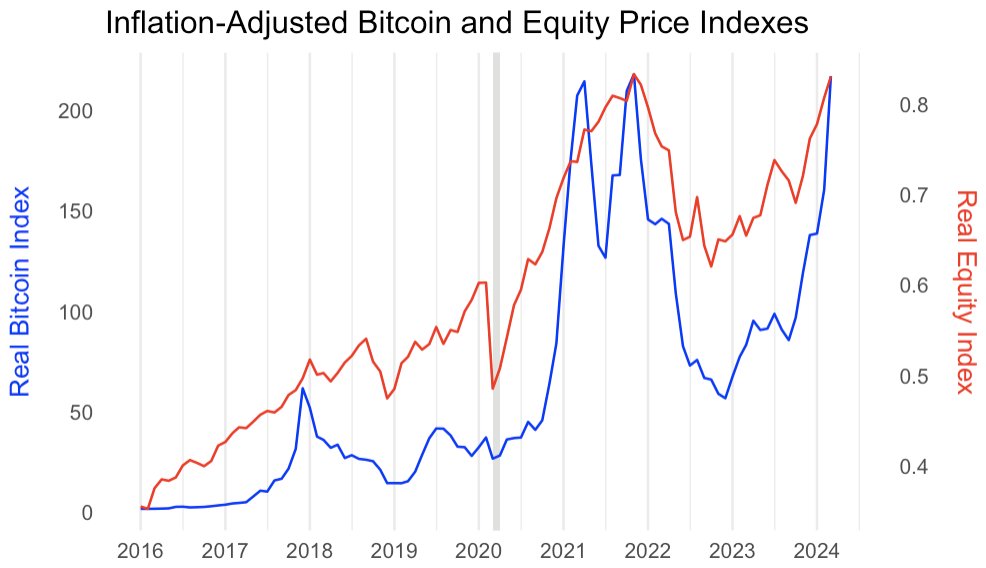
Both bond and risk markets have persistently given the Fed credit for its attempted tightening of conditions. Bond markets have consistently priced a return to lower interest rates, and stocks/Bitcoin have delivered a 0% real return over the last 2-3 years. This pricing is consistent with expectations that the Fed may cause a recession, and at the very least, that the Fed is capable of preventing inflation above its target of 2%.
In our view, the Fed is wholly unable to credibly produce such outcomes given current conditions. Risk assets are yet to fully acknowledge this.
Below are three of countless mechanisms through which the Fed’s interest rate hikes, in the current context, may be having an unintentionally stimulative effect on the economy, complicating its ability to combat inflation:
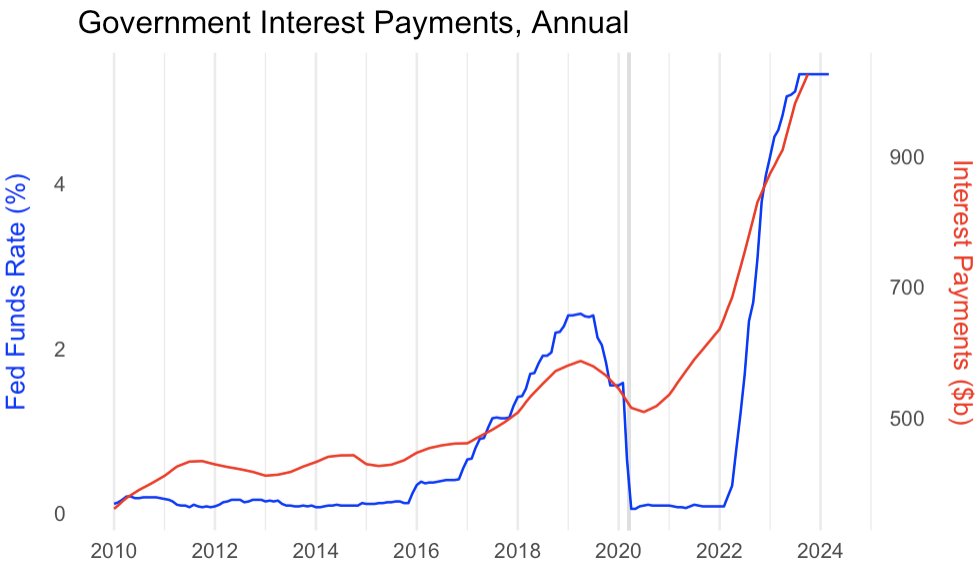
1) Rate hikes raised interest payments by the government to the private sector.
When the Fed raises rates, it rewards savers at the expense of borrowers. In a typical cycle, the private sector kicks off the recovery by increasing its borrowing. In the Covid cycle, the government did the borrowing, sending money to the private sector, making the private sector more of the saver.
With federal debt-to-GDP upwards of 120% post-Covid, the Fed’s rate hikes have doubled the government’s interest payments to the private sector, now annualizing at $1tn.
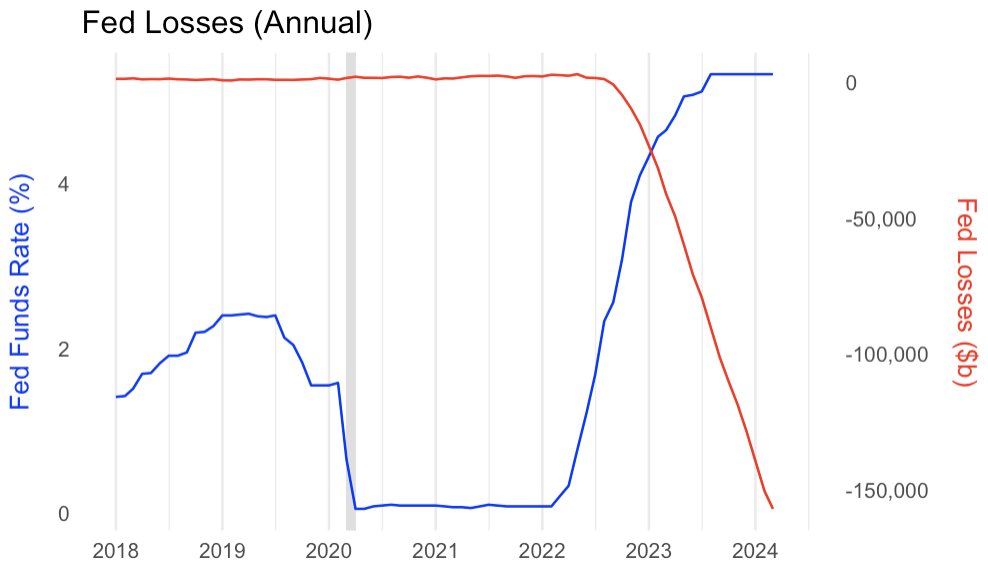
2) Rate hikes raised the Fed’s direct subsidy to the banking system.
The Fed owns long-term Treasury securities and owes short-term cash reserves to the banking sector. Typically, when the yield curve is positively sloped, this will produce a steady income stream for the Fed as the Fed’s holdings earn a spread over what the Fed pays on the reserves it owes.
Since 2022, the Fed’s rate hikes dramatically flattened and then inverted this yield curve: With reserves now yielding 5.5% and 10-year Treasury bonds yielding only 4.5%, the Fed is now “making a loss”. That loss is someone else’s gain; in this case, the banking sector which holds all of those reserves.
On an annual basis, the Fed’s balance sheet is producing a $150bn yearly loss, which is a direct stimulus check to the banks.
3) Rate hikes induced a housing construction boom.
The extraordinary fiscal support and Covid-specific dynamics produced a huge demand for residential property that was in the midst of clearing prior to the Fed’s rate hikes. As the Fed began raising rates, anyone with a preexisting mortgage became essentially shut out of the market, along with their home. The only way to satisfy the continued demand for homes was to build more, and this process has one of the highest GDP multipliers of any economic activity.
Homes under construction is still near all-time highs, and the slight decline in home sale prices is directly a result of housing shrinkflation; on a square footage basis, home prices are still at all-time highs.
The post-Covid era is one of fiscal dominance, starting with an extremely aggressive fiscal response to the pandemic. Fiscal dominance is not just a state of policy where the fiscal authority is shooting a bigger gun than the Fed; rather, it’s one where the choices of the fiscal authority necessarily unload the Fed’s gun, in which the way the Fed thinks about its policy starts to break down.
In such an environment, the only remaining option for the Fed is to be able to speak into existence its desired economic outcomes, using an elaborate apparatus of FOMC member speeches and financial media cooperation.
The Fed laid the groundwork for this model of policymaking in the early 2010s, when it became apparent that the Fed’s policy tools were ineffective in pulling the US economy out of the 2008 financial crisis.
Markets continue to give the Fed too much credibility that the Fed can achieve whatever economic outcome it desires. Today, that’s showing up as a 3-year period in which risk markets delivered a 0% real return, despite economic conditions having proven substantially more resilient than what was expected prior to the Fed’s rate hikes.
In our view, there is still a substantially upward adjustment that must take place for these markets to begin to reflect the reality of an incapacitated Fed that is unable to provide an antidote to the ongoing fiscal impulse.
Special thanks once again to @rpgoyal_ for guest-writing this report!
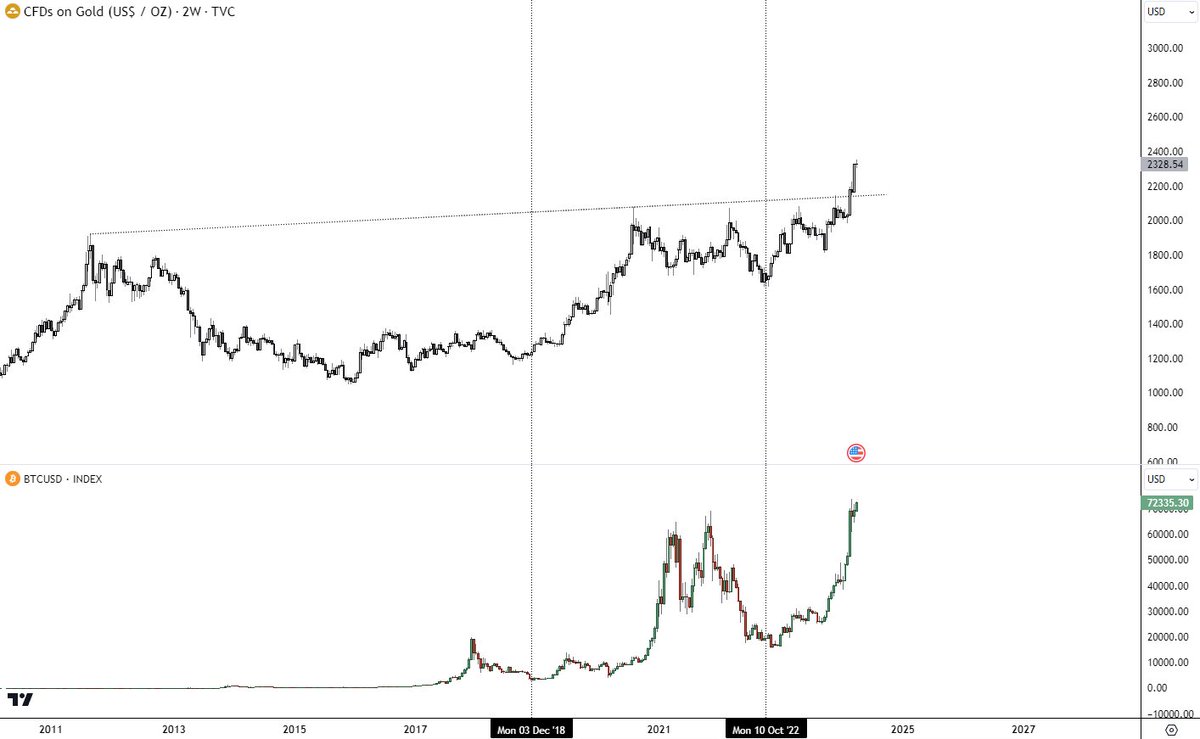
I swear that people do not get it. The higher #GOLD goes the higher #Bitcoin will go
And #GOLD just broke out from a 13-year ascending cup & handle to new highs with the largest accumulation from Central Banks in 60 years!!!!
Shit is about to hit the fan as the world is positioning itself for the largest money printing & devaluation of currency with strong geopolitical risks
The moment #BTC gets accepted as a world store of value will be too late, people waiting for that moment will be late. You need to be positioned ahead of it
The #DecadeOfCommodities has begun & $BTC is a digital commodity. People who refuse to accept that will be forced to learn the hard way. Seeing their wealth getting evaporated in front of their eyes.
There have been two major inflection points in both #GOLD & #BTC AT THE SAME TIME!!!!!!!
October 2022 & October 2023 with #Bitcoin having its deviation of #FTX which would never have happened had it not been for that IMO
And I repeat, #Bitcoin as the lowest market cap commodity will see the highest % returns. You can bet your ass on that. I certainly am
Is @THORChain the next Terra Luna?
🤔
Recent implementation, ADR012, burned 60 million Rune tokens🔥boosting lending capacity by 20 million Rune.
The aim: optimize token utility within the protocol.
Is RUNE worth its inherent risks?
🧵👇
1/ Another Squirrel TardFi 🧵 about @THORChain loans. And how much they are worth. And what should be done about that.
First, let’s talk about convertible bonds (and not TC) for the next 3 posts in this 🧵.
Why?
1/ Lots of debate about the @THORChain loan product. Here’s is a TardFi explainer:
It’s not a loan. It’s an option.
Wut?
Give: 1 BTC
Get: 50% cash and the opportunity to buy 1 BTC for that amount of cash
Yesterday @THORChain crossed $500m in daily trading volume -- here's our Q1 overview:
Intro
The rapid growth of alt layer 1 (L1) blockchains, which began in 2016-2017, has created a huge market opportunity for innovations that enable seamless blockchain interoperability. THORChain has emerged as a groundbreaking protocol that reshapes the decentralized exchange (DEX) landscape by enabling native L1 cross-chain swaps. Established in 2018 by a team of pseudonymous developers, THORChain is built on the Tendermint and Cosmos-SDK frameworks, distinguishing itself by enabling trustless swaps between native assets across multiple chains without relying on centralized exchanges (CEXs) or the complexities of cross-chain bridges or wrapped tokens. This article delves into the mechanics, advantages, and security dynamics of THORChain, illustrating its role in addressing the challenges of cross-chain interoperability and liquidity fragmentation within the cryptocurrency ecosystem.
THORChain
THORChain represents a departure from traditional single-chain automated market makers (AMMs) by providing a similar experience but allowing the swapping of native assets across multiple chains. The protocol is designed with the highest levels of decentralization and security in mind, ensuring BTC (and other supported assets) is secured in an over-collateralized fashion by an anonymous, permissionless set of validators.
THORChain is an independent blockchain and decentralized exchange (DEX) facilitating seamless cross-chain native asset swaps. It stands out by enabling direct exchanges between various cryptocurrencies, such as bitcoin (BTC) and ether (ETH), without the need for cross-chain bridges or wrapped tokens—a common need within the current crypto ecosystem that subjects users to additional (and often exploited) risks. THORChain's mission is to address and streamline the complexities surrounding cross-chain swaps and the fragmented liquidity landscape, offering a unified and decentralized liquidity network accessible to all chains. As of 2024, THORChain supports native asset swaps between Bitcoin, Ethereum, BNB Chain, Avalanche, Cosmos Hub, Dogecoin, Bitcoin Cash & Litecoin.
Crypto’s “Cross-chain” Evolution
The expansion of the crypto economy over the years, fueled by the emergence of Layer 1 blockchains and the evolution of DeFi, demands interoperability across various blockchain networks. This has led to the development of cross-chain technologies and bridges that enable the transfer of assets, enhancing the functionality and accessibility of different blockchain ecosystems.
Centralized exchanges (CEXs)traditionally facilitated asset transfers across blockchains but are inherently limited by their centralized nature. This centralization introduces counterparty risk, as users must rely on the exchange's internal systems and custodial services, which can become points of vulnerability, as evidenced by historical failures (e.g., FTX).
Blockchain bridges, designed to connect disparate blockchain networks, promise improvements over CEXs by enabling direct asset swaps without custody risk. However, these bridges have their own set of challenges, including security risks, centralization concerns, and the reliance on "wrapped" assets. Wrapped assets, representing IOUs of the original asset on a different blockchain, add complexity and introduce risks not present with native assets.
Wrapped assets are inferior to native assets because:
Wrapped assets are IOUs on the original asset (an IOU is never as good as the real thing because it involves some form of counterparty risk)
Wrapped assets fragment and compete with liquidity from the native asset
Wrapped assets as collateral in DeFi can “depeg,” resulting in liquidations not possible if holding the native asset
In some instances, wrapped assets require an external oracle for pricing, which is another vector of risk
In contrast, solutions like THORChain don’t suffer from these limitations enabling direct asset swaps, utilizing its Bifröst Protocol for cross-chain interoperability. This approach not only mitigates the risks associated with wrapped assets and centralization but also unlocks significant value by leveraging dormant capital in a trust-minimized environment, setting it apart from traditional CEXs and bridges.
How Does THORChain Solve Cross-chain Swaps?
As previously mentioned, THORChain enables native asset swaps across multiple chains, such as converting native BTC to ETH, without necessitating intermediaries or the custody risk inherent in using a CEX. In addition, pricing on THORChain is both transparent and independent of any centralized entities. This approach ensures that users receive consistent and transparent pricing, devoid of manipulation by external parties. Finally, it completely removes the need for bridges and wrapped assets.
At its core, THORChain is driven by state machines, which are used to manage asset exchange logic and coordinate external transactions. These state machines ensure that the platform can synchronize its internal state with other chains, enabling a seamless flow of assets across different blockchain ecosystems. This synchronization is achieved through one-way state pegs, which allow THORChain to accurately reflect the status of assets on connected blockchains in real time.
RUNE Token and Protocol Security
The RUNE token and its utility are at the heart of THORChain's entire economic security model. Specifically, THORChain incentivizes the locking of RUNE at a rate 3x the value of non-RUNE assets within the ecosystem.
To maintain the network's security and incentivize sufficient liquidity, THORChain utilizes a dual incentive mechanism. Participants lock three dollars of RUNE for every dollar of non-RUNE assets on the platform. This 3:1 ratio establishes a foundational value for RUNE, underpinning the token's economic model. Such a structure not only promotes a high degree of liquidity but also plays a crucial role in securing the assets on the network. Through this innovative economic design, THORChain not only addresses common challenges in the DeFi space, such as liquidity fragmentation and security vulnerabilities, but also provides a compelling value proposition for both investors and users within the cryptocurrency ecosystem. CLPs and Key Entities Central to THORChain's operational model is the utilization of a continuous liquidity pool (CLP), with RUNE serving as the intermediary asset in every transaction. This innovative approach ensures that when users wish to exchange two different assets, the swap is conducted through two distinct liquidity pools. For instance, converting USDT to BTC involves an initial swap from USDT to RUNE, followed by a subsequent exchange from RUNE to BTC. This process is streamlined by the THORChain state machine, which handles asset conversion seamlessly with no need for users to interact directly with RUNE. The liquidity model employed by THORChain adapts to the changing demands for liquidity. This is further augmented by the different actors within the THORChain ecosystem, which include liquidity providers, traders, and node operators. Each plays a critical part in ensuring the network's efficiency and reliability. Liquidity providers contribute assets to the pools, earning rewards in the form of block rewards and transaction fees, which are determined by their share in the pool and the pool's overall activity.
THORChain prioritizes the interests of liquidity providers, treating them as essential participants within its ecosystem and taking significant measures to safeguard their capital. In contrast, node operators are viewed differently; while they are compensated for their services, they are also subject to removal should they fail to adhere to the platform's standards.
Swappers form the user base that engages in asset exchanges, while traders leverage arbitrage opportunities to align the prices within THORChain's pools with those in the broader market, thereby maintaining equilibrium. Node operators, on the other hand, bond RUNE to support the network's security and consensus mechanism, operating under a veil of anonymity and subject to rotation to ensure network integrity.
Technology Stack
The THORChain network uses a series of technologies to deliver its vision. Overall, THORChain was built using the Cosmos SDK platform, a stack that lets developers build Proof of Stake (PoS) blockchains. The stack has a number of necessary pre-built modules that are relevant to THORChain to assist developers, such as transaction authentication or staking solutions. THORChain facilitates cryptocurrency swaps using its own AMM design, using the RUNE token as the intermediary powering a peer-to-pool economic model.
In addition to Cosmos SDK, THORChain also uses several other novel technologies that come together to facilitate the permissionless, cross-chain swaps.
Tendermint Consensus
THORChain, as part of the Cosmos ecosystem, leverages Tendermint Core for its consensus mechanism. Tendermint Core is a versatile, language-agnostic algorithm that allows for the replication of decentralized applications (dApps) across various programming languages. It is built on a Byzantine Fault Tolerant (BFT) consensus model, which ensures that the network can continue to operate reliably and reach agreement on transactions and state changes even if up to one-third of the network's nodes fail arbitrarily.
In the Tendermint system, validators play a crucial role. They are responsible for confirming transactions and casting cryptographic "votes" to agree on the network's state. This process occurs in rounds, with validators working together to maintain the integrity and consistency of the system. THORChain employs a unique approach to managing its validators, capping the number at 120, thereby promoting competition among potential would-be validators. The 120 validators are "churned" every three days based on several different factors. Nodes that commit the largest amount of RUNE are selected to join the network, while those with the smallest commitments, as well as the oldest and least efficient nodes, are removed.
Additionally, THORChain made the conscious decision not to enable delegated staking. The decision against public delegation stems from concerns that it could lead to a concentration of power among a limited number of validators, undermining the network's decentralization. This is a behavior observed in other delegated Proof of Stake (dPoS) networks, where node operators engage in activities designed to attract delegated funds, such as marketing campaigns and offering lower commissions. THORChain's stance is designed to prevent such dynamics, ensuring a more equitable and decentralized ecosystem.
However, THORChain does accommodate private delegation within specified limits. This arrangement permits node operators to maintain a whitelist of up to ten bonders, preventing the scalability issues associated with broader public delegation. This model is predicated on mutual trust among bonders and operators, with the expectation that operators fulfill their obligations while maintaining the network's integrity.
To qualify as an independent validator within THORChain, there is a substantial entry requirement: a minimum bond of 300,000 RUNE, which is double the amount of external assets held in the network's liquidity pools to ensure full underwriting. However, while 300,000 RUNE is the protocol’s hard-coded minimum, the actual minimum to break into the top 120 validators is currently 700,000+ RUNE. This high threshold serves as a deterrent against malicious actions, as any validator found guilty of misconduct or theft faces severe penalties, including a bond slash of at least 1.5 times the value of the stolen assets.
Validators are also required to operate a node on each blockchain supported by THORChain, which is integral to the functioning of the Bifröst Protocol, THORChain's mechanism for enabling cross-chain transactions. While this requirement underpins the protocol's security and interoperability, it also adds a layer of complexity to the operation of nodes, demanding significant commitment and technical expertise from validators. This system ensures that THORChain remains secure, decentralized, and resilient against attacks, making it a robust part of the broader Cosmos ecosystem.
Bifröst
At the core of THORChain's functionality are THORNodes and the Bifröst protocol. THORNodes operate the internal logic in each node, while Bifröst is the service that monitors each chain and reports to THORNodes. The Bifröst Protocol, in a sense, acts as a bridge, allowing for the seamless transfer of assets. This interoperability is significant because it overcomes the limitations and security vulnerabilities associated with traditional cross-chain bridges while handling impressive volumes in the billions of USD per month (image below).
In the THORChain ecosystem, these native assets are managed through Asgard Vaults, which are secured by multi-signature keys managed by anonymous THORNodes, thereby avoiding potential collusion. Transactions require a 2/3 consensus among the 20 nodes managing a vault, with a Threshold Signature Scheme (TSS) ensuring random signatory selection to further enhance security.
Each node within THORChain's network is equipped with a Bifrost service. The Bifrost service is tasked with connecting to various blockchains and monitoring vault addresses for inbound transactions. This service plays a crucial role in ensuring that THORChain remains updated with all transactional activities across the networks it interfaces with.
When users initiate transactions, such as swaps, assets are deposited into these vaults and monitored until a consensus is reached, prompting THORNode to execute the action desired by the user, such as making a swap or adding liquidity.
For processing chain-specific transactions, THORChain utilizes a Bifrost Chain Client. This client is responsible for taking the transaction schemes created by the Signer, serializing them into the appropriate destination transaction format, and executing them using the respective chain client. This process ensures that transactions are accurately and efficiently processed according to the unique requirements of each connected blockchain.
Threshold Signature Schemes (TSS)
The Threshold Signature Scheme (TSS) is a sophisticated cryptographic protocol employed by THORChain to enhance the security and decentralization of cryptocurrency transactions, such as swaps. This method diverges from traditional practices that often rely on a singular trusted entity to manage private keys. Instead, TSS spreads the responsibility for key management across a network of nodes, with THORChain's implementation involving about 100 nodes, aiming for an expansion to 120. This distributed approach requires a consensus of two-thirds of the node operators for the execution of transactions, significantly increasing security and resistance to unauthorized access or attacks.
The operational framework of THORChain's TSS is broken down into three fundamental steps:
Key Generation: The initial phase where key pairs necessary for transaction verification are created collaboratively by the participating nodes. This ensures that no single node holds the complete key, maintaining security and decentralization.
Sign: In this phase, the distributed nodes work together to sign transactions. This process is critical for authorizing transactions in a way that ensures the signature is valid only if the agreed threshold of participants consents.
Verify: The final step involves the verification of the signature by the network to confirm the transaction's legitimacy. This ensures that the transaction has been authorized by the requisite number of nodes.
THORChain's TSS model is particularly notable for its end-to-end encryption and a bond model that disincentivizes attacks on the network. It operates through a sequence of well-orchestrated steps, beginning with accepting transaction requests. It then organizes the requisite parties for the key generation and signing process, efficiently managing communication and coordination through a peer-to-peer network. This setup ensures that all parties are synchronized in the key generation phase, which is essential for the distributed management of the TSS secret key. Since the secret key is dispersed among the participants, no single entity can unilaterally authorize transactions, thereby bolstering the system's security and integrity.
Trade Execution
A critical aspect of decentralized exchanges is the need for accurate pricing to enable users to swap across supported assets effectively. THORChain addresses this challenge by harnessing the intrinsic design of its liquidity pools and engaging arbitrageurs to maintain exchange rate accuracy. This strategy eliminates the dependence on external resources such as oracles or weighted averages, which are susceptible to manipulation and attacks.
THORChain’s internal pricing mechanism works similarly to other AMMs, adjusting the price of each asset based on the ratio of the assets in the liquidity pool. This approach enables the system to determine not only the instantaneous price of an asset but also its relative purchasing power. This distinction is crucial for applications such as collateralizing debt, where understanding an asset's purchasing power is as important as knowing its spot price.
All swaps conducted on THORChain are governed by the platform's State Machine, ensuring that only valid transactions are finalized while invalid ones are rejected. This process is quite efficient, with all swaps being confirmed within a brief 5-10 second window.
Additionally, as of Q2 2023, THORChain has introduced “Streaming Swaps,” designed to enhance the execution of large transactions by dividing them into multiple, smaller sub-swaps over time. This novel approach mirrors the concept of a Time Weighted Average Price (TWAP) trade but is confined to a 24-hour timeframe.
Streaming Swaps operate by allowing users to specify two critical parameters: the Swap Interval and the Swap Count. The Swap Interval, measured in THORChain blocks (approximately six seconds each), dictates the time delay between each sub-swap, thereby facilitating arbitrage opportunities that help maintain the balance of the liquidity pools throughout the transaction process. The Swap Count determines the number of sub-swaps into which the original transaction will be divided, aiming to reduce slippage by decreasing the size of each transaction leg. Should a user set the Swap Count to zero, THORChain automatically adjusts the swap size to minimize the liquidity fee to five basis points, optimizing the cost-efficiency of the transaction.
From the perspective of users, particularly those looking to execute large trades, Streaming Swaps present a compelling alternative to traditional trading methods on decentralized exchanges. Streaming Swaps distribute the liquidity demand over a series of moments, allowing for arbitrage to adjust prices more effectively in real-time. This mechanism not only improves price execution but also enhances the capital efficiency of THORChain without necessitating an increase in Total Value Locked (TVL). By enabling transactions to be broken down into smaller, more manageable parts, Streaming Swaps reduces the impact of slip-based fees, a common hurdle in large-scale DeFi transactions. This innovation allows THORChain to offer competitive liquidity fees as low as five basis points, making it an increasingly attractive platform for high-volume traders seeking efficient, cost-effective trading solutions in the decentralized space.
Security
The governance mechanisms and security protocols of blockchain networks are critical to their functionality, safety, and performance. THORChain employs a multi-layered security strategy to safeguard the network's solvency and minimize the impact of potential exploits. This comprehensive approach ensures the integrity of transactions and the safety of user funds.
Governance Through Mimir
At the heart of THORChain's governance model is Mimir, a sophisticated feature that empowers the network's nodes with the authority to modify various constants and parameters crucial for the network's operation. Through a consensus mechanism requiring more than 66% agreement, active nodes can vote to adjust network parameters such as reserve emissions, minimum bond, churn speed, and more. These adjustments are pivotal for maintaining the network's optimal performance and ensuring its security. By enabling node operators to influence network parameters directly, THORChain ensures that its governance is distributed among those who have a vested interest in the network's success.
Security Monitoring and THORSec
THORChain's security framework is bolstered by several innovative features designed to safeguard the network against a range of threats. One such feature is the automatic security flagging mechanism embedded within the network's code. This mechanism is programmed to emit events under specific conditions, such as unauthorized transactions, attempts at double-spending, or unusually large withdrawals. These events are immediately reported to a dedicated monitoring channel on THORSec Discord for swift review. THORSec’s Red Team is a dedicated group of cybersecurity professionals responsible for reviewing code, monitoring protocol health, and providing incident response services. This team plays a critical role in maintaining the network's security posture through continuous oversight and emergency preparedness.
Granular Halting Controls
Contrary to the rest of the chain’s hands-off approach to chain design, THORChain has implemented granular halting controls. These controls enable Node Operators to exercise precise command over the network's operations, enhancing its safety. Through Mimir, nodes can issue commands to halt signing for a specific chain, pause trading for a specific chain, or even halt all operations for a particular chain. This level of control is crucial for addressing chain-specific issues such as forks, syncing problems, or exploits without disrupting the entire network's operations.
Moreover, in situations requiring immediate and broad action, nodes have the authority to halt trading globally across the network. This emergency control mechanism, while controversial to some, is a critical safeguard that ensures the network can be quickly stabilized in response to significant threats.
Additional Security Measures and Protocols
Conformation Counting: This mechanism protects against double-spend attacks and non-instantaneous block reorganizations, enhancing the network's reliability.
Outbound Transaction Throttling: To prevent large-scale fund extractions, outbound transactions are limited in value per block and subject to maximum processing times, with these parameters adjustable by Node Operators.
Distributed Outbound Requests: Large transactions are dispersed across multiple blocks to maintain system stability and prevent bottlenecks, ensuring the network can handle significant outflows without compromise.
Solvency Checkers: Both reactive and proactive solvency checkers are deployed. Reactive checkers compare vault values with actual wallet amounts, while proactive checkers anticipate insolvencies before transactions are executed, significantly reducing the risk of financial discrepancies.
Audits and Bug Bounty Program: THORChain has undergone rigorous audits by leading security firms such as Kudelski, Halborn Security, and Trail of Bits. These audits are meticulously documented and accessible via a dedicated GitHub repository. Furthermore, a formal bug bounty program managed by Immunefi encourages the discovery and reporting of vulnerabilities, ensuring that security concerns are promptly and effectively addressed.
Economic Security Model
THORChain's approach to maintaining economic security within its ecosystem is both innovative and intricate, leveraging a balance between liquidity provision and the securing of assets through a mechanism known as the Incentive Pendulum. This model is designed to ensure that the value secured by nodes, through bonding, is always proportionate to the value held within the network's liquidity pools. The architecture of this system embeds a hard cap within the THORChain codebase, effectively pausing new deposits into the pools once a certain threshold is reached, thereby preventing an imbalance that could jeopardize the network's security and efficiency.
[Twitter Character Limit Reached]





![reflexivityres's tweet photo. Yesterday @THORChain crossed $500m in daily trading volume -- here's our Q1 overview:
Intro
The rapid growth of alt layer 1 (L1) blockchains, which began in 2016-2017, has created a huge market opportunity for innovations that enable seamless blockchain interoperability. THORChain has emerged as a groundbreaking protocol that reshapes the decentralized exchange (DEX) landscape by enabling native L1 cross-chain swaps. Established in 2018 by a team of pseudonymous developers, THORChain is built on the Tendermint and Cosmos-SDK frameworks, distinguishing itself by enabling trustless swaps between native assets across multiple chains without relying on centralized exchanges (CEXs) or the complexities of cross-chain bridges or wrapped tokens. This article delves into the mechanics, advantages, and security dynamics of THORChain, illustrating its role in addressing the challenges of cross-chain interoperability and liquidity fragmentation within the cryptocurrency ecosystem.
THORChain
THORChain represents a departure from traditional single-chain automated market makers (AMMs) by providing a similar experience but allowing the swapping of native assets across multiple chains. The protocol is designed with the highest levels of decentralization and security in mind, ensuring BTC (and other supported assets) is secured in an over-collateralized fashion by an anonymous, permissionless set of validators.
THORChain is an independent blockchain and decentralized exchange (DEX) facilitating seamless cross-chain native asset swaps. It stands out by enabling direct exchanges between various cryptocurrencies, such as bitcoin (BTC) and ether (ETH), without the need for cross-chain bridges or wrapped tokens—a common need within the current crypto ecosystem that subjects users to additional (and often exploited) risks. THORChain's mission is to address and streamline the complexities surrounding cross-chain swaps and the fragmented liquidity landscape, offering a unified and decentralized liquidity network accessible to all chains. As of 2024, THORChain supports native asset swaps between Bitcoin, Ethereum, BNB Chain, Avalanche, Cosmos Hub, Dogecoin, Bitcoin Cash & Litecoin.
Crypto’s “Cross-chain” Evolution
The expansion of the crypto economy over the years, fueled by the emergence of Layer 1 blockchains and the evolution of DeFi, demands interoperability across various blockchain networks. This has led to the development of cross-chain technologies and bridges that enable the transfer of assets, enhancing the functionality and accessibility of different blockchain ecosystems.
Centralized exchanges (CEXs)traditionally facilitated asset transfers across blockchains but are inherently limited by their centralized nature. This centralization introduces counterparty risk, as users must rely on the exchange's internal systems and custodial services, which can become points of vulnerability, as evidenced by historical failures (e.g., FTX).
Blockchain bridges, designed to connect disparate blockchain networks, promise improvements over CEXs by enabling direct asset swaps without custody risk. However, these bridges have their own set of challenges, including security risks, centralization concerns, and the reliance on "wrapped" assets. Wrapped assets, representing IOUs of the original asset on a different blockchain, add complexity and introduce risks not present with native assets.
Wrapped assets are inferior to native assets because:
Wrapped assets are IOUs on the original asset (an IOU is never as good as the real thing because it involves some form of counterparty risk)
Wrapped assets fragment and compete with liquidity from the native asset
Wrapped assets as collateral in DeFi can “depeg,” resulting in liquidations not possible if holding the native asset
In some instances, wrapped assets require an external oracle for pricing, which is another vector of risk
In contrast, solutions like THORChain don’t suffer from these limitations enabling direct asset swaps, utilizing its Bifröst Protocol for cross-chain interoperability. This approach not only mitigates the risks associated with wrapped assets and centralization but also unlocks significant value by leveraging dormant capital in a trust-minimized environment, setting it apart from traditional CEXs and bridges.
How Does THORChain Solve Cross-chain Swaps?
As previously mentioned, THORChain enables native asset swaps across multiple chains, such as converting native BTC to ETH, without necessitating intermediaries or the custody risk inherent in using a CEX. In addition, pricing on THORChain is both transparent and independent of any centralized entities. This approach ensures that users receive consistent and transparent pricing, devoid of manipulation by external parties. Finally, it completely removes the need for bridges and wrapped assets.
At its core, THORChain is driven by state machines, which are used to manage asset exchange logic and coordinate external transactions. These state machines ensure that the platform can synchronize its internal state with other chains, enabling a seamless flow of assets across different blockchain ecosystems. This synchronization is achieved through one-way state pegs, which allow THORChain to accurately reflect the status of assets on connected blockchains in real time.
RUNE Token and Protocol Security
The RUNE token and its utility are at the heart of THORChain's entire economic security model. Specifically, THORChain incentivizes the locking of RUNE at a rate 3x the value of non-RUNE assets within the ecosystem.
To maintain the network's security and incentivize sufficient liquidity, THORChain utilizes a dual incentive mechanism. Participants lock three dollars of RUNE for every dollar of non-RUNE assets on the platform. This 3:1 ratio establishes a foundational value for RUNE, underpinning the token's economic model. Such a structure not only promotes a high degree of liquidity but also plays a crucial role in securing the assets on the network. Through this innovative economic design, THORChain not only addresses common challenges in the DeFi space, such as liquidity fragmentation and security vulnerabilities, but also provides a compelling value proposition for both investors and users within the cryptocurrency ecosystem. CLPs and Key Entities Central to THORChain's operational model is the utilization of a continuous liquidity pool (CLP), with RUNE serving as the intermediary asset in every transaction. This innovative approach ensures that when users wish to exchange two different assets, the swap is conducted through two distinct liquidity pools. For instance, converting USDT to BTC involves an initial swap from USDT to RUNE, followed by a subsequent exchange from RUNE to BTC. This process is streamlined by the THORChain state machine, which handles asset conversion seamlessly with no need for users to interact directly with RUNE. The liquidity model employed by THORChain adapts to the changing demands for liquidity. This is further augmented by the different actors within the THORChain ecosystem, which include liquidity providers, traders, and node operators. Each plays a critical part in ensuring the network's efficiency and reliability. Liquidity providers contribute assets to the pools, earning rewards in the form of block rewards and transaction fees, which are determined by their share in the pool and the pool's overall activity.
THORChain prioritizes the interests of liquidity providers, treating them as essential participants within its ecosystem and taking significant measures to safeguard their capital. In contrast, node operators are viewed differently; while they are compensated for their services, they are also subject to removal should they fail to adhere to the platform's standards.
Swappers form the user base that engages in asset exchanges, while traders leverage arbitrage opportunities to align the prices within THORChain's pools with those in the broader market, thereby maintaining equilibrium. Node operators, on the other hand, bond RUNE to support the network's security and consensus mechanism, operating under a veil of anonymity and subject to rotation to ensure network integrity.
Technology Stack
The THORChain network uses a series of technologies to deliver its vision. Overall, THORChain was built using the Cosmos SDK platform, a stack that lets developers build Proof of Stake (PoS) blockchains. The stack has a number of necessary pre-built modules that are relevant to THORChain to assist developers, such as transaction authentication or staking solutions. THORChain facilitates cryptocurrency swaps using its own AMM design, using the RUNE token as the intermediary powering a peer-to-pool economic model.
In addition to Cosmos SDK, THORChain also uses several other novel technologies that come together to facilitate the permissionless, cross-chain swaps.
Tendermint Consensus
THORChain, as part of the Cosmos ecosystem, leverages Tendermint Core for its consensus mechanism. Tendermint Core is a versatile, language-agnostic algorithm that allows for the replication of decentralized applications (dApps) across various programming languages. It is built on a Byzantine Fault Tolerant (BFT) consensus model, which ensures that the network can continue to operate reliably and reach agreement on transactions and state changes even if up to one-third of the network's nodes fail arbitrarily.
In the Tendermint system, validators play a crucial role. They are responsible for confirming transactions and casting cryptographic "votes" to agree on the network's state. This process occurs in rounds, with validators working together to maintain the integrity and consistency of the system. THORChain employs a unique approach to managing its validators, capping the number at 120, thereby promoting competition among potential would-be validators. The 120 validators are "churned" every three days based on several different factors. Nodes that commit the largest amount of RUNE are selected to join the network, while those with the smallest commitments, as well as the oldest and least efficient nodes, are removed.
Additionally, THORChain made the conscious decision not to enable delegated staking. The decision against public delegation stems from concerns that it could lead to a concentration of power among a limited number of validators, undermining the network's decentralization. This is a behavior observed in other delegated Proof of Stake (dPoS) networks, where node operators engage in activities designed to attract delegated funds, such as marketing campaigns and offering lower commissions. THORChain's stance is designed to prevent such dynamics, ensuring a more equitable and decentralized ecosystem.
However, THORChain does accommodate private delegation within specified limits. This arrangement permits node operators to maintain a whitelist of up to ten bonders, preventing the scalability issues associated with broader public delegation. This model is predicated on mutual trust among bonders and operators, with the expectation that operators fulfill their obligations while maintaining the network's integrity.
To qualify as an independent validator within THORChain, there is a substantial entry requirement: a minimum bond of 300,000 RUNE, which is double the amount of external assets held in the network's liquidity pools to ensure full underwriting. However, while 300,000 RUNE is the protocol’s hard-coded minimum, the actual minimum to break into the top 120 validators is currently 700,000+ RUNE. This high threshold serves as a deterrent against malicious actions, as any validator found guilty of misconduct or theft faces severe penalties, including a bond slash of at least 1.5 times the value of the stolen assets.
Validators are also required to operate a node on each blockchain supported by THORChain, which is integral to the functioning of the Bifröst Protocol, THORChain's mechanism for enabling cross-chain transactions. While this requirement underpins the protocol's security and interoperability, it also adds a layer of complexity to the operation of nodes, demanding significant commitment and technical expertise from validators. This system ensures that THORChain remains secure, decentralized, and resilient against attacks, making it a robust part of the broader Cosmos ecosystem.
Bifröst
At the core of THORChain's functionality are THORNodes and the Bifröst protocol. THORNodes operate the internal logic in each node, while Bifröst is the service that monitors each chain and reports to THORNodes. The Bifröst Protocol, in a sense, acts as a bridge, allowing for the seamless transfer of assets. This interoperability is significant because it overcomes the limitations and security vulnerabilities associated with traditional cross-chain bridges while handling impressive volumes in the billions of USD per month (image below).
In the THORChain ecosystem, these native assets are managed through Asgard Vaults, which are secured by multi-signature keys managed by anonymous THORNodes, thereby avoiding potential collusion. Transactions require a 2/3 consensus among the 20 nodes managing a vault, with a Threshold Signature Scheme (TSS) ensuring random signatory selection to further enhance security.
Each node within THORChain's network is equipped with a Bifrost service. The Bifrost service is tasked with connecting to various blockchains and monitoring vault addresses for inbound transactions. This service plays a crucial role in ensuring that THORChain remains updated with all transactional activities across the networks it interfaces with.
When users initiate transactions, such as swaps, assets are deposited into these vaults and monitored until a consensus is reached, prompting THORNode to execute the action desired by the user, such as making a swap or adding liquidity.
For processing chain-specific transactions, THORChain utilizes a Bifrost Chain Client. This client is responsible for taking the transaction schemes created by the Signer, serializing them into the appropriate destination transaction format, and executing them using the respective chain client. This process ensures that transactions are accurately and efficiently processed according to the unique requirements of each connected blockchain.
Threshold Signature Schemes (TSS)
The Threshold Signature Scheme (TSS) is a sophisticated cryptographic protocol employed by THORChain to enhance the security and decentralization of cryptocurrency transactions, such as swaps. This method diverges from traditional practices that often rely on a singular trusted entity to manage private keys. Instead, TSS spreads the responsibility for key management across a network of nodes, with THORChain's implementation involving about 100 nodes, aiming for an expansion to 120. This distributed approach requires a consensus of two-thirds of the node operators for the execution of transactions, significantly increasing security and resistance to unauthorized access or attacks.
The operational framework of THORChain's TSS is broken down into three fundamental steps:
Key Generation: The initial phase where key pairs necessary for transaction verification are created collaboratively by the participating nodes. This ensures that no single node holds the complete key, maintaining security and decentralization.
Sign: In this phase, the distributed nodes work together to sign transactions. This process is critical for authorizing transactions in a way that ensures the signature is valid only if the agreed threshold of participants consents.
Verify: The final step involves the verification of the signature by the network to confirm the transaction's legitimacy. This ensures that the transaction has been authorized by the requisite number of nodes.
THORChain's TSS model is particularly notable for its end-to-end encryption and a bond model that disincentivizes attacks on the network. It operates through a sequence of well-orchestrated steps, beginning with accepting transaction requests. It then organizes the requisite parties for the key generation and signing process, efficiently managing communication and coordination through a peer-to-peer network. This setup ensures that all parties are synchronized in the key generation phase, which is essential for the distributed management of the TSS secret key. Since the secret key is dispersed among the participants, no single entity can unilaterally authorize transactions, thereby bolstering the system's security and integrity.
Trade Execution
A critical aspect of decentralized exchanges is the need for accurate pricing to enable users to swap across supported assets effectively. THORChain addresses this challenge by harnessing the intrinsic design of its liquidity pools and engaging arbitrageurs to maintain exchange rate accuracy. This strategy eliminates the dependence on external resources such as oracles or weighted averages, which are susceptible to manipulation and attacks.
THORChain’s internal pricing mechanism works similarly to other AMMs, adjusting the price of each asset based on the ratio of the assets in the liquidity pool. This approach enables the system to determine not only the instantaneous price of an asset but also its relative purchasing power. This distinction is crucial for applications such as collateralizing debt, where understanding an asset's purchasing power is as important as knowing its spot price.
All swaps conducted on THORChain are governed by the platform's State Machine, ensuring that only valid transactions are finalized while invalid ones are rejected. This process is quite efficient, with all swaps being confirmed within a brief 5-10 second window.
Additionally, as of Q2 2023, THORChain has introduced “Streaming Swaps,” designed to enhance the execution of large transactions by dividing them into multiple, smaller sub-swaps over time. This novel approach mirrors the concept of a Time Weighted Average Price (TWAP) trade but is confined to a 24-hour timeframe.
Streaming Swaps operate by allowing users to specify two critical parameters: the Swap Interval and the Swap Count. The Swap Interval, measured in THORChain blocks (approximately six seconds each), dictates the time delay between each sub-swap, thereby facilitating arbitrage opportunities that help maintain the balance of the liquidity pools throughout the transaction process. The Swap Count determines the number of sub-swaps into which the original transaction will be divided, aiming to reduce slippage by decreasing the size of each transaction leg. Should a user set the Swap Count to zero, THORChain automatically adjusts the swap size to minimize the liquidity fee to five basis points, optimizing the cost-efficiency of the transaction.
From the perspective of users, particularly those looking to execute large trades, Streaming Swaps present a compelling alternative to traditional trading methods on decentralized exchanges. Streaming Swaps distribute the liquidity demand over a series of moments, allowing for arbitrage to adjust prices more effectively in real-time. This mechanism not only improves price execution but also enhances the capital efficiency of THORChain without necessitating an increase in Total Value Locked (TVL). By enabling transactions to be broken down into smaller, more manageable parts, Streaming Swaps reduces the impact of slip-based fees, a common hurdle in large-scale DeFi transactions. This innovation allows THORChain to offer competitive liquidity fees as low as five basis points, making it an increasingly attractive platform for high-volume traders seeking efficient, cost-effective trading solutions in the decentralized space.
Security
The governance mechanisms and security protocols of blockchain networks are critical to their functionality, safety, and performance. THORChain employs a multi-layered security strategy to safeguard the network's solvency and minimize the impact of potential exploits. This comprehensive approach ensures the integrity of transactions and the safety of user funds.
Governance Through Mimir
At the heart of THORChain's governance model is Mimir, a sophisticated feature that empowers the network's nodes with the authority to modify various constants and parameters crucial for the network's operation. Through a consensus mechanism requiring more than 66% agreement, active nodes can vote to adjust network parameters such as reserve emissions, minimum bond, churn speed, and more. These adjustments are pivotal for maintaining the network's optimal performance and ensuring its security. By enabling node operators to influence network parameters directly, THORChain ensures that its governance is distributed among those who have a vested interest in the network's success.
Security Monitoring and THORSec
THORChain's security framework is bolstered by several innovative features designed to safeguard the network against a range of threats. One such feature is the automatic security flagging mechanism embedded within the network's code. This mechanism is programmed to emit events under specific conditions, such as unauthorized transactions, attempts at double-spending, or unusually large withdrawals. These events are immediately reported to a dedicated monitoring channel on THORSec Discord for swift review. THORSec’s Red Team is a dedicated group of cybersecurity professionals responsible for reviewing code, monitoring protocol health, and providing incident response services. This team plays a critical role in maintaining the network's security posture through continuous oversight and emergency preparedness.
Granular Halting Controls
Contrary to the rest of the chain’s hands-off approach to chain design, THORChain has implemented granular halting controls. These controls enable Node Operators to exercise precise command over the network's operations, enhancing its safety. Through Mimir, nodes can issue commands to halt signing for a specific chain, pause trading for a specific chain, or even halt all operations for a particular chain. This level of control is crucial for addressing chain-specific issues such as forks, syncing problems, or exploits without disrupting the entire network's operations.
Moreover, in situations requiring immediate and broad action, nodes have the authority to halt trading globally across the network. This emergency control mechanism, while controversial to some, is a critical safeguard that ensures the network can be quickly stabilized in response to significant threats.
Additional Security Measures and Protocols
Conformation Counting: This mechanism protects against double-spend attacks and non-instantaneous block reorganizations, enhancing the network's reliability.
Outbound Transaction Throttling: To prevent large-scale fund extractions, outbound transactions are limited in value per block and subject to maximum processing times, with these parameters adjustable by Node Operators.
Distributed Outbound Requests: Large transactions are dispersed across multiple blocks to maintain system stability and prevent bottlenecks, ensuring the network can handle significant outflows without compromise.
Solvency Checkers: Both reactive and proactive solvency checkers are deployed. Reactive checkers compare vault values with actual wallet amounts, while proactive checkers anticipate insolvencies before transactions are executed, significantly reducing the risk of financial discrepancies.
Audits and Bug Bounty Program: THORChain has undergone rigorous audits by leading security firms such as Kudelski, Halborn Security, and Trail of Bits. These audits are meticulously documented and accessible via a dedicated GitHub repository. Furthermore, a formal bug bounty program managed by Immunefi encourages the discovery and reporting of vulnerabilities, ensuring that security concerns are promptly and effectively addressed.
Economic Security Model
THORChain's approach to maintaining economic security within its ecosystem is both innovative and intricate, leveraging a balance between liquidity provision and the securing of assets through a mechanism known as the Incentive Pendulum. This model is designed to ensure that the value secured by nodes, through bonding, is always proportionate to the value held within the network's liquidity pools. The architecture of this system embeds a hard cap within the THORChain codebase, effectively pausing new deposits into the pools once a certain threshold is reached, thereby preventing an imbalance that could jeopardize the network's security and efficiency.
[Twitter Character Limit Reached]](https://pbs.twimg.com/media/GIPQ2k3WYAA0Swu.jpg)
![reflexivityres's tweet photo. Yesterday @THORChain crossed $500m in daily trading volume -- here's our Q1 overview:
Intro
The rapid growth of alt layer 1 (L1) blockchains, which began in 2016-2017, has created a huge market opportunity for innovations that enable seamless blockchain interoperability. THORChain has emerged as a groundbreaking protocol that reshapes the decentralized exchange (DEX) landscape by enabling native L1 cross-chain swaps. Established in 2018 by a team of pseudonymous developers, THORChain is built on the Tendermint and Cosmos-SDK frameworks, distinguishing itself by enabling trustless swaps between native assets across multiple chains without relying on centralized exchanges (CEXs) or the complexities of cross-chain bridges or wrapped tokens. This article delves into the mechanics, advantages, and security dynamics of THORChain, illustrating its role in addressing the challenges of cross-chain interoperability and liquidity fragmentation within the cryptocurrency ecosystem.
THORChain
THORChain represents a departure from traditional single-chain automated market makers (AMMs) by providing a similar experience but allowing the swapping of native assets across multiple chains. The protocol is designed with the highest levels of decentralization and security in mind, ensuring BTC (and other supported assets) is secured in an over-collateralized fashion by an anonymous, permissionless set of validators.
THORChain is an independent blockchain and decentralized exchange (DEX) facilitating seamless cross-chain native asset swaps. It stands out by enabling direct exchanges between various cryptocurrencies, such as bitcoin (BTC) and ether (ETH), without the need for cross-chain bridges or wrapped tokens—a common need within the current crypto ecosystem that subjects users to additional (and often exploited) risks. THORChain's mission is to address and streamline the complexities surrounding cross-chain swaps and the fragmented liquidity landscape, offering a unified and decentralized liquidity network accessible to all chains. As of 2024, THORChain supports native asset swaps between Bitcoin, Ethereum, BNB Chain, Avalanche, Cosmos Hub, Dogecoin, Bitcoin Cash & Litecoin.
Crypto’s “Cross-chain” Evolution
The expansion of the crypto economy over the years, fueled by the emergence of Layer 1 blockchains and the evolution of DeFi, demands interoperability across various blockchain networks. This has led to the development of cross-chain technologies and bridges that enable the transfer of assets, enhancing the functionality and accessibility of different blockchain ecosystems.
Centralized exchanges (CEXs)traditionally facilitated asset transfers across blockchains but are inherently limited by their centralized nature. This centralization introduces counterparty risk, as users must rely on the exchange's internal systems and custodial services, which can become points of vulnerability, as evidenced by historical failures (e.g., FTX).
Blockchain bridges, designed to connect disparate blockchain networks, promise improvements over CEXs by enabling direct asset swaps without custody risk. However, these bridges have their own set of challenges, including security risks, centralization concerns, and the reliance on "wrapped" assets. Wrapped assets, representing IOUs of the original asset on a different blockchain, add complexity and introduce risks not present with native assets.
Wrapped assets are inferior to native assets because:
Wrapped assets are IOUs on the original asset (an IOU is never as good as the real thing because it involves some form of counterparty risk)
Wrapped assets fragment and compete with liquidity from the native asset
Wrapped assets as collateral in DeFi can “depeg,” resulting in liquidations not possible if holding the native asset
In some instances, wrapped assets require an external oracle for pricing, which is another vector of risk
In contrast, solutions like THORChain don’t suffer from these limitations enabling direct asset swaps, utilizing its Bifröst Protocol for cross-chain interoperability. This approach not only mitigates the risks associated with wrapped assets and centralization but also unlocks significant value by leveraging dormant capital in a trust-minimized environment, setting it apart from traditional CEXs and bridges.
How Does THORChain Solve Cross-chain Swaps?
As previously mentioned, THORChain enables native asset swaps across multiple chains, such as converting native BTC to ETH, without necessitating intermediaries or the custody risk inherent in using a CEX. In addition, pricing on THORChain is both transparent and independent of any centralized entities. This approach ensures that users receive consistent and transparent pricing, devoid of manipulation by external parties. Finally, it completely removes the need for bridges and wrapped assets.
At its core, THORChain is driven by state machines, which are used to manage asset exchange logic and coordinate external transactions. These state machines ensure that the platform can synchronize its internal state with other chains, enabling a seamless flow of assets across different blockchain ecosystems. This synchronization is achieved through one-way state pegs, which allow THORChain to accurately reflect the status of assets on connected blockchains in real time.
RUNE Token and Protocol Security
The RUNE token and its utility are at the heart of THORChain's entire economic security model. Specifically, THORChain incentivizes the locking of RUNE at a rate 3x the value of non-RUNE assets within the ecosystem.
To maintain the network's security and incentivize sufficient liquidity, THORChain utilizes a dual incentive mechanism. Participants lock three dollars of RUNE for every dollar of non-RUNE assets on the platform. This 3:1 ratio establishes a foundational value for RUNE, underpinning the token's economic model. Such a structure not only promotes a high degree of liquidity but also plays a crucial role in securing the assets on the network. Through this innovative economic design, THORChain not only addresses common challenges in the DeFi space, such as liquidity fragmentation and security vulnerabilities, but also provides a compelling value proposition for both investors and users within the cryptocurrency ecosystem. CLPs and Key Entities Central to THORChain's operational model is the utilization of a continuous liquidity pool (CLP), with RUNE serving as the intermediary asset in every transaction. This innovative approach ensures that when users wish to exchange two different assets, the swap is conducted through two distinct liquidity pools. For instance, converting USDT to BTC involves an initial swap from USDT to RUNE, followed by a subsequent exchange from RUNE to BTC. This process is streamlined by the THORChain state machine, which handles asset conversion seamlessly with no need for users to interact directly with RUNE. The liquidity model employed by THORChain adapts to the changing demands for liquidity. This is further augmented by the different actors within the THORChain ecosystem, which include liquidity providers, traders, and node operators. Each plays a critical part in ensuring the network's efficiency and reliability. Liquidity providers contribute assets to the pools, earning rewards in the form of block rewards and transaction fees, which are determined by their share in the pool and the pool's overall activity.
THORChain prioritizes the interests of liquidity providers, treating them as essential participants within its ecosystem and taking significant measures to safeguard their capital. In contrast, node operators are viewed differently; while they are compensated for their services, they are also subject to removal should they fail to adhere to the platform's standards.
Swappers form the user base that engages in asset exchanges, while traders leverage arbitrage opportunities to align the prices within THORChain's pools with those in the broader market, thereby maintaining equilibrium. Node operators, on the other hand, bond RUNE to support the network's security and consensus mechanism, operating under a veil of anonymity and subject to rotation to ensure network integrity.
Technology Stack
The THORChain network uses a series of technologies to deliver its vision. Overall, THORChain was built using the Cosmos SDK platform, a stack that lets developers build Proof of Stake (PoS) blockchains. The stack has a number of necessary pre-built modules that are relevant to THORChain to assist developers, such as transaction authentication or staking solutions. THORChain facilitates cryptocurrency swaps using its own AMM design, using the RUNE token as the intermediary powering a peer-to-pool economic model.
In addition to Cosmos SDK, THORChain also uses several other novel technologies that come together to facilitate the permissionless, cross-chain swaps.
Tendermint Consensus
THORChain, as part of the Cosmos ecosystem, leverages Tendermint Core for its consensus mechanism. Tendermint Core is a versatile, language-agnostic algorithm that allows for the replication of decentralized applications (dApps) across various programming languages. It is built on a Byzantine Fault Tolerant (BFT) consensus model, which ensures that the network can continue to operate reliably and reach agreement on transactions and state changes even if up to one-third of the network's nodes fail arbitrarily.
In the Tendermint system, validators play a crucial role. They are responsible for confirming transactions and casting cryptographic "votes" to agree on the network's state. This process occurs in rounds, with validators working together to maintain the integrity and consistency of the system. THORChain employs a unique approach to managing its validators, capping the number at 120, thereby promoting competition among potential would-be validators. The 120 validators are "churned" every three days based on several different factors. Nodes that commit the largest amount of RUNE are selected to join the network, while those with the smallest commitments, as well as the oldest and least efficient nodes, are removed.
Additionally, THORChain made the conscious decision not to enable delegated staking. The decision against public delegation stems from concerns that it could lead to a concentration of power among a limited number of validators, undermining the network's decentralization. This is a behavior observed in other delegated Proof of Stake (dPoS) networks, where node operators engage in activities designed to attract delegated funds, such as marketing campaigns and offering lower commissions. THORChain's stance is designed to prevent such dynamics, ensuring a more equitable and decentralized ecosystem.
However, THORChain does accommodate private delegation within specified limits. This arrangement permits node operators to maintain a whitelist of up to ten bonders, preventing the scalability issues associated with broader public delegation. This model is predicated on mutual trust among bonders and operators, with the expectation that operators fulfill their obligations while maintaining the network's integrity.
To qualify as an independent validator within THORChain, there is a substantial entry requirement: a minimum bond of 300,000 RUNE, which is double the amount of external assets held in the network's liquidity pools to ensure full underwriting. However, while 300,000 RUNE is the protocol’s hard-coded minimum, the actual minimum to break into the top 120 validators is currently 700,000+ RUNE. This high threshold serves as a deterrent against malicious actions, as any validator found guilty of misconduct or theft faces severe penalties, including a bond slash of at least 1.5 times the value of the stolen assets.
Validators are also required to operate a node on each blockchain supported by THORChain, which is integral to the functioning of the Bifröst Protocol, THORChain's mechanism for enabling cross-chain transactions. While this requirement underpins the protocol's security and interoperability, it also adds a layer of complexity to the operation of nodes, demanding significant commitment and technical expertise from validators. This system ensures that THORChain remains secure, decentralized, and resilient against attacks, making it a robust part of the broader Cosmos ecosystem.
Bifröst
At the core of THORChain's functionality are THORNodes and the Bifröst protocol. THORNodes operate the internal logic in each node, while Bifröst is the service that monitors each chain and reports to THORNodes. The Bifröst Protocol, in a sense, acts as a bridge, allowing for the seamless transfer of assets. This interoperability is significant because it overcomes the limitations and security vulnerabilities associated with traditional cross-chain bridges while handling impressive volumes in the billions of USD per month (image below).
In the THORChain ecosystem, these native assets are managed through Asgard Vaults, which are secured by multi-signature keys managed by anonymous THORNodes, thereby avoiding potential collusion. Transactions require a 2/3 consensus among the 20 nodes managing a vault, with a Threshold Signature Scheme (TSS) ensuring random signatory selection to further enhance security.
Each node within THORChain's network is equipped with a Bifrost service. The Bifrost service is tasked with connecting to various blockchains and monitoring vault addresses for inbound transactions. This service plays a crucial role in ensuring that THORChain remains updated with all transactional activities across the networks it interfaces with.
When users initiate transactions, such as swaps, assets are deposited into these vaults and monitored until a consensus is reached, prompting THORNode to execute the action desired by the user, such as making a swap or adding liquidity.
For processing chain-specific transactions, THORChain utilizes a Bifrost Chain Client. This client is responsible for taking the transaction schemes created by the Signer, serializing them into the appropriate destination transaction format, and executing them using the respective chain client. This process ensures that transactions are accurately and efficiently processed according to the unique requirements of each connected blockchain.
Threshold Signature Schemes (TSS)
The Threshold Signature Scheme (TSS) is a sophisticated cryptographic protocol employed by THORChain to enhance the security and decentralization of cryptocurrency transactions, such as swaps. This method diverges from traditional practices that often rely on a singular trusted entity to manage private keys. Instead, TSS spreads the responsibility for key management across a network of nodes, with THORChain's implementation involving about 100 nodes, aiming for an expansion to 120. This distributed approach requires a consensus of two-thirds of the node operators for the execution of transactions, significantly increasing security and resistance to unauthorized access or attacks.
The operational framework of THORChain's TSS is broken down into three fundamental steps:
Key Generation: The initial phase where key pairs necessary for transaction verification are created collaboratively by the participating nodes. This ensures that no single node holds the complete key, maintaining security and decentralization.
Sign: In this phase, the distributed nodes work together to sign transactions. This process is critical for authorizing transactions in a way that ensures the signature is valid only if the agreed threshold of participants consents.
Verify: The final step involves the verification of the signature by the network to confirm the transaction's legitimacy. This ensures that the transaction has been authorized by the requisite number of nodes.
THORChain's TSS model is particularly notable for its end-to-end encryption and a bond model that disincentivizes attacks on the network. It operates through a sequence of well-orchestrated steps, beginning with accepting transaction requests. It then organizes the requisite parties for the key generation and signing process, efficiently managing communication and coordination through a peer-to-peer network. This setup ensures that all parties are synchronized in the key generation phase, which is essential for the distributed management of the TSS secret key. Since the secret key is dispersed among the participants, no single entity can unilaterally authorize transactions, thereby bolstering the system's security and integrity.
Trade Execution
A critical aspect of decentralized exchanges is the need for accurate pricing to enable users to swap across supported assets effectively. THORChain addresses this challenge by harnessing the intrinsic design of its liquidity pools and engaging arbitrageurs to maintain exchange rate accuracy. This strategy eliminates the dependence on external resources such as oracles or weighted averages, which are susceptible to manipulation and attacks.
THORChain’s internal pricing mechanism works similarly to other AMMs, adjusting the price of each asset based on the ratio of the assets in the liquidity pool. This approach enables the system to determine not only the instantaneous price of an asset but also its relative purchasing power. This distinction is crucial for applications such as collateralizing debt, where understanding an asset's purchasing power is as important as knowing its spot price.
All swaps conducted on THORChain are governed by the platform's State Machine, ensuring that only valid transactions are finalized while invalid ones are rejected. This process is quite efficient, with all swaps being confirmed within a brief 5-10 second window.
Additionally, as of Q2 2023, THORChain has introduced “Streaming Swaps,” designed to enhance the execution of large transactions by dividing them into multiple, smaller sub-swaps over time. This novel approach mirrors the concept of a Time Weighted Average Price (TWAP) trade but is confined to a 24-hour timeframe.
Streaming Swaps operate by allowing users to specify two critical parameters: the Swap Interval and the Swap Count. The Swap Interval, measured in THORChain blocks (approximately six seconds each), dictates the time delay between each sub-swap, thereby facilitating arbitrage opportunities that help maintain the balance of the liquidity pools throughout the transaction process. The Swap Count determines the number of sub-swaps into which the original transaction will be divided, aiming to reduce slippage by decreasing the size of each transaction leg. Should a user set the Swap Count to zero, THORChain automatically adjusts the swap size to minimize the liquidity fee to five basis points, optimizing the cost-efficiency of the transaction.
From the perspective of users, particularly those looking to execute large trades, Streaming Swaps present a compelling alternative to traditional trading methods on decentralized exchanges. Streaming Swaps distribute the liquidity demand over a series of moments, allowing for arbitrage to adjust prices more effectively in real-time. This mechanism not only improves price execution but also enhances the capital efficiency of THORChain without necessitating an increase in Total Value Locked (TVL). By enabling transactions to be broken down into smaller, more manageable parts, Streaming Swaps reduces the impact of slip-based fees, a common hurdle in large-scale DeFi transactions. This innovation allows THORChain to offer competitive liquidity fees as low as five basis points, making it an increasingly attractive platform for high-volume traders seeking efficient, cost-effective trading solutions in the decentralized space.
Security
The governance mechanisms and security protocols of blockchain networks are critical to their functionality, safety, and performance. THORChain employs a multi-layered security strategy to safeguard the network's solvency and minimize the impact of potential exploits. This comprehensive approach ensures the integrity of transactions and the safety of user funds.
Governance Through Mimir
At the heart of THORChain's governance model is Mimir, a sophisticated feature that empowers the network's nodes with the authority to modify various constants and parameters crucial for the network's operation. Through a consensus mechanism requiring more than 66% agreement, active nodes can vote to adjust network parameters such as reserve emissions, minimum bond, churn speed, and more. These adjustments are pivotal for maintaining the network's optimal performance and ensuring its security. By enabling node operators to influence network parameters directly, THORChain ensures that its governance is distributed among those who have a vested interest in the network's success.
Security Monitoring and THORSec
THORChain's security framework is bolstered by several innovative features designed to safeguard the network against a range of threats. One such feature is the automatic security flagging mechanism embedded within the network's code. This mechanism is programmed to emit events under specific conditions, such as unauthorized transactions, attempts at double-spending, or unusually large withdrawals. These events are immediately reported to a dedicated monitoring channel on THORSec Discord for swift review. THORSec’s Red Team is a dedicated group of cybersecurity professionals responsible for reviewing code, monitoring protocol health, and providing incident response services. This team plays a critical role in maintaining the network's security posture through continuous oversight and emergency preparedness.
Granular Halting Controls
Contrary to the rest of the chain’s hands-off approach to chain design, THORChain has implemented granular halting controls. These controls enable Node Operators to exercise precise command over the network's operations, enhancing its safety. Through Mimir, nodes can issue commands to halt signing for a specific chain, pause trading for a specific chain, or even halt all operations for a particular chain. This level of control is crucial for addressing chain-specific issues such as forks, syncing problems, or exploits without disrupting the entire network's operations.
Moreover, in situations requiring immediate and broad action, nodes have the authority to halt trading globally across the network. This emergency control mechanism, while controversial to some, is a critical safeguard that ensures the network can be quickly stabilized in response to significant threats.
Additional Security Measures and Protocols
Conformation Counting: This mechanism protects against double-spend attacks and non-instantaneous block reorganizations, enhancing the network's reliability.
Outbound Transaction Throttling: To prevent large-scale fund extractions, outbound transactions are limited in value per block and subject to maximum processing times, with these parameters adjustable by Node Operators.
Distributed Outbound Requests: Large transactions are dispersed across multiple blocks to maintain system stability and prevent bottlenecks, ensuring the network can handle significant outflows without compromise.
Solvency Checkers: Both reactive and proactive solvency checkers are deployed. Reactive checkers compare vault values with actual wallet amounts, while proactive checkers anticipate insolvencies before transactions are executed, significantly reducing the risk of financial discrepancies.
Audits and Bug Bounty Program: THORChain has undergone rigorous audits by leading security firms such as Kudelski, Halborn Security, and Trail of Bits. These audits are meticulously documented and accessible via a dedicated GitHub repository. Furthermore, a formal bug bounty program managed by Immunefi encourages the discovery and reporting of vulnerabilities, ensuring that security concerns are promptly and effectively addressed.
Economic Security Model
THORChain's approach to maintaining economic security within its ecosystem is both innovative and intricate, leveraging a balance between liquidity provision and the securing of assets through a mechanism known as the Incentive Pendulum. This model is designed to ensure that the value secured by nodes, through bonding, is always proportionate to the value held within the network's liquidity pools. The architecture of this system embeds a hard cap within the THORChain codebase, effectively pausing new deposits into the pools once a certain threshold is reached, thereby preventing an imbalance that could jeopardize the network's security and efficiency.
[Twitter Character Limit Reached]](https://pbs.twimg.com/media/GIPPchHW4AAkaa9.jpg)
![reflexivityres's tweet photo. Yesterday @THORChain crossed $500m in daily trading volume -- here's our Q1 overview:
Intro
The rapid growth of alt layer 1 (L1) blockchains, which began in 2016-2017, has created a huge market opportunity for innovations that enable seamless blockchain interoperability. THORChain has emerged as a groundbreaking protocol that reshapes the decentralized exchange (DEX) landscape by enabling native L1 cross-chain swaps. Established in 2018 by a team of pseudonymous developers, THORChain is built on the Tendermint and Cosmos-SDK frameworks, distinguishing itself by enabling trustless swaps between native assets across multiple chains without relying on centralized exchanges (CEXs) or the complexities of cross-chain bridges or wrapped tokens. This article delves into the mechanics, advantages, and security dynamics of THORChain, illustrating its role in addressing the challenges of cross-chain interoperability and liquidity fragmentation within the cryptocurrency ecosystem.
THORChain
THORChain represents a departure from traditional single-chain automated market makers (AMMs) by providing a similar experience but allowing the swapping of native assets across multiple chains. The protocol is designed with the highest levels of decentralization and security in mind, ensuring BTC (and other supported assets) is secured in an over-collateralized fashion by an anonymous, permissionless set of validators.
THORChain is an independent blockchain and decentralized exchange (DEX) facilitating seamless cross-chain native asset swaps. It stands out by enabling direct exchanges between various cryptocurrencies, such as bitcoin (BTC) and ether (ETH), without the need for cross-chain bridges or wrapped tokens—a common need within the current crypto ecosystem that subjects users to additional (and often exploited) risks. THORChain's mission is to address and streamline the complexities surrounding cross-chain swaps and the fragmented liquidity landscape, offering a unified and decentralized liquidity network accessible to all chains. As of 2024, THORChain supports native asset swaps between Bitcoin, Ethereum, BNB Chain, Avalanche, Cosmos Hub, Dogecoin, Bitcoin Cash & Litecoin.
Crypto’s “Cross-chain” Evolution
The expansion of the crypto economy over the years, fueled by the emergence of Layer 1 blockchains and the evolution of DeFi, demands interoperability across various blockchain networks. This has led to the development of cross-chain technologies and bridges that enable the transfer of assets, enhancing the functionality and accessibility of different blockchain ecosystems.
Centralized exchanges (CEXs)traditionally facilitated asset transfers across blockchains but are inherently limited by their centralized nature. This centralization introduces counterparty risk, as users must rely on the exchange's internal systems and custodial services, which can become points of vulnerability, as evidenced by historical failures (e.g., FTX).
Blockchain bridges, designed to connect disparate blockchain networks, promise improvements over CEXs by enabling direct asset swaps without custody risk. However, these bridges have their own set of challenges, including security risks, centralization concerns, and the reliance on "wrapped" assets. Wrapped assets, representing IOUs of the original asset on a different blockchain, add complexity and introduce risks not present with native assets.
Wrapped assets are inferior to native assets because:
Wrapped assets are IOUs on the original asset (an IOU is never as good as the real thing because it involves some form of counterparty risk)
Wrapped assets fragment and compete with liquidity from the native asset
Wrapped assets as collateral in DeFi can “depeg,” resulting in liquidations not possible if holding the native asset
In some instances, wrapped assets require an external oracle for pricing, which is another vector of risk
In contrast, solutions like THORChain don’t suffer from these limitations enabling direct asset swaps, utilizing its Bifröst Protocol for cross-chain interoperability. This approach not only mitigates the risks associated with wrapped assets and centralization but also unlocks significant value by leveraging dormant capital in a trust-minimized environment, setting it apart from traditional CEXs and bridges.
How Does THORChain Solve Cross-chain Swaps?
As previously mentioned, THORChain enables native asset swaps across multiple chains, such as converting native BTC to ETH, without necessitating intermediaries or the custody risk inherent in using a CEX. In addition, pricing on THORChain is both transparent and independent of any centralized entities. This approach ensures that users receive consistent and transparent pricing, devoid of manipulation by external parties. Finally, it completely removes the need for bridges and wrapped assets.
At its core, THORChain is driven by state machines, which are used to manage asset exchange logic and coordinate external transactions. These state machines ensure that the platform can synchronize its internal state with other chains, enabling a seamless flow of assets across different blockchain ecosystems. This synchronization is achieved through one-way state pegs, which allow THORChain to accurately reflect the status of assets on connected blockchains in real time.
RUNE Token and Protocol Security
The RUNE token and its utility are at the heart of THORChain's entire economic security model. Specifically, THORChain incentivizes the locking of RUNE at a rate 3x the value of non-RUNE assets within the ecosystem.
To maintain the network's security and incentivize sufficient liquidity, THORChain utilizes a dual incentive mechanism. Participants lock three dollars of RUNE for every dollar of non-RUNE assets on the platform. This 3:1 ratio establishes a foundational value for RUNE, underpinning the token's economic model. Such a structure not only promotes a high degree of liquidity but also plays a crucial role in securing the assets on the network. Through this innovative economic design, THORChain not only addresses common challenges in the DeFi space, such as liquidity fragmentation and security vulnerabilities, but also provides a compelling value proposition for both investors and users within the cryptocurrency ecosystem. CLPs and Key Entities Central to THORChain's operational model is the utilization of a continuous liquidity pool (CLP), with RUNE serving as the intermediary asset in every transaction. This innovative approach ensures that when users wish to exchange two different assets, the swap is conducted through two distinct liquidity pools. For instance, converting USDT to BTC involves an initial swap from USDT to RUNE, followed by a subsequent exchange from RUNE to BTC. This process is streamlined by the THORChain state machine, which handles asset conversion seamlessly with no need for users to interact directly with RUNE. The liquidity model employed by THORChain adapts to the changing demands for liquidity. This is further augmented by the different actors within the THORChain ecosystem, which include liquidity providers, traders, and node operators. Each plays a critical part in ensuring the network's efficiency and reliability. Liquidity providers contribute assets to the pools, earning rewards in the form of block rewards and transaction fees, which are determined by their share in the pool and the pool's overall activity.
THORChain prioritizes the interests of liquidity providers, treating them as essential participants within its ecosystem and taking significant measures to safeguard their capital. In contrast, node operators are viewed differently; while they are compensated for their services, they are also subject to removal should they fail to adhere to the platform's standards.
Swappers form the user base that engages in asset exchanges, while traders leverage arbitrage opportunities to align the prices within THORChain's pools with those in the broader market, thereby maintaining equilibrium. Node operators, on the other hand, bond RUNE to support the network's security and consensus mechanism, operating under a veil of anonymity and subject to rotation to ensure network integrity.
Technology Stack
The THORChain network uses a series of technologies to deliver its vision. Overall, THORChain was built using the Cosmos SDK platform, a stack that lets developers build Proof of Stake (PoS) blockchains. The stack has a number of necessary pre-built modules that are relevant to THORChain to assist developers, such as transaction authentication or staking solutions. THORChain facilitates cryptocurrency swaps using its own AMM design, using the RUNE token as the intermediary powering a peer-to-pool economic model.
In addition to Cosmos SDK, THORChain also uses several other novel technologies that come together to facilitate the permissionless, cross-chain swaps.
Tendermint Consensus
THORChain, as part of the Cosmos ecosystem, leverages Tendermint Core for its consensus mechanism. Tendermint Core is a versatile, language-agnostic algorithm that allows for the replication of decentralized applications (dApps) across various programming languages. It is built on a Byzantine Fault Tolerant (BFT) consensus model, which ensures that the network can continue to operate reliably and reach agreement on transactions and state changes even if up to one-third of the network's nodes fail arbitrarily.
In the Tendermint system, validators play a crucial role. They are responsible for confirming transactions and casting cryptographic "votes" to agree on the network's state. This process occurs in rounds, with validators working together to maintain the integrity and consistency of the system. THORChain employs a unique approach to managing its validators, capping the number at 120, thereby promoting competition among potential would-be validators. The 120 validators are "churned" every three days based on several different factors. Nodes that commit the largest amount of RUNE are selected to join the network, while those with the smallest commitments, as well as the oldest and least efficient nodes, are removed.
Additionally, THORChain made the conscious decision not to enable delegated staking. The decision against public delegation stems from concerns that it could lead to a concentration of power among a limited number of validators, undermining the network's decentralization. This is a behavior observed in other delegated Proof of Stake (dPoS) networks, where node operators engage in activities designed to attract delegated funds, such as marketing campaigns and offering lower commissions. THORChain's stance is designed to prevent such dynamics, ensuring a more equitable and decentralized ecosystem.
However, THORChain does accommodate private delegation within specified limits. This arrangement permits node operators to maintain a whitelist of up to ten bonders, preventing the scalability issues associated with broader public delegation. This model is predicated on mutual trust among bonders and operators, with the expectation that operators fulfill their obligations while maintaining the network's integrity.
To qualify as an independent validator within THORChain, there is a substantial entry requirement: a minimum bond of 300,000 RUNE, which is double the amount of external assets held in the network's liquidity pools to ensure full underwriting. However, while 300,000 RUNE is the protocol’s hard-coded minimum, the actual minimum to break into the top 120 validators is currently 700,000+ RUNE. This high threshold serves as a deterrent against malicious actions, as any validator found guilty of misconduct or theft faces severe penalties, including a bond slash of at least 1.5 times the value of the stolen assets.
Validators are also required to operate a node on each blockchain supported by THORChain, which is integral to the functioning of the Bifröst Protocol, THORChain's mechanism for enabling cross-chain transactions. While this requirement underpins the protocol's security and interoperability, it also adds a layer of complexity to the operation of nodes, demanding significant commitment and technical expertise from validators. This system ensures that THORChain remains secure, decentralized, and resilient against attacks, making it a robust part of the broader Cosmos ecosystem.
Bifröst
At the core of THORChain's functionality are THORNodes and the Bifröst protocol. THORNodes operate the internal logic in each node, while Bifröst is the service that monitors each chain and reports to THORNodes. The Bifröst Protocol, in a sense, acts as a bridge, allowing for the seamless transfer of assets. This interoperability is significant because it overcomes the limitations and security vulnerabilities associated with traditional cross-chain bridges while handling impressive volumes in the billions of USD per month (image below).
In the THORChain ecosystem, these native assets are managed through Asgard Vaults, which are secured by multi-signature keys managed by anonymous THORNodes, thereby avoiding potential collusion. Transactions require a 2/3 consensus among the 20 nodes managing a vault, with a Threshold Signature Scheme (TSS) ensuring random signatory selection to further enhance security.
Each node within THORChain's network is equipped with a Bifrost service. The Bifrost service is tasked with connecting to various blockchains and monitoring vault addresses for inbound transactions. This service plays a crucial role in ensuring that THORChain remains updated with all transactional activities across the networks it interfaces with.
When users initiate transactions, such as swaps, assets are deposited into these vaults and monitored until a consensus is reached, prompting THORNode to execute the action desired by the user, such as making a swap or adding liquidity.
For processing chain-specific transactions, THORChain utilizes a Bifrost Chain Client. This client is responsible for taking the transaction schemes created by the Signer, serializing them into the appropriate destination transaction format, and executing them using the respective chain client. This process ensures that transactions are accurately and efficiently processed according to the unique requirements of each connected blockchain.
Threshold Signature Schemes (TSS)
The Threshold Signature Scheme (TSS) is a sophisticated cryptographic protocol employed by THORChain to enhance the security and decentralization of cryptocurrency transactions, such as swaps. This method diverges from traditional practices that often rely on a singular trusted entity to manage private keys. Instead, TSS spreads the responsibility for key management across a network of nodes, with THORChain's implementation involving about 100 nodes, aiming for an expansion to 120. This distributed approach requires a consensus of two-thirds of the node operators for the execution of transactions, significantly increasing security and resistance to unauthorized access or attacks.
The operational framework of THORChain's TSS is broken down into three fundamental steps:
Key Generation: The initial phase where key pairs necessary for transaction verification are created collaboratively by the participating nodes. This ensures that no single node holds the complete key, maintaining security and decentralization.
Sign: In this phase, the distributed nodes work together to sign transactions. This process is critical for authorizing transactions in a way that ensures the signature is valid only if the agreed threshold of participants consents.
Verify: The final step involves the verification of the signature by the network to confirm the transaction's legitimacy. This ensures that the transaction has been authorized by the requisite number of nodes.
THORChain's TSS model is particularly notable for its end-to-end encryption and a bond model that disincentivizes attacks on the network. It operates through a sequence of well-orchestrated steps, beginning with accepting transaction requests. It then organizes the requisite parties for the key generation and signing process, efficiently managing communication and coordination through a peer-to-peer network. This setup ensures that all parties are synchronized in the key generation phase, which is essential for the distributed management of the TSS secret key. Since the secret key is dispersed among the participants, no single entity can unilaterally authorize transactions, thereby bolstering the system's security and integrity.
Trade Execution
A critical aspect of decentralized exchanges is the need for accurate pricing to enable users to swap across supported assets effectively. THORChain addresses this challenge by harnessing the intrinsic design of its liquidity pools and engaging arbitrageurs to maintain exchange rate accuracy. This strategy eliminates the dependence on external resources such as oracles or weighted averages, which are susceptible to manipulation and attacks.
THORChain’s internal pricing mechanism works similarly to other AMMs, adjusting the price of each asset based on the ratio of the assets in the liquidity pool. This approach enables the system to determine not only the instantaneous price of an asset but also its relative purchasing power. This distinction is crucial for applications such as collateralizing debt, where understanding an asset's purchasing power is as important as knowing its spot price.
All swaps conducted on THORChain are governed by the platform's State Machine, ensuring that only valid transactions are finalized while invalid ones are rejected. This process is quite efficient, with all swaps being confirmed within a brief 5-10 second window.
Additionally, as of Q2 2023, THORChain has introduced “Streaming Swaps,” designed to enhance the execution of large transactions by dividing them into multiple, smaller sub-swaps over time. This novel approach mirrors the concept of a Time Weighted Average Price (TWAP) trade but is confined to a 24-hour timeframe.
Streaming Swaps operate by allowing users to specify two critical parameters: the Swap Interval and the Swap Count. The Swap Interval, measured in THORChain blocks (approximately six seconds each), dictates the time delay between each sub-swap, thereby facilitating arbitrage opportunities that help maintain the balance of the liquidity pools throughout the transaction process. The Swap Count determines the number of sub-swaps into which the original transaction will be divided, aiming to reduce slippage by decreasing the size of each transaction leg. Should a user set the Swap Count to zero, THORChain automatically adjusts the swap size to minimize the liquidity fee to five basis points, optimizing the cost-efficiency of the transaction.
From the perspective of users, particularly those looking to execute large trades, Streaming Swaps present a compelling alternative to traditional trading methods on decentralized exchanges. Streaming Swaps distribute the liquidity demand over a series of moments, allowing for arbitrage to adjust prices more effectively in real-time. This mechanism not only improves price execution but also enhances the capital efficiency of THORChain without necessitating an increase in Total Value Locked (TVL). By enabling transactions to be broken down into smaller, more manageable parts, Streaming Swaps reduces the impact of slip-based fees, a common hurdle in large-scale DeFi transactions. This innovation allows THORChain to offer competitive liquidity fees as low as five basis points, making it an increasingly attractive platform for high-volume traders seeking efficient, cost-effective trading solutions in the decentralized space.
Security
The governance mechanisms and security protocols of blockchain networks are critical to their functionality, safety, and performance. THORChain employs a multi-layered security strategy to safeguard the network's solvency and minimize the impact of potential exploits. This comprehensive approach ensures the integrity of transactions and the safety of user funds.
Governance Through Mimir
At the heart of THORChain's governance model is Mimir, a sophisticated feature that empowers the network's nodes with the authority to modify various constants and parameters crucial for the network's operation. Through a consensus mechanism requiring more than 66% agreement, active nodes can vote to adjust network parameters such as reserve emissions, minimum bond, churn speed, and more. These adjustments are pivotal for maintaining the network's optimal performance and ensuring its security. By enabling node operators to influence network parameters directly, THORChain ensures that its governance is distributed among those who have a vested interest in the network's success.
Security Monitoring and THORSec
THORChain's security framework is bolstered by several innovative features designed to safeguard the network against a range of threats. One such feature is the automatic security flagging mechanism embedded within the network's code. This mechanism is programmed to emit events under specific conditions, such as unauthorized transactions, attempts at double-spending, or unusually large withdrawals. These events are immediately reported to a dedicated monitoring channel on THORSec Discord for swift review. THORSec’s Red Team is a dedicated group of cybersecurity professionals responsible for reviewing code, monitoring protocol health, and providing incident response services. This team plays a critical role in maintaining the network's security posture through continuous oversight and emergency preparedness.
Granular Halting Controls
Contrary to the rest of the chain’s hands-off approach to chain design, THORChain has implemented granular halting controls. These controls enable Node Operators to exercise precise command over the network's operations, enhancing its safety. Through Mimir, nodes can issue commands to halt signing for a specific chain, pause trading for a specific chain, or even halt all operations for a particular chain. This level of control is crucial for addressing chain-specific issues such as forks, syncing problems, or exploits without disrupting the entire network's operations.
Moreover, in situations requiring immediate and broad action, nodes have the authority to halt trading globally across the network. This emergency control mechanism, while controversial to some, is a critical safeguard that ensures the network can be quickly stabilized in response to significant threats.
Additional Security Measures and Protocols
Conformation Counting: This mechanism protects against double-spend attacks and non-instantaneous block reorganizations, enhancing the network's reliability.
Outbound Transaction Throttling: To prevent large-scale fund extractions, outbound transactions are limited in value per block and subject to maximum processing times, with these parameters adjustable by Node Operators.
Distributed Outbound Requests: Large transactions are dispersed across multiple blocks to maintain system stability and prevent bottlenecks, ensuring the network can handle significant outflows without compromise.
Solvency Checkers: Both reactive and proactive solvency checkers are deployed. Reactive checkers compare vault values with actual wallet amounts, while proactive checkers anticipate insolvencies before transactions are executed, significantly reducing the risk of financial discrepancies.
Audits and Bug Bounty Program: THORChain has undergone rigorous audits by leading security firms such as Kudelski, Halborn Security, and Trail of Bits. These audits are meticulously documented and accessible via a dedicated GitHub repository. Furthermore, a formal bug bounty program managed by Immunefi encourages the discovery and reporting of vulnerabilities, ensuring that security concerns are promptly and effectively addressed.
Economic Security Model
THORChain's approach to maintaining economic security within its ecosystem is both innovative and intricate, leveraging a balance between liquidity provision and the securing of assets through a mechanism known as the Incentive Pendulum. This model is designed to ensure that the value secured by nodes, through bonding, is always proportionate to the value held within the network's liquidity pools. The architecture of this system embeds a hard cap within the THORChain codebase, effectively pausing new deposits into the pools once a certain threshold is reached, thereby preventing an imbalance that could jeopardize the network's security and efficiency.
[Twitter Character Limit Reached]](https://pbs.twimg.com/media/GIPPWzfXUAAkApK.jpg)






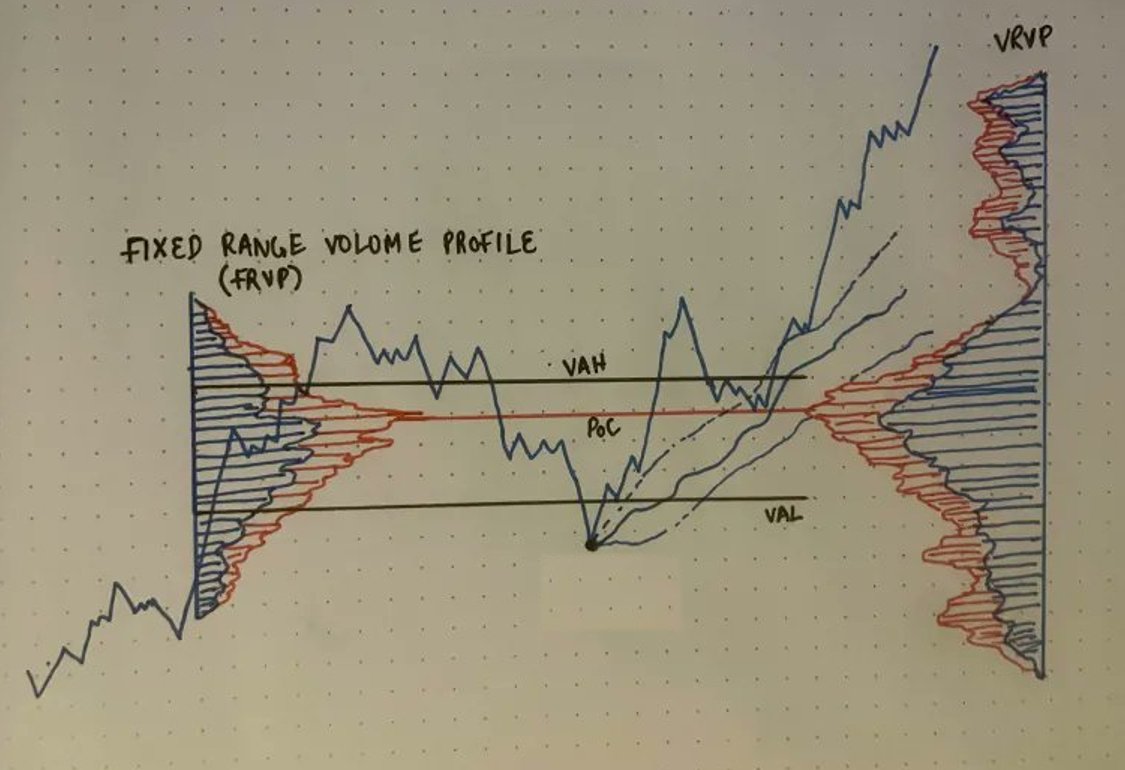

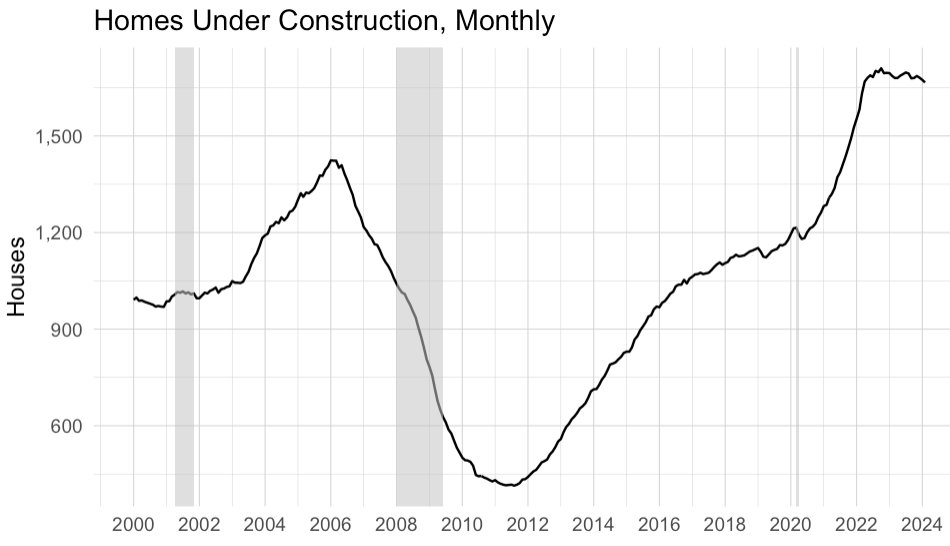


![reflexivityres's tweet photo. Yesterday @THORChain crossed $500m in daily trading volume -- here's our Q1 overview:
Intro
The rapid growth of alt layer 1 (L1) blockchains, which began in 2016-2017, has created a huge market opportunity for innovations that enable seamless blockchain interoperability. THORChain has emerged as a groundbreaking protocol that reshapes the decentralized exchange (DEX) landscape by enabling native L1 cross-chain swaps. Established in 2018 by a team of pseudonymous developers, THORChain is built on the Tendermint and Cosmos-SDK frameworks, distinguishing itself by enabling trustless swaps between native assets across multiple chains without relying on centralized exchanges (CEXs) or the complexities of cross-chain bridges or wrapped tokens. This article delves into the mechanics, advantages, and security dynamics of THORChain, illustrating its role in addressing the challenges of cross-chain interoperability and liquidity fragmentation within the cryptocurrency ecosystem.
THORChain
THORChain represents a departure from traditional single-chain automated market makers (AMMs) by providing a similar experience but allowing the swapping of native assets across multiple chains. The protocol is designed with the highest levels of decentralization and security in mind, ensuring BTC (and other supported assets) is secured in an over-collateralized fashion by an anonymous, permissionless set of validators.
THORChain is an independent blockchain and decentralized exchange (DEX) facilitating seamless cross-chain native asset swaps. It stands out by enabling direct exchanges between various cryptocurrencies, such as bitcoin (BTC) and ether (ETH), without the need for cross-chain bridges or wrapped tokens—a common need within the current crypto ecosystem that subjects users to additional (and often exploited) risks. THORChain's mission is to address and streamline the complexities surrounding cross-chain swaps and the fragmented liquidity landscape, offering a unified and decentralized liquidity network accessible to all chains. As of 2024, THORChain supports native asset swaps between Bitcoin, Ethereum, BNB Chain, Avalanche, Cosmos Hub, Dogecoin, Bitcoin Cash & Litecoin.
Crypto’s “Cross-chain” Evolution
The expansion of the crypto economy over the years, fueled by the emergence of Layer 1 blockchains and the evolution of DeFi, demands interoperability across various blockchain networks. This has led to the development of cross-chain technologies and bridges that enable the transfer of assets, enhancing the functionality and accessibility of different blockchain ecosystems.
Centralized exchanges (CEXs)traditionally facilitated asset transfers across blockchains but are inherently limited by their centralized nature. This centralization introduces counterparty risk, as users must rely on the exchange's internal systems and custodial services, which can become points of vulnerability, as evidenced by historical failures (e.g., FTX).
Blockchain bridges, designed to connect disparate blockchain networks, promise improvements over CEXs by enabling direct asset swaps without custody risk. However, these bridges have their own set of challenges, including security risks, centralization concerns, and the reliance on "wrapped" assets. Wrapped assets, representing IOUs of the original asset on a different blockchain, add complexity and introduce risks not present with native assets.
Wrapped assets are inferior to native assets because:
Wrapped assets are IOUs on the original asset (an IOU is never as good as the real thing because it involves some form of counterparty risk)
Wrapped assets fragment and compete with liquidity from the native asset
Wrapped assets as collateral in DeFi can “depeg,” resulting in liquidations not possible if holding the native asset
In some instances, wrapped assets require an external oracle for pricing, which is another vector of risk
In contrast, solutions like THORChain don’t suffer from these limitations enabling direct asset swaps, utilizing its Bifröst Protocol for cross-chain interoperability. This approach not only mitigates the risks associated with wrapped assets and centralization but also unlocks significant value by leveraging dormant capital in a trust-minimized environment, setting it apart from traditional CEXs and bridges.
How Does THORChain Solve Cross-chain Swaps?
As previously mentioned, THORChain enables native asset swaps across multiple chains, such as converting native BTC to ETH, without necessitating intermediaries or the custody risk inherent in using a CEX. In addition, pricing on THORChain is both transparent and independent of any centralized entities. This approach ensures that users receive consistent and transparent pricing, devoid of manipulation by external parties. Finally, it completely removes the need for bridges and wrapped assets.
At its core, THORChain is driven by state machines, which are used to manage asset exchange logic and coordinate external transactions. These state machines ensure that the platform can synchronize its internal state with other chains, enabling a seamless flow of assets across different blockchain ecosystems. This synchronization is achieved through one-way state pegs, which allow THORChain to accurately reflect the status of assets on connected blockchains in real time.
RUNE Token and Protocol Security
The RUNE token and its utility are at the heart of THORChain's entire economic security model. Specifically, THORChain incentivizes the locking of RUNE at a rate 3x the value of non-RUNE assets within the ecosystem.
To maintain the network's security and incentivize sufficient liquidity, THORChain utilizes a dual incentive mechanism. Participants lock three dollars of RUNE for every dollar of non-RUNE assets on the platform. This 3:1 ratio establishes a foundational value for RUNE, underpinning the token's economic model. Such a structure not only promotes a high degree of liquidity but also plays a crucial role in securing the assets on the network. Through this innovative economic design, THORChain not only addresses common challenges in the DeFi space, such as liquidity fragmentation and security vulnerabilities, but also provides a compelling value proposition for both investors and users within the cryptocurrency ecosystem. CLPs and Key Entities Central to THORChain's operational model is the utilization of a continuous liquidity pool (CLP), with RUNE serving as the intermediary asset in every transaction. This innovative approach ensures that when users wish to exchange two different assets, the swap is conducted through two distinct liquidity pools. For instance, converting USDT to BTC involves an initial swap from USDT to RUNE, followed by a subsequent exchange from RUNE to BTC. This process is streamlined by the THORChain state machine, which handles asset conversion seamlessly with no need for users to interact directly with RUNE. The liquidity model employed by THORChain adapts to the changing demands for liquidity. This is further augmented by the different actors within the THORChain ecosystem, which include liquidity providers, traders, and node operators. Each plays a critical part in ensuring the network's efficiency and reliability. Liquidity providers contribute assets to the pools, earning rewards in the form of block rewards and transaction fees, which are determined by their share in the pool and the pool's overall activity.
THORChain prioritizes the interests of liquidity providers, treating them as essential participants within its ecosystem and taking significant measures to safeguard their capital. In contrast, node operators are viewed differently; while they are compensated for their services, they are also subject to removal should they fail to adhere to the platform's standards.
Swappers form the user base that engages in asset exchanges, while traders leverage arbitrage opportunities to align the prices within THORChain's pools with those in the broader market, thereby maintaining equilibrium. Node operators, on the other hand, bond RUNE to support the network's security and consensus mechanism, operating under a veil of anonymity and subject to rotation to ensure network integrity.
Technology Stack
The THORChain network uses a series of technologies to deliver its vision. Overall, THORChain was built using the Cosmos SDK platform, a stack that lets developers build Proof of Stake (PoS) blockchains. The stack has a number of necessary pre-built modules that are relevant to THORChain to assist developers, such as transaction authentication or staking solutions. THORChain facilitates cryptocurrency swaps using its own AMM design, using the RUNE token as the intermediary powering a peer-to-pool economic model.
In addition to Cosmos SDK, THORChain also uses several other novel technologies that come together to facilitate the permissionless, cross-chain swaps.
Tendermint Consensus
THORChain, as part of the Cosmos ecosystem, leverages Tendermint Core for its consensus mechanism. Tendermint Core is a versatile, language-agnostic algorithm that allows for the replication of decentralized applications (dApps) across various programming languages. It is built on a Byzantine Fault Tolerant (BFT) consensus model, which ensures that the network can continue to operate reliably and reach agreement on transactions and state changes even if up to one-third of the network's nodes fail arbitrarily.
In the Tendermint system, validators play a crucial role. They are responsible for confirming transactions and casting cryptographic "votes" to agree on the network's state. This process occurs in rounds, with validators working together to maintain the integrity and consistency of the system. THORChain employs a unique approach to managing its validators, capping the number at 120, thereby promoting competition among potential would-be validators. The 120 validators are "churned" every three days based on several different factors. Nodes that commit the largest amount of RUNE are selected to join the network, while those with the smallest commitments, as well as the oldest and least efficient nodes, are removed.
Additionally, THORChain made the conscious decision not to enable delegated staking. The decision against public delegation stems from concerns that it could lead to a concentration of power among a limited number of validators, undermining the network's decentralization. This is a behavior observed in other delegated Proof of Stake (dPoS) networks, where node operators engage in activities designed to attract delegated funds, such as marketing campaigns and offering lower commissions. THORChain's stance is designed to prevent such dynamics, ensuring a more equitable and decentralized ecosystem.
However, THORChain does accommodate private delegation within specified limits. This arrangement permits node operators to maintain a whitelist of up to ten bonders, preventing the scalability issues associated with broader public delegation. This model is predicated on mutual trust among bonders and operators, with the expectation that operators fulfill their obligations while maintaining the network's integrity.
To qualify as an independent validator within THORChain, there is a substantial entry requirement: a minimum bond of 300,000 RUNE, which is double the amount of external assets held in the network's liquidity pools to ensure full underwriting. However, while 300,000 RUNE is the protocol’s hard-coded minimum, the actual minimum to break into the top 120 validators is currently 700,000+ RUNE. This high threshold serves as a deterrent against malicious actions, as any validator found guilty of misconduct or theft faces severe penalties, including a bond slash of at least 1.5 times the value of the stolen assets.
Validators are also required to operate a node on each blockchain supported by THORChain, which is integral to the functioning of the Bifröst Protocol, THORChain's mechanism for enabling cross-chain transactions. While this requirement underpins the protocol's security and interoperability, it also adds a layer of complexity to the operation of nodes, demanding significant commitment and technical expertise from validators. This system ensures that THORChain remains secure, decentralized, and resilient against attacks, making it a robust part of the broader Cosmos ecosystem.
Bifröst
At the core of THORChain's functionality are THORNodes and the Bifröst protocol. THORNodes operate the internal logic in each node, while Bifröst is the service that monitors each chain and reports to THORNodes. The Bifröst Protocol, in a sense, acts as a bridge, allowing for the seamless transfer of assets. This interoperability is significant because it overcomes the limitations and security vulnerabilities associated with traditional cross-chain bridges while handling impressive volumes in the billions of USD per month (image below).
In the THORChain ecosystem, these native assets are managed through Asgard Vaults, which are secured by multi-signature keys managed by anonymous THORNodes, thereby avoiding potential collusion. Transactions require a 2/3 consensus among the 20 nodes managing a vault, with a Threshold Signature Scheme (TSS) ensuring random signatory selection to further enhance security.
Each node within THORChain's network is equipped with a Bifrost service. The Bifrost service is tasked with connecting to various blockchains and monitoring vault addresses for inbound transactions. This service plays a crucial role in ensuring that THORChain remains updated with all transactional activities across the networks it interfaces with.
When users initiate transactions, such as swaps, assets are deposited into these vaults and monitored until a consensus is reached, prompting THORNode to execute the action desired by the user, such as making a swap or adding liquidity.
For processing chain-specific transactions, THORChain utilizes a Bifrost Chain Client. This client is responsible for taking the transaction schemes created by the Signer, serializing them into the appropriate destination transaction format, and executing them using the respective chain client. This process ensures that transactions are accurately and efficiently processed according to the unique requirements of each connected blockchain.
Threshold Signature Schemes (TSS)
The Threshold Signature Scheme (TSS) is a sophisticated cryptographic protocol employed by THORChain to enhance the security and decentralization of cryptocurrency transactions, such as swaps. This method diverges from traditional practices that often rely on a singular trusted entity to manage private keys. Instead, TSS spreads the responsibility for key management across a network of nodes, with THORChain's implementation involving about 100 nodes, aiming for an expansion to 120. This distributed approach requires a consensus of two-thirds of the node operators for the execution of transactions, significantly increasing security and resistance to unauthorized access or attacks.
The operational framework of THORChain's TSS is broken down into three fundamental steps:
Key Generation: The initial phase where key pairs necessary for transaction verification are created collaboratively by the participating nodes. This ensures that no single node holds the complete key, maintaining security and decentralization.
Sign: In this phase, the distributed nodes work together to sign transactions. This process is critical for authorizing transactions in a way that ensures the signature is valid only if the agreed threshold of participants consents.
Verify: The final step involves the verification of the signature by the network to confirm the transaction's legitimacy. This ensures that the transaction has been authorized by the requisite number of nodes.
THORChain's TSS model is particularly notable for its end-to-end encryption and a bond model that disincentivizes attacks on the network. It operates through a sequence of well-orchestrated steps, beginning with accepting transaction requests. It then organizes the requisite parties for the key generation and signing process, efficiently managing communication and coordination through a peer-to-peer network. This setup ensures that all parties are synchronized in the key generation phase, which is essential for the distributed management of the TSS secret key. Since the secret key is dispersed among the participants, no single entity can unilaterally authorize transactions, thereby bolstering the system's security and integrity.
Trade Execution
A critical aspect of decentralized exchanges is the need for accurate pricing to enable users to swap across supported assets effectively. THORChain addresses this challenge by harnessing the intrinsic design of its liquidity pools and engaging arbitrageurs to maintain exchange rate accuracy. This strategy eliminates the dependence on external resources such as oracles or weighted averages, which are susceptible to manipulation and attacks.
THORChain’s internal pricing mechanism works similarly to other AMMs, adjusting the price of each asset based on the ratio of the assets in the liquidity pool. This approach enables the system to determine not only the instantaneous price of an asset but also its relative purchasing power. This distinction is crucial for applications such as collateralizing debt, where understanding an asset's purchasing power is as important as knowing its spot price.
All swaps conducted on THORChain are governed by the platform's State Machine, ensuring that only valid transactions are finalized while invalid ones are rejected. This process is quite efficient, with all swaps being confirmed within a brief 5-10 second window.
Additionally, as of Q2 2023, THORChain has introduced “Streaming Swaps,” designed to enhance the execution of large transactions by dividing them into multiple, smaller sub-swaps over time. This novel approach mirrors the concept of a Time Weighted Average Price (TWAP) trade but is confined to a 24-hour timeframe.
Streaming Swaps operate by allowing users to specify two critical parameters: the Swap Interval and the Swap Count. The Swap Interval, measured in THORChain blocks (approximately six seconds each), dictates the time delay between each sub-swap, thereby facilitating arbitrage opportunities that help maintain the balance of the liquidity pools throughout the transaction process. The Swap Count determines the number of sub-swaps into which the original transaction will be divided, aiming to reduce slippage by decreasing the size of each transaction leg. Should a user set the Swap Count to zero, THORChain automatically adjusts the swap size to minimize the liquidity fee to five basis points, optimizing the cost-efficiency of the transaction.
From the perspective of users, particularly those looking to execute large trades, Streaming Swaps present a compelling alternative to traditional trading methods on decentralized exchanges. Streaming Swaps distribute the liquidity demand over a series of moments, allowing for arbitrage to adjust prices more effectively in real-time. This mechanism not only improves price execution but also enhances the capital efficiency of THORChain without necessitating an increase in Total Value Locked (TVL). By enabling transactions to be broken down into smaller, more manageable parts, Streaming Swaps reduces the impact of slip-based fees, a common hurdle in large-scale DeFi transactions. This innovation allows THORChain to offer competitive liquidity fees as low as five basis points, making it an increasingly attractive platform for high-volume traders seeking efficient, cost-effective trading solutions in the decentralized space.
Security
The governance mechanisms and security protocols of blockchain networks are critical to their functionality, safety, and performance. THORChain employs a multi-layered security strategy to safeguard the network's solvency and minimize the impact of potential exploits. This comprehensive approach ensures the integrity of transactions and the safety of user funds.
Governance Through Mimir
At the heart of THORChain's governance model is Mimir, a sophisticated feature that empowers the network's nodes with the authority to modify various constants and parameters crucial for the network's operation. Through a consensus mechanism requiring more than 66% agreement, active nodes can vote to adjust network parameters such as reserve emissions, minimum bond, churn speed, and more. These adjustments are pivotal for maintaining the network's optimal performance and ensuring its security. By enabling node operators to influence network parameters directly, THORChain ensures that its governance is distributed among those who have a vested interest in the network's success.
Security Monitoring and THORSec
THORChain's security framework is bolstered by several innovative features designed to safeguard the network against a range of threats. One such feature is the automatic security flagging mechanism embedded within the network's code. This mechanism is programmed to emit events under specific conditions, such as unauthorized transactions, attempts at double-spending, or unusually large withdrawals. These events are immediately reported to a dedicated monitoring channel on THORSec Discord for swift review. THORSec’s Red Team is a dedicated group of cybersecurity professionals responsible for reviewing code, monitoring protocol health, and providing incident response services. This team plays a critical role in maintaining the network's security posture through continuous oversight and emergency preparedness.
Granular Halting Controls
Contrary to the rest of the chain’s hands-off approach to chain design, THORChain has implemented granular halting controls. These controls enable Node Operators to exercise precise command over the network's operations, enhancing its safety. Through Mimir, nodes can issue commands to halt signing for a specific chain, pause trading for a specific chain, or even halt all operations for a particular chain. This level of control is crucial for addressing chain-specific issues such as forks, syncing problems, or exploits without disrupting the entire network's operations.
Moreover, in situations requiring immediate and broad action, nodes have the authority to halt trading globally across the network. This emergency control mechanism, while controversial to some, is a critical safeguard that ensures the network can be quickly stabilized in response to significant threats.
Additional Security Measures and Protocols
Conformation Counting: This mechanism protects against double-spend attacks and non-instantaneous block reorganizations, enhancing the network's reliability.
Outbound Transaction Throttling: To prevent large-scale fund extractions, outbound transactions are limited in value per block and subject to maximum processing times, with these parameters adjustable by Node Operators.
Distributed Outbound Requests: Large transactions are dispersed across multiple blocks to maintain system stability and prevent bottlenecks, ensuring the network can handle significant outflows without compromise.
Solvency Checkers: Both reactive and proactive solvency checkers are deployed. Reactive checkers compare vault values with actual wallet amounts, while proactive checkers anticipate insolvencies before transactions are executed, significantly reducing the risk of financial discrepancies.
Audits and Bug Bounty Program: THORChain has undergone rigorous audits by leading security firms such as Kudelski, Halborn Security, and Trail of Bits. These audits are meticulously documented and accessible via a dedicated GitHub repository. Furthermore, a formal bug bounty program managed by Immunefi encourages the discovery and reporting of vulnerabilities, ensuring that security concerns are promptly and effectively addressed.
Economic Security Model
THORChain's approach to maintaining economic security within its ecosystem is both innovative and intricate, leveraging a balance between liquidity provision and the securing of assets through a mechanism known as the Incentive Pendulum. This model is designed to ensure that the value secured by nodes, through bonding, is always proportionate to the value held within the network's liquidity pools. The architecture of this system embeds a hard cap within the THORChain codebase, effectively pausing new deposits into the pools once a certain threshold is reached, thereby preventing an imbalance that could jeopardize the network's security and efficiency.
[Twitter Character Limit Reached]](https://pbs.twimg.com/media/GIPQ-kwXIAAGN8L.png)


