South Korea has proposed deferring its tax on virtual asset gains by two years, from January 2027 to 2029. If enacted, this will be the fourth postponement of a regime first scheduled for January 2022. Finance Minister Lee Hyoung-il has said the Government will consult lawmakers on the proposal.
The tax would apply at 22% (20% income tax and 2% local tax) on annual gains above KRW 2.5 million (approx. USD 1,860). The Government has tied the new date to 2029, when South Korea begins exchanging information under the Crypto-Asset Reporting Framework (CARF). It said that taxing gains before those exchanges begin could disadvantage the domestic market relative to overseas markets.
Source: https://t.co/Lk8sAqbrlX
220
BWA Presents Union Budget 2027 Recommendations: Towards Fair Taxation, Stronger Compliance and Regulatory Certainty for India’s VDA Sector
Bharat Web3 Association (BWA) presented the Virtual Digital Asset (VDA) industry’s recommendations to the Ministry of Finance during the pre-budget consultations ahead of Union Budget 2027.
The BWA submission focused on the need for a fair, balanced and effective taxation framework that encourages compliance, strengthens investor protection, enhances tax revenues and supports the growth of India’s domestic Web3 ecosystem.
BWA highlighted several key recommendations, including:
1. Ensuring a level playing field: Clarifying and strengthening the applicability of Indian tax provisions, particularly TDS obligations, to offshore VDA platforms serving Indian users, so that compliant domestic platforms are not placed at a competitive disadvantage.
2. Rationalising VDA taxation: Reconsidering the existing 1% TDS, permitting the set-off and carry-forward of losses, and reviewing the 30% tax rate to encourage greater participation through compliant Indian platforms.
3. Strengthening compliance and accountability: Improving the enforcement of registration and reporting obligations and ensuring that offshore entities serving Indian users are subject to appropriate Indian legal and regulatory requirements.
We also drew attention to the need for regulatory clarity regarding access to global liquidity by FIU-IND-registered Indian VDA platforms through offshore exchanges, particularly in the context of ongoing enquiries and differing interpretations under FEMA.
Clear and consistent guidelines, developed in consultation with the relevant authorities, would provide much-needed certainty to compliant Indian platforms, strengthen the domestic ecosystem and help ensure that Indian users continue to access transparent, accountable and compliant channels.
BWA’s central message was that effective taxation, regulatory certainty and a level playing field can reinforce one another.
A framework that encourages activity within compliant Indian platforms can strengthen oversight, improve tax compliance and support innovation and investment in India.
BWA remains committed to working constructively with the Government and regulatory authorities towards a responsible, transparent and globally competitive VDA ecosystem.
#BharatWeb3Association #UnionBudget2027 #Web3 #DigitalAssets #VDA #TaxReform #RegulatoryClarity #DigitalIndia
The Financial Stability Board (FSB) has released its G20 Roadmap for Enhancing Cross-border Payments: Consolidated Progress Report for 2026, outlining progress towards improving the speed, cost, transparency and accessibility of cross-border payments.
On virtual assets, the report highlights progress by the Financial Action Task Force (FATF) in implementing the Travel Rule, including the revised FATF Recommendation 16, the forthcoming 2027 Guidance and the publication of Best Practices on Travel Rule Supervision.
The report underscores the need for consistent implementation of international standards and stronger supervisory frameworks across the virtual asset ecosystem.
Read more: https://t.co/8xY2oON6CH
Hong Kong has passed a law requiring VDA exchanges and other covered service providers to collect customer and transaction data for tax reporting purposes. The rules will come into effect in 2027, with the first automatic exchange of information with overseas tax authorities scheduled for 2028.
The law incorporates the OECD’s Crypto-Asset Reporting Framework (CARF), released in October 2022.
Source: https://t.co/LRz6eHxlYX
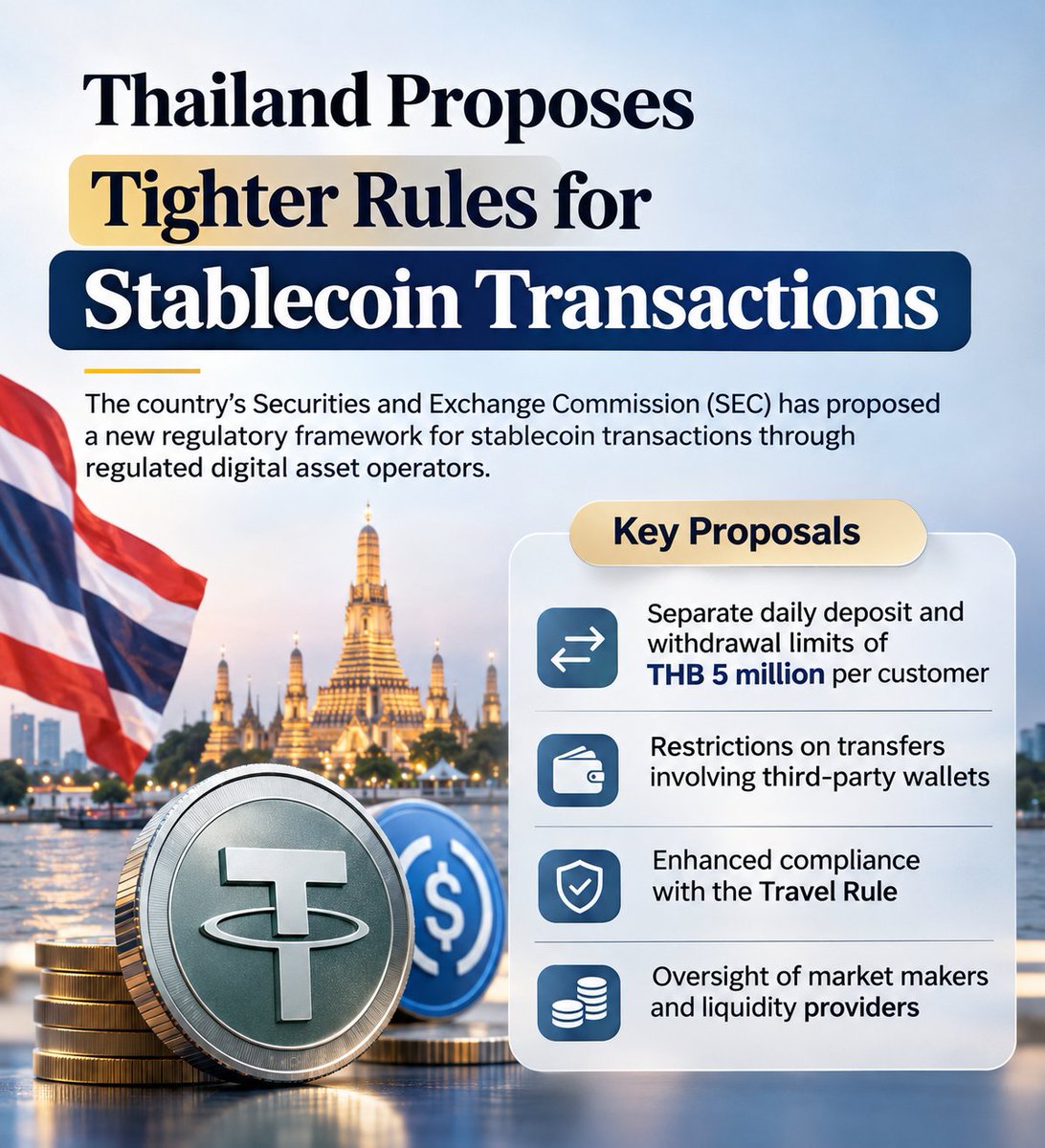
Thailand’s Securities and Exchange Commission (SEC) has proposed regulations governing stablecoin transactions through regulated digital asset operators.
The proposed framework includes separate daily deposit and withdrawal limits of THB 5 million per customer, restrictions on transfers involving third-party wallets, enhanced compliance with the Travel Rule, and oversight of market makers and liquidity providers.
Source: https://t.co/tG72VFv5ro
Taiwan’s Financial Supervisory Commission (FSC) released draft regulations under the Virtual Asset Service Act. The draft covers stablecoin issuer eligibility, ownership requirements for issuing companies and minimum capital requirements.
Read more: https://t.co/va3sclqAy5
#VDA #Stablecoins #Taiwan #Regulation
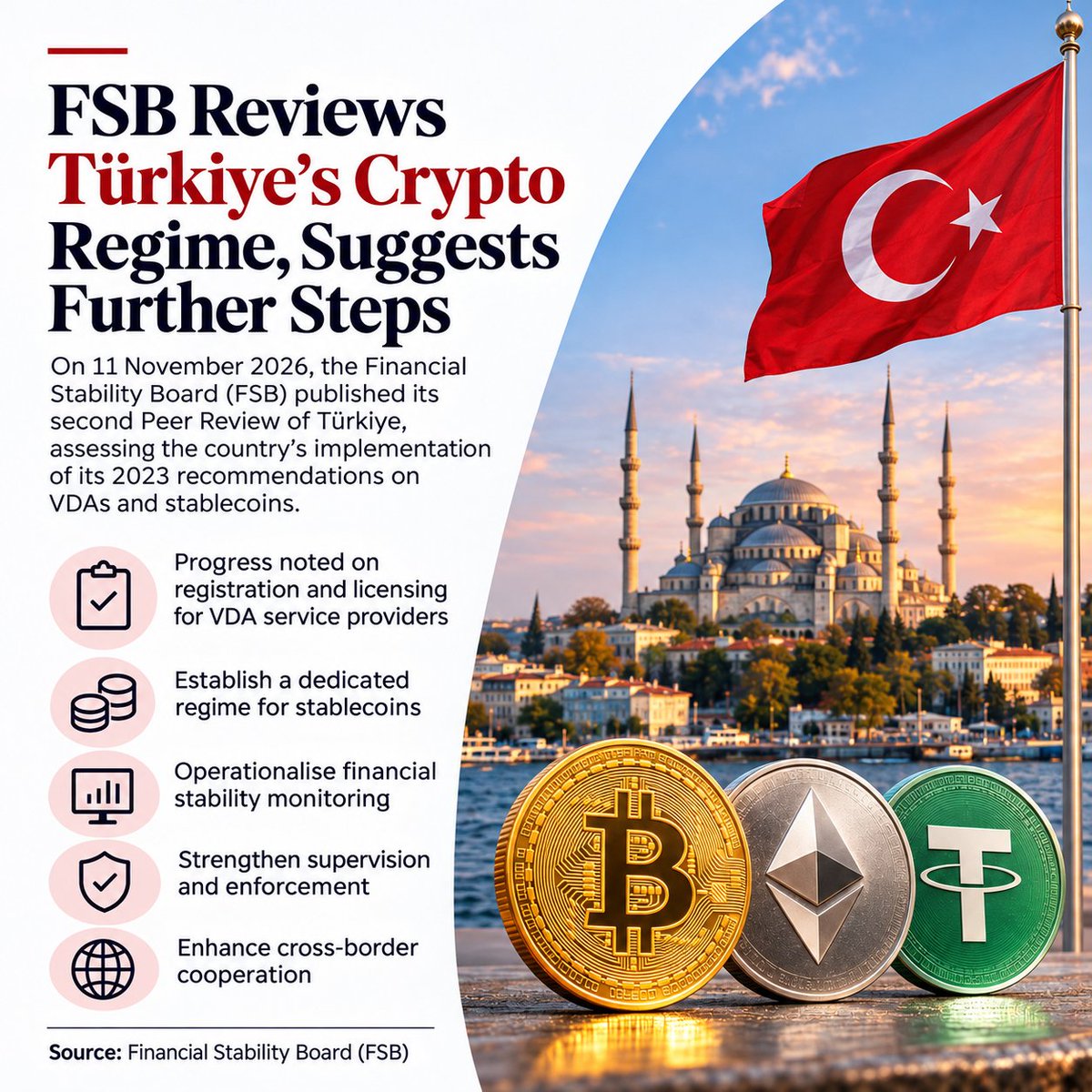
On 11 November 2026, the Financial Stability Board (FSB) published its second Peer Review of Türkiye.
The FSB recommends that Türkiye establish a dedicated regime for stablecoins, operationalise financial stability monitoring, strengthen supervision and enforcement, and enhance cross-border cooperation.
Read more: https://t.co/ycf0y7HGAl
The Bank of Russia has approved Bitcoin (BTC), Ether (ETH) and Tether (USDT) for trading by non-qualified investors, effective 17 November 2026. Retail investors may purchase these assets through brokers, trust managers and crypto exchange offices, subject to a limit of 300,000 rubles per year per intermediary. Qualified investors face no restrictions. All investors must pass a test and review risk information before transacting.
Source: https://t.co/8xGUY4kGOl
The Central Bank of Nigeria (CBN) has issued the ""Regulations for the Operations of Non-Security Virtual Assets in Nigeria"", establishing licensing, capital and reserve requirements for entities operating across the VDA ecosystem.
The framework covers stablecoin issuers, VDA payment service providers, exchanges, custodians and other regulated service providers.
Source:https://t.co/28eQSLUJxF
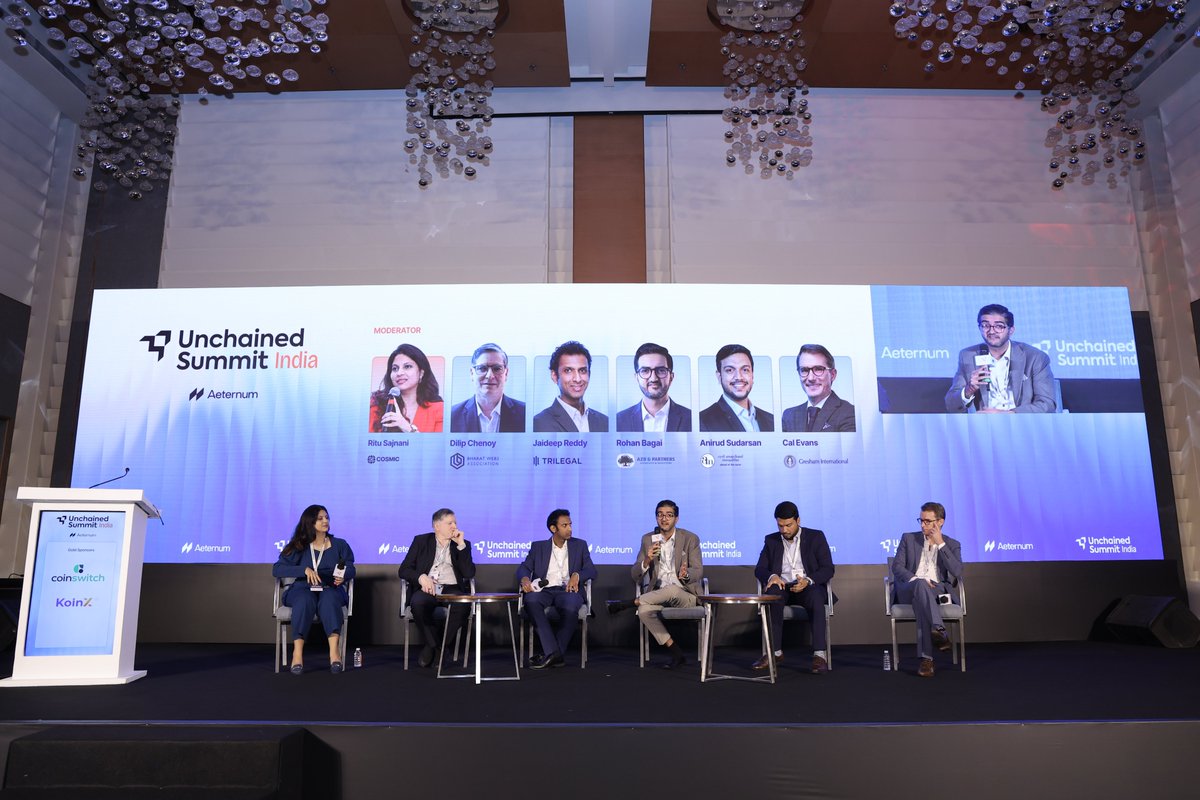
Bharat Web3 Association (BWA) Chairperson Dilip Chenoy participated in a panel discussion at Unchained Summit, examining India's evolving regulatory landscape for virtual digital assets.
The panel explored the need for regulatory clarity, balancing innovation with investor protection, and strengthening India's global competitiveness in the Web3 ecosystem.
The US Office of the Comptroller of the Currency (OCC) has encouraged community banks to develop payment stablecoin capabilities, following the finalisation of its rules implementing the Guiding and Establishing National Innovation for US Stablecoins (GENIUS) Act. In a statement on X, the regulator highlighted the role of community banking institutions in the development of the payment stablecoin ecosystem. The GENIUS Act, which establishes a federal regulatory framework for payment stablecoins, is scheduled to come into effect in January 2027.
Source: https://t.co/6FY6mrK4op
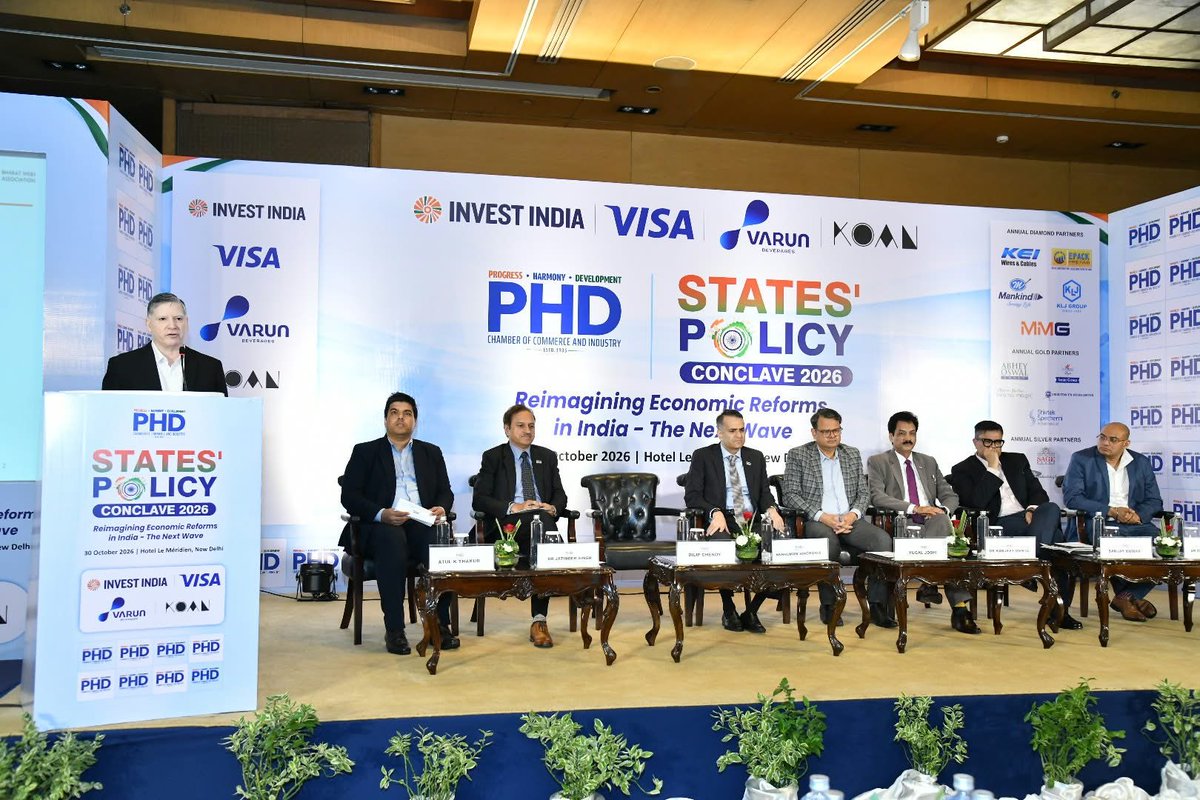
Bharat Web3 Association (BWA) is pleased to share that its Chairperson, Mr. Dilip Chenoy, attended the 20th edition of the PHDCCI States’ Policy Conclave 2026, held in New Delhi on the theme “Reimagining Economic Reforms in India – The Next Wave.”
During the Conclave, Mr. Chenoy highlighted how Web3 technologies can help states improve governance, reduce transaction costs, enhance transparency and build trust through verifiable digital records.
He emphasised the importance of practical, interoperable solutions that address existing governance challenges and contribute to more efficient and trusted digital ecosystems.
#BharatWeb3Association #Web3 #PHDCCI #StatesPolicyConclave2026 #DigitalGovernance #EconomicReforms
The Canadian government has initiated a 60-day public consultation on proposed regulations governing stablecoin issuers that are not financial institutions.
Announced on 24 October 2026, the proposed framework includes provisions addressing stablecoin issuance and a potential prohibition on yield payments to holders.
The consultation will remain open until 23 December 2026. The proposal also seeks to align Canada's regulatory approach with frameworks in the United States and other jurisdictions, with the objective of reducing the regulatory burden on issuers operating across multiple jurisdictions.
Source: https://t.co/nnMkjDyrtt
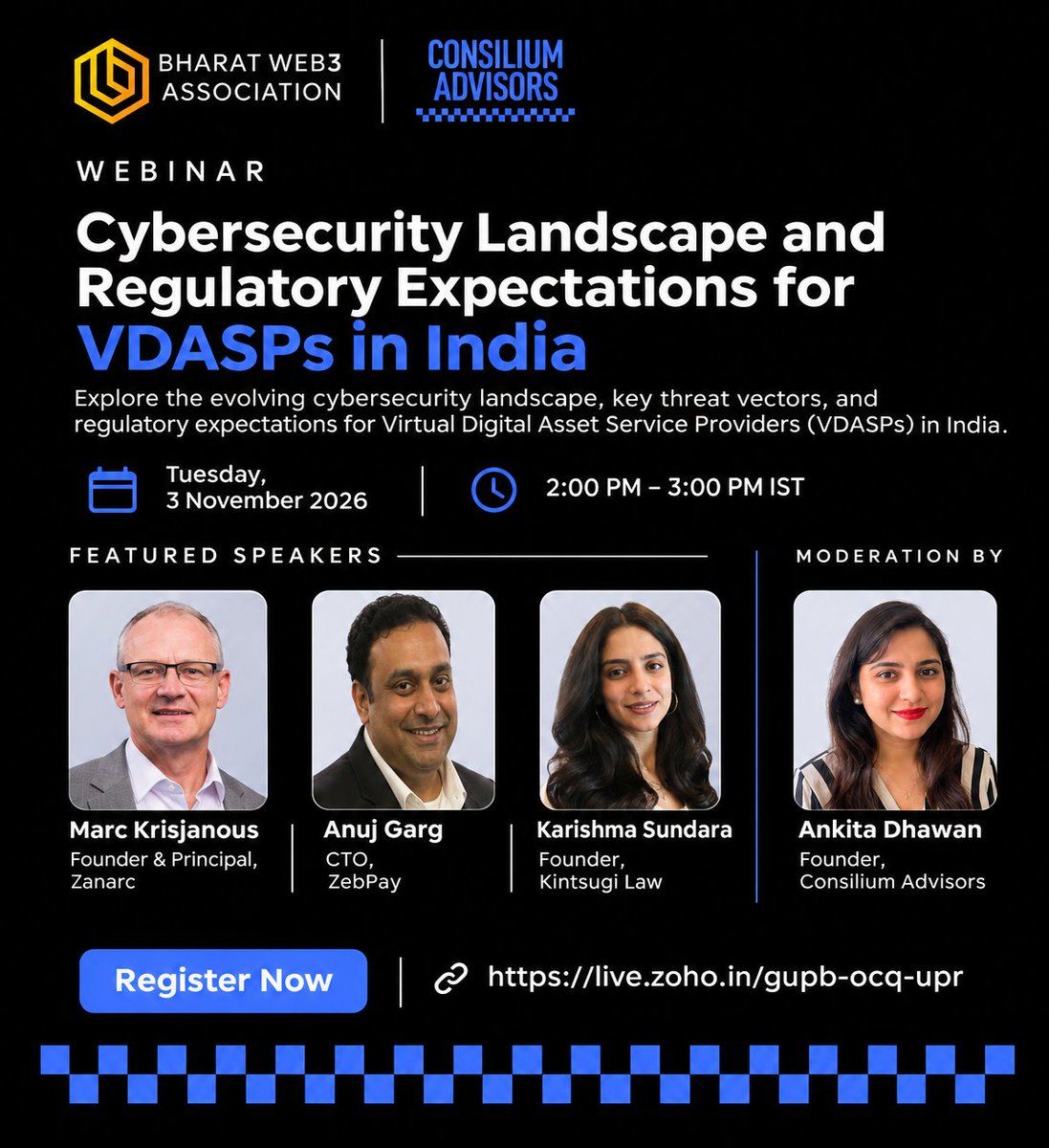
We are pleased to share that Bharat Web3 Association and Consilium Advisors are organising a webinar on “Cybersecurity Landscape and Regulatory Expectations for VDASPs in India.”
The session will explore the evolving cybersecurity landscape, key threat vectors, and regulatory expectations for Virtual Digital Asset Service Providers (VDASPs) in India.
Featured Speakers:
Marc Krisjanous – Founder & Principal, Zanarc
Anuj Kumar Garg – CTO, ZebPay
Karishma S. – Founder, Kintsugi Law
Moderation by Ankita Dhawan- Founder, Consilium Advisors
We invite you to join us for this discussion.
Please register using the link below:
https://t.co/2nPDP6R0fR
The French Senate has adopted a bill seeking to enable tax authorities to automatically exchange information on crypto-asset transactions with their foreign counterparts. Having passed its first reading, the legislation has been transmitted to the National Assembly as Bill No. 3421 for further consideration. The proposed framework covers an agreement on the exchange of crypto-related tax information, alongside an update to an existing agreement governing the exchange of financial account information.
Source: https://t.co/EaTtqzMkzD
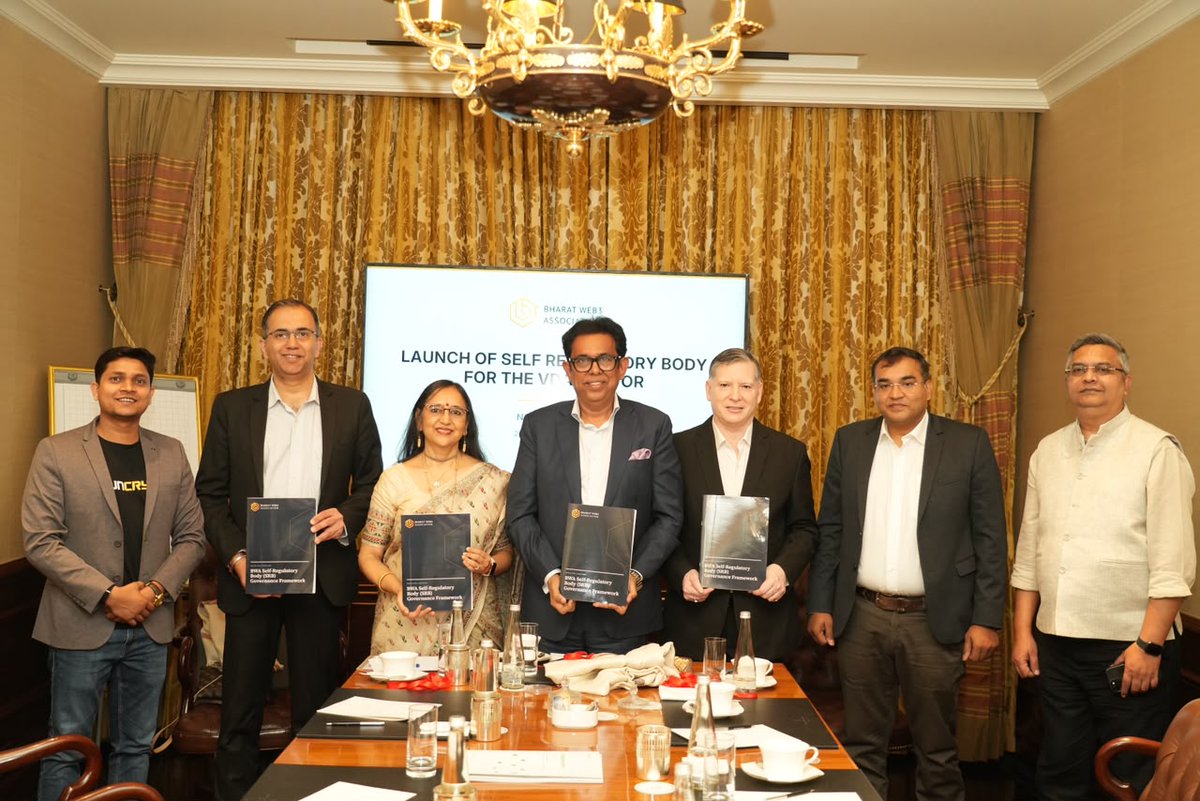
The launch of the Bharat Web3 Association’s Self-Regulatory Body (SRB) marks an important step towards strengthening governance, accountability and responsible growth in India’s Virtual Digital Asset (VDA) ecosystem.
The SRB’s charter is to promote responsible industry practices through a structured framework covering key areas such as consumer protection, token listing, market integrity, cybersecurity and responsible marketing.
More details on the BWA SRB, including its charter, governance framework and objectives, are available on the BWA website: https://t.co/T1KFJbzGto
Today, Bharat Web3 Association (BWA) officially launched its Self-Regulatory Body (SRB), marking an important milestone in advancing responsible governance and self-regulation in India’s Virtual Digital Asset (VDA) sector.
The SRB will focus on strengthening industry practices across cybersecurity, token listing, fair trading, consumer protection and responsible marketing.
We extend our sincere thanks to all BWA members for their continued trust, support and commitment to this initiative as we work collectively towards a more transparent, secure and responsible VDA ecosystem in India.
As India’s VDA industry evolves, consistent guidelines, strong compliance practices and effective safeguards will be essential to building trust and enabling responsible growth.
With this objective at it’s core, the Bharat Web3 Association (BWA) has established a Self-Regulatory Body (SRB) to strengthen industry practices, ensure consistent adherence and promote greater accountability among its members
BWA is privileged to have Shri Rohit Kumar Singh IAS (retd.), former Secretary to the Government of India, and Dr. Praggya Das, former Adviser-in-Charge of the Monetary Policy Department at the RBI, as SRB Chairperson and Member respectively.
This is only a beginning, but an important step in BWA’s commitment to developing a responsible, compliant and sustainable VDA sector in India.
Most of us have received a message that makes us stop for a second.
"Your bank account will be blocked." "Your KYC has expired." "Click here to fix it."
These messages are designed to make us act first and think later. And in that moment, anyone can be vulnerable to a scam.
As a financial platform, we think our responsibility goes beyond building products that people use to manage their money. It also means helping people understand the risks they may encounter while navigating the digital world.
In 2025, India recorded 24.02 lakh financial cyber fraud complaints, with reported losses of ₹22,495 crore. Behind these numbers are people who may have lost money they worked hard to earn.
That’s why we’re launching SafeSwitch at @CoinSwitch and @LemonnHQ during this National Cybersecurity Awareness Month.
The idea is simply to help people build the habit of stopping, checking and verifying before they act.
SafeSwitch brings together an interactive quiz to help people recognise common scam tactics, a website checker to assess suspicious links and websites, and guidance on how to report cyber fraud.
We’re also taking these conversations to our employees, users and the wider public. Because knowing what to look out for is an important first step towards staying safer online.
We know one platform or campaign can’t prevent every scam. But if it helps someone pause before clicking a suspicious link, question a message that doesn’t feel right, or know where to report fraud, it’s a step worth taking.
That’s what STOP. CHECK. VERIFY. means to us, making digital safety a more familiar part of everyday life.
Start with yourself. Take the SafeSwitch quiz now. Link in the comments.
@SagarVimal@govind1246