Home prices have just turned negative on a year-over-year basis reports housing analyst Melody Wright @m3_melody
Despite having predicted this, she's now concerned that falling prices will accelerated from here at an ever faster pace than she expected
Watch below:
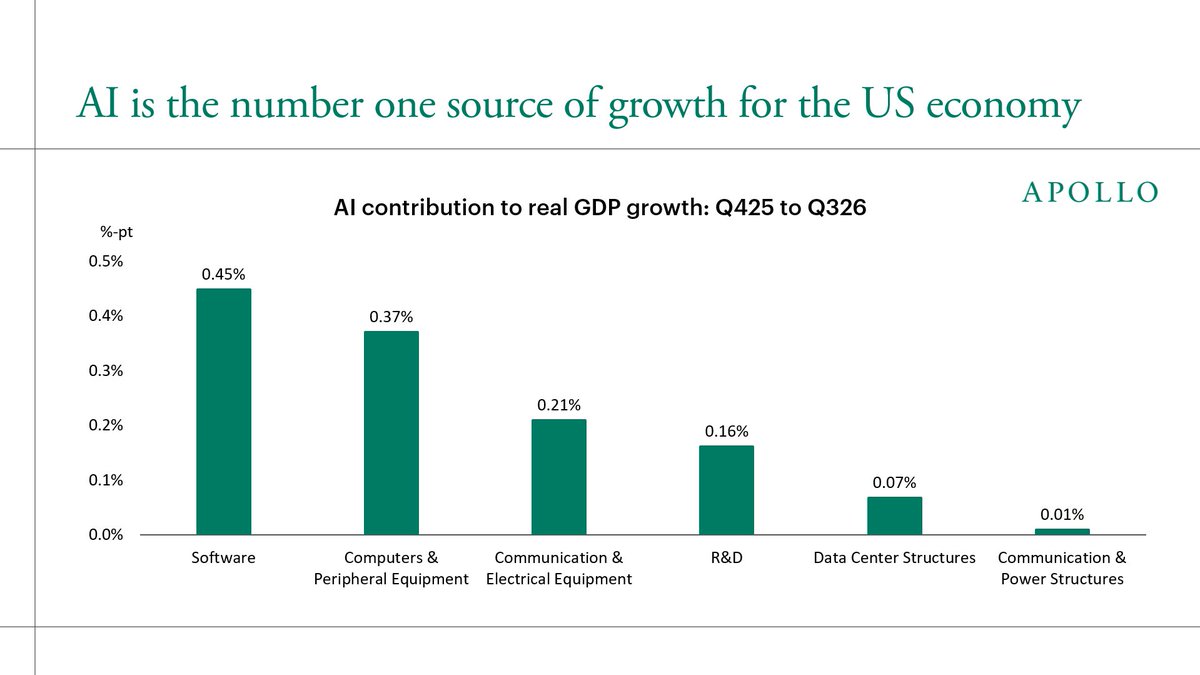
From Torsten Slok's The Daily Spark this morning: "The bottom line is that AI is the number one source of growth for the US economy, and anyone making statements about the 2027 outlook for equity and credit markets is implicitly making assumptions about the pace and magnitude of the AI data center buildout."
https://t.co/yVsKDhFigp
Deflating equity, housing and crypto asset bubbles into a system of extreme sovereign, corporate and consumer debt is a novel strategy Cotton!
@LukeGromen
At this point, with multiple Fed officials calling for a 50-basis-point hike in December, despite clear easing of energy pressure on prices, I can only believe that the Fed is trying to crash the market verbally to give them cover to stop hiking altogether soon. Nothing else makes any sense.
U.S. DEBT CEILING CRISIS LOOMS IN 2027 AS BORROWING APPROACHES $41.1 TRILLION LIMIT
The U.S. government could hit its $41.1 trillion debt ceiling as early as February or March 2027, according to the Bipartisan Policy Center.
Treasury cash reserves and extraordinary measures could delay a potential default until August–December 2027.
With Congress divided, negotiations over raising the borrowing limit could trigger another political showdown.
The looming deadline adds fiscal uncertainty and potential Treasury market volatility to existing concerns over rising interest rates and AI-sector valuations.
When you run persistent deficits, government bond purchases become de facto tax payments. The problem is when the bond buyers finally realize this and revolt you experience a massive overnight loss of tax revenue, the "sudden stop".