Nephrologist, Conjoint Professor of Medicine @UNSWMedicine @georgeinstitute. 'Science is a way of thinking much more than it is a body of knowledge.' Carl Sagan
Excited to share our latest study showing kidney, CV and survival benefits of GLP-1 receptor agonists just published in @TheLancetEndo Time-limited free access https://t.co/skhqzkBvVg
1/
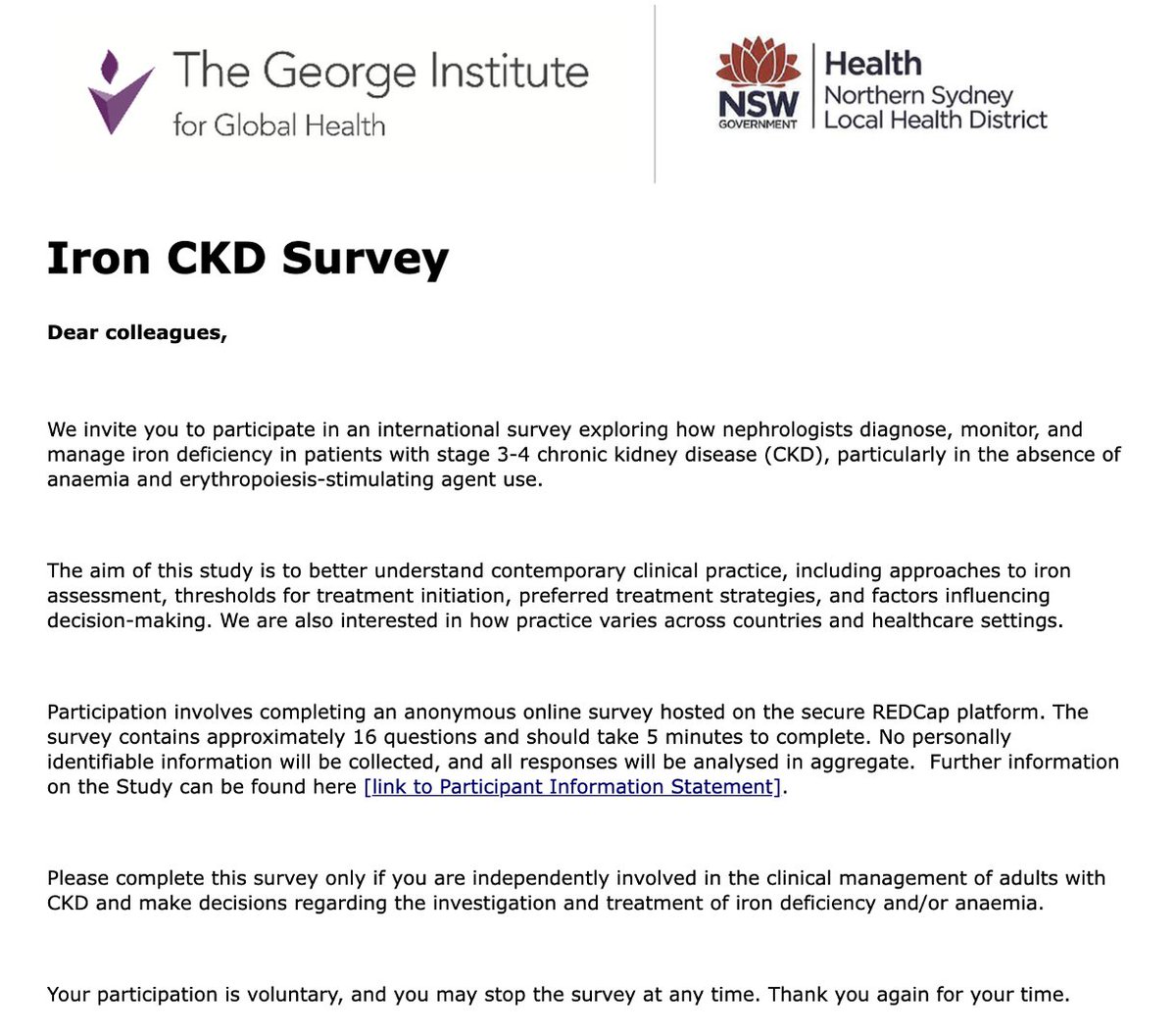
Colleagues, we need your help -
We're seeking nephrologists' perspectives on management of iron deficiency in CKD. The survey takes <5 minutes & will help shape the design of a new international randomised trial
https://t.co/T9G4ILLL70
Thanks for sharing with your networks
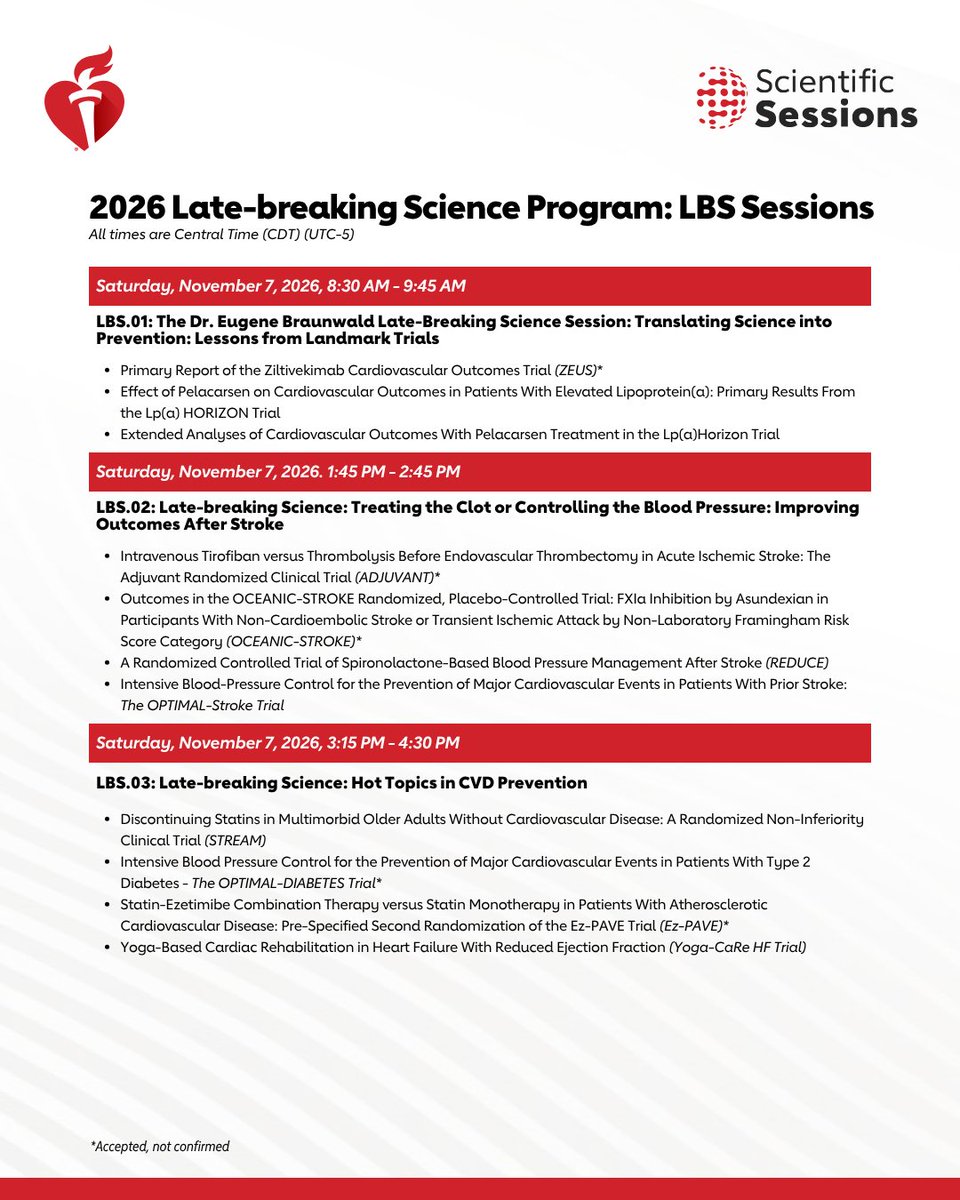
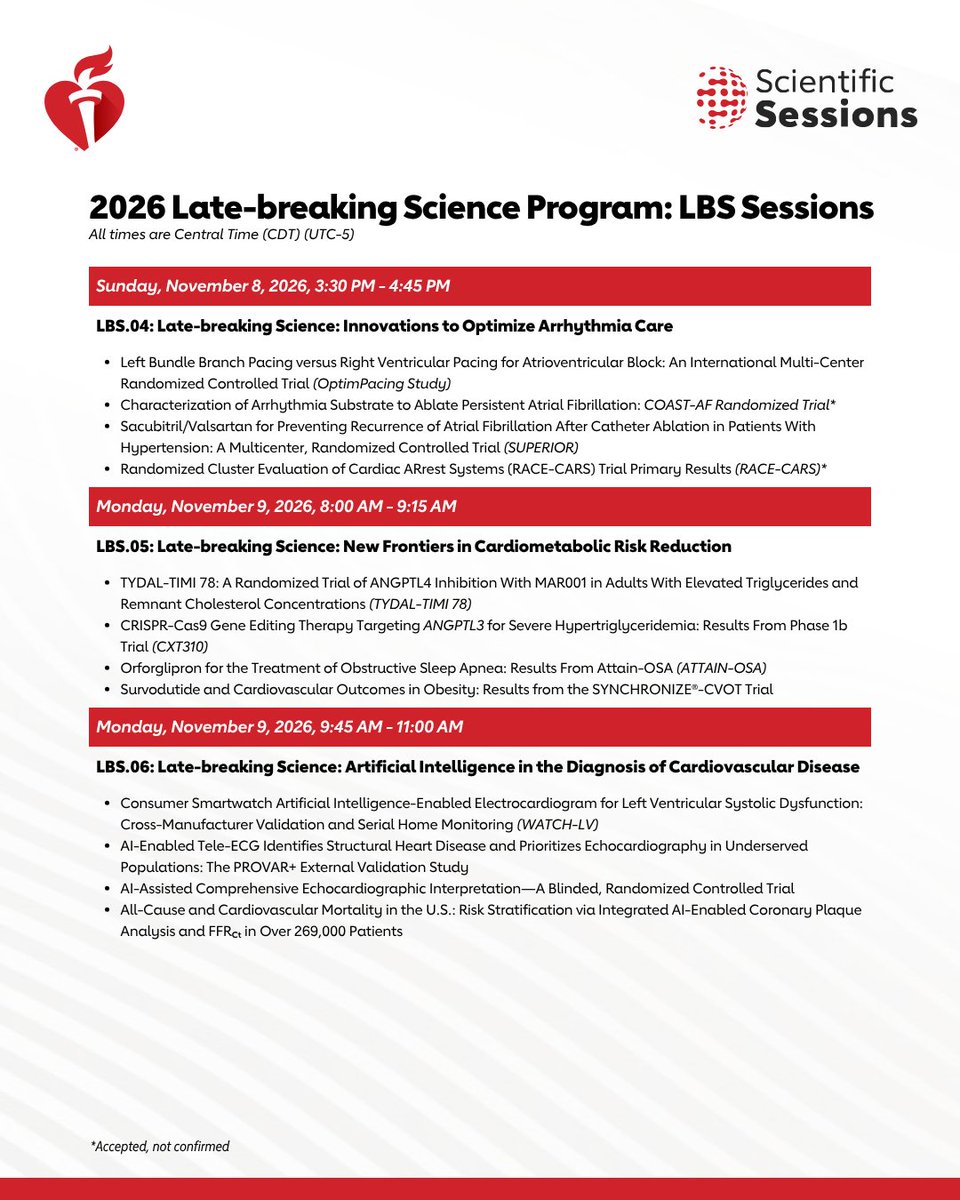
📣Announcing #ScientificSessions26 Late-Breaking Science.
Join us in November to experience the highest tier of scientific discovery and practice-changing educational content.
📍Chicago, Nov 6-9
@JoChikweMD@bnallamo
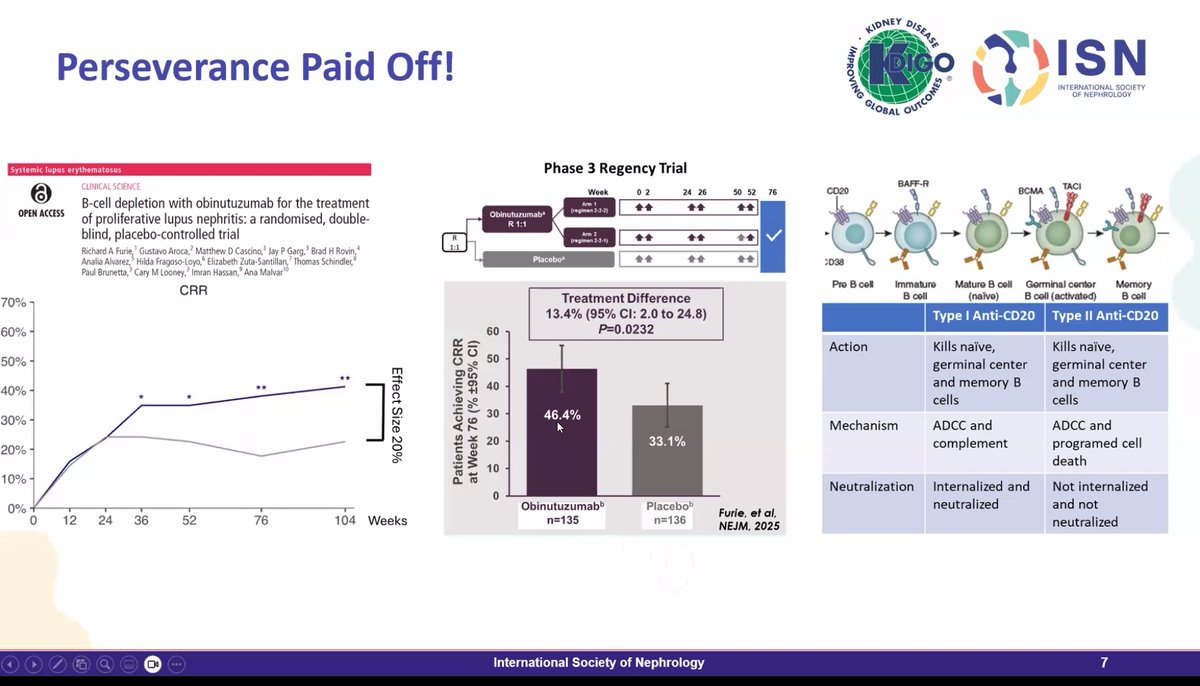
@ISNeducation@ISNkidneycare@KajareeG@krithicism@myadla@BradRovin Obinutuzumab, a type II anti-CD20 antibody, achieved deeper and more sustained peripheral and tissue B-cell depletion than rituximab, translating into improved renal responses in LN
Perhaps it's not just B-cell depletion, but how completely we deplete them
Presented at #ERA26:
In adults without diabetes who had chronic kidney disease, the nonsteroidal mineralocorticoid receptor antagonist finerenone led to a slower decrease in the estimate glomerular filtration rate than placebo over 32 months. Full phase 3 FIND-CKD trial results: https://t.co/BSF1GmHFaf
@ERAkidney
Now online: The largest global validation of AHA PREVENT & ESC SCORE2 cardiovascular risk tools. Across ~6.5M people, both performed comparably across geographies & albuminuria further improved risk prediction
Open access in @NatureMedicine:
https://t.co/HiSjXc01rI
Three years since the first flight of Starship, the next generation is here. New ship. New booster. New engines. New pad and new test site. SpaceX engineers are working to solve one of the most difficult engineering challenges in history: developing a fully, rapidly reusable rocket
Dr. Mike Sharma and I discuss the results of the phase III OCEANIC-STROKE Trial: In secondary stroke prevention the Factor Xi inhibitor Asundexian reduced the risk of recurrent ischemic stroke at 1 year by 26%. The absolute reduction was such that only 53 people would we need to be treated to prevent another stroke at 1 year.
There was no increase in mild or severe bleeding or intracranial bleeding
63% of people were on DAPT at study start, and they had the same benefit as people on antiplatelet monotherapy
Similar benefit in medium to large vessel ischemic stroke, lacunar stroke and stroke of unidentified origin
All benefit with no increase in bleeding risk
View slides here: https://t.co/mk0BVUGhEY
Scientists found a way to reverse kidney damage—is a cure next? - National Geographic
It's about the 4-pillar approach to CKD with Kathleen Tuttle, Vlado Perkovic, and Prabir Roy-Chaudhury, among others https://t.co/s1iKQRLOns
@SabeloShezi_ Cystatin C is normal. He does not have CKD
Cr in the blood reflects production (muscle mass dependent) & GFR. Think of cystatin C as a muscle mass ignorant Cr level. Most creatine OTC formulations do not increase Cr contrary to popular belief, Kid Int (2019) 96, 527–528
KDIGO is pleased to share the newly published report from its Controversies Conference on Preventing CKD and Maintaining Kidney Health, now available in press in @Kidney_Int.
📄Download the report: https://t.co/gEVKYm5mG6
📘 Read the report in KI: https://t.co/RdWDEpz3Mo
Co-chaired by Dr. Alberto Ortiz and Dr. Kathy Tuttle, the conference brought together global experts and patient advocates to reframe how kidney disease is addressed, prioritizing prevention, early detection, and long-term kidney health across the lifespan.
“CKD affects over 800 million people worldwide and is one of the major unsolved challenges in global health,” said Dr. Ortiz. “We need structural changes that support proactive primary prevention in addition to earlier diagnosis and treatment—especially in low- and middle-income countries.”
“The data now show that kidney disease is not inevitable. In many cases, it can be delayed—or even prevented—if we intervene early," said Dr Tuttle. "We need to treat CKD prevention as a public health priority, like we’ve done for heart disease and diabetes. That means integrating kidney health into the entire continuum of chronic disease prevention and empowering both clinicians and patients through education and awareness.”
#kidneyhealth #publichealth #CKD
IMJ June 2025 #FreeAccess
Editorial: Smokers and kidney transplantation assessment: a question of risk or equity?
https://t.co/u7345Eo43y
@TheRACP@WileyHealth@Badves