First, COVID was likely a lab leak from China, as declassified intel shows.
Second, it did kill millions.
Third, in Jan 2020, anyone who spoke of it was called "racist."
How can you believe it was both a dangerous Chinese virus...and also a non-issue?
https://t.co/zdAr4CAzff
Yesterday was my final day as Director of National Intelligence. I declassified and released never-before-seen documents exposing the truth about Fauci directing millions of US taxpayer dollars to fund dangerous gain-of-function research at the Wuhan lab, worked with the Intelligence Community to suppress the truth about his actions and hide the virus’ lab-leak origins, and lied to Congress while under oath in 2024. It’s time you know the truth. Go to https://t.co/tVwWp0TxZ4 to see for yourself.
INTERVIEW: “ZODL is to zcash:native what Coinbase was to bitcoin:native .”
@jswihart joins Bankless to unpack ZEC's awakening and why @Zcash may be entering its most important chapter yet.
We cover:
- @zodl_app's plan for Zcash
- the rise of shielded ZEC
- privacy in the AI era
- why Bitcoiners are paying attention
- making private money too big to kill
---
TIMESTAMPS
0:00 Intro
4:17 Privacy in the AI Era
6:19 Crypto’s Missing Privacy Layer
9:49 The Political Fight for Privacy
14:42 Can Crypto Retain Privacy?
16:47 From Zashi to ZODL
19:48 The Zcash Reawakening
21:41 Balaji, Funding, and the Mission
24:49 Product Market Fit for Shielded ZEC
27:51 ZODL's Role in the Zcash Stack
29:36 The Zcash Roadmap
32:56 What Is ZEC and is it Undervalued?
36:56 The Shielded Pool Explained
45:12 The $25M ZODL Raise
47:16 Compliance and Shielded ZEC
51:25 Institutions vs Cypherpunk Values
53:58 Personal Privacy in an AI World
Watch the video. In reality, I explicitly argued against prideful nationalism and for internationalism, as I do everywhere. I also engaged you in good faith.
However, I didn't realize you thought Ugandans were merely "defend[ing] their homeland" when they murderously expelled 80,000 peaceful Indians for "dominating" the economy...by running businesses!
Insane.
I guess you want Idi Amin, with American characteristics. Too bad for you that I got out before you could do that to me.
https://t.co/s9zeqgfqXA
@MainstreamViews@mikemajlak It’s a great comparison because Ugandas would not give a flying fuck about net tax contributions, they would defend their homeland.
In fact, when just 80,000 Indians started dominating Uganda’s economy, they ethnically cleansed them.
My view is: you’re not actually mad at me, but mad at the situation. I grant that it sucks, but I didn’t cause decades of money printing and the pending sovereign debt crisis, and neither did you.
But in short: if the Mayflower was American, and leaving England to build New England was American, then leaving the dysfunctional old world to build the new is the most American thing you can do.
A longer response follows.
(1) DID THE IRISH AMERICANS BETRAY IRELAND?
First, did the Irish Americans betray Ireland by leaving for America? Why weren’t they loyal to Ireland? Why did they "cut and run"? Why didn’t they stay and fight the Irish Potato Famine?
And the Puritans...did they traduce England by not returning and fighting with the Roundheads? Were the Virginians disloyal to the other side, the Cavaliers? How about the German Americans…how come they left Europe after the Revolutions of 1848?
Point: virtually every single US ethnic group, other than the African Americans and Native Americans, “fled” some issue in the old world. War, civil war, communism, fascism, fundamentalism. The whole point of the New World was to leave behind dysfunctional, bankrupt states…often caught in the throes of endless left-vs-right conflicts.
If almost every single American is descended from someone who left a dysfunctional state, how can it be un-American to leave a dysfunctional state? Why could your ancestors leave dysfunction, why are they free men... but others can’t move, and are locked to the land?
(2) LOYAL TO BLUE OR RED AMERICANS?
Second, if someone tries being loyal to “the American people”, does that mean being loyal to the 75 million Kamala voters, the Blue Americans? Because if you’re loyal to them, you are unfortunately no longer loyal to the Red Americans.
And that’s the rub. Just as Democrats use “democracy” to mean rule by Democrats, and are then stunned that ~50% of democratic votes keep going to Republicans, Republicans keep using “American” to mean Red American, and are then always angry that ~50% of US citizens are Blue Americans.
Today, Gallup reports only 36% of Democrats are “proud to be American”. They are, however, proud to be Democrats. They’re also not posting on X, but rather on Bluesky. The digital secession, the spiritual secession of Democrats away from a “United” States of America has already happened. That’s unfortunately what polarization means.
This Blue/Red conflict is exactly the kind of left-right fight that the Puritans and Cavaliers left behind in the 1600s, and the German Americans left in the 1800s. Just like there is no Korea, only North Korea and South Korea, there is unfortunately no America any more, only Blue America and Red America. And just like the Korean situation led to a Korean diaspora, the American situation is causing an American diaspora.
(3) STAY AND FIGHT, BUT WHO OR WHAT?
Then, if someone was to stay and fight, who do you want them to fight? Perhaps you want them to fight other Americans (namely Blue Americans), in the name of being an American. Or you want them "fight" a ~$175T sovereign debt crisis, which is like fighting a volcanoa, as it's just the largest bill ever due in history, and something even Elon couldn’t put a dent in.
TLDR: you can’t “stay and fight” a sovereign debt crisis. It’s not something you can punch in the nose.
(4) SHOULD INDIAN AMERICANS STAY OR GO?
Also, in case you haven't noticed, half of MAGA is yelling that Indian tech guys should leave the country, or never come, as they'll never be true Americans. Now others are suddenly mad that Indian tech guys are taking them up on it, and leaving America. Meanwhile, far leftists have begun just shooting at tech guys.
This is just a schizo and unstable situation.
(5) LOYALTY TO IDEALS WAS LOYALTY TO AMERICA
I am loyal to capitalism, democracy, free speech, free markets, science, math, wherever they are. I am loyal to peace and trade, small-l libertarianism, privacy, nonviolence, and technological innovation.
I am also loyal to a specific enumerated group of people, the many friends, coworkers, collaborators, and customers who I’ve worked with over the years, both US citizens and non-citizens, from the Stanford and Silicon Valley of a few decades ago.
These were essentially the mainstream American ideals for decades. Millions of Americans still support them. Indeed, millions of Americans think that blood-and-soil nationalism of the kind you implicitly propound is un-American!
(6) BLOOD AND SOIL, BUT WHAT BLOOD?
Finally, and now we really get down to brass tacks: what test do you propose to determine whether someone is a true American, aside from their current paperwork? Because unlike (say) the Japanese, there is no genetic test that correlates close-to-perfectly with US passport ownership.
Therefore, any definition of who’s American *has* to be civic nationalism from a purely operational standpoint, defined at the “software” level (in terms of law) rather than the hardware level (in terms of genetics).
Yet if you try to get N different rightists to define the “is_american” function you’ll get N different definitions, with and without different minority groups. One that went viral recently is the “Grade A American = Mayflower” thing, which is sort of like wokeness in reverse, but for MAGA.
And look: loyalty means symmetry. I am loyal to you if you are loyal to me. But the way you're talking about loyalty translates to servitude. I've been polite, and engaged you in good faith, but we are strangers. Yet you are demanding gratitude and even deference (!) from me, implicitly on racial grounds, because "you didn't build that, someone else made that happen". Moreover, you are doing so by invoking "the people" in a right-coded variation of the way the Soviets invoked "the people."
I'm sorry, that doesn't fly.
Why would anyone be loyal to a MAGA faction that arbitrarily designates countless millions to be Grade B, C, and D? You can't just redefine the social contract overnight, unilaterally, with some tweets, into a retconned blood-and-soil America that the WASPs themselves shut down...and then get extremely mad when others don't buy into it.
We're just going have to renegotiate these kinds of relationships from scratch, with new opt-in communities, where everyone is a grade A citizen. If that means rebuilding New America outside America, just as New England was built outside England, so be it. The next Mayflower is boarding.
My view is: you’re not actually mad at me, but mad at the situation. I grant that it sucks, but I didn’t cause decades of money printing and the pending sovereign debt crisis, and neither did you.
But in short: if the Mayflower was American, and leaving England to build New England was American, then leaving the dysfunctional old world to build the new is the most American thing you can do.
A longer response follows.
(1) DID THE IRISH AMERICANS BETRAY IRELAND?
First, did the Irish Americans betray Ireland by leaving for America? Why weren’t they loyal to Ireland? Why did they "cut and run"? Why didn’t they stay and fight the Irish Potato Famine?
And the Puritans...did they traduce England by not returning and fighting with the Roundheads? Were the Virginians disloyal to the other side, the Cavaliers? How about the German Americans…how come they left Europe after the Revolutions of 1848?
Point: virtually every single US ethnic group, other than the African Americans and Native Americans, “fled” some issue in the old world. War, civil war, communism, fascism, fundamentalism. The whole point of the New World was to leave behind dysfunctional, bankrupt states…often caught in the throes of endless left-vs-right conflicts.
If almost every single American is descended from someone who left a dysfunctional state, how can it be un-American to leave a dysfunctional state? Why could your ancestors leave dysfunction, why are they free men... but others can’t move, and are locked to the land?
(2) LOYAL TO BLUE OR RED AMERICANS?
Second, if someone tries being loyal to “the American people”, does that mean being loyal to the 75 million Kamala voters, the Blue Americans? Because if you’re loyal to them, you are unfortunately no longer loyal to the Red Americans.
And that’s the rub. Just as Democrats use “democracy” to mean rule by Democrats, and are then stunned that ~50% of democratic votes keep going to Republicans, Republicans keep using “American” to mean Red American, and are then always angry that ~50% of US citizens are Blue Americans.
Today, Gallup reports only 36% of Democrats are “proud to be American”. They are, however, proud to be Democrats. They’re also not posting on X, but rather on Bluesky. The digital secession, the spiritual secession of Democrats away from a “United” States of America has already happened. That’s unfortunately what polarization means.
This Blue/Red conflict is exactly the kind of left-right fight that the Puritans and Cavaliers left behind in the 1600s, and the German Americans left in the 1800s. Just like there is no Korea, only North Korea and South Korea, there is unfortunately no America any more, only Blue America and Red America. And just like the Korean situation led to a Korean diaspora, the American situation is causing an American diaspora.
(3) STAY AND FIGHT, BUT WHO OR WHAT?
Then, if someone was to stay and fight, who do you want them to fight? Perhaps you want them to fight other Americans (namely Blue Americans), in the name of being an American. Or you want them "fight" a ~$175T sovereign debt crisis, which is like fighting a volcanoa, as it's just the largest bill ever due in history, and something even Elon couldn’t put a dent in.
TLDR: you can’t “stay and fight” a sovereign debt crisis. It’s not something you can punch in the nose.
(4) SHOULD INDIAN AMERICANS STAY OR GO?
Also, in case you haven't noticed, half of MAGA is yelling that Indian tech guys should leave the country, or never come, as they'll never be true Americans. Now others are suddenly mad that Indian tech guys are taking them up on it, and leaving America. Meanwhile, far leftists have begun just shooting at tech guys.
This is just a schizo and unstable situation.
(5) LOYALTY TO IDEALS WAS LOYALTY TO AMERICA
I am loyal to capitalism, democracy, free speech, free markets, science, math, wherever they are. I am loyal to peace and trade, small-l libertarianism, privacy, nonviolence, and technological innovation.
I am also loyal to a specific enumerated group of people, the many friends, coworkers, collaborators, and customers who I’ve worked with over the years, both US citizens and non-citizens, from the Stanford and Silicon Valley of a few decades ago.
These were essentially the mainstream American ideals for decades. Millions of Americans still support them. Indeed, millions of Americans think that blood-and-soil nationalism of the kind you implicitly propound is un-American!
(6) BLOOD AND SOIL, BUT WHAT BLOOD?
Finally, and now we really get down to brass tacks: what test do you propose to determine whether someone is a true American, aside from their current paperwork? Because unlike (say) the Japanese, there is no genetic test that correlates close-to-perfectly with US passport ownership.
Therefore, any definition of who’s American *has* to be civic nationalism from a purely operational standpoint, defined at the “software” level (in terms of law) rather than the hardware level (in terms of genetics).
Yet if you try to get N different rightists to define the “is_american” function you’ll get N different definitions, with and without different minority groups. One that went viral recently is the “Grade A American = Mayflower” thing, which is sort of like wokeness in reverse, but for MAGA.
And look: loyalty means symmetry. I am loyal to you if you are loyal to me. But the way you're talking about loyalty translates to servitude. I've been polite, and engaged you in good faith, but we are strangers. Yet you are demanding gratitude and even deference (!) from me, implicitly on racial grounds, because "you didn't build that, someone else made that happen". Moreover, you are doing so by invoking "the people" in a right-coded variation of the way the Soviets invoked "the people."
I'm sorry, that doesn't fly.
Why would anyone be loyal to a MAGA faction that arbitrarily designates countless millions to be Grade B, C, and D? You can't just redefine the social contract overnight, unilaterally, with some tweets, into a retconned blood-and-soil America that the WASPs themselves shut down...and then get extremely mad when others don't buy into it.
We're just going have to renegotiate these kinds of relationships from scratch, with new opt-in communities, where everyone is a grade A citizen. If that means rebuilding New America outside America, just as New England was built outside England, so be it. The next Mayflower is boarding.
It isn’t false.
There are now 420+ cities with tech unicorns, crypto has globally decentralized, and most billionaires are actually non-American. See graphs below.
The Internet exists everywhere and there is no special silicon in the hills of Silicon Valley; all you need is a coffee shop and laptop.
Remember, technology is global.
There are 420+ cities with unicorns.
Crypto has decentralized out of the US.
And AI is decentralizing too.
You can advance technology from anywhere.
Fully agree with your framework, Tim, because it starts by acknowledging the grim reality of the situation and then comes up with (at least) two paths forward.
An American who recognizes that yes, decades of money printing has destined the US for a USSR-like meltdown, but that they are nevertheless still going to take their chances with a multi-decadal rebuild, possibly complete with domestic conflict — like many Russians went through after the fall of the Soviet Union — that makes sense and is honorable. And indeed I back many guys like that.
I also believe, however, that the proto-Americans who decided to leave England in the 1600s, who also decided to leave Ireland, who decided to leave Europe and later Asia rather than fighting all of the Old World’s crazy wars — that kind of emigration is *also* a path consistent with American values and indeed timeless values. It’s the Quaker spirit of nonviolence, it’s Ron Paul libertarianism, and the pragmatism of seeking a new frontier rather than just endlessly fighting over land.
There is also another dimension, which is that I actually agree with some of the MAGAs that America is not “my country.” To state the obvious: it was founded 250 years ago by Anglos, and was ~90% white and ~10% black till relatively recently. Even if there’s a degree of Ship of Theseus, even if Anglos are down to ~20% of America and whites down to ~50-55%, sure, many do absolutely have an emotional and historical tie to American soil that I simply do not share.
Am I one of the Civil War Srinivasans? No, and I don’t want to be one of the Second Civil War Srinivasans. Look at the Russians and Ukrainians fighting four years over a few square miles of Eastern Ukraine in a Second Russian Civil War. What a pointless disaster for both of them.
By contrast, however — for anything founded on the Internet 250 weeks ago, or 250 days ago, that’s going to have a much higher representation of Indians, Chinese, Russians, and the like, as well as native-born Americans and indeed people from all around the world. That’s much more my speed than pointless war.
Moreover, these entities, like Google and Facebook and Bitcoin, already have userbases larger than the United States. Collectively, when anyone wants to say the US is still doing well, they point to tech and mainly to tech. So clearly these entities founded 250 weeks ago or 250 months ago are quite important to the country founded 250 years ago.
Furthermore, no one can say that someone of Indian descent isn’t a “real Googler” or isn’t a “real Bitcoiner.” Indian technocapitalists are very much equals on the Internet, in a way we just aren’t in MAGA America. (Of course, many in Blue America want to shoot capitalists on sight, so that’s even worse.)
Now, I recognize that there will be different responses by different Indian-Americans, and many won’t agree with me. Some will unfortunately go to the left given the increasingly unhinged anti-Indian hatred on the right. Some will go back to India, as per Sridhar Vembu. Some will go to the American right, whether capitalist right like Vivek or nationalist right like Nalin Haley.
That’s fine, I can’t speak for anyone else, but I do know that all I want is a place with minimum attention to race, where an Indian’s rise is as unexceptional as an Italian’s, a Chinese as a Czech, where someone from the Midwest could collaborate with someone from the Middle East, where anyone from anywhere and any social class could learn, build, and cooperate.
For decades, Silicon Valley was that place, but it’s ending now, in a way few in tech fully see, but that the tech zillionaires who had to leave California surely do.
So what comes next? Build new Silicon Valleys, build one hundred of them, build them all over the world in friendly places, build them peacefully, and network them together. I think we can do it.
TLDR: I support you on your path of restoring the old, and I hope you support us on our path of building the new!
PRINT OUT THE INTERNET
Ok. Let me make it extremely concrete.
Where did this giant sprawling datacenter come from?
It was printed out from the Internet.
Specifically, Zuck used the Internet to gather men, make money, organize materials, purchase territory, and shape it to advance Meta's goals.
The principal such goal is, ultimately, the replication of Meta itself. This datacenter makes money in the cloud, which enables Zuck to purchase more land, which he repeats all over the earth.
Think of it as viral growth, but in the physical world. Now extend that beyond Meta, towards any Internet tribe...such as your following.
After all, where was your following built? Was it built one handshake at a time? No, it was built on the Internet.
And where do you spend your time? Do you spend it convincing people in a small town? No, you probably spend it on the Internet.
And where do you make your money, use your money, find your information, talk to your ideologically aligned friends? Again and again, the Internet.
As Orwell said, to see what is in front of one's nose needs a constant struggle. The Internet is, right this moment, in front of your nose, as you're looking at your screen.
Yet despite being the single most important force in the world, the thing that billions personally engage with for hours per day, the driving force that essentially didn't even exist in daily life just a few decades ago, perhaps the most popular thing humans have ever created...the Internet is still somehow underestimated.
After all, the Internet is now much larger than America, with billions of users. The Internet is actually much wealthier too, as it's the only thing with global economic scale comparable to China. The Internet also now drives every single political and military event, from the initial Twitter-driven election of Trump and Brexit, to crypto and AI, to the advent of drone warfare.
In fact, the Internet was in part built by America to outlive America. That's why Paul Baran of RAND proposed a packet-switched network, so that the Internet could resist a nuclear attack. ARPA eventually adopted the same blueprint on efficiency grounds.
But Baran's initial idea remains important: even if the American state went down, the Internet's network would stay up. Concretely, what it means is that brilliant Americans designed a communications system that could survive even as everything else went down. So that we could restore America from cloud backup.
We might need to draw on that property. We might need to print out the Internet, to organize social networks in the physical world, to gather peers together online to start building the societies we believe in offline.
Because if we can print out a datacenter, we can also print out a new city.
You should read this just to understand how silly these tech guys are when it comes to politics. Balaji thinks that if shit hits the fan in the USA, tech people can save themselves by fleeing to…the internet.
@johnkonrad Of course, the Philippines would prefer to have the US around to help balance a domineering China.
But unfortunately, the disastrous Hormuz cutoff has left US allies high and dry, and pushed even them into swallowing hard and working with China.
https://t.co/qKLu18b2Jg
Agree with much of that, other than the idea that the Iran war was conducted better than Iraq.
The only way in which Gulf War 3 was conducted more prudently than Gulf War 2 is that no ground invasion has happened, thank god. Otherwise, it's an unmitigated and chaotic mess.
I think that's obvious at this point. I can provide first party analysis...or cite anyone from MAGAs like Tucker, to Europeans, Asians, Democrats, neocons, whatever. But basically: this war flipped over cards that the US *should not* have flipped over, that neither the US nor Iran were actually fully aware of, and that was Iran's relative strength.
In retrospect we can see it, what with Iran driving the US out of Iraq and Afghanistan by funding militias there, building its missile program, helping the Houthis close the Red Sea, and so on. There were warnings.
But now, as I noted, the 1000X cost disruption has come to the US military. The $10B Iran military was built for purpose, with buried missile silos and long-range missiles and drones, to shell every US military base and keep US boats far away. It's punching way above its weight, which is why the US could take Iraq in 19 days in 1991 but doesn't believe it can reopen Hormuz by force in 2026.
TLDR: Gulf War 1 was the beginning of the unipolar moment, Gulf War 3 is the beginning of the multipolar moment.
See also:
[1]: https://t.co/GOVA5wGFlJ
[2]: https://t.co/wpuhZ6Piy1
And if new miltech startups deliver 1000X cost reductions, the result isn’t necessarily saving the Pentagon. It could be disrupting the Pentagon.
The Houthis are a preview of a world where it might only cost $800M to flummox the $800B US military.
I get it, actually. For a secular nationalist nth-generation American, if they don't have religion to fall back on, they've often replaced G-o-d with G-o-v.
The left-wing version is the state as bounteous mother who can provide unlimited welfare for everyone. They get offended if you say the state's resources are limited, that scarcity exists.
The right-wing version is the state as stern father who can blow up anyone. They get offended if you say the military's resources are also limited, that wars also cost scarce resources.
The religious Americans don't have this issue in quite the same way, because they have God to fall back on. And the many people on the borders of empire (like Australians, Canadians, Europeans, and various first-gen Americans) also never felt that the American Empire was quite their big thing. Those in other countries also have their own State, even if they don't have the American State. Finally, the technologists have the International Network to rely on, the Internet.
But if you have neither God, nor State, nor Network...if you trusted the State in its bounteous mother or stern father form, and then it fails...well, it's tough. Similar to the secular Russian nationlist identity crisis at the end of the USSR. They're just mad at the situation, and I get it.
Wrote about this here: https://t.co/ZHFkKs8asf
@3rdordereffects@romanhelmetguy Not at all. He actually used the phrase originally. I'm just saying he's talented enough to not be underemployed forever.
https://t.co/ReXMkaQhDt
To oversimplify, China is too "racist" to be "imperialist."
(1) That is: China doesn't want to absorb non-Chinese people because they'd be culturally and linguistically diluted by them. Even today, they have a very small fraction of foreign nationals relative to their size (800k, about 0.06% of 1.4B).
(2) The places you mention are all ethnically Asian areas bordering China. Unlike the Islamic or Christian worlds, China is not good at arguing in foreign tongues, and so it was never a universalist ideology exporter. It does export physical goods, but its three main ideologies of Buddhism, Communism, and Technocapitalism are actually imported from India, Europe/Russia, and America respectively.
(3) That's why China is more MAGA than MAGA. They also built a wall; indeed they're characterized by the Great Wall and the Great Firewall. Zheng He is the exception that proves the rule, and he was a Chinese Muslim. Otherwise, more typical of China is burning the Treasure Fleet to preserve strict isolationism. The Qing dynasty was also isolationist. Modern China's relative openness to trade was very controversial internally, and is conditioned on their extremely closed surveillance state.
(4) Next, yes, building an empire does dilute the native population. Rome towards the end had totally different genetics than at the beginning. Spaniards obviously mixed with the natives within the New World. Britain now has millions of Indians in Britain.
Additionally: the Soviets got down to ~51% Russian by 1991, which is one of the reasons they called off the empire. The Americans have similarly reduced their WASP fraction down to less than 20%, and the white fraction of America to ~50%, which is part of what's prompting the current identity crisis.
(5) Fundamentally, it's worth understanding other cultures to understand their motivations. China isn't benevolent, they're highly self-interested. But they are like the monkey's paw opposite of the neocons and neolibs, where they'll sell their equipment (including their surveillance gear) to any state, whether it respects human rights internally or not.
(6) That is a big problem, but it's a wholly different kind of problem than "China will violently invade you." It's more that "China will make money by equip a local government to surveil you." We'll need freedom technologies to deal with that, like encryption.
(7) Oh, last, in terms of "third-worldism", I don't endorse Hasan or whatever. There was plenty of good about the old American and plenty of bad about far left anti-American movements. That said, just as blue cities have unfortunately started to become "third world", much of the former third world (and former communist second world) is actually now first world in economic development. See:
@Madeline_Zimm Ah, I didn't see that review. Wrote a response here.
Regarding the emoji, I'll refrain from engaging in kind. However, the US military is explicitly withdrawing from the world. Having military protection does not mean having *US* military protection.
https://t.co/1SBR2ppenq
(1) Most countries do not actually have a military.
Instead, most countries outsource their security to the US (most common), to Russia (like Belarus), or to China (like North Korea, partially). Iran is unusual in that they're going it largely alone. They're also unusual in that they actually appear to be winning. And if Iran does manage to drive the US out of not just Afghanistan and Iraq, but the entire Middle East, they'll have unfortunately undermined the idea that America can or will provide any security guarantees at all.
(2) So, with the withdrawal of the American Empire, every country is going to need a new military.
Some countries will "build their own." The ones most likely to go nuclear are Japan and Turkey. Maybe also Germany, South Korea, Australia, Brazil, and Poland. They'll do so both for defense and to guarantee an energy supply now that Hormuz isn't stable. Thus, the Iran war will unfortunately obviate non-proliferation.
Most other countries will not build their own militaries. They'll simply do what's necessary to align with the new regional hegemon. That new hegemon will likely be China in East and Southeast Asia, Russia in North Asia and Eastern Europe, and Iran in West Asia. India has a tough situation in South Asia due to Pakistan. MAGA America will probably refocus on Latin America. And Newsom's Democrats will likely align with China, as Carney's Canadians have already done.
(3) But what about every group in the world that's not running a country? What about every company and community?
They'll need to think about a world where the US military has withdrawn, and isn't there for them. Is there any way to preserve something that looks like the rules-based order without the former guarantor of those rules?
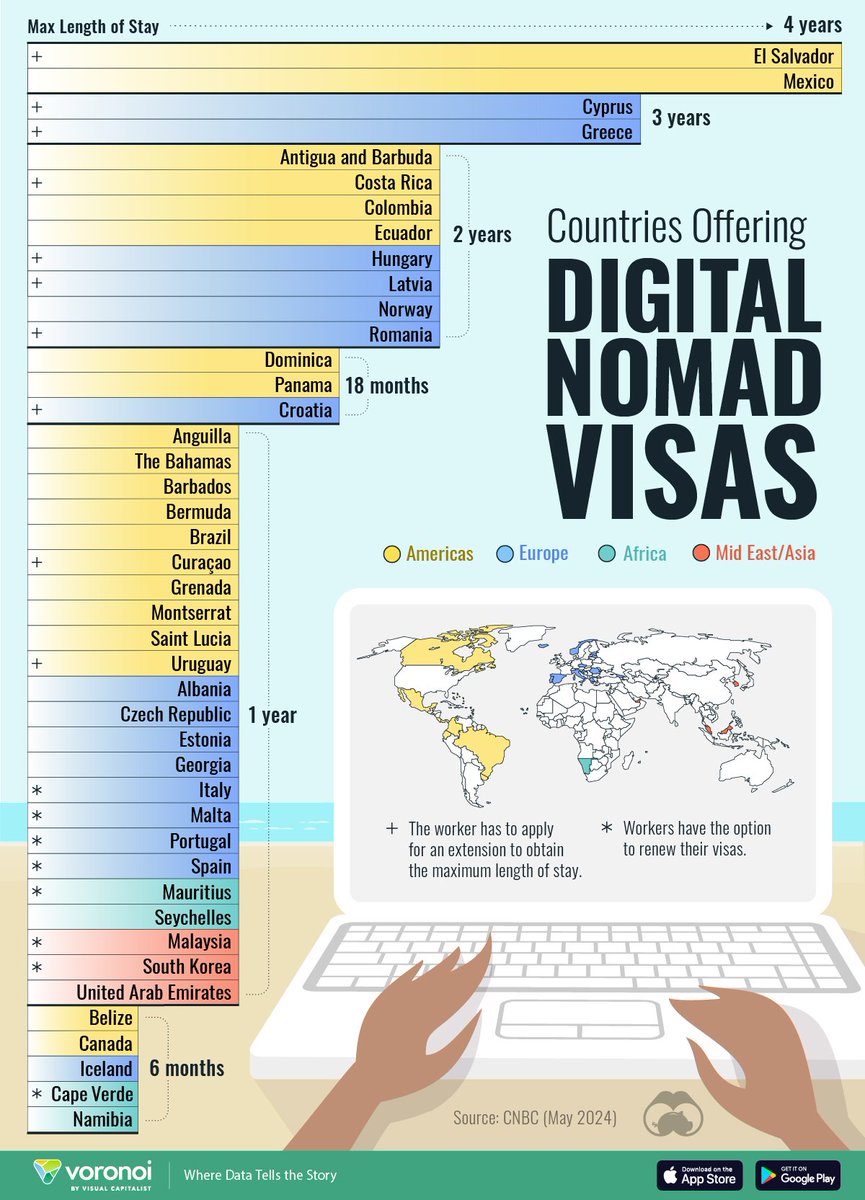
(a) In the physical world, these companies and communities will have to find a country that has either built their own security, as described above, or is aligned with one that has. And abide by whatever new rules they set. From the standpoint purely of tech, dozens of countries are now surprisingly permissive, opening up new special economic zones and digital nomad visas.
(b) In the digital world, a partial answer is the code-based order, protected by encryption rather than weapons. Like the handoff from the British to the Americans, can we hand some of what America did off to the Internet?
Crypto is furthest along here. The anti-government strain within American libertarianism, the Ron Paul strain that says you can't trust the government, well...crypto simply applies that to all of the US government, including the parts run by Republicans, including the dollar that backs the US military. Crypto does not trust the plan. After all, the US has >$175T in compounding debt, and it's financially going to zero, economically doomed just like the USSR, albeit from Keynesianism rather than Communism. Elon is our best guy and couldn't fix it with DOGE. As he said, he did his best.
(4) The closest modern analog to the end of the US empire may be the end of the USSR's empire. Just like the Soviet Union became Russia, the USA is becoming America. Troops are being pulled back from around the world, it's becoming a "republic, not an empire", and everyone has to figure it out for themselves.
Now, many wars did erupt in the aftermath of Soviet withdrawal, like Chechnya and the Tajikistani civil war. But it's not like every single place fell into war. Estonia didn't, Poland didn't. The Czechs and Slovaks had the Velvet Divorce. Countries long under the Soviets worked out local security arrangements between themselves.
That's what's happening now as the American Empire withdraws from the world. Everyone is figuring it out for themselves.
IN SUMMARY
(a) You're correct that a country needs a military, but the world is losing the US military, so they'll build their own or align with a country that has one.
(b) You're correct that the US military historically protected the rules-based order, but in many ways it's abandoning that order, while much of Eurasia is actually going further in the direction of free trade, and the Internet is exporting global rule-of-law via rule-of-code.
(c) You're correct that US military withdrawal will likely result in chaos in parts of the world, like the USSR's military withdrawal did, but I don't think it results in chaos in all of the world, anymore than the USSR's withdrawal did.
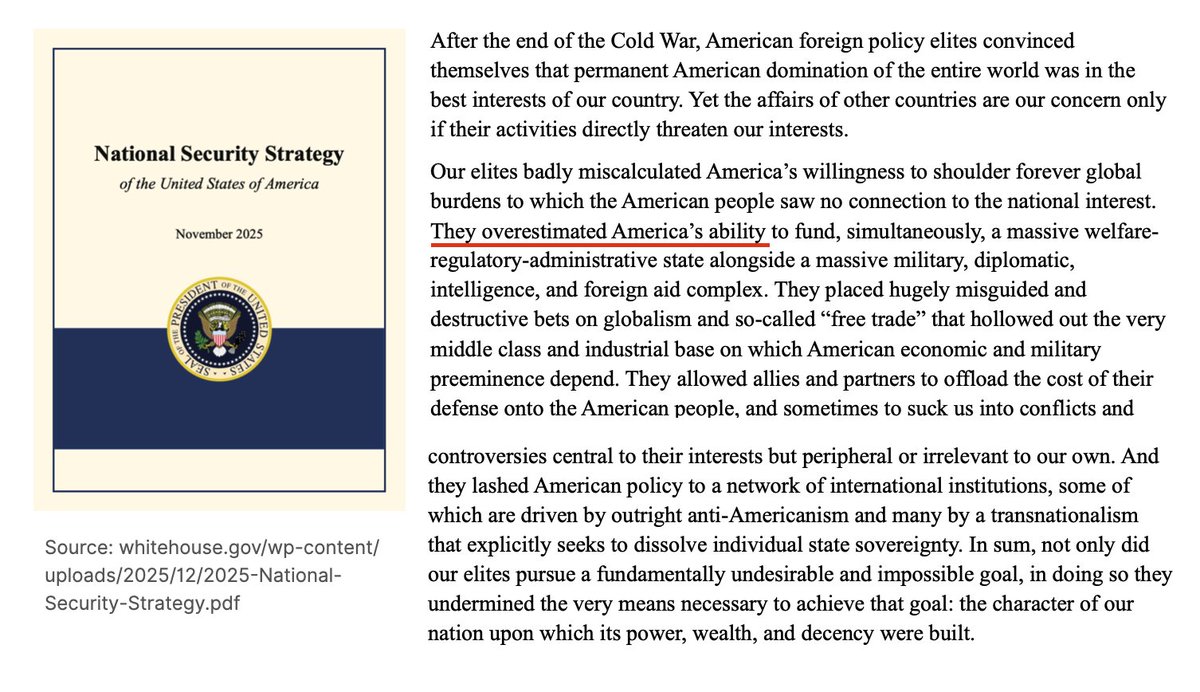
(d) Don't take it from me, though. The 2025 US National Security Strategy said that elites "overestimated America's ability" and that "permanent American domination of the entire world" is not in the best interests of the US.
In other words, they've already announced that the world is multipolar, that the unipolar moment is over, that US will no longer pay any price and bear any burdern. So everyone will need to figure out security after the American empire leaves, just as they had to figure out local security arrangements after the British, French, and Soviet empires left.
https://t.co/SWwJETDdbB
(1) Most countries do not actually have a military.
Instead, most countries outsource their security to the US (most common), to Russia (like Belarus), or to China (like North Korea, partially). Iran is unusual in that they're going it largely alone. They're also unusual in that they actually appear to be winning. And if Iran does manage to drive the US out of not just Afghanistan and Iraq, but the entire Middle East, they'll have unfortunately undermined the idea that America can or will provide any security guarantees at all.
(2) So, with the withdrawal of the American Empire, every country is going to need a new military.
Some countries will "build their own." The ones most likely to go nuclear are Japan and Turkey. Maybe also Germany, South Korea, Australia, Brazil, and Poland. They'll do so both for defense and to guarantee an energy supply now that Hormuz isn't stable. Thus, the Iran war will unfortunately obviate non-proliferation.
Most other countries will not build their own militaries. They'll simply do what's necessary to align with the new regional hegemon. That new hegemon will likely be China in East and Southeast Asia, Russia in North Asia and Eastern Europe, and Iran in West Asia. India has a tough situation in South Asia due to Pakistan. MAGA America will probably refocus on Latin America. And Newsom's Democrats will likely align with China, as Carney's Canadians have already done.
(3) But what about every group in the world that's not running a country? What about every company and community?
They'll need to think about a world where the US military has withdrawn, and isn't there for them. Is there any way to preserve something that looks like the rules-based order without the former guarantor of those rules?
(a) In the physical world, these companies and communities will have to find a country that has either built their own security, as described above, or is aligned with one that has. And abide by whatever new rules they set. From the standpoint purely of tech, dozens of countries are now surprisingly permissive, opening up new special economic zones and digital nomad visas.
(b) In the digital world, a partial answer is the code-based order, protected by encryption rather than weapons. Like the handoff from the British to the Americans, can we hand some of what America did off to the Internet?
Crypto is furthest along here. The anti-government strain within American libertarianism, the Ron Paul strain that says you can't trust the government, well...crypto simply applies that to all of the US government, including the parts run by Republicans, including the dollar that backs the US military. Crypto does not trust the plan. After all, the US has >$175T in compounding debt, and it's financially going to zero, economically doomed just like the USSR, albeit from Keynesianism rather than Communism. Elon is our best guy and couldn't fix it with DOGE. As he said, he did his best.
(4) The closest modern analog to the end of the US empire may be the end of the USSR's empire. Just like the Soviet Union became Russia, the USA is becoming America. Troops are being pulled back from around the world, it's becoming a "republic, not an empire", and everyone has to figure it out for themselves.
Now, many wars did erupt in the aftermath of Soviet withdrawal, like Chechnya and the Tajikistani civil war. But it's not like every single place fell into war. Estonia didn't, Poland didn't. The Czechs and Slovaks had the Velvet Divorce. Countries long under the Soviets worked out local security arrangements between themselves.
That's what's happening now as the American Empire withdraws from the world. Everyone is figuring it out for themselves.
IN SUMMARY
(a) You're correct that a country needs a military, but the world is losing the US military, so they'll build their own or align with a country that has one.
(b) You're correct that the US military historically protected the rules-based order, but in many ways it's abandoning that order, while much of Eurasia is actually going further in the direction of free trade, and the Internet is exporting global rule-of-law via rule-of-code.
(c) You're correct that US military withdrawal will likely result in chaos in parts of the world, like the USSR's military withdrawal did, but I don't think it results in chaos in all of the world, anymore than the USSR's withdrawal did.
(d) Don't take it from me, though. The 2025 US National Security Strategy said that elites "overestimated America's ability" and that "permanent American domination of the entire world" is not in the best interests of the US.
In other words, they've already announced that the world is multipolar, that the unipolar moment is over, that US will no longer pay any price and bear any burdern. So everyone will need to figure out security after the American empire leaves, just as they had to figure out local security arrangements after the British, French, and Soviet empires left.
https://t.co/SWwJETDdbB
Hm? I wouldn't say that's the implication at all.
(1) I just think the current American right's total focus on military force is wrongheaded in many ways. It's a triple-down on hard power as the be-all and end-all, just as the Republicans are *losing* that hard power in relative terms.
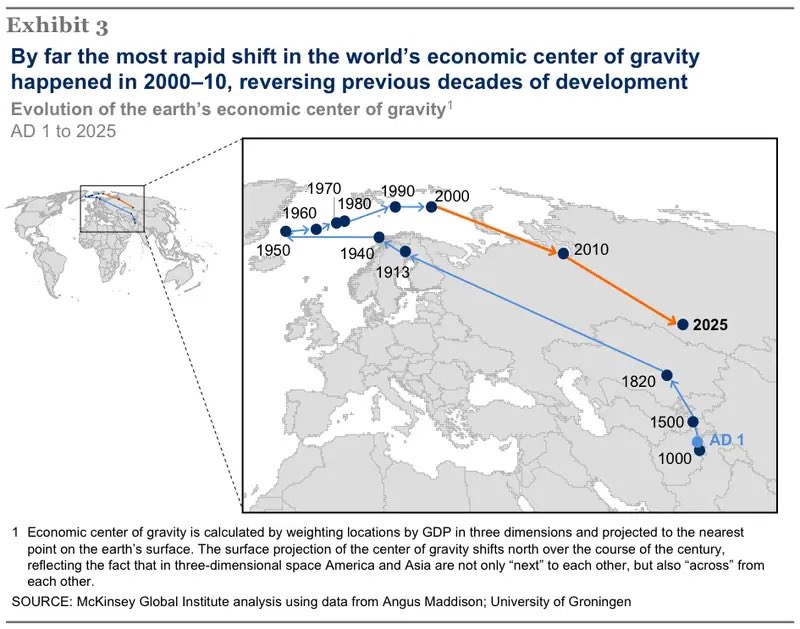
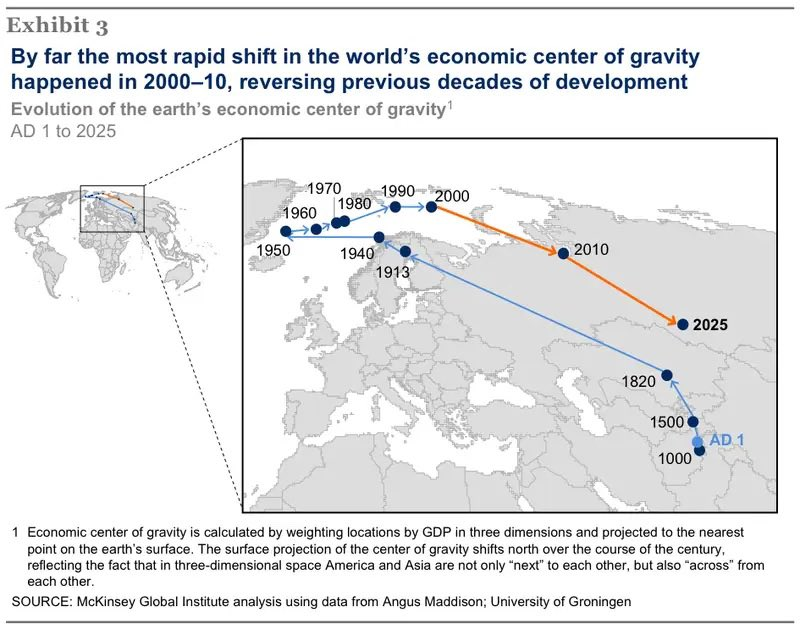
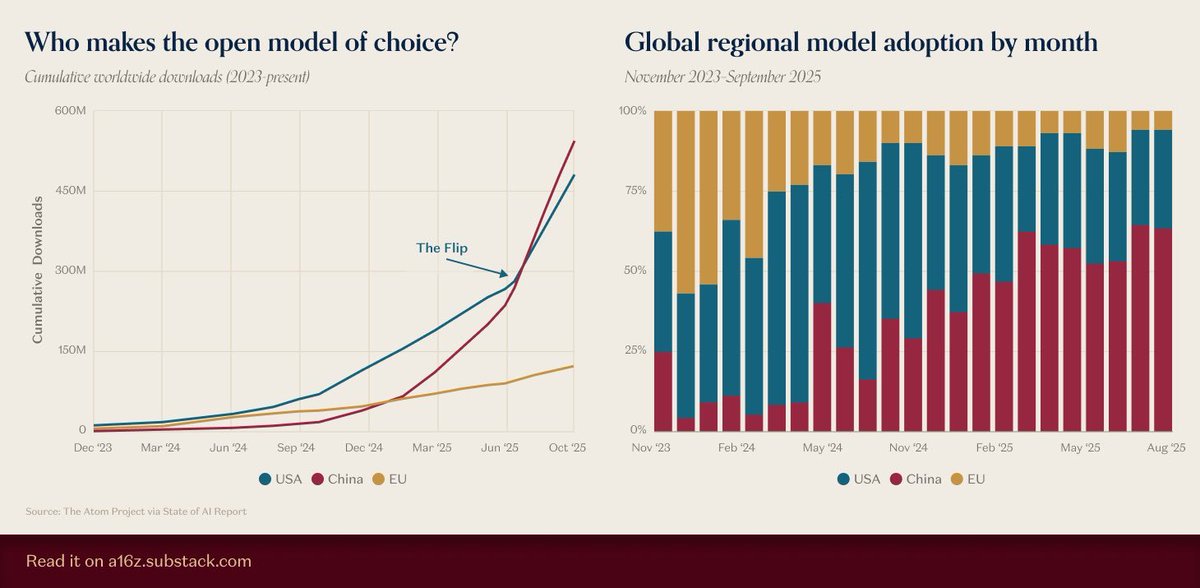
(2) Quantitatively: the unipolar era that Krauthammer announced in 1991 is clearly over. I pasted two graphs at the bottom of this thread that show (a) the US military is made in China and (b) the world economy has moved to Asia. I can include many more if you want.
(3) Literally hundreds of new towns and cities have been created or radically modernized in much of Eurasia over the last few decades. Not just in China, but also in Eastern Europe and India and ASEAN, without firing a shot.
(4) There are also many special economic zones and digital nomad visas (see graphics 3 and 4). Much of the world is actively recruiting tech talent. So: why not just move there, set up the Silicon Valley of X, and abide by local laws, while doing tech innovation? And then network those locations together?
(5) In other words: obviously existing local police forces and militaries exist. And you can scale large networks while simply respecting local law. Yes, it's possible that if you get big they try to use force against you, which means you rebalance to another node. This has already been a proven strategy for decades with multinationals and cryptocurrencies.
(6) Put another way: all these governments that are inviting tech in with digital nomad visas to build special economic zones are not suddenly going to invade your new offices or real estate developments. If some of them ever get the idea of doing that, as you build wealth, then you live light on the land and decentralize to other locations.
(7) This is different from the 20th century, where wealthy kulaks were fully tied to the land and *could* get completely expropriated. The advent of cryptocurrency means fiat states genuinely can't simply freeze your assets. Also, a hostile state can perhaps seize the desks, but without the cooperation of the tech workers, they can't seize or develop the tech.
In short, in this century, the land does need to negotiate with the cloud.
> “All actual physical territory will be controlled by whoever wins the USA vs China Cold War.”
Also, I disagree with this, because Chinese empires aren’t like Western ones.
(1) Western empires have a lifecycle of invading everyone, conquering, converting them to their ideology, printing a lot of money and causing a lot of ethnic strife, and then collapsing. That’s Rome, Spain, Portugal, France, Russia, Britain, and now America.
(2) China is the opposite. They just want others to pay tribute to them, via the tributary system. Otherwise, they don’t want to invade the world, because they would become less Han Chinese in doing so!
(3) In a deep sense China is more MAGA than MAGA. They are stay-at-home traditionalists who will let the barbarians abroad do their thing so long as they pay tribute, trade for goods, and not “interfere in China’s internal affairs.”
(4) The dual absence of both America and China from much of the map creates opportunities. American empire will withdraw and China, not wanting to repeat the same mistakes, will not deploy Chinese troops abroad in a naive way. Instead it will just trade with local partners in each region.
(5) China is like the opposite of the neocons and neolibs, they basically don’t care about what a country does, so long as it doesn’t mess with China. It could be totally corrupt Venezuela or totally meritocratic UAE, Orthodox Christian like Russia or fundamentalist like Iran. China doesn’t care and doesn’t care to invade their land either. Will just trade with them rather than waste trillions on pointless wars.
You were extremely focused on the security piece, which is why we needed to discuss the emerging world order.
(1) I am glad we agree the Internet will outlast the American Empire. You seem to also have implicitly conceded the Iran war is a disastrous loss, as you haven’t contested that.
(2) On the rest, my view is: no, the US military is not actually hegemonic anymore. No, US manufacturing is unfortunately not going to return anytime soon. No, it’s not a question of “if China becomes so dominant.” That is already the current reality, and American Empire is getting rapidly wound down, and Trump’s Taiwan comments signal there isn’t going to be a war with China.
(3) So what comes next? We loved America, but the empire is over. China disrupted the Republicans and the Internet disrupted the Democrats. So the next phase is China and the Internet.
(4) What you seem to focus on is the question of whether new startup societies will instantly become full military sovereigns, able to fight and win wars with hostile powers bent on their destruction.
(5) Of course they won’t, so they won’t even try. They will just operate peacefully within the limits of their host countries. The thing to emphasize is that you can get very far while doing that.
(6) All the tech companies got to millions of user and billions of dollars without firing a shot. Cryptocurrencies did too. And the Internet is only getting stronger; no modern country can operate without drones, phones, robotics, AI, social. Not to mention other sectors like biotech and space. Tech is becoming the entire economy, every communication and transaction, every self-driving car and factory robot.
(7) China will sell some tech to them, and the free Internet will build other parts. Tech talent will be a scarce resource for most countries not named China, which is why so many digital nomad programs are opening up.
(8) And how will those countries attract tech talent? Like Chinatowns and Little Indias, but for tech. The Silicon Valley of Kazakhstan and the Silicon Valley of Poland and so on. Already a thing, but will become more of a thing. Tech as valued guests. We don’t need to fight a war to negotiate a network of special economic zones, tech parks, and nomad visas. And can get very far with nonviolence.
(9) Just to give you a sense, here’s a map of some of the special economic zones in the world. We don’t need to fight for territory, because so many countries are already inviting the Internet in. https://t.co/Yvell63tTd










![balajis's tweet photo. Watch the video. In reality, I explicitly argued against prideful nationalism and for internationalism, as I do everywhere. I also engaged you in good faith.
However, I didn't realize you thought Ugandans were merely "defend[ing] their homeland" when they murderously expelled 80,000 peaceful Indians for "dominating" the economy...by running businesses!
Insane.
I guess you want Idi Amin, with American characteristics. Too bad for you that I got out before you could do that to me.
https://t.co/s9zeqgfqXA](https://pbs.twimg.com/media/HJZJDtwakAAp_Cr.png)







![balajis's tweet photo. Agree with much of that, other than the idea that the Iran war was conducted better than Iraq.
The only way in which Gulf War 3 was conducted more prudently than Gulf War 2 is that no ground invasion has happened, thank god. Otherwise, it's an unmitigated and chaotic mess.
I think that's obvious at this point. I can provide first party analysis...or cite anyone from MAGAs like Tucker, to Europeans, Asians, Democrats, neocons, whatever. But basically: this war flipped over cards that the US *should not* have flipped over, that neither the US nor Iran were actually fully aware of, and that was Iran's relative strength.
In retrospect we can see it, what with Iran driving the US out of Iraq and Afghanistan by funding militias there, building its missile program, helping the Houthis close the Red Sea, and so on. There were warnings.
But now, as I noted, the 1000X cost disruption has come to the US military. The $10B Iran military was built for purpose, with buried missile silos and long-range missiles and drones, to shell every US military base and keep US boats far away. It's punching way above its weight, which is why the US could take Iraq in 19 days in 1991 but doesn't believe it can reopen Hormuz by force in 2026.
TLDR: Gulf War 1 was the beginning of the unipolar moment, Gulf War 3 is the beginning of the multipolar moment.
See also:
[1]: https://t.co/GOVA5wGFlJ
[2]: https://t.co/wpuhZ6Piy1](https://pbs.twimg.com/media/HJUMSoUasAAyhCp.png)