C̶l̶a̶u̶d̶e̶ ̶B̶u̶g̶ ̶H̶u̶n̶t̶e̶r̶ is now BUG HUNTER.
We changed the name because it is no longer limited to Claude Code.
Now it is a standalone open-source CLI that runs from any terminal.
Use Ollama, Groq, DeepSeek, Claude, OpenAI or Grok.
Built for the bug bounty community.
Run it locally with Ollama - no paid AI subscription required.
We are very close to 2.5K GitHub stars. Let’s make it happen, guys.
More updates coming soon.
#OpenSource #BugBounty #CyberSecurity #AI #EthicalHacking #Ollama #GitHub #SecurityTools #BugHunter
🔐Instagram Meta AI Vulnerability Allegedly Enables Password Reset for Accounts
Source: https://t.co/bxzWfGoOpO
A critical flaw in Meta's AI-powered account recovery tool on Instagram allowed attackers to hijack high-value accounts by tricking the chatbot into forwarding password reset codes with no verification required.
Attackers engaged the AI chatbot in conversation and prompted it to forward password reset codes to unauthorized parties, entirely bypassing identity verification checks. The flaw stemmed from insufficient controls in how the AI processed account recovery requests, effectively allowing anyone who knew a target's username to initiate the takeover process.
#cybersecuritynews
🚨 New 0-Click WhatsApp Account Takeover Attack Targeting iOS 16 Users
Source: https://t.co/8Te9flsgIK
A new 0-Click WhatsApp Account Takeover Attack Targeting iOS 16 Users is raising serious concerns after multiple iPhone users reported their accounts being hijacked without any interaction, warnings, or visible linked devices.
The attackers are exploiting a zero-click attack chain that allows them to silently access WhatsApp accounts, even while the legitimate user remains logged in.
Unlike traditional WhatsApp hijacking techniques such as QR code phishing or GhostPairing campaigns, this attack does not require user action, making it significantly more dangerous and difficult to detect.
#cybersecuitynews #whatsapp #iOS
🛡️ Claude Code RCE Flaw Lets Attackers Execute Commands via Malicious Deeplinks
Source: https://t.co/vRw8HSV63g
A critical remote code execution (RCE) vulnerability has been discovered in Anthropic’s Claude Code CLI tool, allowing attackers to execute arbitrary commands on a victim’s machine by tricking them into clicking a specially crafted deeplink.
The flaw, now patched in Claude Code version 2.1.118, was rooted in a naive command-line argument parser that could be weaponized through the tool’s claude-cli:// deeplink handler.
The issue stemmed from eagerParseCliFlag, a function in main.tsx designed to parse critical flags like --settings before the main initialization routine runs.
#cybersecuritynews
API DESIGN HTTP METHODS (GET, POST, PUT, PATCH, DELETE)
WHAT ARE HTTP METHODS
HTTP methods define the type of action a client wants to perform on a resource in an API.
→ They act as communication verbs between client and server
→ They follow standard web conventions
→ They make APIs predictable and structured
RESTful APIs heavily rely on these methods for resource operations.
1. GET → RETRIEVE DATA
The GET method is used to fetch resources from the server.
→ Retrieves data without modifying it
→ Safe and read-only operation
→ Commonly used for fetching lists or specific resources
COMMON USE CASES
→ Fetch all users
→ Retrieve a single product
→ Load dashboard data
→ Search resources
CHARACTERISTICS
→ Should not change server data
→ Can be cached for performance
→ Parameters are usually passed in the URL
EXAMPLE ACTIONS
→ Get all products
→ Get a user profile
→ Fetch blog posts
GET requests are the foundation of data retrieval in APIs.
2. POST → CREATE NEW DATA
The POST method is used to create new resources on the server.
→ Sends data to the server
→ Creates new records or resources
→ Often triggers server-side processing
COMMON USE CASES
→ User registration
→ Creating orders
→ Uploading files
→ Submitting forms
CHARACTERISTICS
→ Changes server state
→ Not idempotent → repeating may create duplicates
→ Data is usually sent in the request body
EXAMPLE ACTIONS
→ Create a new account
→ Add a product
→ Submit payment information
POST is primarily used for creation operations.
3. PUT → REPLACE OR UPDATE ENTIRE RESOURCE
The PUT method replaces an existing resource completely.
→ Updates all fields of a resource
→ Replaces old data with new data
→ Used when the complete resource representation is available
COMMON USE CASES
→ Updating user profiles
→ Replacing product information
→ Updating configuration settings
CHARACTERISTICS
→ Idempotent → repeating gives the same result
→ Requires the full resource data
→ Existing resource is overwritten
EXAMPLE ACTIONS
→ Replace user details
→ Update inventory information
→ Modify account settings completely
PUT is ideal for full updates.
4. PATCH → PARTIAL UPDATE
The PATCH method updates only specific fields of a resource.
→ Modifies selected attributes
→ Avoids sending full resource data
→ Efficient for small changes
COMMON USE CASES
→ Updating profile picture
→ Changing password
→ Editing status fields
→ Updating a single setting
CHARACTERISTICS
→ Partial modification only
→ Reduces payload size
→ More flexible than PUT for small updates
EXAMPLE ACTIONS
→ Change email address
→ Update order status
→ Modify notification preferences
PATCH is best for targeted updates.
5. DELETE → REMOVE DATA
The DELETE method removes resources from the server.
→ Deletes a specific resource
→ Removes data permanently or logically
→ Used for cleanup and management operations
COMMON USE CASES
→ Delete accounts
→ Remove products
→ Cancel orders
→ Delete uploaded files
CHARACTERISTICS
→ Idempotent → repeated requests produce same outcome
→ May perform soft delete or permanent delete
→ Requires proper authorization
EXAMPLE ACTIONS
→ Remove a user
→ Delete a comment
→ Cancel a booking
DELETE is responsible for resource removal.
SAFE VS UNSAFE METHODS
SAFE METHODS
→ GET → does not modify data
UNSAFE METHODS
→ POST
→ PUT
→ PATCH
→ DELETE
Unsafe methods change the server state.
IDEMPOTENT VS NON-IDEMPOTENT METHODS
IDEMPOTENT METHODS
→ GET
→ PUT
→ DELETE
Repeated execution produces the same result.
NON-IDEMPOTENT METHODS
→ POST
Repeated requests may create multiple resources.
PATCH may or may not be idempotent depending on implementation.
CHOOSING THE RIGHT METHOD
→ GET → when retrieving data
→ POST → when creating resources
→ PUT → when replacing entire resources
→ PATCH → when partially updating resources
→ DELETE → when removing resources
Using the correct method improves API clarity and consistency.
COMMON MISTAKES TO AVOID
→ Using POST for every operation
→ Updating data with GET requests
→ Confusing PUT and PATCH
→ Ignoring idempotency
→ Returning inconsistent responses
Following proper HTTP method usage keeps APIs clean and professional.
QUICK TIP
HTTP methods are the backbone of RESTful API communication. Proper use of GET, POST, PUT, PATCH, and DELETE ensures predictable behavior, improves developer experience, and creates scalable API architectures.
Get the complete API Design guide here:
https://t.co/t2KOeav5Wm
@viehgroup Classic mass-assignment issue.
Never trust client-side fields, even if they are hidden or undocumented. The server should define what can be updated, not the user request.
🛡️ Critical Android Zero-Click Vulnerability Grants Remote Shell Access
Source: https://t.co/EUEZkh4CEa
Google has published the May 2026 Android Security Bulletin, alerting the ecosystem to a highly severe remote code execution (RCE) flaw. Tracked as CVE-2026-0073, this critical vulnerability resides deep within the core Android System component.
It allows an attacker to gain remote shell access without requiring a single tap, download, or click from the device owner. Threat actors can launch this zero-click attack proximally, meaning they only need to be on the same local network or in physical proximity to exploit a vulnerable mobile device.
#cybersecuritynews #Android
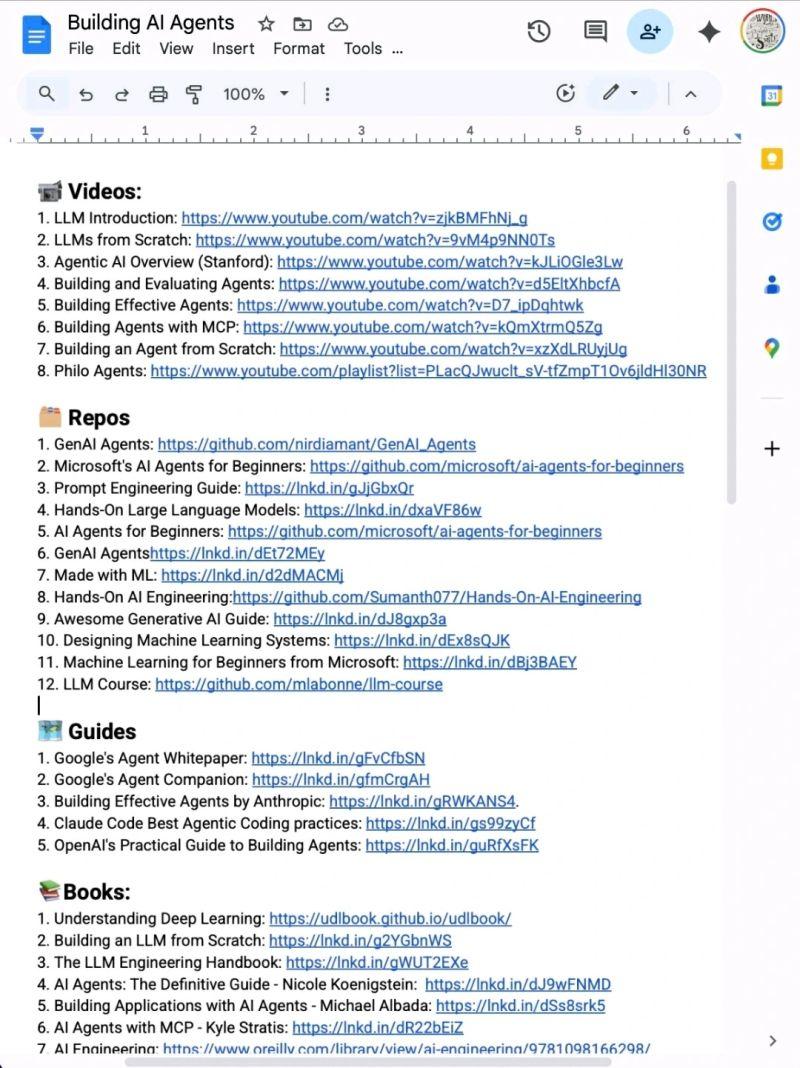
Stop wasting hours trying to learn AI. 📘📚
I have already done it for you.
With one list. Zero confusion. And no fluff
📹 Videos:
1. LLM Introduction: https://t.co/YkuDFVmW9e
2. LLMs from Scratch: https://t.co/u3kSz5SGuJ
3. Agentic AI Overview (Stanford): https://t.co/W6rzVHGSgC
4. Building and Evaluating Agents: https://t.co/sEl8vVax3F
5. Building Effective Agents: https://t.co/c7fD4aWFYO
6. Building Agents with MCP: https://t.co/GlMdR6htgA
7. Building an Agent from Scratch: https://t.co/kUQ9jPuI0R
8. Philo Agents: https://t.co/8JHvqw0DKn
🗂️ Repos
1. GenAI Agents: https://t.co/cyHPvOAjlK
2. Microsoft's AI Agents for Beginners: https://t.co/zFJAN74JQe
3. Prompt Engineering Guide: https://t.co/liUshX2XsP
4. Hands-On Large Language Models: https://t.co/TXFhbiboZY
5. AI Agents for Beginners: https://t.co/zFJAN74JQe
6. GenAI Agentshttps://lnkd.in/dEt72MEy
7. Made with ML: https://t.co/lkXP6itwK0
8. Hands-On AI Engineering:https://t.co/zB8EEctE4Y
9. Awesome Generative AI Guide: https://t.co/lF7CuIQHRw
10. Designing Machine Learning Systems: https://t.co/XlYUZYOoVi
11. Machine Learning for Beginners from Microsoft: https://t.co/hF5UzZoMJB
12. LLM Course: https://t.co/4tLAwy8fOQ
🗺️ Guides
1. Google's Agent Whitepaper: https://t.co/0OEKVLgF34
2. Google's Agent Companion: https://t.co/r0Dxe4VvDO
3. Building Effective Agents by Anthropic: https://t.co/I0ZyuwiOS3.
4. Claude Code Best Agentic Coding practices: https://t.co/HIBC2TwwAP
5. OpenAI's Practical Guide to Building Agents: https://t.co/1I8n0wnjHQ
📚Books:
1. Understanding Deep Learning: https://t.co/XEzhyAcWbq
2. Building an LLM from Scratch: https://t.co/4sZmBnHPEg
3. The LLM Engineering Handbook: https://t.co/IkAYNFkVNI
4. AI Agents: The Definitive Guide - Nicole Koenigstein: https://t.co/KsFnET47hx
5. Building Applications with AI Agents - Michael Albada: https://t.co/lJhMLtsLql
6. AI Agents with MCP - Kyle Stratis: https://t.co/C2lhD8uTDL
7. AI Engineering: https://t.co/34EyUiIVMv
📜 Papers
1. ReAct: https://t.co/kfQ8tWysne
2. Generative Agents: https://t.co/wbfqXq8KZK.
3. Toolformer: https://t.co/OQ7m49YWls
4. Chain-of-Thought Prompting: https://t.co/XeNgLQdTIL.
🧑🏫 Courses:
1. HuggingFace's Agent Course: https://t.co/tUZyPEGhni
2. MCP with Anthropic: https://t.co/wx1DAIWis0
3. Building Vector Databases with Pinecone: https://t.co/8XsQzDstTB
4. Vector Databases from Embeddings to Apps: https://t.co/9n6DvZGTMN
5. Agent Memory: https://t.co/OxFAaM0fp7
Repost for your network ♻️
Massive Cybersecurity Library 200+ eBooks
If you’re into offensive security, this one’s for you.
This collection covers:
• Advanced red teaming techniques
• Exploit development & memory corruption
• Active Directory exploitation
• Recon, OSINT & intel gathering
• Bug bounty strategies
• Threat hunting & SOC workflows
No theory overload just hands-on knowledge.
⬇️ Download and level up your skills.
https://t.co/W3dpdvQcic