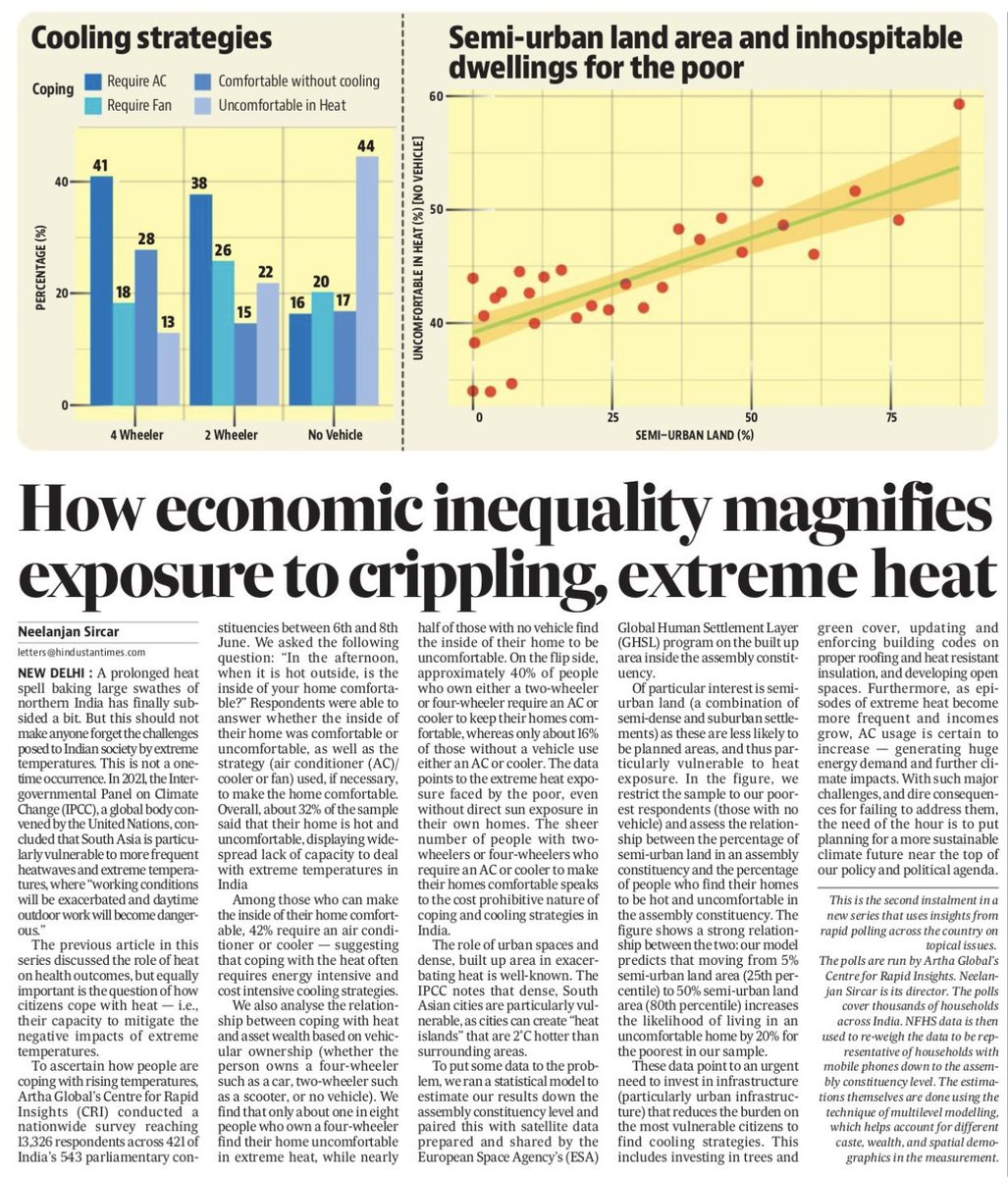
We find 44% of poor (no vehicle) have uncomfortable homes in heat, & 40% of more well-off (w vehicle) need AC/cooler to make home comfortable
Consequences for coping with heat & future energy consumption are immense.
Collab btw Centre for Rapid Insights @Artha__Global@htTweets
"This is an unprecedented heatwave. In my 13 years of working here, I don’t remember signing a death certificate for heat stroke. This year, I’ve signed several."
My piece on the Delhi heat crisis and more.
https://t.co/QJIUdjY4H9
The Delhi heatwave is testing the limits of human endurance. Other hot countries should beware and prepare. This event follows hot on the heels of extreme heatwaves across Asia and the Sahel.
Climate scientists have long warned these days would come. https://t.co/vIO4s2hJiS
#TribuneEdit: The struggle is symptomatic of #climatic shifts affecting urban #India. Record-breaking #temperatures, exacerbated by urban heat islands, highlight the urgent need for adaptive measures
#Heatwave
https://t.co/bvr4DIuy8H
A @CSEINDIA study has tracked heat trends in 6 Indian megacities and found some surprising trends: Cities are no longer cooling down at night, writes @NanditaBanerji_
https://t.co/stfcUOps27
The director of the New York office of the UN’s human rights agency has resigned. “We are seeing a genocide unfolding before our eyes, and the Organization that we serve appears powerless to stop it,” he wrote in a letter. https://t.co/0tuvevUhBs
Thrilled to continue the young scholar series at the @IdeasofIndia podcast, where I invite academic job market candidates working on India to talk about their research. I have a handful of 30 min slots.
DM/email me your job market paper/ dissertation. List of past scholars 👇🏾
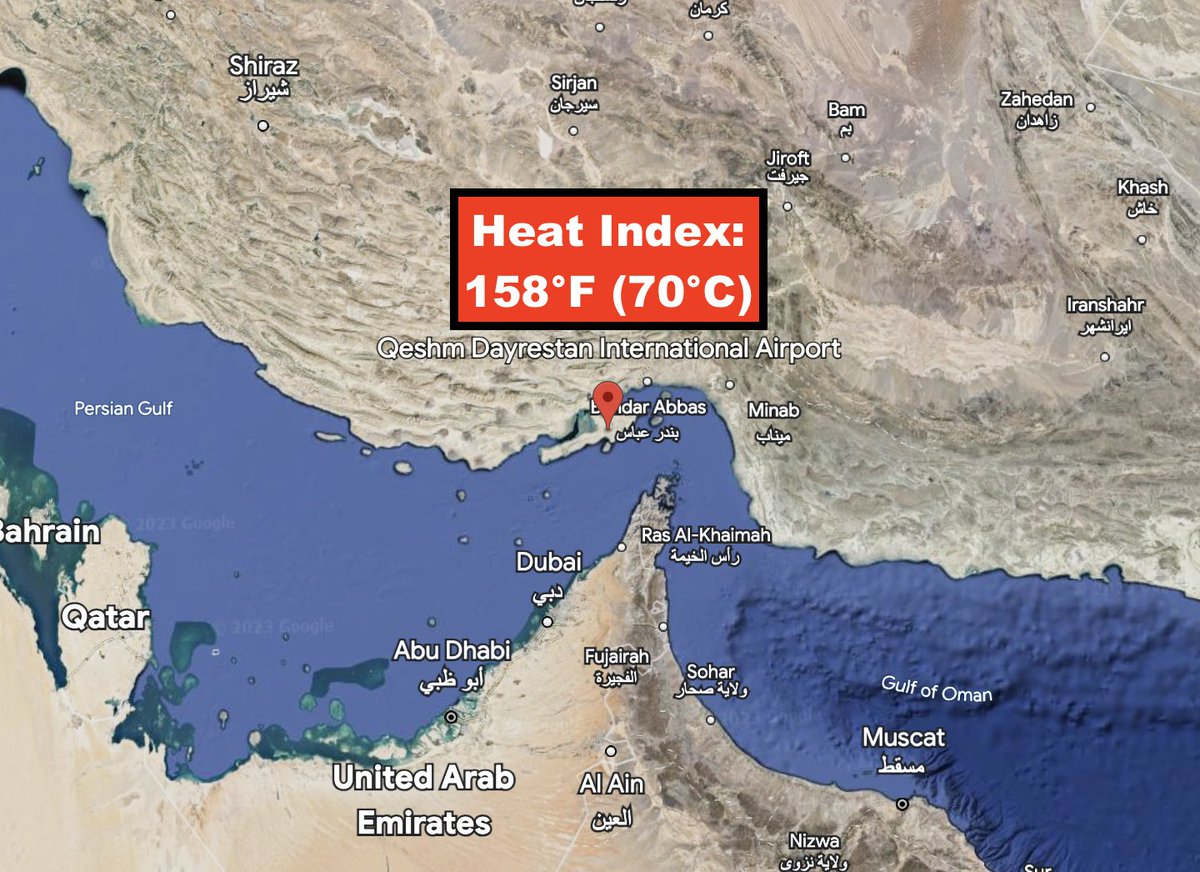
A heat index of 158°F (70°C) was recorded in southern Iran today.
Even the healthiest and youngest individuals could not survive this heat for more than 6 hours.
“The extreme weather which has affected many millions of people in July is unfortunately the harsh reality of #climatechange and a foretaste of the future,” said World Meteorological Organization’s Secretary-General Professor Petteri Taalas.
Read more: https://t.co/7ztPj06UIv