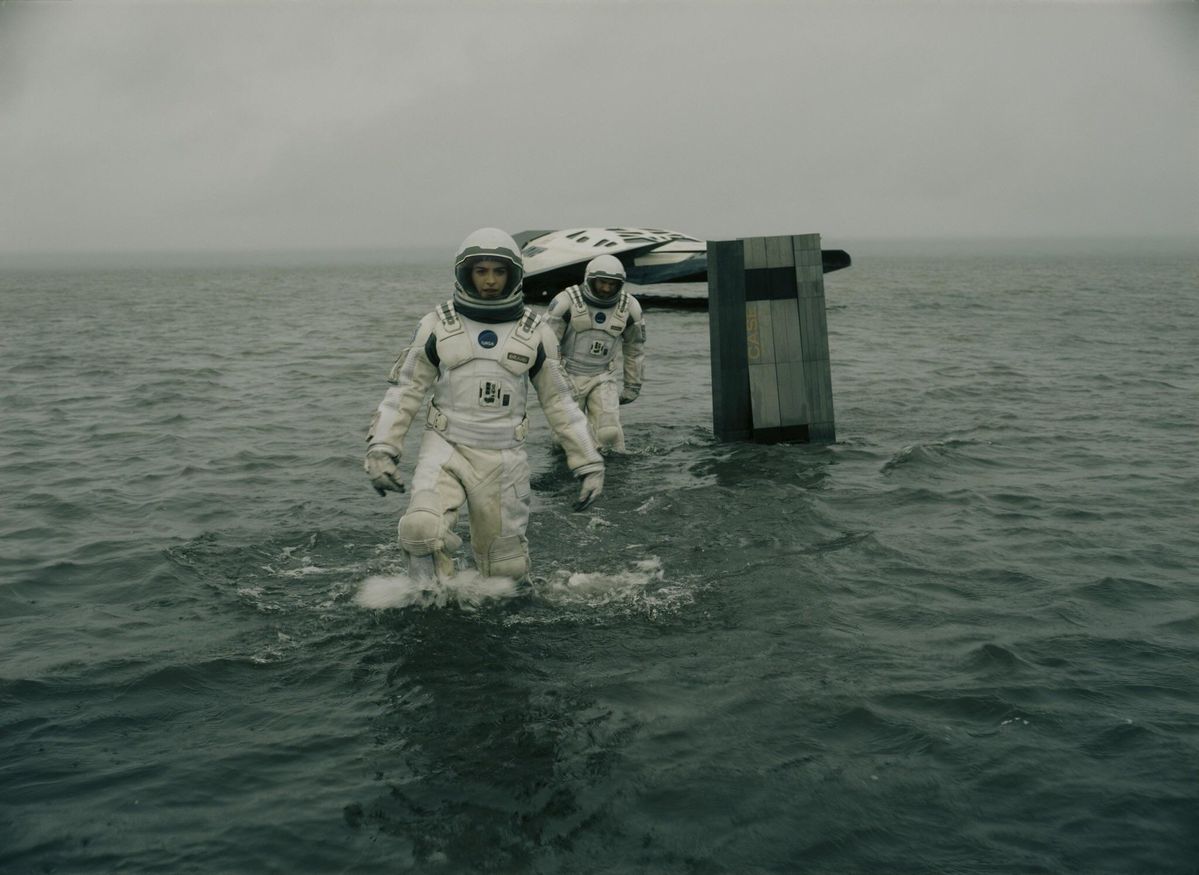
In 1905, Einstein theorised that time doesn’t pass at the same rate for everyone—it depends on speed and gravity. A moving clock (relative to you) ticks more slowly than your own, and a clock deeper in a strong gravitational field also runs slower than one farther away. So two people who move differently or sit in different gravitational environments will age by slightly different amounts, even if they later meet again and compare watches.
🌀 Crazy project alert:
What if you ask AI to visualize your state of mind?
Presenting murmuration: a chrome extension that transforms your ChatGPT and Claude conversation topics into beautiful, animated black-and-white visualizations on every new tab.
It’s honestly an odd timeline: people at the frontier of AI are both super-excited and highly anxious at the same time.
They know what’s coming and it’s magical + disorienting at the same time.
It’s a great comfort to realise that, no matter who you are, the marginal impact of your work on the future is close to zero.
Most outcomes are inevitable in the long run - if you don’t do it, someone else will.
This was true for relativity theories, and is certainly true for most of the everyday work we all do.
This realisation should be a reminder that one must work earnestly and live the only life you have got, but not sacrifice finite time for a delusion that simply isn’t true.
As the world becomes hyper dependent on the AI mother cloud of intelligence for their thinking, having contrarian and independent thinking will provide the alpha.