TLDR: Mildly Bullish / choppy till mid apr / may. Then down till June. Overall still bullish year, expecting money printer to start in Q4.
Follow @theoriqAI
@GameSetAndTalk It is actually the first time since the Open Era began in 1968 that **no former Grand Slam champions** made it to the Round of 16 in a men's major singles draw.
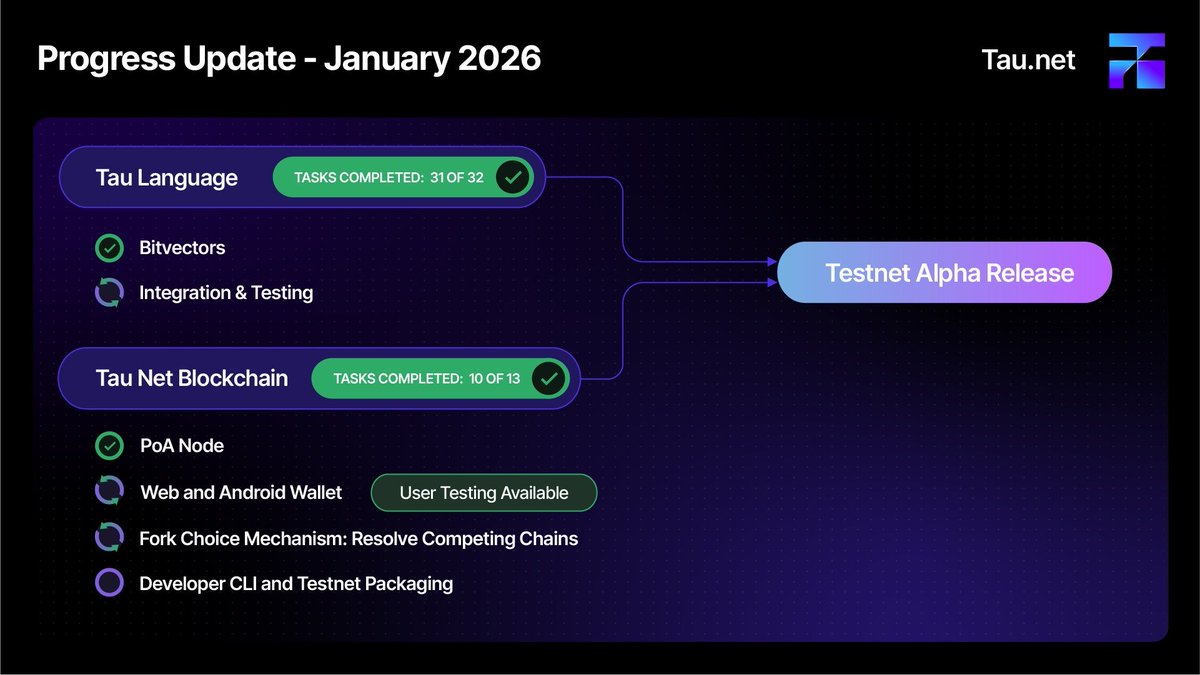
As Tau Test Net alpha progresses, rules are being written in formal logic and agents can propose them individually or on your behalf.
Their debate has already started!
AI + formal verification shifts security upstream is the next frontier. Specifications are formally grounded where controlled natural language doesn't gets interpreted differently by different teams.
Tau Language is built to be decidable, self-referential, executable. The spec is formally correct by construction.
https://t.co/GjKYJSvqOR
🛠 May's Dev Update introduced 2 major breakthroughs:
• Consensus is now fully governed by on-chain Tau rules
• Ohad discovered a new temporal logic approach supporting full LTL, with LLM agents already implementing it across the codebase
This month pushed Tau Net significantly closer to self-evolving infrastructure. 👇
Major Milestones
• The old Python-based consensus system has been replaced with Tau-driven on-chain rules
• Users can now propose and vote on consensus changes directly through the network
• A new Tau Net developer CLI now handles node management, keys, and voting from a single interface
• An autonomous blockchain agent swarm was built to stress-test the network
• A completely new temporal extension approach now supports full LTL (Linear Temporal Logic)
Ohad Asor — Founder & CTO
One of the most important breakthroughs came from a complete rethink of Tau’s temporal logic architecture.
As Ohad explained:
> “I realized that the approach I was trying was completely wrong. So I looked for a new approach and I found one and it was very successful. It can support full LTL. It's algorithmically much easier... and then LLM agents implement it over the codebase of the Tau Language and they manage to do it.”
The result:
• Full LTL support
• Simpler algorithms
• Faster implementation path
• LLM agents already contributing directly to development
🛠 Development Highlights
0:12 – Karim Kaddeche — Development Coordinator
• Oversaw major development progress across the team
• Consensus migration to Tau-driven governance completed by Andrei
• New developer CLI introduced for streamlined network operations
• Team-wide improvements across normalization, parsing, testing, and type safety
5:28 – Tomáš Klapka — Tau Language Developer
• Merged multi-line parsing support with postponed type inference
• Added new tau_result template for structured warnings/info handling
• Improved UTF-16 and Windows string conversion support
• Fixed parse tree node reuse bug
• Began groundwork for future garbage collection support
7:04 – Lucca Tiemens — Tau Language Developer
• Developing a quantifier block-focused normalization algorithm
• Enables earlier simplifications with fewer formula traversals
• Using BDD-based quantifier elimination for cleaner normalization flow
• Reduces dependency on deferred syntactic normalization passes
9:31 – David Castro Esteban — Lead Developer
• Enforced mandatory bitwidth specifications for stronger type safety
• Fixed multiple bitvector edge cases and simplification issues
• Added extensive correctness testing
• Refactored predicate blasting + type inference modules with improved documentation
• Improved macOS build/debug workflow
• Added benchmarking and testing infrastructure for predicate blasting
11:37 – Andrei Korotkoff — Senior Developer
• Migrated consensus fully from Python to Tau-governed on-chain rules
• Added proposal + voting transaction types
• Users can now inspect and vote on active consensus rules through the web UI
• Built a polished developer CLI for all node operations
• Created an autonomous blockchain agent swarm capable of:
– Proposing rules
– Voting
– Stress-testing the network
• Planning to deploy the swarm onto the live testnet
💼 April Business Update – Website Launch & Licensing Strategy
New website is live with updated narrative, team, and roadmap.
Plus: Tau Net is shifting to license its technology across the blockchain ecosystem - not just building internally.
0:11 – Igor Hadzic: Website launch, roadmap updates, community bug reports
1:21 – Fola Adejumo: DAOs/AI/RFP pages, wallet design, licensing model, fundraising prep
DePIN might be the most mispriced narrative for the AI era.
Top 7 DePIN projects by 30-day revenue:
1. $HNT ($190.1m MC) - $16.7m revenue
2. $GEOD ($59.7m MC) - $7.3m revenue
3. $SN64 ($107.1m MC) - $5.9m revenue
4. $RENDER ($1.0b MC) - $3.0m revenue
5. $IO ($33.5m MC) - $2.8m revenue
6. $FIL ($697.3m MC) - $1.4m revenue
7. $AKT ($119.4m MC) - $1.1m revenue
DePIN isn't "devices for vibes." It's real-world supply getting paid: wireless coverage, precision location, storage, compute.
And AI is a demand engine for the last two.
How these break down:
- Infrastructure: @helium, @GEODNET
- Compute: @chutes_ai, @rendernetwork, @ionet, @akashnet_
- Storage: @Filecoin
Revenue matters this cycle, but tokens aren't stocks. Some have real usage and questionable value accrual.
Watching which ones turn demand into actual token sinks, not just revenue charts.
ETH PUT holder update.
Available liquidity in Aave ETH dropped below the minimum liquidity threshold. All ETH was withdrawn. The system prioritizes liquidity above yield. No action required.
Don’t tell Pfizer
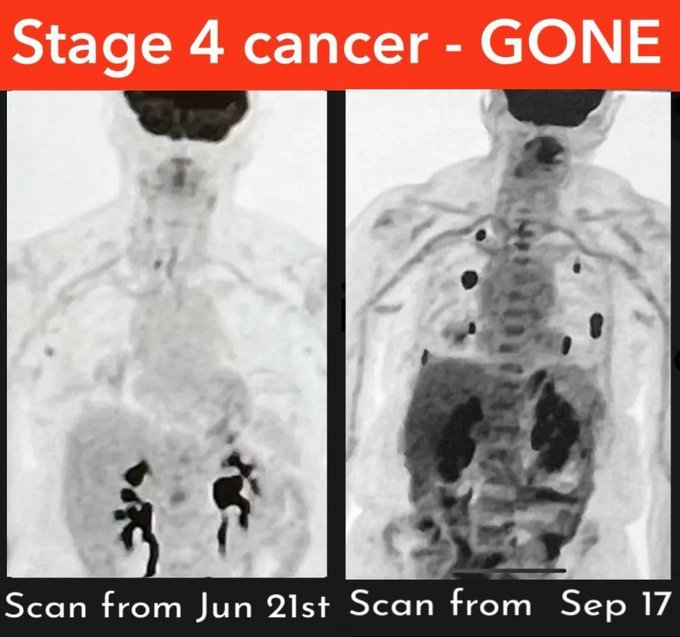
🚨 Stage 4 Cancer... GONE in 3 Months — Naturally!
A 73-year-old woman was told there was no cure. Stage 4. “Nothing we can do,” doctors said.
👉 But just 90 days later… her scans showed NO disease detected.
What changed?
Her son went down the research rabbit hole on X and found my posts on IP6 (Inositol Hexaphosphate), juicing, Mesima mushrooms, and Ivermectin.
Here’s what she did ⬇️
• 🥄 IP6: 2 scoops, twice a day on an empty stomach
• 🥕 24 oz carrot juice daily (+ some other juices)
• 🍄 A bit of Mesima mushroom & Olive leaf
• 💉 3 immunotherapy sessions (docs said it wouldn’t cure her)
• 💊 Ivermectin: added as support — we’re seeing more and more remarkable responses when it’s included 👏
⚡ No chemo. No radiation. No Fenben.
And guess what? The cancer disappeared.
This isn’t a one-off story. I’ve been receiving multiple reports of stunning cancer reversals using these exact protocols — especially IP6, juicing, and Ivermectin.
There are also published studies and case reports showing the same thing:
👉 These natural compounds have powerful anticancer effects.
People deserve to know this.
(But shhh… don’t tell Pfizer, or they might “regulate” them 😉) Follow @ZakariaMDv3 .
RISC-V just hit 25% market share. No royalties. No "gatekeepers." Just pure, open-source performance.
Pair it with an FPGA, and you’re literally printing your own custom AI accelerators for the price of a coffee. ☕️
Arm and x86 aren't shaking. They’re sweating. 📉
#RISCV#FPGA #Tech2026 #OpenSource
@bearlyai@chainyoda $Minima isn't building the compute (the "muscle") for the AGI CPU, but they are building the verification framework (the "audit trail") that these AI agents will eventually need to operate safely across a decentralized network. @Minima_Global@Arm
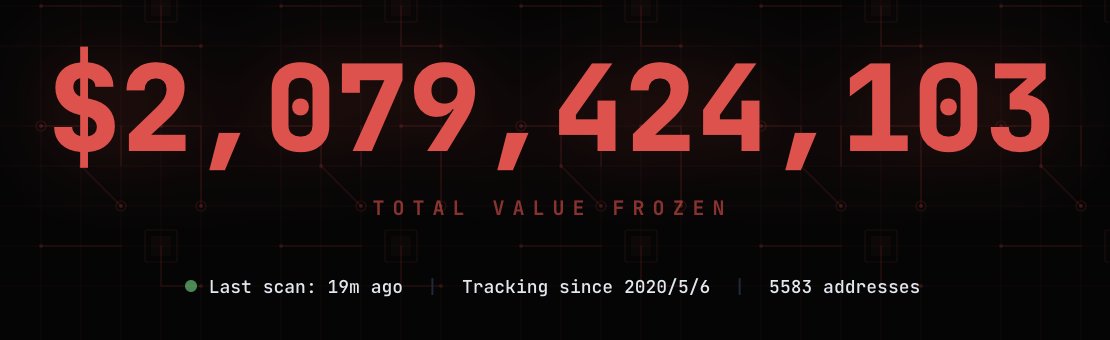
You don't own your stablecoins. Circle and Tether do. And they have a remote kill switch.
Introducing ➡️ https://t.co/7IulaUkdoW
I built a real-time tracker for every single blacklist event on Ethereum and TRON. The data is brutal: thousands of addresses frozen, billions of dollars locked.
No trial. No appeals. No recourse.
What’s under the hood:
- Auto-syncs from Etherscan & TronGrid every 30 mins
- Cumulative charts & monthly freeze breakdowns
- Top censored wallets & a live address checker
Built on the same .rip matrix architecture: open, zero tracking, no signup.
If you hold $USDC or $USDT, you need to see this. Welcome to the transparent fiat prison. 🏴☠️
🛠 March Dev Update - Tau API Complete, Docker Gone, Tables Algorithm Settled
Three main accomplishments this month:
1. The Tau API is fully implemented with a complete test suite. The REPL now goes through the API. This is the foundation every external tool will build on.
2. Tau Net nodes now call Tau Language directly via native bindings. The Docker workaround is gone.
3. A first algorithm for Boolean function quantifier elimination has been settled. This unlocks table support, which is a feature the team has been working toward for a long time. Tables make it possible to implement real-life programs in the Tau Language. Handling arrays that may themselves contain arrays, which is essential for any practical application built on the network
But, there is more:
- Bitvector simplification rebuilt using reverse Polish notation. Single post-order traversal and faster than before
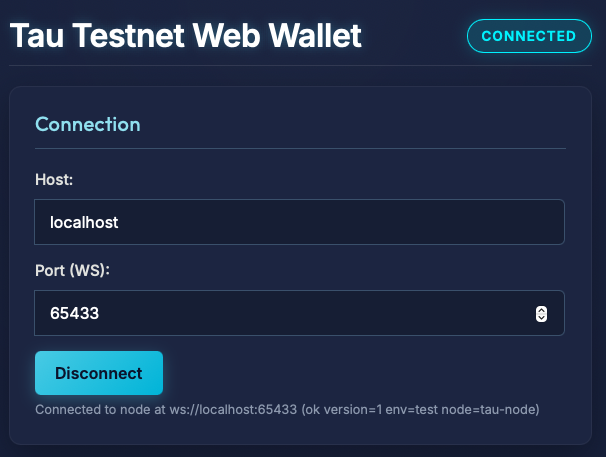
- Web wallet refreshed, now connects to main mining node by default
- BDD library being built for Tau formulas, which enables long-planned normalization optimizations
- Docker containers created for easy local node setup (two commands)
- Ohad's temporal extensions paper in progress - making Tau Language strictly more expressive than LTL
"Now that the long effort of supporting tables is finally settled, I'm working on the paper with the temporal extensions of the Tau Language. It will be strictly more than LTL, and hopefully much more appealing to researchers in the field of formal methods and software synthesis."
— Ohad Asor
Timestamps & Speakers:
0:10 – Karim Kaddeche (Development Overview)
6:24 – Tomáš Klapka (Tau Language Developer)
7:45 – David Castro Esteban (Lead Developer)
10:16 – Lucca Tiemens (Tau Language Developer)
13:19 – Andrei Korotkoff (Senior Developer)
16:54 – Ohad Asor (Founder & CTO)
📣 March Q&A Is Live - Community Questions Answered
Can Tau outperform Strix and BOCIE at synthesis? Will there be an ERC20-style token standard? How much hardware do you actually need to run a node?
This month's Q&A brings:
Tau vs Strix/BOCIE
Ohad explains why the comparison isn't straightforward. Tau operates on infinite domains using purely syntactic reasoning. No automata. No finite-state shortcuts. A paper extending Tau to full LTL is in progress.
Token Standards on Tau
Yes — but here's the difference: on Tau, users define the standard through consensus, not hard-coded smart contracts. That's the whole point.
Cross-App Composability
Apps define constraints for how their assets interact. Compatibility is maintained through Tau's constraint system — and it could ship with mainnet from day one.
Running a Node
Current testnet runs on 2 cores, 2GB RAM. Try it on whatever you have.
Questions & Timestamps:
00:00 - Intro
0:12 - What hardware is recommended for running a Tau node on testnet and mainnet?
1:34 - What does the symbol for uninterpreted constant mean in Tau Language? - (Answer - github . com/orgs/IDNI/discussions/61)
1:51 - Has Ohad built anything using Tau Language himself?
2:27 - Can Tau solve synthesis benchmarks that Strix or BOCIE can't?
4:10 - Will Tau have a chain-level token standard like ERC20?
4:56 - What's the roadmap for cross-app composability of app-defined assets?
7:02 - Outro
Have questions for our next session? We'd love to hear from you! Submit them here: http: //bit.ly/TauchainQuestionForm
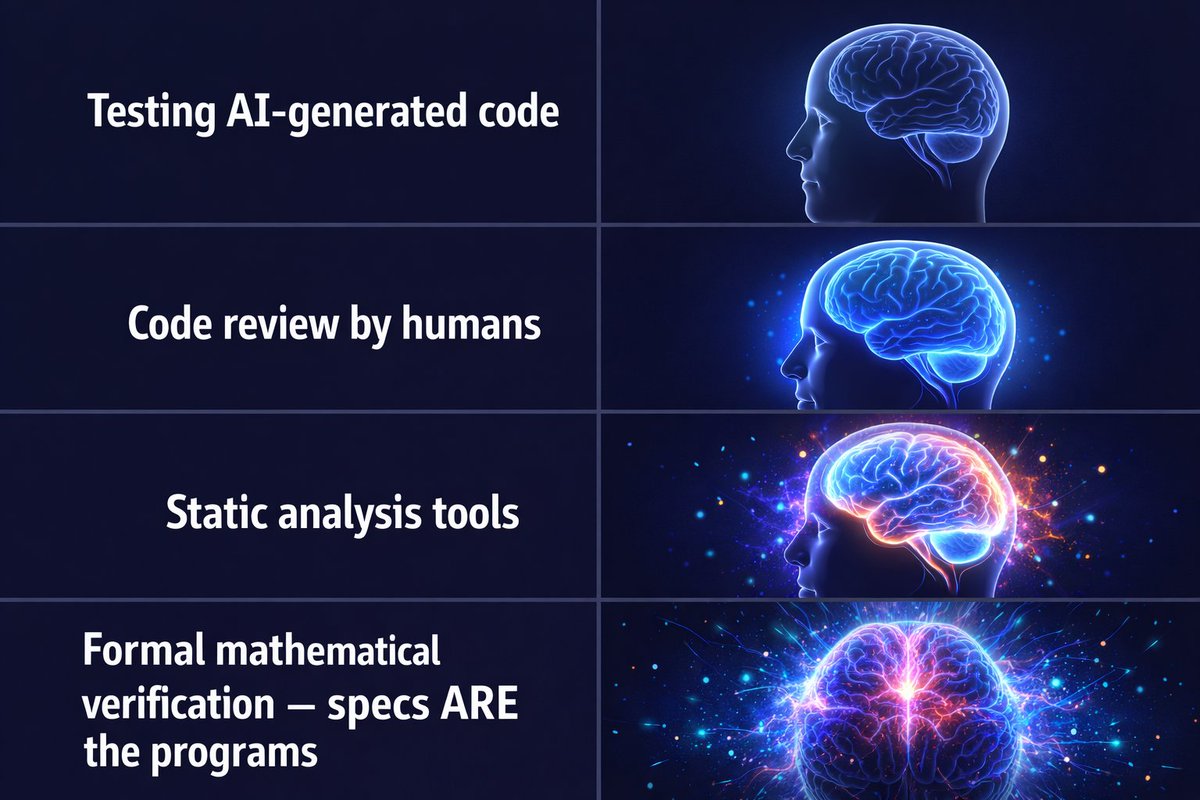
AI is projected to generate 95% of code by 2030, only formal mathematical proof (not testing or code review) can provide correctness guarantees at that scale.
This is exactly the problem Tau is being built to solve.
User specs are formaly verified and automatically function as working programs.
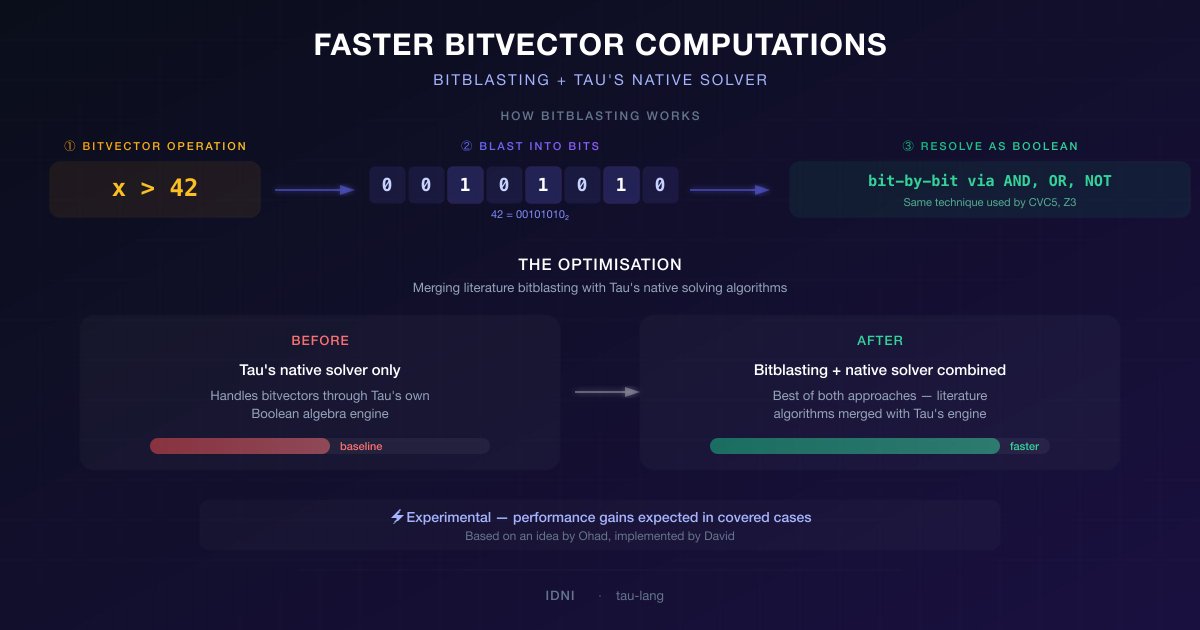
🔢 Faster bitvector computations for Tau Language.
David is merging established bitblasting algorithms from the literature with Tau's own solving algorithms.
The best of both to speed up bitvector operations.
Experimental, with performance gains expected as it matures. 🧵👇
🛠 February Latest Dev Update – TestNet Hardening & Tau Language development.
"We do have the best software specification language ever, much better, many levels better than anything that existed before." – Ohad Asor (18:03)
Highlights:
- Web wallet live at (testnet . tau . net) with transaction and rule-writing support
- Safe recovery mode for clean Genesis restart after node failures
- New Tau C++ API and Python bindings for programmatic use
- Advanced bitvector constant simplification completed
- 7 community-reported GitHub issues resolved (issues #41, #44, #52, #54, #58 and more)
Timestamps & Summaries: 👇
0:12 – Karim Kaddeche (Development Overview)
- Andrei hardened the runtime with safe recovery mode and DDoS resistance
- David resolved multiple GitHub issues and added anti-prenexing heuristics for performance
- Lucca completed bitvector constant simplification and improved partitioning algorithm
- Tomáš delivered the Tau C++ API and Python bindings
- Ohad progressed research on temporal extensions paper with new algorithmic discoveries
7:26 – Andrei Korotkoff (Senior Developer)
- Added safe recovery mode forcing clean Genesis restart after failures or corruption
- Refactored state restoration keeping chain state and Tau synchronized during restarts
- Introduced miner keys for proof of authority consensus - all blocks now signed
- Enabled per-node connection limits and rate controls for DDoS resistance
- Made transaction validation deterministic and non-polluting
- Web wallet live at (testnet . tau . net): send transactions, write rules, check balances
- Next: direct Tau library bindings replacing Docker-based interpreter communication
10:25 – Lucca Tiemens (Tau Language Developer)
- Completed advanced bitvector constant simplification (started December, now done)
- Integrated previous function definitions into type inference algorithm
- Improved specification partitioning algorithm - skips recalculating already-verified parts
- Reviewed Ohad's boolean function quantifier elimination approach for tables
- Fixed negation of constants handling and equality reasoning breaking partitions
12:20 – David Castro Esteban (Lead Developer)
- Added heuristic to Anti-prenexing algorithm: eliminates existential variables by term substitution
- Resolved GitHub issues #58, #54, #41, #52, #44 from community reports
- Issue #54 partial solution by DarkLightX required further type handling changes
- Issue #41 resolved jointly with Lucca for proper function/predicate matching
- Refactored type inference code: extracted lambdas into proper functions for readability
- Changed grammar for consistent notation across stream/recurrence relation definitions
- Added warning for unsupported recurrence relation override (issue #51)
- Now improving error reporting in type inference for more informative messages
16:52 – Tomáš Klapka (Tau Language Developer)
- Finished initial Tau C++ API implementation for simple programmatic use of Tau
- Refactored IO context for input/output stream information and types
- Created initial Python bindings for Tau on top of the C++ API
- Updated GitHub workflows for testing and building release packages
- Resolved all macOS build issues, working on macOS release package
- Currently adding multi-line partial parsing and programmatic specification building
18:04 – Ohad Asor (Founder & CTO)
- Research direction on tables showing promise, handed to Lucca for further investigation
- Continued work on temporal extensions paper for the Tau Language
- Aims to earn scientific community recognition for Tau's specification capabilities
- Discovered new results during paper work making algorithms even better
Other Blockchains hardcodes block validity into the protocol.
Tau's Testnet Alpha lets participants rewrite the rules.
A lightweight blockchain with User-defined specs.
User-defined chains. That's the endgame