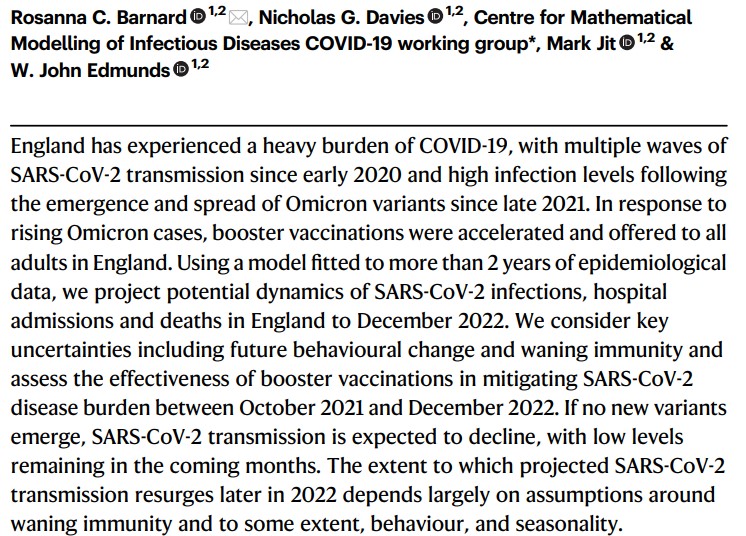
My research (with @_nickdavies@cmmid_lshtm@markjit & John Edmunds) is published in @NatureComms 🥳
This is the culmination of many months of work (my funding from @Epipose)🍾🎉
https://t.co/qt4rDHGgKe
Until I write a book on this (publishers/agents hmu😝), here is a 🦣🧵
What should we expect from #SARSCoV2 this autumn?
I think it would be smart to prepare for both an increase in #COVID19 due to seasonal (behavioural) change & a new variant.
As so many others have elegantly illustrated, new lineages of SC2 are sparking interest.
1/17
1/ New paper! https://t.co/E1iAwyqr3g with @_szhang@aaronclauset @DanLarremore.
🎓 We analyzed all 295K tenure-track faculty at US PhD-granting universities in 10,612 departments over 10 years to quantify hierarchy and dynamics in US faculty hiring and retention.
🦥 A summary:
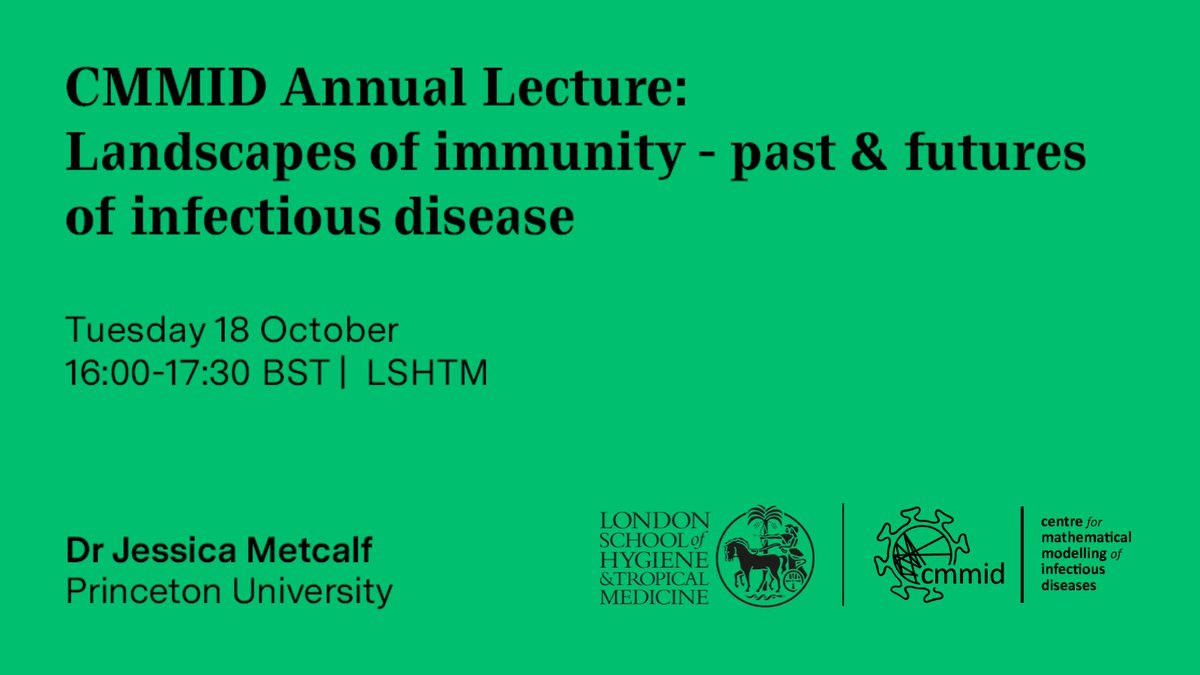
Join us for the 2022 @cmmid_lshtm Annual Lecture
Dr Jessica Metcalf (@CJEMetcalf | @Princeton | @PrincetonEnviro) will address the topic "Landscapes of immunity: past & futures of infectious disease".
📅 18 October
⏲️ 16:00-17:30 BST
📍 Online
🔗 https://t.co/8Rf4vu6GMO
A SARS-CoV-2 model of transmission dynamics in England shows the biggest factors influencing virus transmission are waning immunity, social behaviour and seasonality, @BarnardResearch writes in the Nature Portfolio Health Community. https://t.co/sOMfzx07V6
💫NEW JOB💫
I’m hiring a data scientist to work on questions around the drivers of antibiotic resistance.
You’d be joining the great @cmmid_lshtm and @LSHTM_AMR at LSHTM as part of my team working on AMR questions using a variety of microbiological, modelling & economic tools.
Want to learn more about how researchers analysed the fast-moving twists and turns of #COVID19?
New blog by @BarnardResearch offers a glimpse behind the scenes of the work of our mathematical modellers to produce crucial evidence about the pandemic.
👇
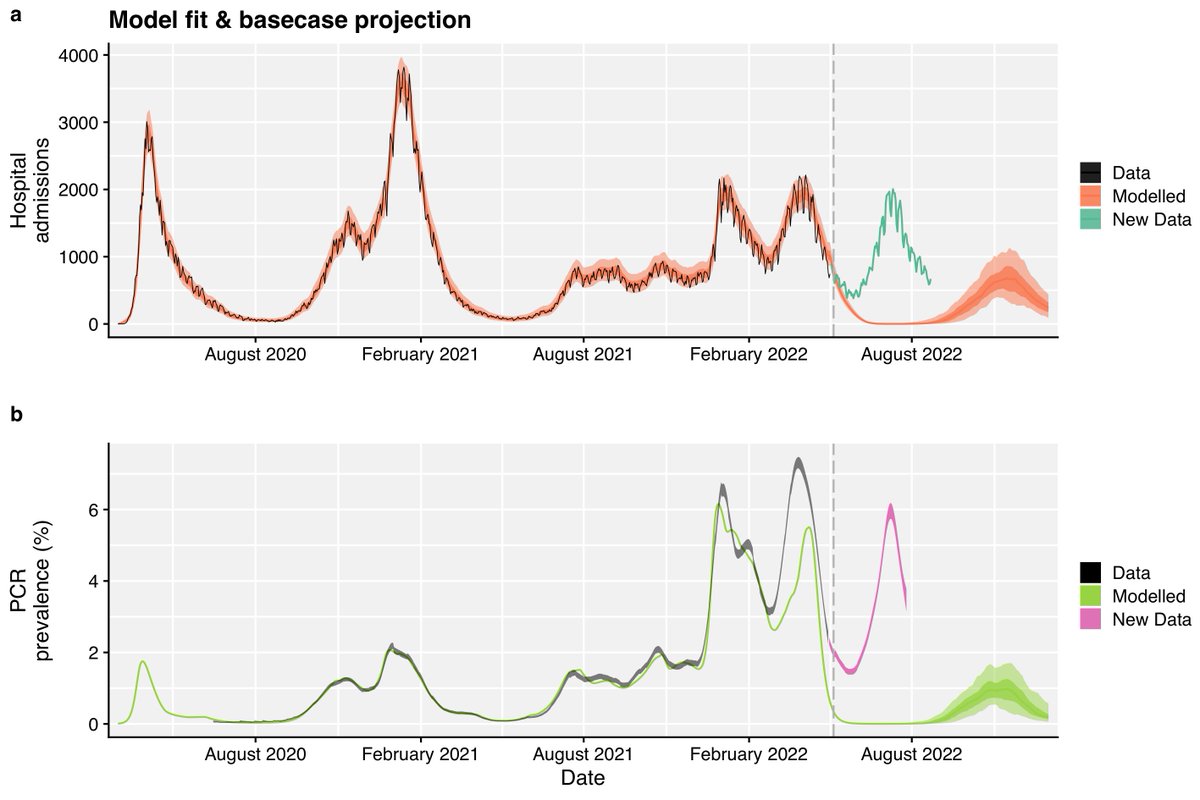
I know @chrischirp and others noted that predictive models like these are of limited use without capturing emerging variants (e.g. https://t.co/S8aptKo2tO), so it's nice to be able to show some of these limitations visually ⤴️
With the rapid evolution of variants we've had this year, this unfortunately means that predictive infectious disease models are of limited use.
What remains useful are insights of how big a role waning & behaviour can play. 3/3
The bonus content compares our model fit and central model projections for England (made in May 2022) to what happened in reality, using data up to August 2022
The model:
1⃣doesn't capture Omicron BA.5's increase from May
2⃣struggles to capture PCR prevalence, even for BA.2
One other honorary mention: my colleague @seabbs makes an excellent point about how difficult it is/was to crowbar research done in response to COVID-19 (or any other outbreak, FWIW) into traditional academic outputs (& sadly that was 100% my experience)
https://t.co/HPF9GPxrmh
Note in the thread how ludicrously hard crowbarring response work into academic publications was. We should maybe reflect on that both for how we assess ECRs now and how we evaluate outputs from future outbreaks.
My research (with @_nickdavies@cmmid_lshtm@markjit & John Edmunds) is published in @NatureComms 🥳
This is the culmination of many months of work (my funding from @Epipose)🍾🎉
https://t.co/qt4rDHGgKe
Until I write a book on this (publishers/agents hmu😝), here is a 🦣🧵
In the acknowledgements section of the paper I thank @riverssteve @Lloyd_Chapman_@ciaravmccarthy (friends / colleagues who supported me by, e.g., accompanying me on numerous seaside (t/w)alks, having faith in me when I didn't, & patiently listening to rants / problem solving 🥰)
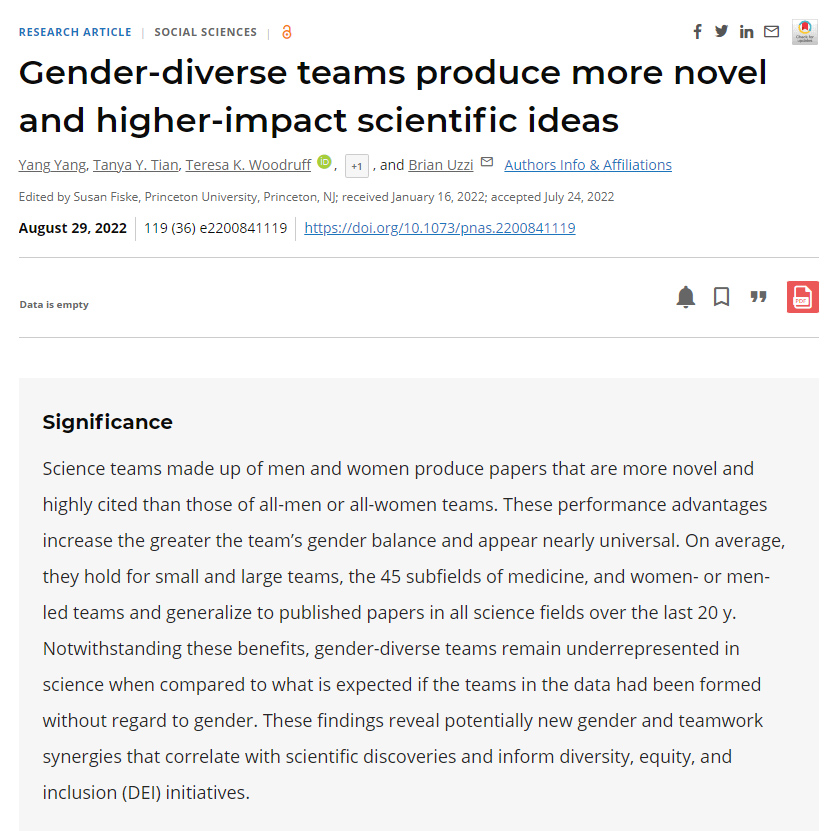
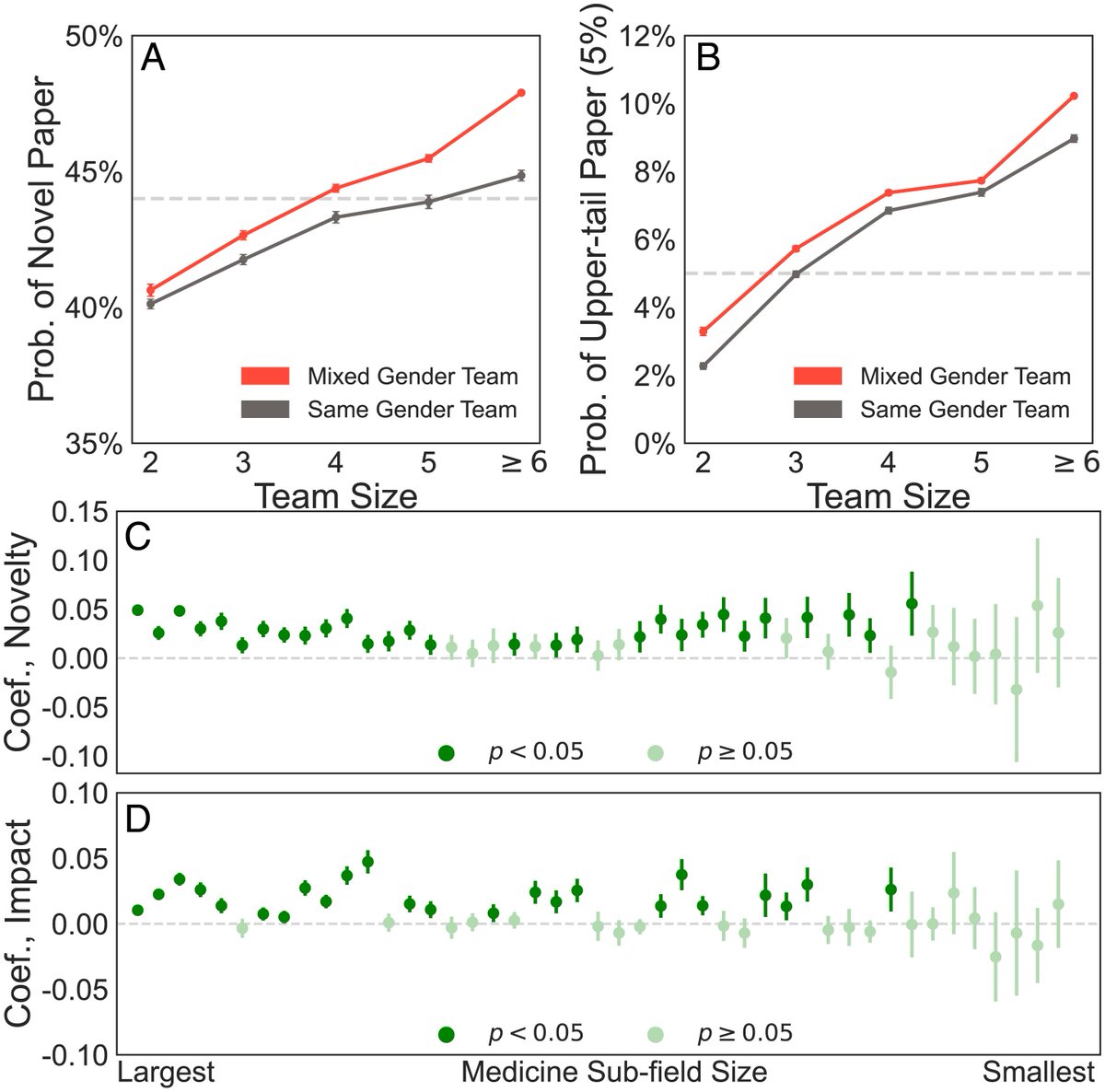
Science teams made up of men and women produce papers that are more novel and highly cited than those of all-men or all-women teams. Read our findings @PNASNews w/ Yang Yang, Tanya Tian, Teresa Woodruff and @bfjo. @KelloggSchool@NICOatNU https://t.co/aj7grMqPvh