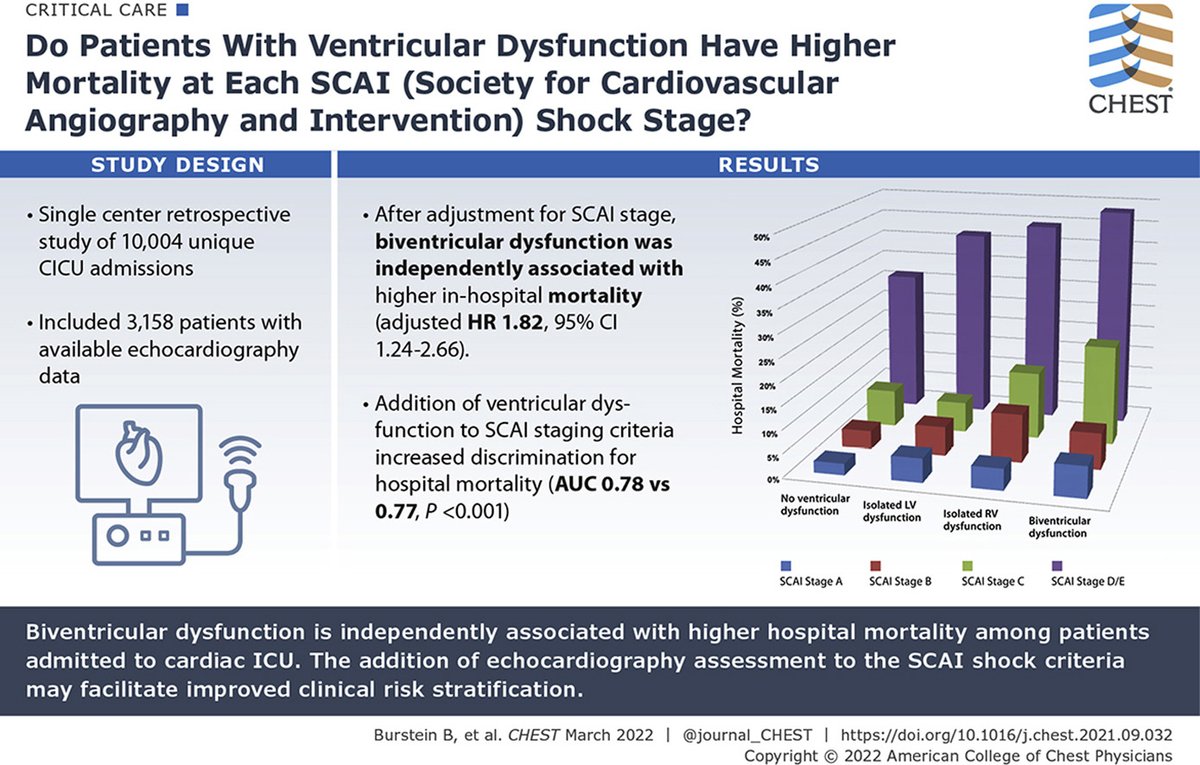
Finally in print! Our data from @MayoClinicCV CICU patients showing how echo can help risk stratify patients within SCAI shock stages. @seanvandiepen@nandananavekar @CICU_ECHO @MayoPCCM
https://t.co/i3uRL3QEUg
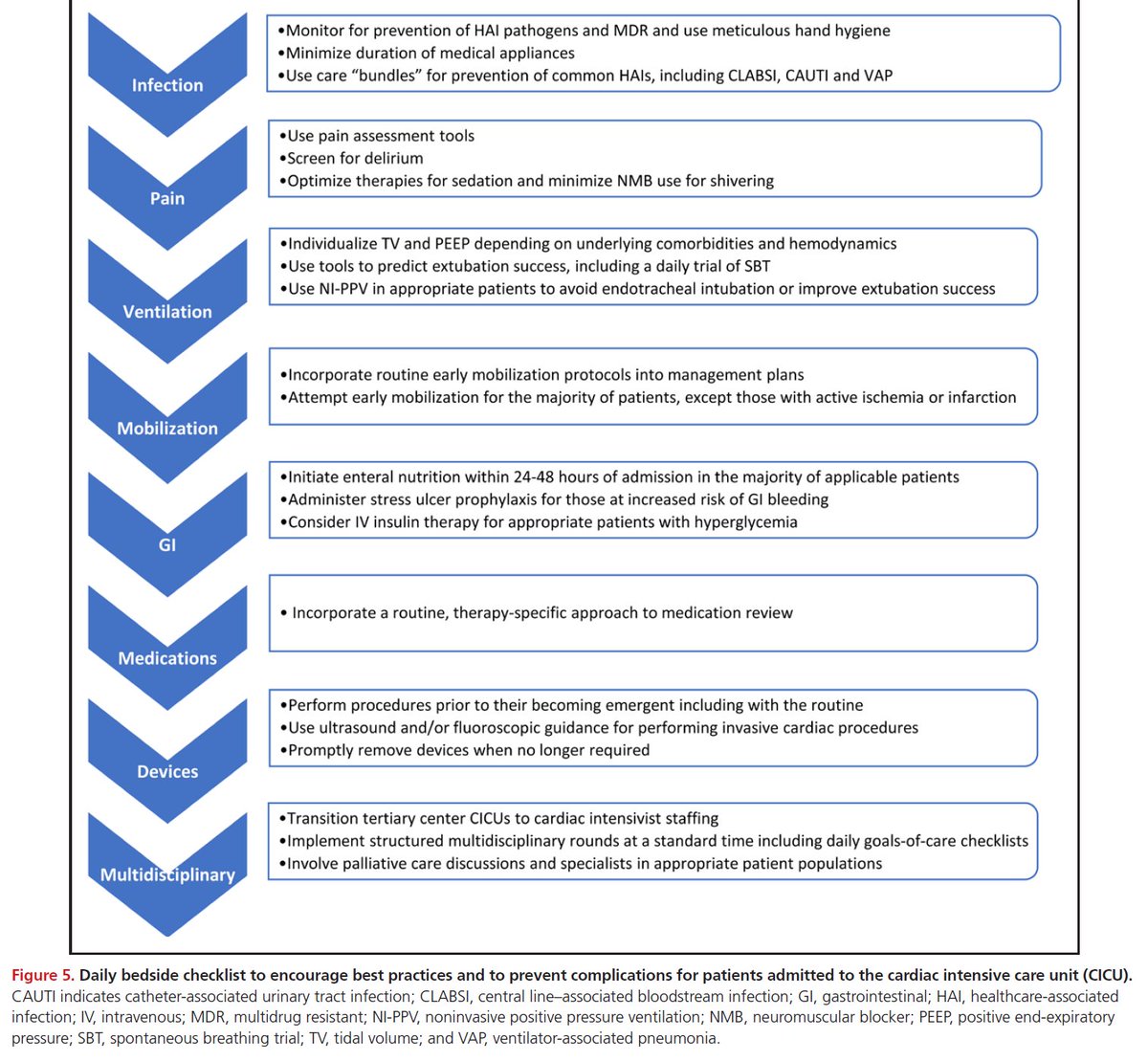
#CardioNerds, it is with GREAT pleasure that we break ground on a NEW Series:
🚨Cardiac Critical Care🚨
Stay tuned for an incredible curriculum & a comprehensive dive into this burgeoning field!
❤️🤓Co-Chairs: @MarkBelkinMD@EuniceDuganMD@karanpdesai@YoavKarpenshif 🙏🏽
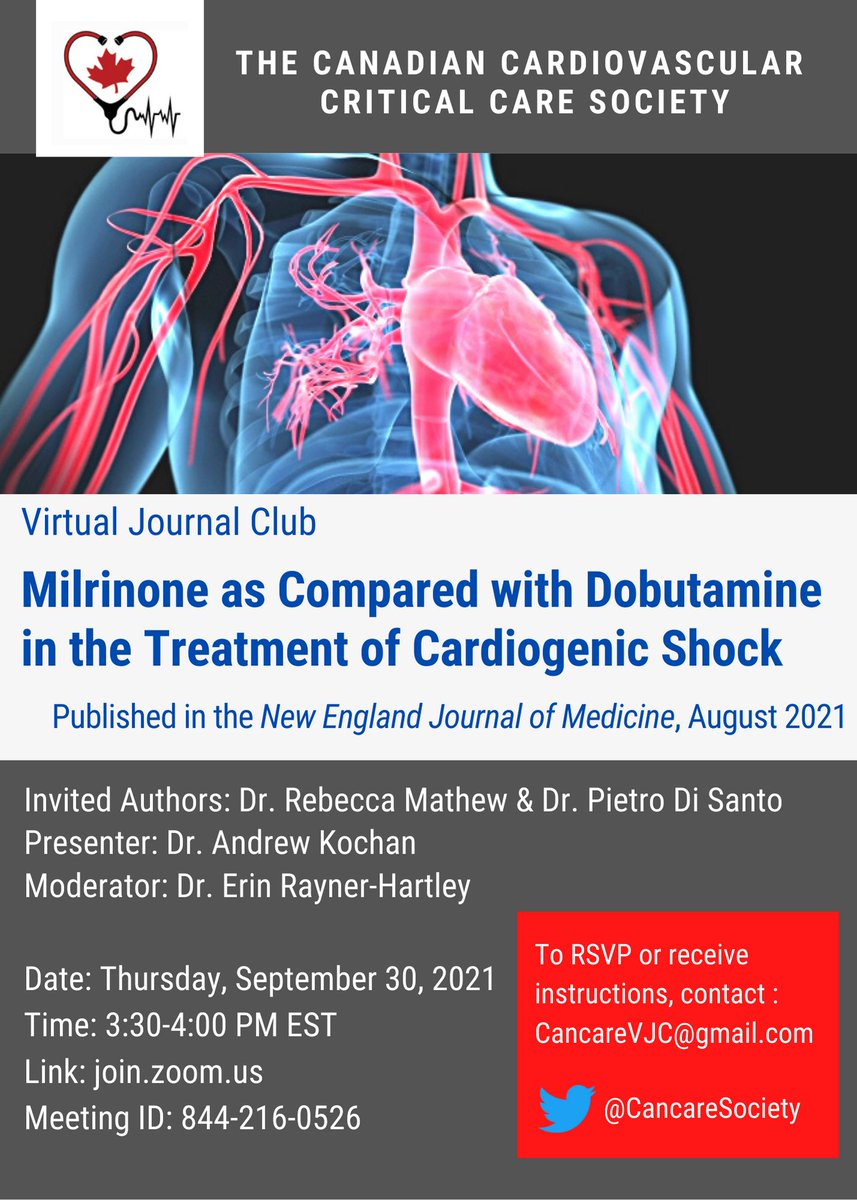
Join us LIVE this Thur @ 3:30PM EST for a @CANCARESociety Virtual Journal Club, discussing @NEJM's Capital DoReMi Trial, comparing dobutamine to milrinone in #CardiogenicShock.
We'll be joined by 2 authors @RebeccaMathewMD & @DiSantoPietro from @UOHIResearch🇨🇦
See details⤵️
@TorontoIDDoc CIN is waaaay overstated, in general. It is almost always worth giving contrast if it will better inform diagnosis and subsequent management.
https://t.co/dGhoTy6Uqs
Great collaboration demonstrating the increased CV risk associated with sepsis survival. A potentially important risk factor in CV prevention. Great work @leahkosyakovsky, @fedeangriman, @PatrickLawlerMD and team!
The definition of "pre-shock" in CICU patients can be elusive. In the latest issue of @CircHF we demonstrate that it may not be what you think...
Defining Shock and Preshock for Mortality Risk Stratification in Cardiac Intensive Care Unit Patients https://t.co/KLeT6HIopP
Surely a no. You only have to read IABP-SHOCK II in @NEJM, @TheLancet and @CircAHA
If you use IABP it may only to make you better sleep during the night. But it does not help the patient! Even no benefit on lactate or does of catecholamines...
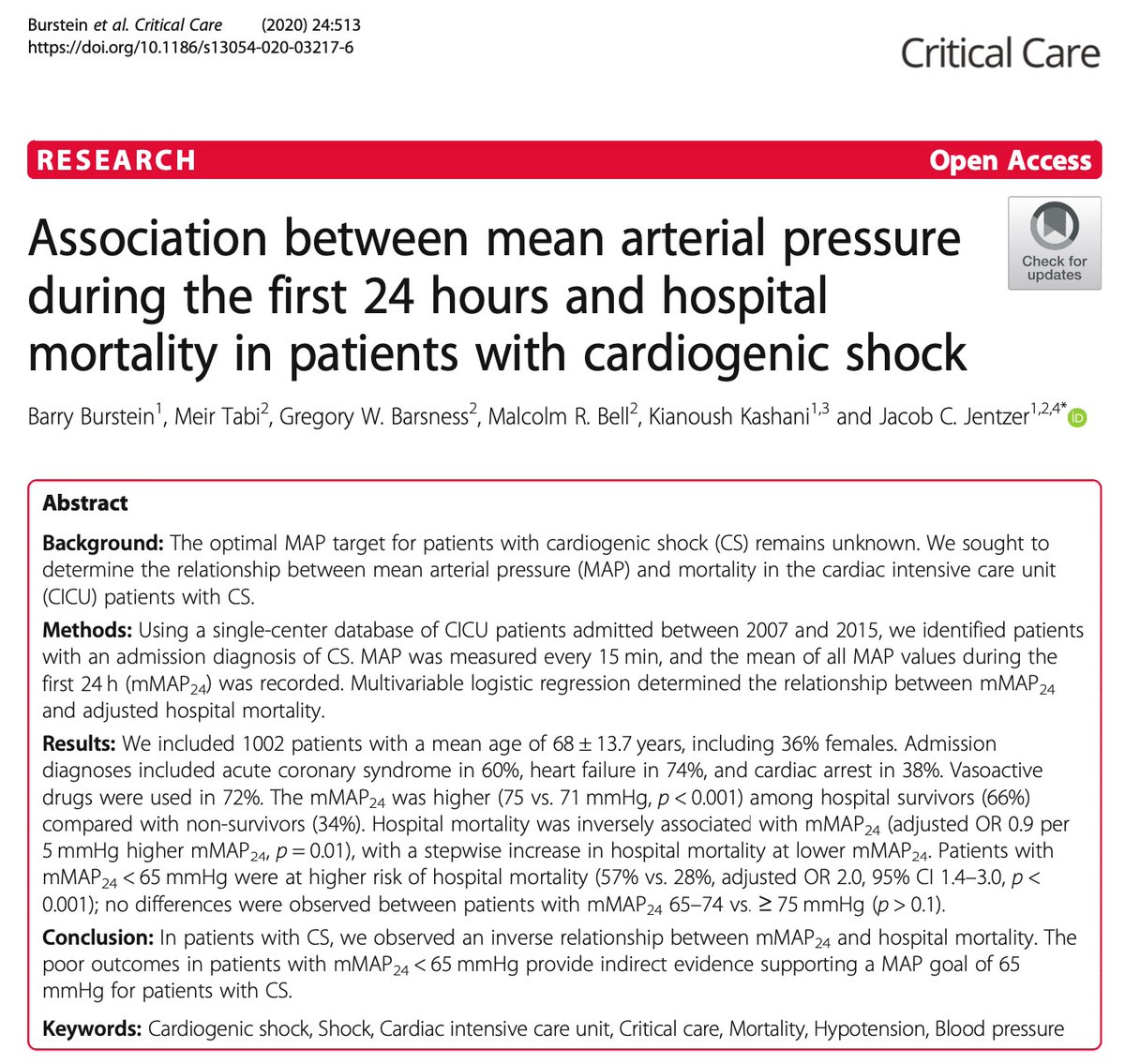
Our analysis of the @MayoClinic database demonstrating that MAP>65 mmHg is associated with survival in #CardiogenicShock, now published in @Crit_Care. Some guidance for clinicians to improve care for our patients. Great collaboration with @MeirTabi, @kianoushbk, and others!