First face: AVRcap1b binds the ENTH-domain protein TOL9a, using one side of its striking L-shaped structure.
Beautiful structural snapshot here: AVRcap1b clasping TOL9a from one side of the “L”
https://t.co/gMcFRywK8b
Fantastic study by @MarionClavel4@PlantoPhagy & co. on how autophagy fine-tunes immunity during viral infection by degrading EDS1!
Stay tuned - we will soon lift the mystery why autophagy acts as a "pro-death" pathway during bacterial infection ☠️
https://t.co/Ns9i4Tyt1q
Many experiments in biology happen one protein at a time, which means synthesizing DNA one gene at a time. This is fine for tens of genes. For thousands, the cost is unsustainable.
Introducing uSort-M: a method to isolate and sequence-verify thousands of genes at low cost
MPK3- and MPK6-mediated phosphorylation of STOP1 triggers its nuclear stabilization to modulate hypoxia responses in Arabidopsis (Jian-Hong Wang, Ying Zhou, et al) https://t.co/VxVrVc2Aqu @ASPB#PlantSci
Many people think of proteins as having a biological function — catalyze reactions, detect pathogens, etc.
At a higher level, though, proteins are programmable materials. They are an advanced form of nanotechnology, made from templates that we can read and write and understand.
And because proteins are programmable, we can use them to build physical logic gates or “smart” drugs.
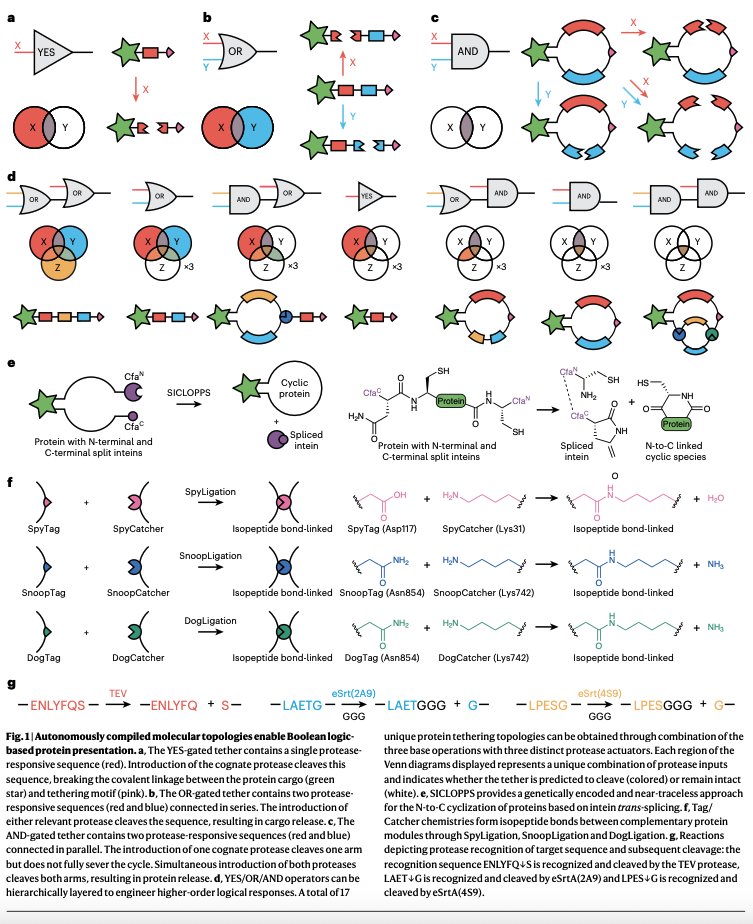
Say you wanted to make a protein that acts as a YES gate. That is, the protein releases some cargo (like a drug or other signal) only when a specific input is received.
You could build this YES gate by synthesizing a short protein (called a peptide) that has a particular sequence which is uniquely recognized by another protein, called a protease. There are many proteases found in nature. Each protease type recognizes a unique protein sequence and cleaves it, thus splitting the target in two.
A YES gate, then, can be made by building a peptide that has a protease recognition site. One end of the peptide is attached to a drug. The drug is only released when exposed to the protease.
An OR gate is also simple to make. Just create a peptide carrying two different protease sites in series, such that the addition of either protease will cleave the peptide and release the drug.
An AND gate is more difficult. To make it, you can instead attach the drug to two different peptides, each carrying a different protease recognition site. Then, anchor the ends of these two peptides to a scaffold. In this case, the drug will only be released if BOTH proteases are added.
Why am I writing about this? Because you can use these basic logic gate architectures to build all kinds of wonderful, “smart” materials and drug delivery vehicles. For a recent study, researchers built each of these logic gates, and also nested or stacked them together to build even more complex circuits (17 different logic architectures in total.)
They embedded these protein logic gates onto magnetic beads, hydrogels, and even living mammalian cells. These logical proteins are genetically encoded, modular, and could in principle respond to other signals, too; not just proteases but also light, small molecules, or mechanical forces.
Imagine a therapy for metastatic cancer that only releases its drug when two tumor-specific proteases, like MMP-9 and cathepsin B, are active. Or engineered immune cells that secrete cytokines only when both an infection marker and a metabolic stress signal are present.
Interesting to think about.
I think we will soon have AI tools to genetically encode--i.e., make #enzymes for--many useful chemical transformations. On our way to getting biology to do all the chemistry we love (and think only humans can do). #directedevolution#MLDE#proteindesign
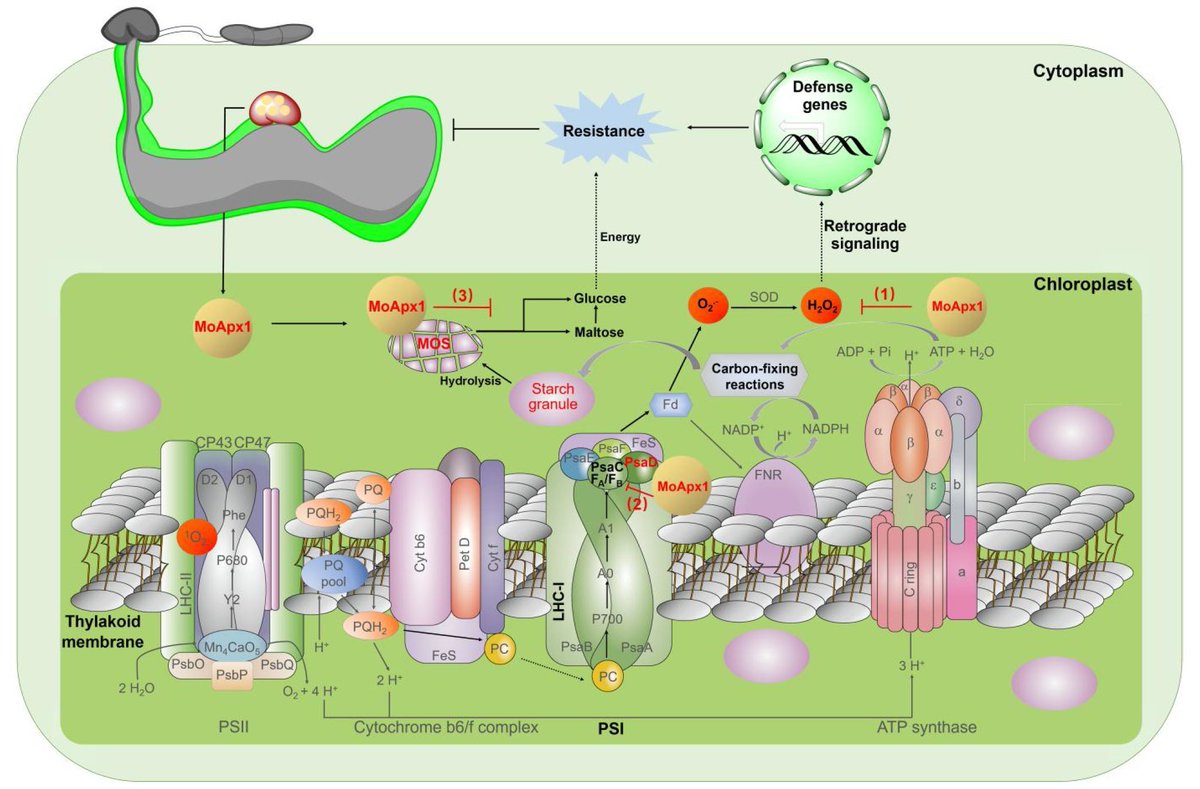
The multifunctional ascorbate peroxidase MoApx1 secreted by Magnaporthe oryzae mediates the suppression of rice immunity (Muxing Liu , Ziqian Guo , Jiexiong Hu , Yuke Chen , et al) https://t.co/SF3KnFx4lw #@ASPB #PlantSci
More than 16 million Americans are at risk of losing their health care because Republicans in Congress are rushing to pass a bill that would cut federal funding for Medicaid and weaken the Affordable Care Act.
If the House passes this bill, it will increase costs and hurt working class families for generations to come. Call your representative today and tell them to vote no on this bill.
Analysis of protein aging reveals rates of subcellular organelle renewal and selective post-translational modification in Arabidopsis https://t.co/J5wMViBOcp #biorxiv_plants
New Article: "TIR immune signalling is blocked by phosphorylation to maintain plant growth" https://t.co/Mbb60e7G8W
Ca2+-dependent kinases phosphorylate TIR domains at a conserved serine to block NADase activity across kingdoms. Link with SNC1-mediated immunity in plants.