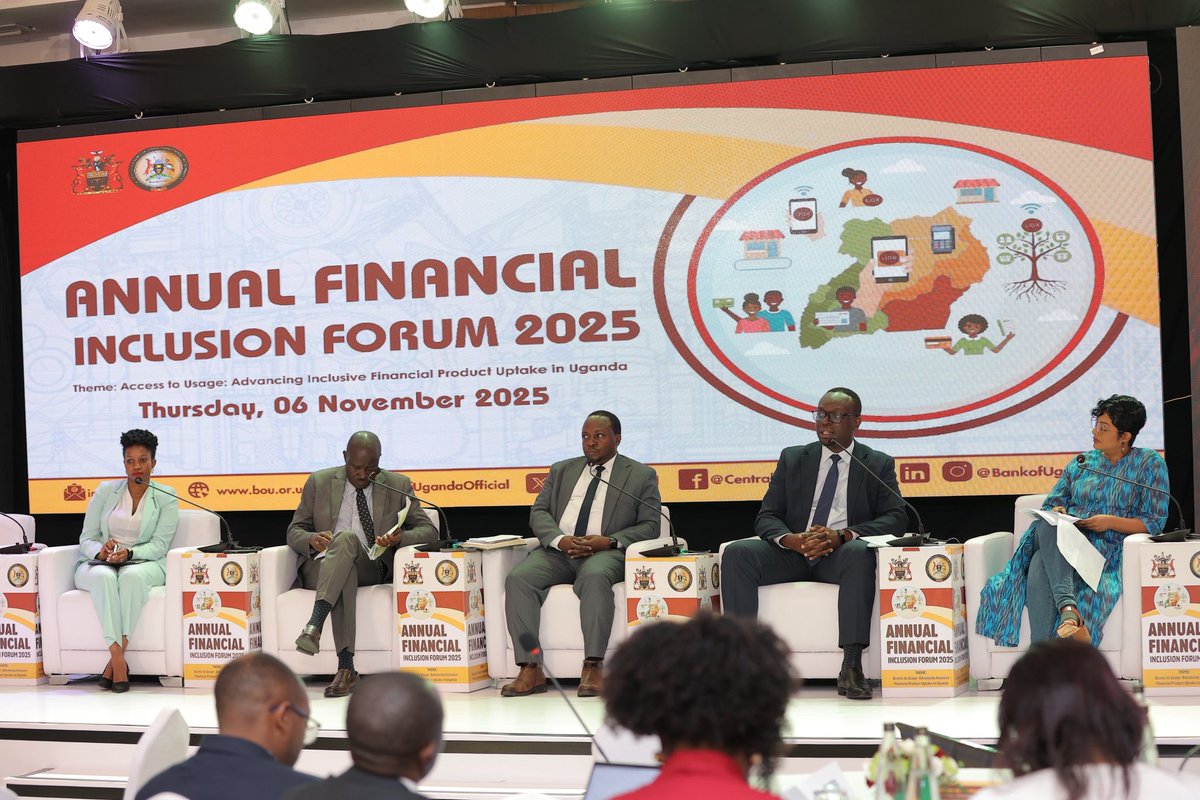
Bank of Uganda today hosted the Annual Financial Inclusion Forum 2025 in partnership with the Ministry of Finance, Planning, and Economic Development, providing a platform for discussions on initiatives to advance inclusive finance in Uganda.
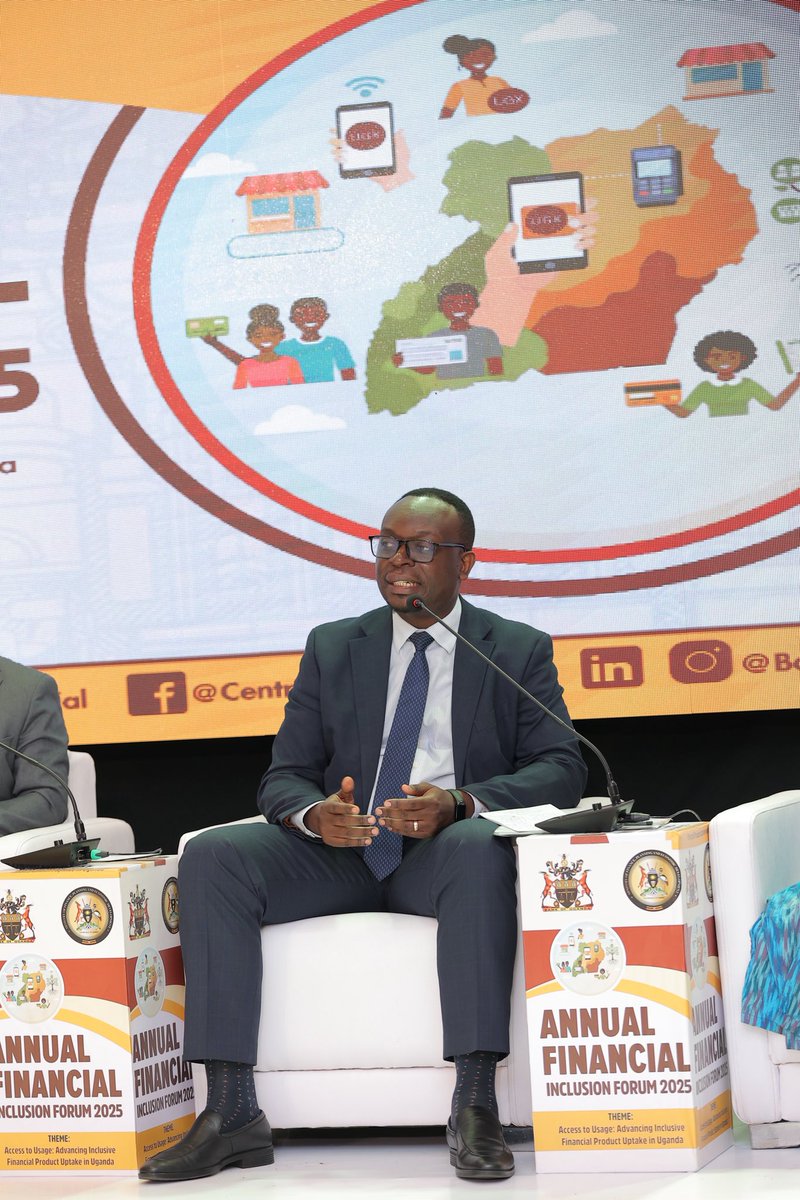
The forum was held under the theme, Access to usage: Advancing Inclusive Financial Product Uptake in Uganda. During the same, I shared my thoughts of what needs to be done for us to further sustainable financial inclusion.
Sustainability is at the centre of the financial inclusion conversation; hence, we cannot achieve our purpose without deliberately venturing into the MSME and agriculture sectors, the largest sources of employment for Ugandans, especially youth and women, who are the most excluded from formal finance.
To succeed in this space, we have to think differently. Don’t begin with a product or solution; begin by understanding the people, the businesses in these communities, their cash flow patterns, and what drives their livelihoods, and then design solutions that help them grow.
Providing access lays the foundation of the financial inclusion journey and this is best driven by technology. The onboarding journey must be simple, and the account should be easy to use.
Most MSMEs and farmers depend on seasonal income. We must be open to extending credit that fits their cycles and not the bank’s calendar. Partnerships with the Government, Bank of Uganda, and development partners like AFD are essential to de-risk this segment and make it sustainable.
But inclusion is not just about credit. It is about building ecosystems that support growth, leveraging existing customer networks, and equipping people with financial literacy to make informed decisions.
Climate change now poses a new risk, especially for smallholder farmers who rely on traditional rain-fed agriculture. Changing weather patterns threaten their yields and income. As providers of financial services, we must integrate risk mitigants into our business strategies and support farmers adopting green and climate-smart practices.
Financial inclusion is a journey that requires collaboration, innovation, and a deep understanding of the people we serve. When we design for their realities, inclusion becomes attainable and sustainable.
Every man reaches that brutal, beautiful season:
Where he’s not angry, not loud, not trying to prove he’s tough. Just quiet. Focused. Cleaning his mess. Because this time, it’s about legacy, not likes.
For many men, before a great thing, you suffer the worst form of loneliness.
You spend hours, planning, plotting, thinking, testing yourself, second guessing. Pushing back against doubt.
Breaking. Recreating.
You’ll be misunderstood, misrepresented even by those closest to you.
Yet the boats are burned and you must stay the course.
Salute to the men who know what I’m talking about.