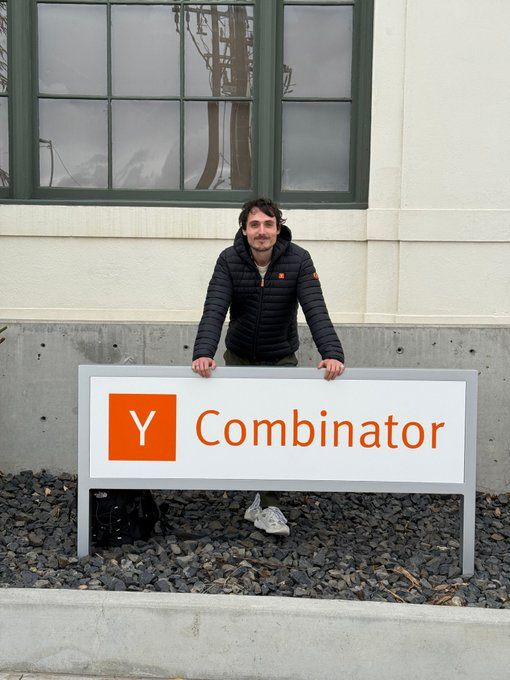
Two months ago I was fired by Google for creating the Google Workspace CLI. It went viral, hit #1 on Hacker News, gained thousands of GitHub stars and many thousands of actual users in just a couple days.
It was an incredible, confusing journey, from directors and leaders asking what they could learn from the tool to getting grilled by legal about why the Google logo and brand colors are on the Google Workspace GitHub code repositories.
I think the cause was that Workspace and certain leaders (and projects) were afraid of being disrupted. But the fear wasn't specific to my CLI, it was a broader fear in what agents meant for Workspace. Either way, the irony of my termination was the announcement at Google Cloud Next two days before I was fired that an official Workspace CLI was coming.
I want this out there because it is easier for me to explain my story and it is an experience I want to fully own. It's also part of my healing.
Nearly 7 years at Google was an incredible opportunity for me and I was fortunate to have wonderful teammates and a manager that fully supported me through these last few months. Thank you.
New market map: AI assistants in iMessage 📱
The next major interface for consumer AI? Text messages.
People don’t want to open an app every time they need help - they want a contact they can text like a friend.
My roundup of the assistants + infra providers below 👇
Introducing Sakana Fugu: A full multi-agent orchestration system accessible via a single model API.
Our ‘Fugu Ultra’ model matches the performance of Fable and Mythos, delivering frontier capability without the risk of export controls.
Try it: https://t.co/hhO6qTawgb 🐡
Voice prompting is 4x faster than typing.
but i wanted more.
Multi-agent orchestration with a shared memory system, running on virtual private servers shipping straight to production.
All controlled by my voice with nivida parakeet running locally or gpt realtime 2 in the cloud.
CNVS is a mac os app built from the ground up in swift for raw performance on apple hardware.
agents have bidirectional control, they can spawn and prompt each other, terminals, and browsers. Create loops and even draw diagrams straight on the canvas.
nothing comes close, and im just getting started.
/no-mistakes is here!
by popular demand i've made the most impactful tool in my agentic engineering setup "no-mistakes" invocable as a skill in Claude Code, Codex et al
just type "/no-mistakes" once your agent has made changes, and watch the magic unfold
details below 👇
Gemma 4 12B Coder is here and it's a game changer for local code generation. This GGUF model packs Google's latest gemma-4 architecture into a compact 12B size, perfect for running on consumer hardware. It's optimized for reasoning and thinking, making it ideal for developers who want fast, private coding assistance without the cloud.
Announcing Cofounder 2: Run an entire company with agents.
It's the infrastructure for the one person billion dollar company - orchestrating agents across engineering, sales, marketing, ops, and design.
(and yes that's my real grandma in the video)
Gemma 4 now runs 2x faster with MTP GGUFs! Run locally on just 6GB RAM. ⚡️
MTP enables Google Gemma 4 run ~1.4–2.2× faster with no accuracy loss.
Gemma 4 12B MTP can run at 162 t/s vs. 52 t/s without MTP. 31B reaches 101 t/s.
GGUFs + Guide: https://t.co/c4gAUlb6YE
ITS ALWAYS THE SIMPLEST FEATURES THAT HIT THE HARDEST.
dynamic resizing coming to CNVS.
your agents deserve a workspace that inspires you to create beautiful projects.
stop vibe coding in the dumpster.
We went from 0 to 2,200 paying customers in under a year by following @ycombinator's 15 rules:
1/ Do things that don't scale. Get your first 10 customers by hand.
2/ Launch now, not when it's "ready". A mediocre product in front of real users teaches you more in a week than 6 months of polishing in the dark.
3/ Charge from day one. If nobody will pay, you don't have a startup, you have a hobby.
4/ Talk to users every single day. The roadmap you need is sitting in your customers' heads, and they'll hand it to you for free
5/ Always hunt the 90/10 solution. For almost any feature there's a way to capture 90% of the value with 10% of the effort.
6/ There are only two real jobs: write code and talk to users. Everything else (conferences, press, VC coffees, corp dev calls) is fake work.
7/ You pick your customers as much as they pick you. 10 users who love you beat 1,000 who kind of like you.
8/ Growth is an output, not a strategy. Grow before product market fit and all you're buying is churn.
9/ Do less, really well. Pick one or two metrics and judge every task against them.
10/ Know if you're default alive. Paul Graham's question: on current growth and current burn, do you reach profitability before the money runs out?
11/ Don't hire until it hurts. Headcount is not progress, it's burn. Every great startup was embarrassingly small for embarrassingly long.
12/ Momentum is the only real moat in year one. Ship something every week, even something tiny.
13/ Every great startup is badly broken at some point. The game isn't avoiding fires, it's how fast you put them out. Again. And again
14/ Ignore your competitors. Startups die of suicide, not murder. In year one, the only company that can kill yours is your own
15/ Startups rarely die from running out of money. They die because the founders fall out. Brutal honesty with your cofounder is the cheapest insurance you'll ever buy
Good luck !
Here's a simple loop: Tell codex to maintain your repos, wake up every 5 minutes and direct work to threads. That makes it easy to parallelize+steer work as needed.
I use a orchestrator skill combined with my triage+autoreview+computer use skills, so some work can land autonomously. https://t.co/FbBoJTIcfd
https://t.co/8389roVnOm
holy shit. claude fable just let me build something in 30 hours that should've taken months.
it's an agentic canvas, and it's fully replaced my usage of claude cowork and claude design.
agent harnesses are worthless now. taste is the last human moat!