I made a lighter for my still life, and wasted many hours trying to get a fire VDB to look good in #octane for #blender. Don't think it can be done. Lighter plastic material thanks to the Octane Oracle @RaphaelRau
@oliviscusAI Completely agree, almost 1/1 what I'm using. Ive had pi write two extra extensions: one simple todo list per session and a broader "worklist" for longer term and session surviving project todos.
Python can now render a 3D satellite timelapse of any part of the world, draping Sentinel-2 imagery over Copernicus DEM terrain with soft transitions and an orbiting camera. Built with forge3d
Try forge3d 👉https://t.co/IvUfbpSVPo
@steipete Ich habe gehört, du baust gerne Sachen. Für 8 € kannst du darauf nicht verzichten, und wenn man die Augen zusammenkneift, sieht es fast wie ein Hummer aus.
https://t.co/kOWzMCHtGc
This feels like cheating.
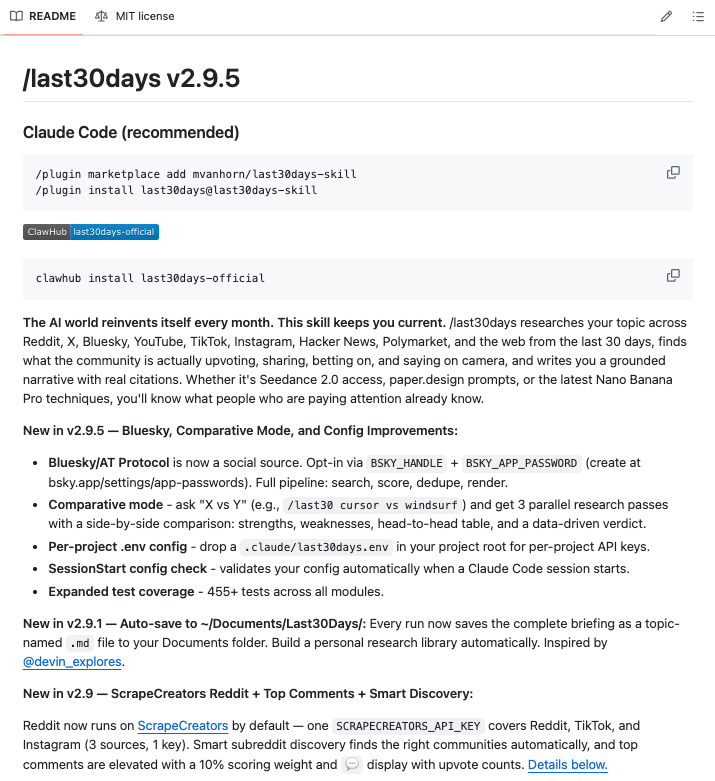
Someone built a Claude Code skill that scans Reddit and X from the last 30 days on any topic you give it, then writes you copy-paste-ready prompts based on what the community has actually figured out not what was working six months ago.
You type /last30days prompting techniques for ChatGPT for legal questions and it comes back with the top patterns real lawyers and power users are using right now, complete with a fully written prompt you can drop in and use immediately.
No more Googling, no more digging through threads, no more prompts that worked last year but got patched out.
It works for anything - Midjourney techniques, Suno music prompts, Cursor rules, trending rap songs, whatever you need to know what people are actually saying about right now.
100% Open Source. MIT License.
Link in the comments.
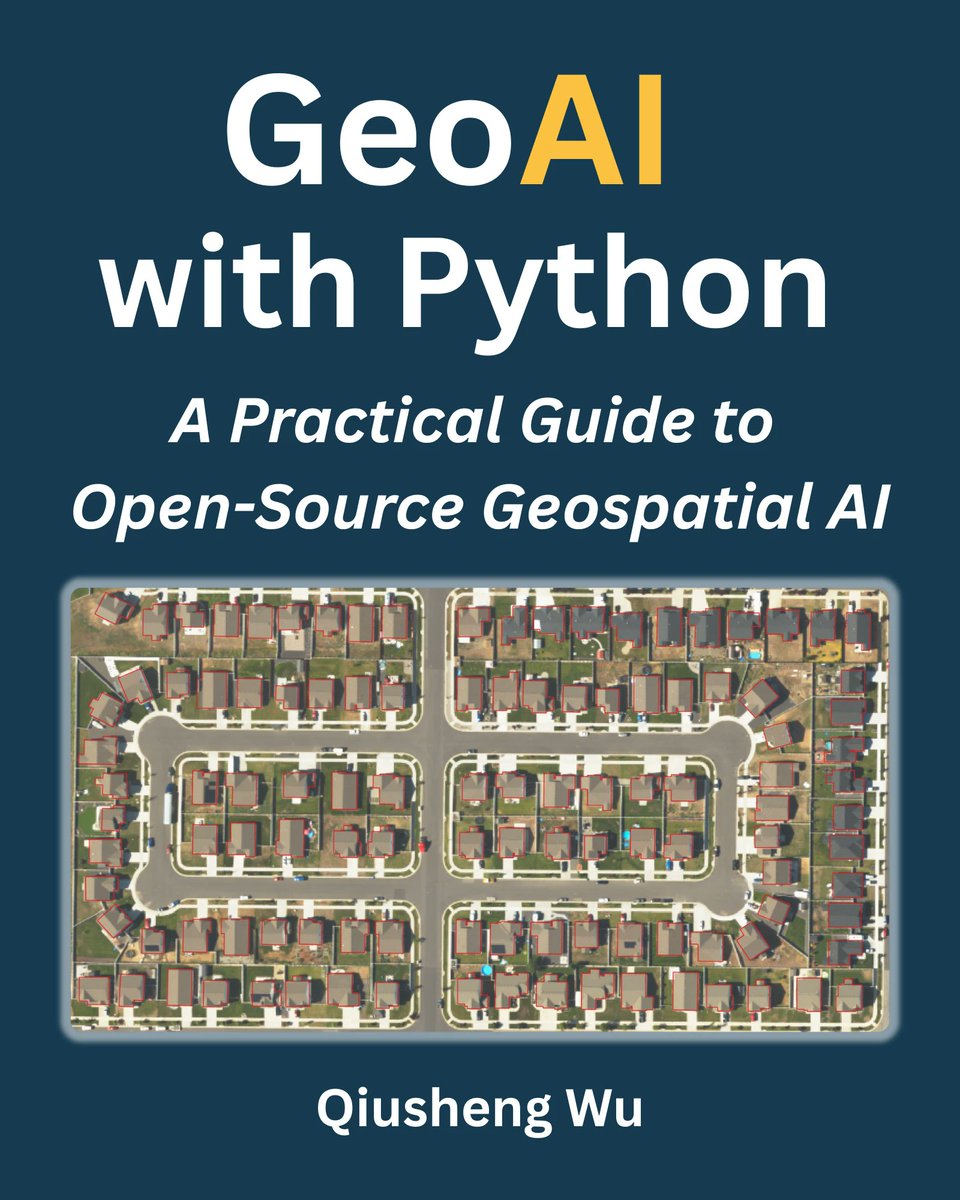
🚀 New book release: GeoAI with Python: A Practical Guide to Open-Source Geospatial AI
The full PDF edition (423 pages) is now available on Leanpub:
https://t.co/SK9NBgFaZ8
All code examples are freely available: https://t.co/i039IxUsWs
This hands-on guide shows how to apply deep learning and AI to satellite imagery, aerial photos, and geospatial data using Python. It walks through the complete workflow, from accessing remote sensing data to training, evaluating, and deploying models using open-source tools.
Explore the Table of Contents: https://t.co/i039IxUsWs
The full-color print edition will be available on Amazon soon.
#geospatial #geoai #opensource
OSINT search engine for mapping real-world infrastructure from OpenStreetMap data.
- Telecommunications towers
- Power plants and substations
- Data centers
- Airports and helipads
- Ports and harbours
- Warehouses and industrial facilities
- Pipelines and refineries
- Military installations
- Hospitals, prisons, embassies
- Surveillance cameras and security infrastructure
- https://t.co/vTp5gMmblg
McKinsey studied 50 agentic AI builds and where they fail the most, and boiled it down to 6 key factors—essential for AI engineers:
1. It’s not about the agent, it’s about the workflow. don't obsess over building "impressive" agents. think about the whole system, not fun toys.
2. Agents aren’t always the answer.
Not every workflow needs a multi-agent system. Low-variance, predictable tasks are best handled with rules or ML, LLMs add complexity . The big wins for agents come in high-variance, messy processes (e.g. extract complex financial information)
3. Avoid "AI Slop". (common)
Focus on long-term development of agents, as you would with the development of an employee. Forget impressive demos. Double down on benchmarks. Agents should be given clear job descriptions, onboarded, and feedback so they improve regularly.
4. Track every step, not just outcomes.
Scaling agents up without visibility is asking for silent failures. Think about monitoring every stage of the workflow. This way teams detect errors early, refine logic quickly, and avoid total breakdowns. When mistakes happen (and they will), you can track where things went wrong and why. Don't skip this.
5. Reuse agents when you can.
Many companies waste time building one-off agents for each task. The smarter play is creating modular agent components (ingest, extract, verify, analyze) that can be reused for other workflows. Centralizing validated tools and prompts cuts 30–50% of redundant work, this number is no joke.
6. Humans remain essential, but in new roles.
Agents can parse, automate, and scale. But humans provide judgment, edge-case handling, and creative problem-solving. The future isn’t agent vs. human, but agent + human.
These are the mistakes startups and established companies make at scale. They cause massive damage to reputation and resources. And now you know how to avoid this.
Just become the world’s first to run an LLM locally on a business card lol.
Why? For fun.
Details:
- llama2.c by @karpathy with modifications from @_davebennett
- 24tok/sec on esp32s3 n16r8 w/ a 260k param model
- designed the card myself, whole inspiration comes from ouija boards i.e talking with ghosts. if i put llms on my business card, it ought to be the ouija form factor lol.
- pcb and smt sponsored by @HQ_NextPCB
Dropping video on youtube + schematics this weekend
Power of CoreML + @ultralytics YOLO11 on @Apple devices! 85 FPS 🥳
This comparison highlights how exporting your PyTorch model to CoreML can significantly boost real-time inference by leveraging Apple’s optimized hardware stack.
More details👇
#MachineLearning#research