Our research is focused on the compatible interaction of cyst nematodes with their hosts with the long-range goal of engineering novel plant resistances.
Our latest publication on a set of GATEWAY vectors to accelerate gene function analysis in soybean composite plants to rapidly screen transgenic roots and investigate subcellular localization, protein–protein interactions, and root-pathogen interactions.
https://t.co/r1FLUa79XD
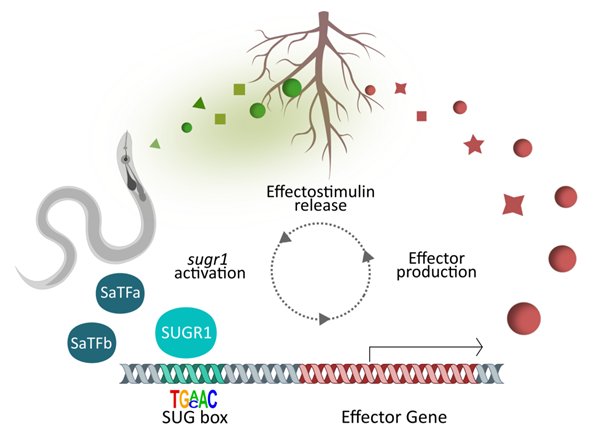
Very excited to see my first first author paper published in @PNASNews . We found the first effector regulator in plant-parasitic nematodes! Congratulations to all authors and co first author @ClemPellegrin. https://t.co/QXvViTlJ64
Very excited to see my first first author paper published in @PNASNews . We found the first effector regulator in plant-parasitic nematodes! Congratulations to all authors and co first author @ClemPellegrin. https://t.co/QXvViTlJ64
Each season #SCN pressure continues to spread across the Midwest – with 30 new counties infected in 2024! Explore pest management resources or find a soil testing lab near you: https://t.co/F7oPBfQeQ2
@Fariba27209790 Yes, Nemacounter is trained to identify cysts by their characteristic shape and can identify cysts even in a sample that has some soil debris. One or two rounds of sucrose cleanup will help improve the recognition rate, but users can also manually correct misidentifications.
Presenting Nemacounter: a new user-friendly tool for nematologists to aid in phenotypic assessment. Check out the Open Access publication in #ScientificReports, from lead author Joffrey Mejias and the Baum lab.
https://t.co/1TT4d7Nuwj
Thursday the 20th of February (15:00-16:15 CET) we'll organize the 2nd edition of our "Trends in Nematology" webinar series! As always, the webinar is free to attend.
The theme of this edition will be "Advances in Bio-informatics".
More info will follow very soon!
[Just Published in Sci. Data] Finally, a reliable long read genome for the quarantine pest Meloidogyne eenterolobii, with all raw and processed data publicly available ! Please use and share it 😉 https://t.co/L7C8RRcFz3
🚨 Editor’s Pick Alert - Margets et al uncover a key soybean cyst nematode effector, Cysteine Protease 1 (CPR1), which inhibits plant immunity and targets a mitochondrial enzyme in soybean roots. This joint effort opens the door to engineering decoy substrates to boost plant defenses against many plant pathogens 🌱🐛. Don’t miss our November issue now to learn about exciting discoveries in #MPMI:
https://t.co/RU5xO3HmwM
@_acmargets@JFplantstuff@Anilm58@remkv6_rick@trmaier @RogerInnes1 @BaumLabISU
🚨 Editor’s Pick Alert - Margets et al uncover a key soybean cyst nematode effector, Cysteine Protease 1 (CPR1), which inhibits plant immunity and targets a mitochondrial enzyme in soybean roots. This joint effort opens the door to engineering decoy substrates to boost plant defenses against many plant pathogens 🌱🐛. Don’t miss our November issue now to learn about exciting discoveries in #MPMI:
https://t.co/RU5xO3HmwM
@_acmargets@JFplantstuff@Anilm58@remkv6_rick@trmaier @RogerInnes1 @BaumLabISU
👏👏👏Congratulations to @Seb_EvdA for being appointed Professor of Biotic Interactions, effective from 1 October. Sebastian is Head of the Plant-Parasite Interactions group here at the CSC. https://t.co/vrgNEZAuzs
.@B_Mol_'s 1st paper now in @PLOSPathogens
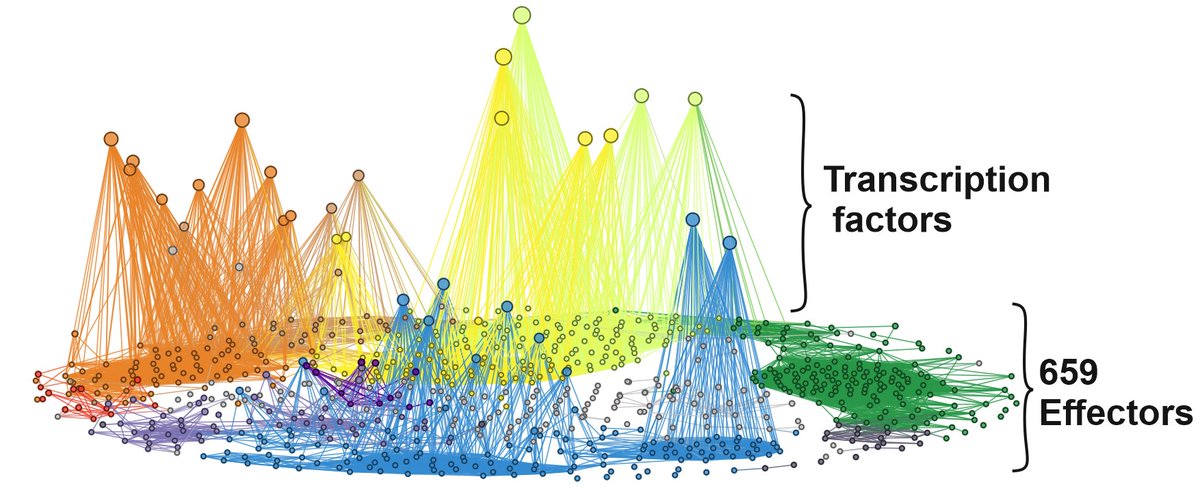
A predicted parasitic nematode effector set is:
1. Big, several hundred genes
2. Diverse, 391 families - some big, most very small
3. Tightly co-regulated
4. Approx. 50% conserved in last parasitic ancestor
https://t.co/WKBsTwd0ej
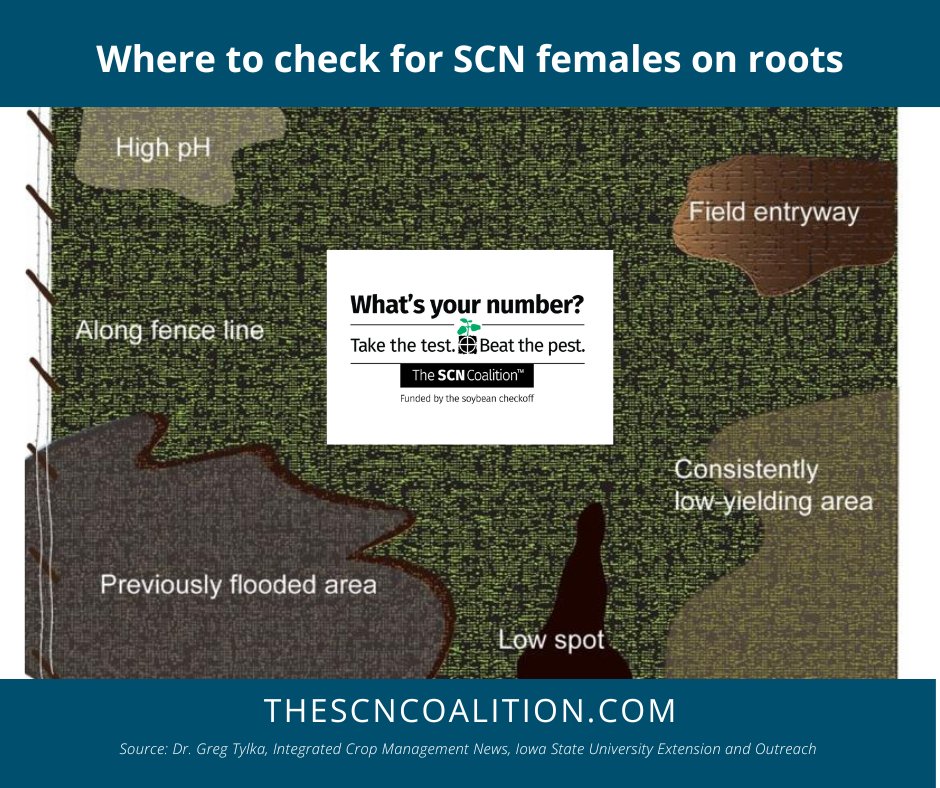
When scouting for #SCN females, experts say #soybean#farmers should look where the pest could be introduced: field entryways, fence lines, where windblown soil accumulates, and areas with unexplained #yield loss, high pH or flooding. Learn more: https://t.co/aiEb11yPEM.
Check out this fascinating report on the SUGR master regulator in cyst nematode from the @Seb_EvdA group! Glad to be able to contribute a small part to this developing story!
!!! preprint alert !!!
The SUbventral-Gland master Regulator (SUGR) of nematode virulence is central to a feed forward loop for host entry.
https://t.co/qJMs3LKsh5
Congratulations to first authors @ClemPellegrin and @AnikaDamm (and welcome to twitter Anika!) and the whole team
!!!Preprint alert with @B_Mol_ !!!
https://t.co/X2XRJpyFQM
The origin, deployment, and evolution of a plant-parasitic nematode effectorome.
Includes the effector network, which we think is both beautiful and useful 😍
@plantsci@CropSciCentre@biorxivpreprint
It's National #NematodeDay!
Thanks to everyone that participated in quizzes during September to learn if you are smarter than a nematode. Watch the videos from SCN Coalition experts for the answers: https://t.co/2Ywuj1LLoG