@zerohedge True.
That is why Bitcoin is based on energy: you can issue fake fiat currency, and every government in history has done so, but it is impossible to fake energy.
JUST IN: 🇺🇸 United States Indo-Pacific Commander, Admiral Samuel Paparo, advises the Senate that "Bitcoin shows incredible potential as a computer science tool."
"Bitcoin is a reality, it is a valuable computer science tool as a power projection."
The reason Bitcoin survives every savage correction is that 90% of the people holding BTC have already lost faith in every alternative and you can’t scare someone who has nowhere else to go
In mid-September the bitcoin network sustainably surpassed 1 zettahash of hashrate on the network for the first time.
In the six weeks since then it's added 100 exahash.
To put that in context, bitcoin didn't reach 100 EH/s for the first time until January 2020.
The pace of hashrate growth right now is mind boggling. And we're due to have a 6.6% upward difficulty adjustment in about six hours.
To anyone reading this wondering what all this means, it means that we're witnessing the exponential growth of the bedrock of the future monetary system.
A monetary system that melds the physical and digital worlds to bring us a scare, transparent, divisible, portable and extremely liquid bearer instrument that has separated money and state.
I wouldn't sleep on this.
https://t.co/eddAI36Y5g
To make @elonmusk's tweet tangible, here's a chart of the bitcoin network hashrate.
At 1.06 ZH/s miners around the world are producing more than 1 sextillion hashes per second in a race to find a hash below the network difficulty level so they can add a block to the ledger and get rewarded in bitcoin.
This is a race that is open for anyone to participate in, it's impossible to cheat, and this race is core to creating a fair distributed system that takes the power of money printing out of the hands of central bankers and politicians.
To ensure that the system doesn't go haywire when more computers join the network and start producing hashes, Satoshi introduced the difficulty adjustment. Roughly every two weeks the network looks at the average time it took to produce a block over that period and adjusts the difficulty target up and down accordingly. If more hash rate comes on line and blocks come in faster, the network makes it harder to mine. If blocks come in slower than the ten-minute target, the network adjusts and makes it easier to mine.
Proof of Work with a difficulty adjustment will be looked at as one of, if not the, greatest technical breakthrough of the 21st century.
Twenty-three years ago, on August 1, 2002, @adam3us formally released the whitepaper for Hashcash and laid the foundation for Satoshi Nakamoto to create #Bitcoin.
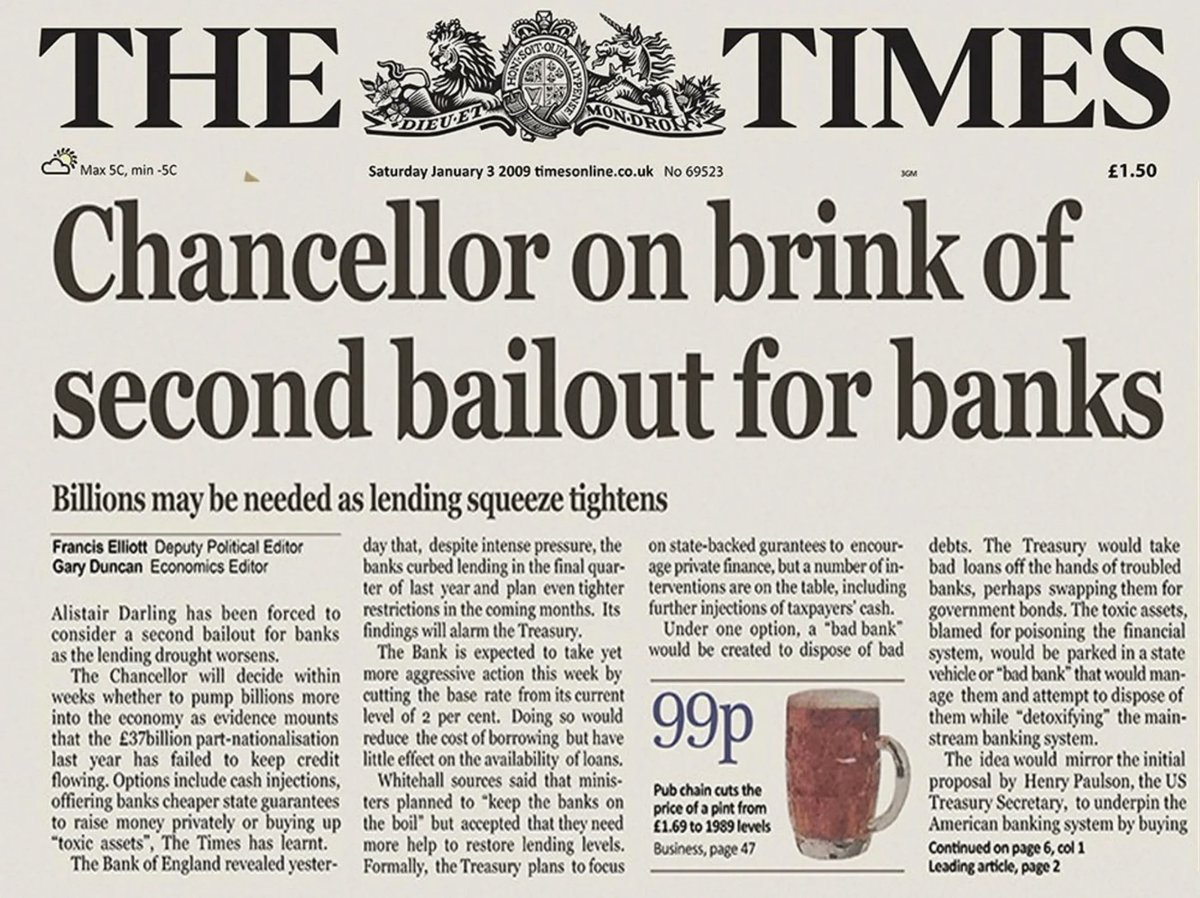
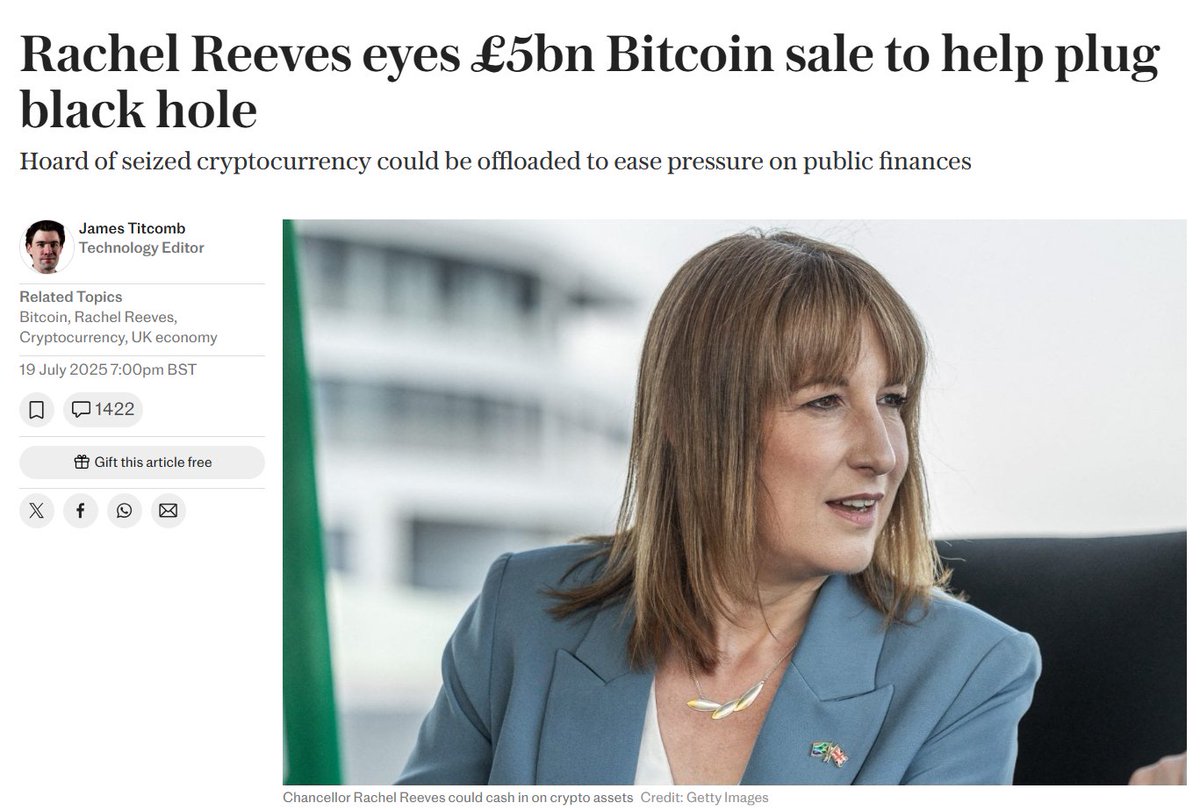
In 2009, Bitcoin was launched into the world, offering a hedge against money printing & government bailouts.
16 years later, Bitcoin is being sold to bail out the government.
Truth is stranger than fiction.
Bitcoin has hundreds of use cases. If someone tells you otherwise, especially with conviction, it means they didn't do the basic research of easily available information, which is now trivial with AI. This is a strong litmus test for their intelligence, curiosity, and ability to reason independently.
https://t.co/8mDJVlTE5d
I truly understood Bitcoin in 2011-2012 and in all these years, the bull case for it has never been stronger. Banks can now custody and offer BTC to their customers, sovereign states and corporations are competing to buy, utility phase of TCP/IP for money is taking off. Buckle up