Retired from the energy sector, starting a small farm in my late 50s on a budget. Real costs, mistakes and progress, plus daily farm history and ag news.
Farming History
In December 1929, North Carolina Gov. O. Max Gardner, working with the Extension Service and the state's agriculture agencies, launched a Live-at-Home campaign: grow more food, feed, and livestock at home, and lean less on cotton and tobacco for cash. County agents worked on corn and livestock; home demonstration agents taught gardens and canning.
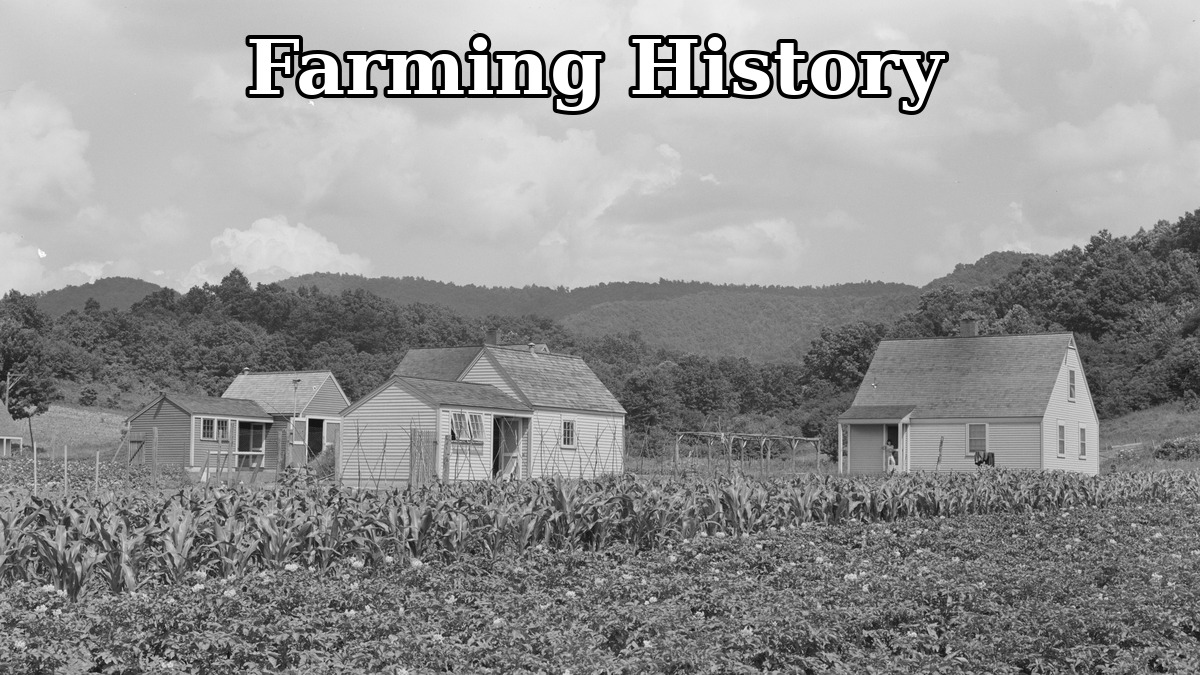
In 1933 the New Deal created the Division of Subsistence Homesteads under the National Industrial Recovery Act, with a $25 million fund in the Interior Department. A 1935 pamphlet described a typical unit as a modest house and outbuildings where a family could raise much of its own food, for home use rather than sale. Communities of 25 to two or three hundred homesteads were sold to families earning under $1,200 a year — about $3,000, or $12.65 a month over 30 years. Cash still had to come from wages.
Arthurdale, near Reedsville, West Virginia, was among the first. Work began October 1, 1933. It laid out 165 homesteads of about three acres, each with a house, a combination barn and poultry house, and a vegetable cellar. A 1945 USDA study counted 33 Division projects completed. In 1935 they passed to the Resettlement Administration, then the Farm Security Administration.
I'm starting a small farm later in life — late 50s, retired from the energy sector, on a budget. This account is the real costs, the mistakes, and the progress, plus daily farm history and ag news.
A ground reading is one test. Gov. Reynolds says soil and water results are still coming, and I have not seen an all-clear. Missouri Gov. Kehoe says no detectable lead is heading their way and expects no impact to agriculture. https://t.co/gh3PrwPKnt
Today's successfully controlled detonation exceeded expectations. Credit goes to our EOD professionals and the Soldiers on the ground today, with every indication showing the munitions used substantially reduced the lead azide threat and safely addressed the hazard. There is a reading of 0.0 lead detected on the ground.
Immediate overhead coverage after the operation confirmed that everything targeted for removal was cleared, with no secondary explosions, no kickout, and no infrastructure damage on or around the installation. Monitoring and verification remain front and center as teams wrap up post-event checks.
Maj. Gen. Shirley says all the lead azide barrels were definitively removed, with no secondary explosions or notable dust kick-outs. Risk to Middletown and Iowa communities was cut "as close to zero as is absolutely humanly possible." I have not seen an all-clear. FEMA's Hamilton told Fox USDA will visit nearby farms for impact assessments. https://t.co/9AzIe5uRTL
Good first read. The number that matters for farms comes later: EPA says it will release verified soil and dust samples, not just air. The Army holds a press conference at 11 a.m. CST, per Gov. Reynolds. https://t.co/a9NUMwkjQs
At 9:00am CT, @USArmy Sustainment Command executed the controlled mitigated detonation at the Iowa Army Ammunition Plant in Middletown, Iowa. ALL EPA real-time air monitors are reporting ZERO detection of airborne lead throughout the region. EPA monitors never stopped collecting data throughout the event. The data can be viewed as it becomes available at: https://t.co/JMdcrsrYHc
Farming History
In December 1929, North Carolina Gov. O. Max Gardner, working with the Extension Service and the state's agriculture agencies, launched a Live-at-Home campaign: grow more food, feed, and livestock at home, and lean less on cotton and tobacco for cash. County agents worked on corn and livestock; home demonstration agents taught gardens and canning.
In 1933 the New Deal created the Division of Subsistence Homesteads under the National Industrial Recovery Act, with a $25 million fund in the Interior Department. A 1935 pamphlet described a typical unit as a modest house and outbuildings where a family could raise much of its own food, for home use rather than sale. Communities of 25 to two or three hundred homesteads were sold to families earning under $1,200 a year — about $3,000, or $12.65 a month over 30 years. Cash still had to come from wages.
Arthurdale, near Reedsville, West Virginia, was among the first. Work began October 1, 1933. It laid out 165 homesteads of about three acres, each with a house, a combination barn and poultry house, and a vegetable cellar. A 1945 USDA study counted 33 Division projects completed. In 1935 they passed to the Resettlement Administration, then the Farm Security Administration.
I'm starting a small farm later in life — late 50s, retired from the energy sector, on a budget. This account is the real costs, the mistakes, and the progress, plus daily farm history and ag news.
In Wisconsin, growers still picking fresh cranberries for the grocery bag will be in the bogs through Thanksgiving. NASS forecasts a 2026 U.S. crop of 7.87 million barrels, with Wisconsin at 4.80 million, about 61 percent of the total.
@fema@EPA AP journalists several miles away heard a loud boom and saw two white plumes that quickly dissipated. The Army has not yet posted its own status update, promised no later than 11 a.m. CST.
@USArmy FEMA's morning alert: evacuation is no longer safe or advised. Residents still within 20 miles — including Middletown, Augusta, and Burlington — are told to shelter in place with windows closed.