Real farmers. Real food. Real change.
What started on our own small regenerative farm Angel Acres, has now grown into a cooperative of regenerative farms raising food the way it used to be: with care, integrity, and respect for the land.
No confinement, no chemicals, and no factory farming.
Just real food, grown right. Food that actually supports your health: low in PUFAs, chemical-free, and full of real flavor.
https://t.co/W8ubft0w6R
I’ve worked directly with the Amish almost daily over the last 2 years.
Here are some things I’ve noticed which likely contribute to their overall better health outcomes:
> They rarely eat out and cook their meals at home
> They often know where their food comes from
> They are active, daily
> Have a strong sense of community with large families
> Multi generation support, rarely nuclear families
> They spend most of their time barefoot (grounded)
> They typically don’t use western medicine (including pharmaceuticals or vaccines), except for emergencies
> Have a strong sense of purpose in life
> Their clothes are made from natural fibers (often linen & cotton), not plastic
> They don’t care about material items
> Their lives are very ‘circadian aligned’ since they don’t have bright blue light at night
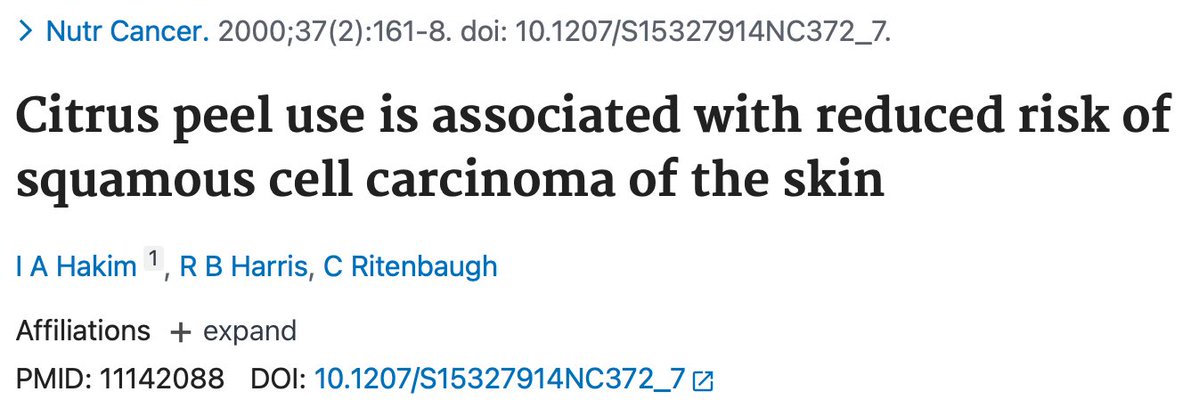
The phytochemicals in citrus peel (specifically, d-limonene, a terpene) helps protect your skin from sunburn. Are you eating your marmalade or (jams made that incorporate citrus peels) this summer? 🍊 🍋
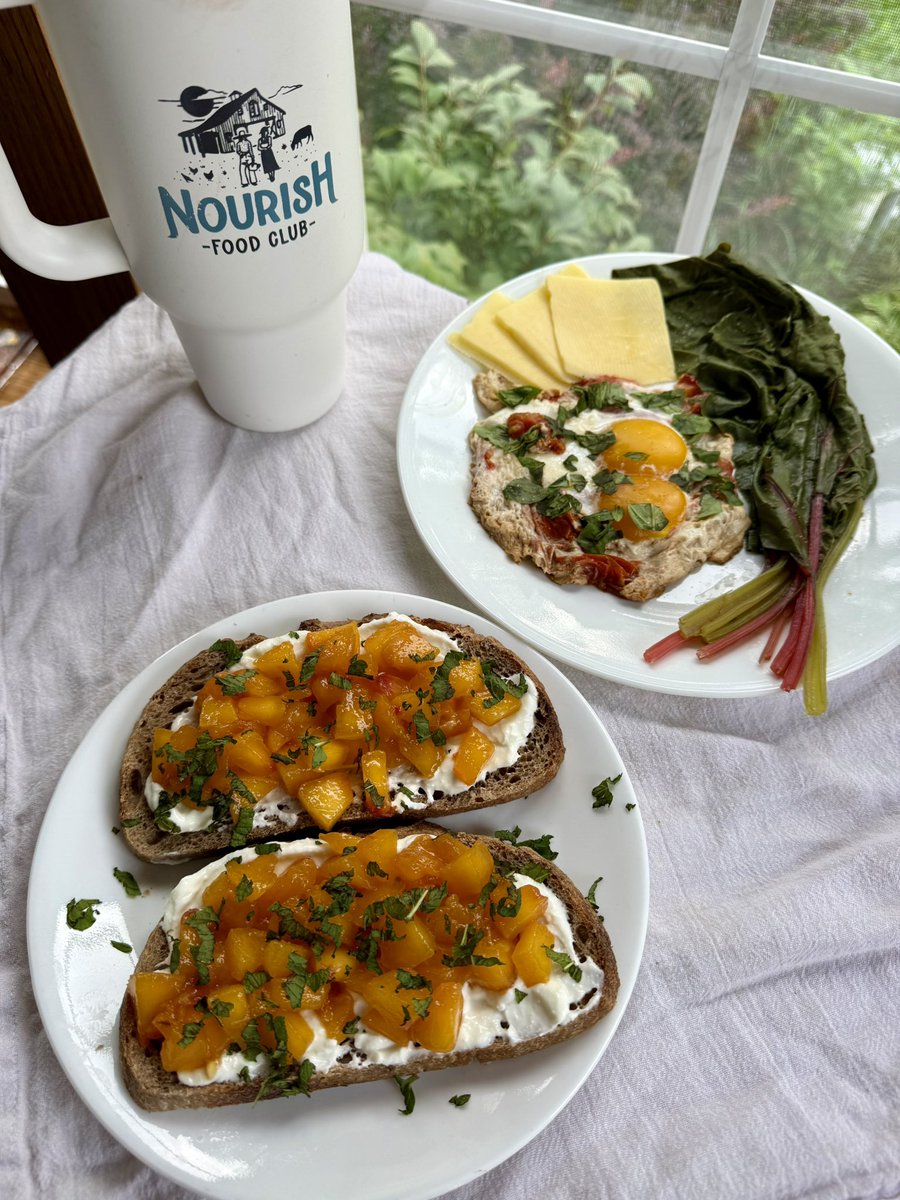
I take breakfast very seriously
🥖 Heritage wheat sourdough with raw A2 Greek yogurt, a nectarine & fresh mint
🍳 Corn- & soy- free eggs with fresh basil
🌿 Rainbow chard from the garden
🧀 Raw A2 cheese
☕️ Coffee
I think that’s probably part of it. Pigs rely much more on glycolytic muscle fibers than ruminants, & B1 is required for key carb metabolism enzymes like PDH. But even wild pigs have higher B1 than beef, so maybe some intrinsic species difference in how pigs store B1 in muscles too??
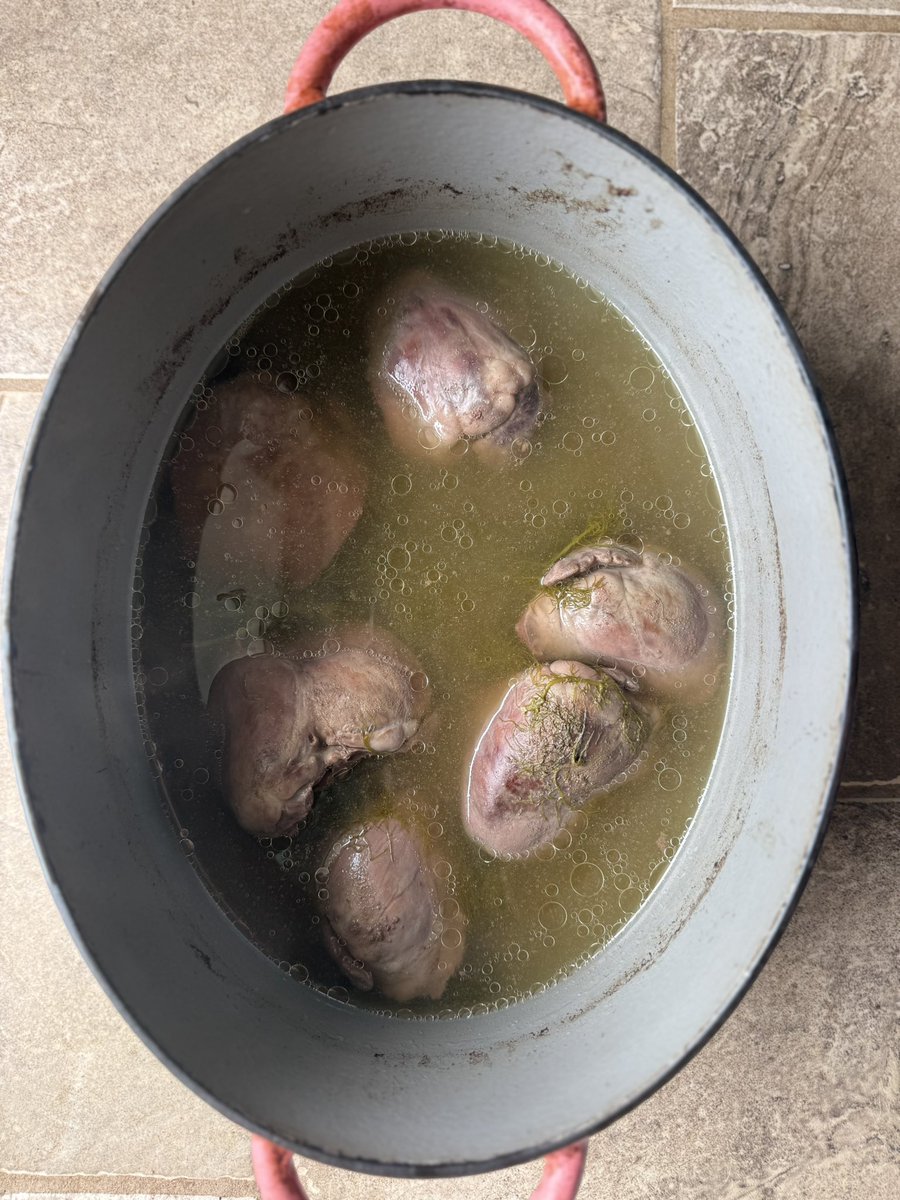
Heart is my favorite organ meat to eat regularly since you don’t go crazy overboard in retinol while getting a ton of B vitamins, iron, zinc, copper, & CoQ10.
Pork heart is my favorite since it has a more mild taste relative to beef heart. It’s also ~4X higher in Vit B1.
My favorite way to cook it is a low & slow braise in a Dutch oven. Then eat it in a soup 😊
Still consuming soups in the summer since maintaining healthy collagen stores improves skin sun resilience.
Pork heart, bone broth, potatoes, collard greens, tomatoes, chives & raw A2 cheddar 🍲
Graphic content label out on my video 😂 Yeh, it sucked to be forced to drive to the top of a smelly landfill and dispose of hog carcasses! But this was government mandated food destruction.
Government bullying in the name of “food safety.”
Less than 3 months after launching Nourish Food Club in 2023, I was forced to pour used motor oil over 10 pasture-raised hog carcasses before driving them to the top of a landfill and disposing of them.
The meat wasn’t contaminated, it didn’t fail testing, and no one got sick. It was destroyed solely because it had been processed at a state-inspected facility instead of a USDA-inspected one (for our first experimental batch testing my corn- and soy-free hog feed for the first time).
Meanwhile, Costco is able to sell chicken products that routinely fail USDA Salmonella performance standards.
Is this really about food safety? Or is it more about food centralization and control?
Government bullying in the name of “food safety.”
Less than 3 months after launching Nourish Food Club in 2023, I was forced to pour used motor oil over 10 pasture-raised hog carcasses before driving them to the top of a landfill and disposing of them.
The meat wasn’t contaminated, it didn’t fail testing, and no one got sick. It was destroyed solely because it had been processed at a state-inspected facility instead of a USDA-inspected one (for our first experimental batch testing my corn- and soy-free hog feed for the first time).
Meanwhile, Costco is able to sell chicken products that routinely fail USDA Salmonella performance standards.
Is this really about food safety? Or is it more about food centralization and control?
PUFAs are more effective at promoting tumor growth than saturated fats.
Researchers administered a cancer-inducing chemical to all groups in the rat study and then examined how different dietary fats influenced tumor development.
- Saturated fats alone (beef tallow or coconut oil) produced relatively low tumor development, similar to the low-fat control group.
- Adding a small amount of PUFA (just 3% sunflower oil) to a diet otherwise composed of saturated fats dramatically increased tumor formation.
- Rats fed a diet containing 3% sunflower oil & 17% saturated fat developed roughly twice as many tumors as rats fed either the saturated fats alone or the low-fat diet.
- Increasing sunflower oil from 3% to 20% did not substantially increase tumor formation further, suggesting that relatively small amounts of PUFA were sufficient to produce most of the tumor-promoting effect.
A few important notes:
Much of the early research investigating the biological effects of PUFAs was conducted before the widespread adoption of the “heart-healthy vegetable oil” hypothesis and saturated fat fear mongering. Studies from the 1950s through the 1970s frequently examined the health concerns of PUFAs, including their susceptibility to oxidation and their effects on cancer development.
Another important observation from this study is that relatively small amounts of PUFA were sufficient to substantially increase tumor formation. This raises an important consideration when evaluating modern studies: many “low-PUFA” comparison groups still contain meaningful amounts of polyunsaturated fats (they don’t keep PUFAs low enough). If a threshold effect exists, comparing one moderate-PUFA diet against another may underestimate the health improvements of true low PUFA diets.
My macro-friendly Ninja Creami Base Recipe (no gums, emulsifiers or pudding mix).
I’ve eaten this almost every single day for the last year 😂
But here is my base vanilla recipe, with unlimited flavor possibilities!
Ingredients:
• 1 cup milk of choice (240 grams) - skim, reduced fat & full fat will work!
• 2 egg yolks (34-37g)
• 7g gelatin powder
• 90g unsweetened applesauce
• 30g maple syrup
• ½ tsp van extract
• Dash cinnamon
• Dash salt
DIRECTIONS & ADDITIONAL NOTES ⬇️
PUFAs are more effective at promoting tumor growth than saturated fats.
Researchers administered a cancer-inducing chemical to all groups in the rat study and then examined how different dietary fats influenced tumor development.
- Saturated fats alone (beef tallow or coconut oil) produced relatively low tumor development, similar to the low-fat control group.
- Adding a small amount of PUFA (just 3% sunflower oil) to a diet otherwise composed of saturated fats dramatically increased tumor formation.
- Rats fed a diet containing 3% sunflower oil & 17% saturated fat developed roughly twice as many tumors as rats fed either the saturated fats alone or the low-fat diet.
- Increasing sunflower oil from 3% to 20% did not substantially increase tumor formation further, suggesting that relatively small amounts of PUFA were sufficient to produce most of the tumor-promoting effect.
A few important notes:
Much of the early research investigating the biological effects of PUFAs was conducted before the widespread adoption of the “heart-healthy vegetable oil” hypothesis and saturated fat fear mongering. Studies from the 1950s through the 1970s frequently examined the health concerns of PUFAs, including their susceptibility to oxidation and their effects on cancer development.
Another important observation from this study is that relatively small amounts of PUFA were sufficient to substantially increase tumor formation. This raises an important consideration when evaluating modern studies: many “low-PUFA” comparison groups still contain meaningful amounts of polyunsaturated fats (they don’t keep PUFAs low enough). If a threshold effect exists, comparing one moderate-PUFA diet against another may underestimate the health improvements of true low PUFA diets.
🚨NEW Study on the dangers of PUFA dropped:
healthy people ate the same calories (40g fat) from butter, coconut oil, corn oil and flaxseed oil
GlycA (systemic inflammation) was significantly elevated after consuming both PUFA sources compared to SFA sources
@fdempster That is really sad 😔 they make it very hard to be a small producer these days! We have almost had to close our business down a few times due to some bureaucratic bullying