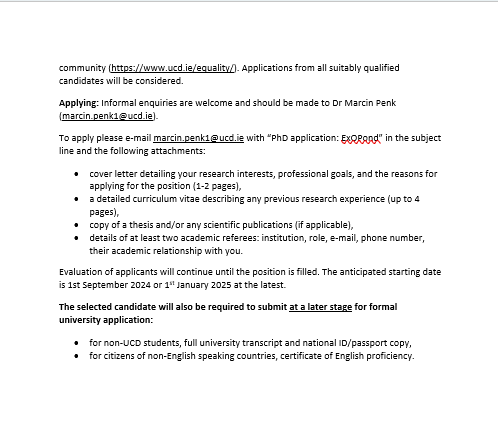
We’re hiring! The Jefferies lab is seeking a Research Assistant/Technician with molecular biology and bioinformatics expertise.
Learn more about the position and how to apply at: https://t.co/dRoFBw1YpA
@ubcscience@UBCMicroImmuno
New pre-print from our lab, https://t.co/HSnzWvkELg, by @Andrew_J_Tighe, using ancient sedimentary DNA to track changes in Ireland's biodiversity over the last 10,000 years (including a few surprises....) @UCDSBES@UCD_Research
Excited to share the Hughes Lab’s 1st 2025 paper, and @ColleenLawless_’s first as first-author, exploreing cuttlefish ink as a chemical defence targeting shark olfactory systems. Great collab with John Finarelli and @OceanExplauren! @UCDSBES@UCD_Research https://t.co/o8s3Y0kNSU
Excited to share I will be joining @UniNeuchatel as an assistant professor early 2025.
OFFER: 2 #PhDposition in the new lab. #1 is on zoo animals🐺🐒🦧 and saliva hormones, and #2 is on 🐠 cognition and brains 🧠
Deadline 20 Nov 2024 https://t.co/hMXkHATe6h
Spread the word 🙏🏽
Large-scale comparative analyses of Amphibians give insights into their genome structure and adaptability to climate change. Check out the latest work from an international team of scientists including UCD’s own @MeganPower101@UCDSBES@UCD_Research
https://t.co/MOqdxzUsub
Upgrade from preprint to published in Molecular Ecology Resources!🐸Happy to have played a role in exploring the uniqueness of #amphibian#genomes & preliminary insights into #climate & transposable elements! @cybokat@OdysysLab@UCDSBES@UCD_Research
https://t.co/CUUL31QI4z
new preprint 🧵: In the midst of a week of news coverage about the oceans aproaching the tipping point of becoming too acidic to sustain marine life, we still don't know how most of those species will actually respond to this. #oceanacidification https://t.co/sANQOq6qIF
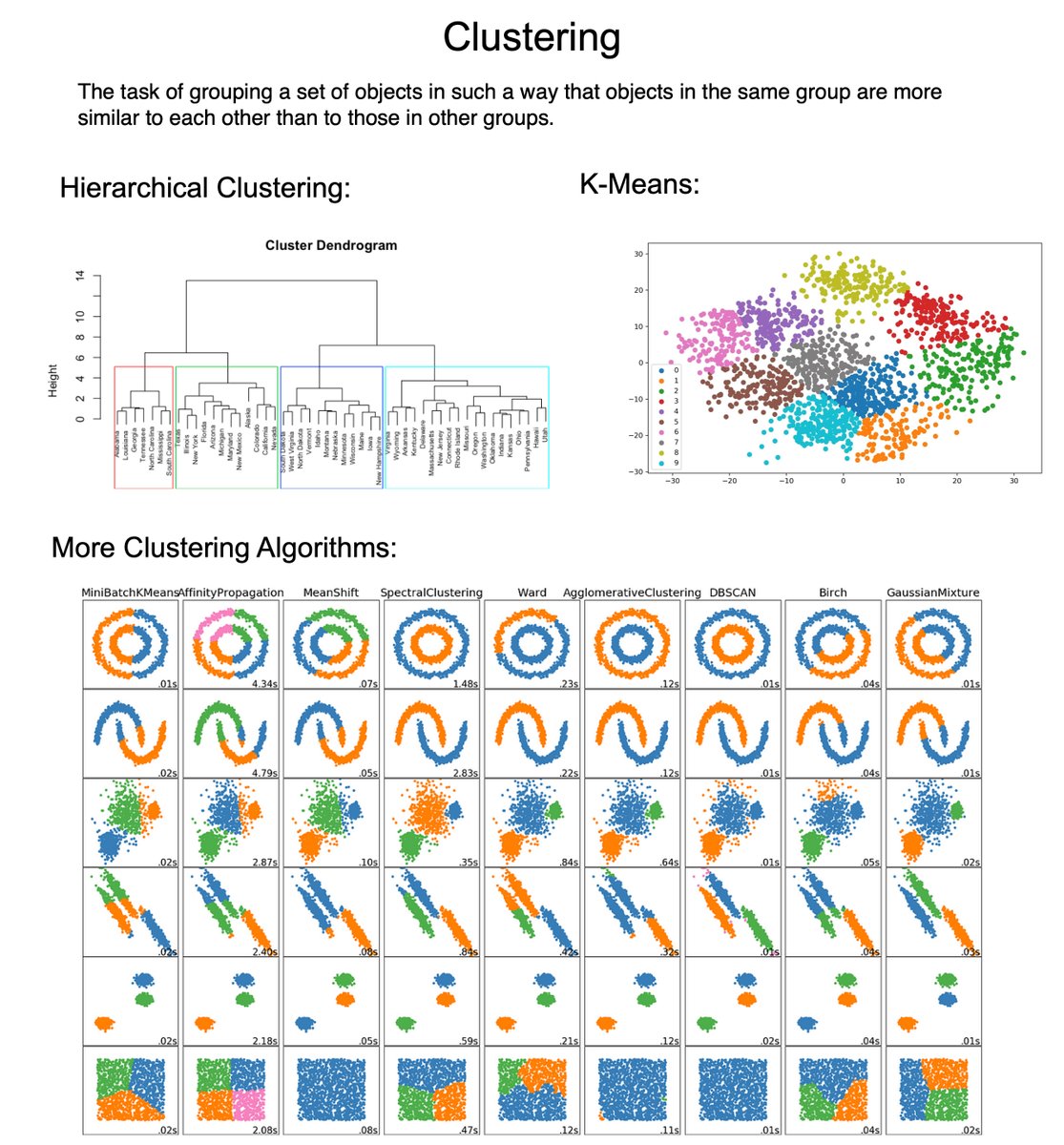
The 10 types of clustering that all data scientists need to know. Let's dive in:
1. K-Means Clustering: This is a centroid-based algorithm, where the goal is to minimize the sum of distances between points and their respective cluster centroid.
2. Hierarchical Clustering: This method creates a tree of clusters. It is subdivided into Agglomerative (bottom-up approach) and Divisive (top-down approach).
3. DBSCAN (Density-Based Spatial Clustering of Applications with Noise): This algorithm defines clusters as areas of high density separated by areas of low density.
4. Mean Shift Clustering: It is a centroid-based algorithm, which updates candidates for centroids to be the mean of points within a given region.
5. Gaussian Mixture Models (GMM): This method uses a probabilistic model to represent the presence of subpopulations within an overall population without requiring to assign each data point to a cluster.
6. Spectral Clustering: It uses the eigenvalues of a similarity matrix to reduce dimensionality before applying a clustering algorithm, typically K-means.
7. OPTICS (Ordering Points To Identify the Clustering Structure): Similar to DBSCAN, but creates a reachability plot to determine clustering structure.
8. Affinity Propagation: It sends messages between pairs of samples until a set of exemplars and corresponding clusters gradually emerges.
9. BIRCH (Balanced Iterative Reducing and Clustering using Hierarchies): Designed for large datasets, it incrementally and dynamically clusters incoming multi-dimensional metric data points.
10. CURE (Clustering Using Representatives): It identifies clusters by shrinking each cluster to a certain number of representative points rather than the centroid.
There you have it- my top 10 types of clustering every data scientist needs to know.
The next problem you'll face is how to apply them to data science to business.
I'd like to help.
I’ve spent 100 hours consolidating my learnings into a free 5-day course, How to Solve Business Problems with Data Science. It comes with:
300+ lines of R and Python code
5 bonus trainings
2 systematic frameworks
1 complete roadmap to avoid mistakes and start solving business problems with data science, TODAY.
👉 Here it is for free: https://t.co/YXG4pL97ZN
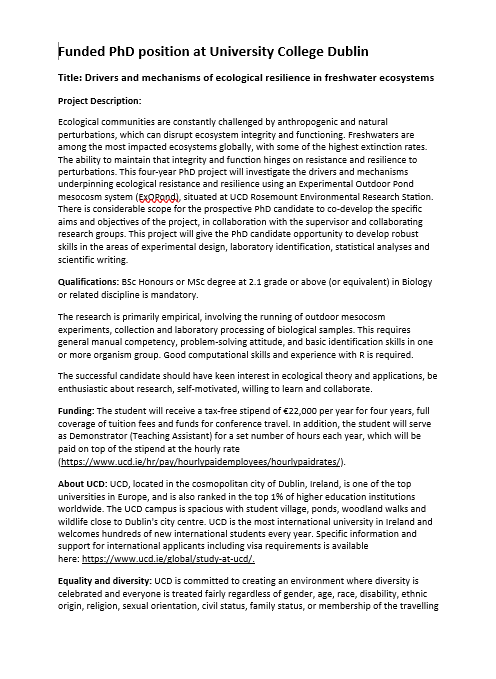
🚨Job alert: Postdoc position in Ecology 🚨Exciting Opportunity! We are hiring a postdoctoral researcher for the MICROMICS project. Join us to explore how #microclimate shapes adaptive evolution and
dispersal dynamics of forest plants! https://t.co/z3ffzna58M
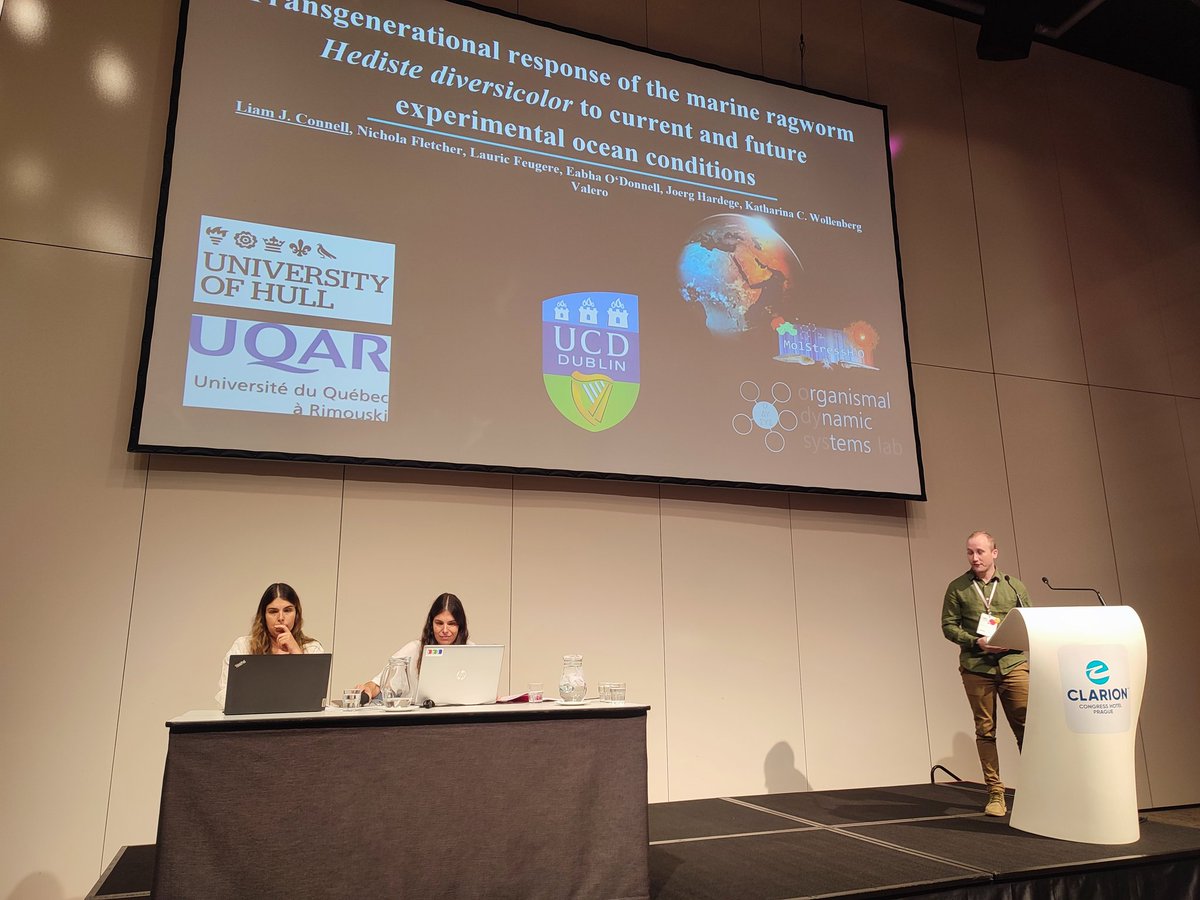
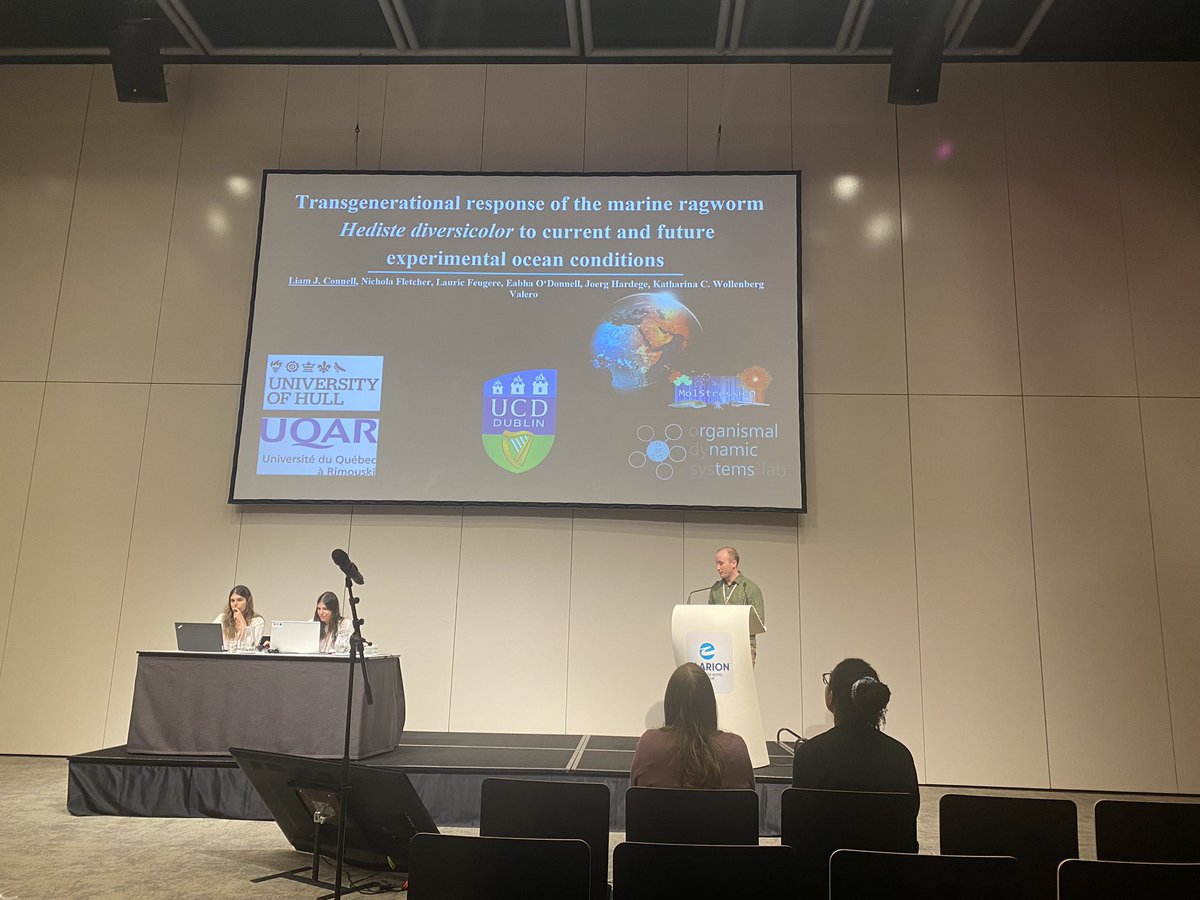
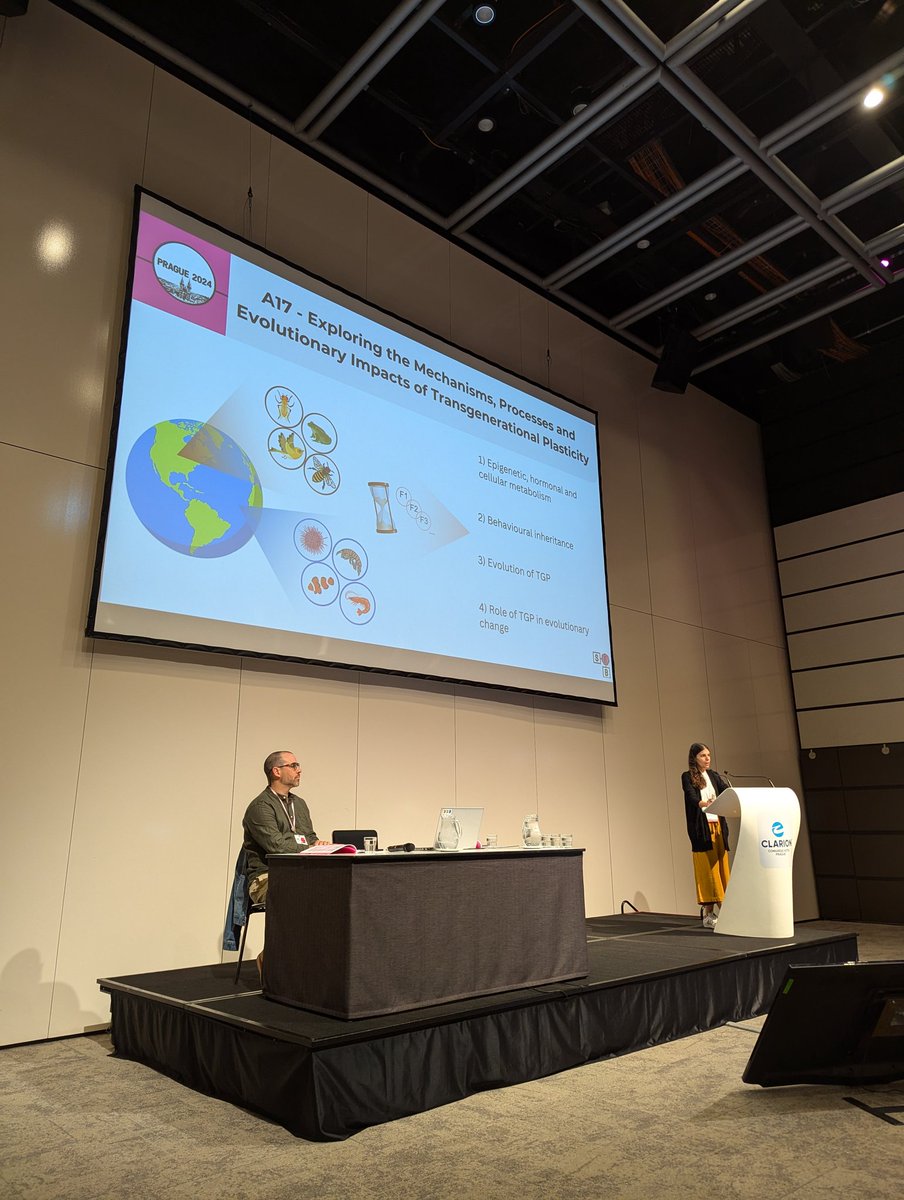
Liam Connell talking about his research on transgenerational plasticity in the marine ragworm to current and future experimental ocean conditions in the A17 session at #sebconference@SEBiology
Amazing talk by @ljconnell92 on multigenerational exposure of future ocean predictions (temperature and pH) to the marine ragworm Hediste diversicolor at #SEBconference#SEB24 under Pi @cybokat, head of @OdysysLab.