I mostly agree with you on several subjects. However, I humbly beg to disagree with you on this one. Will PSG be able to compete in the PL right now? Yes, no doubt. However, there are several other layers to this argument that needs to be unpacked which I do not have the data to argue.
🚨 Morocco have lost their historic fifth place in the FIFA world rankings following the Court of Arbitration for Sport's (CAS) ruling. ❌🇲🇦
Following the decision to restore Senegal's Africa Cup of Nations title, the Atlas Lions have dropped to seventh in the world rankings. 🇸🇳
Nigeria therefore remain the sole holders of the highest-ever FIFA ranking achieved by an African nation, having reached fifth place in 1994.
(Source: Morocco World News)
Since 2011, Real Madrid have changed managers 10 times and Barcelona 9 times, according to the numbers going round this week. Atlético Madrid have had one. Diego Simeone has been in charge since 23 December 2011, and if you want to understand what he really did, you have to look beyond the trophies and into the accounts.
When Simeone arrived, Atlético were in serious trouble. In June 2011, the club owed about €514 million, and close to €171 million of that was owed to the Spanish tax authorities. Their revenue that season was just under €95 million, which means their debt was more than five times what they earned in a year.
They had just sold David de Gea and Sergio Agüero. Things were so bad that when Simeone won the Europa League in his first season, UEFA withheld the prize money because of the club's debts. Imagine winning a European trophy and not being allowed to collect your money.
Now look at the numbers since.
In 2011, Atlético spent about €55.8 million on their squad. Five years later, it was €116.7 million. Success brought money, and money brought better players.
In 2011/12, Atlético were 23rd in Deloitte's ranking of the richest clubs in the world. In 2024/25, they were 13th, with €454 million in revenue. That is almost five times what they earned the year before Simeone arrived.
In 2017, they moved into the Metropolitano, and matchday income followed. By 2023/24, the club was earning €76 million from matchdays, €97 million from commercial deals and €222 million from broadcasting.
Then there is the transfer market. In the summer of 2019 alone, Atlético received €120 million for Griezmann, €80 million for Lucas Hernández and €70 million for Rodri, a player they had signed for about €20 million only ten months earlier.
Over eleven seasons under Simeone, the club spent about €1.02 billion on players and recovered €959 million in sales. That is a squad rebuilt again and again at almost no net cost.
And the clearest number of all: in November 2025, Apollo Sports Capital agreed to become Atlético's majority shareholder in a deal that reportedly valued the club at about €2.5 billion. The club that owed €514 million in 2011 is now worth about €2.5 billion.
All of this happened while competing every season against Real Madrid and Barcelona, two clubs that earned €1.16 billion and €975 million respectively in 2024/25. On the pitch, Simeone has still delivered two La Liga titles, a Copa del Rey, two Europa Leagues, two UEFA Super Cups and a Spanish Super Cup, plus two Champions League finals.
Here is why the business side matters more than people think. Every time a club changes its manager, it pays compensation, rebuilds the squad around a new idea and loses time. Atlético never had to do that. One manager meant one plan, and one plan meant the club could grow its income year after year while it paid down its debts.
There is an honest debate now. Atlético have not won a trophy since 2021, and some fans feel the cycle should have ended. That is fair. But even his biggest critics cannot deny what he inherited and what he built. Some coaches win titles. Very few rebuild an entire club.
My name is Ajoje. I am a FIFA Licensed Agent and International Sports Lawyer. I write on the Law and Business of Football, a lot. Repost and Follow if you want to read more posts like this.
Iyinoluwa Aboyeji, co-founder of Flutterwave, on the biggest mistakes that founders make.
He says the mistake is forgetting their customer.
The first sign is when a founder moves away from the country. Especially when he's running a consumer business. He would write down the investment in his portfolio.
Sometimes, he tells a founder that their product has a problem. Because they don't even use it.
Iyinoluwa Aboyeji, co-founder of Flutterwave, on how he deals with unsuccessful investments
He says invested in 85 companies but one company covered all the returns.
And there are some investments he has written to zero after three months.
He also says money reveals someone's character.
Iyinoluwa Aboyeji, co-founder of Flutterwave, on why first-time founders cannot raise money today.
He says the VCs ask themselves how foolish they'll look if they back a founder. And he runs away with their money. They also ask for reference or track record.
He also says if you do not have the money to build, get a job.
📊 What the CAS ruling does to the FIFA ranking?
🇸🇳 Senegal are African champions again: CAS restored their 1-0 win over 🇲🇦 Morocco in the AFCON 2025 final.
FIFA has scored that final as a 3-0 forfeit win for Morocco since its April ranking. If it switches back to the 1-0:
🇲🇦 Morocco -18.0, down 2 to 7th, 1.0 point above 🇧🇪 Belgium
🇵🇹 Portugal and 🇧🇷 Brazil up 1 to 5th and 6th
🇸🇳 Senegal +22.0, still 18th, 7.3 points behind 🇯🇵 Japan
If FIFA re-runs every match since January instead, it is about +17.9 and -13.9, with the same places.
⬆️⬇️ on the card = places moved from the official ranking of 18 November
Under the NPFL's standard player contract, an injured player gets his full basic wage for up to 18 months, and the club must keep treating him even after his contract ends. So why do we still see Nigerian players appealing to the public to fund their surgery?
Let me start with what the rules actually say, because I think many players, and even some clubs, have never read them.
The NPFL publishes a Framework and Rules document every season. Inside it is a standard player contract. Clause 6.1.3 of that contract says the club must "promptly arrange appropriate medical and dental examinations and treatment for the Player at the Club's expense" for any injury or illness, including mental illness.
In plain English: if you tear your ACL playing or training for your club, the surgery is the club's bill, not yours.
The contract says it again from the player's side. Clause 3.1.10 says the player must undergo prescribed treatment "at no expense to himself." So the player doesn't pay. Simple.
Now, here's what many people don't know. The club's duty to treat you doesn't end when your contract ends. It continues until your treatment is complete, or for up to 18 months after the contract expires or is terminated, whichever comes first.
So a club can't wait until June and say, "Your contract has finished, go and treat yourself."
What happens to the player's salary?
Clause 7.2.1 says that if you are out because of a football injury, the club must pay your full basic wage for the first 18 months, and half your basic wage after that, for as long as your contract runs. For other illnesses, it's 12 months of full pay before it drops to half.
Can the club just sack you because you are injured? No. Under clause 8.1, the club can only serve notice if you suffer permanent incapacity, or if the same injury keeps you out for 18 months within any 20-month period.
Even then, the notice period for a football injury is 12 months, and the club still has to keep treating you during that period. An ACL tear doesn't come anywhere close to that.
This is one of the reasons I don't think we need new laws in Nigeria cos we have a lot of them. In fact, in my opinion, on paper, this is a very good system. So where is it failing?
First, insurance. NPFL Rule B.12.12 says clubs "shall ensure that they maintain a medical insurance scheme approved by the NPFL." The rules also say the NPFL itself will arrange personal injury insurance "by a reputable insurance company in case of any eventuality."
But nowhere do the rules say what that insurance must cover. There is no minimum amount and no list of covered procedures. So whether a club's policy actually pays for an ACL reconstruction depends entirely on that club's policy, and most players never see it.
Second, the rulebook itself. The latest edition I could find online is for the 2023/24 season. It still lists the minimum wage as ₦150,000, when the current minimum is ₦2 million. So either a newer version exists that hasn't been published, or players are being asked to rely on rules they can't easily access. Either way, that's a problem.
Third, licensing. Clubs are supposed to meet the NFF's Club Licensing Regulations before they can play in the league, and those regulations are where insurance requirements should be enforced. But I couldn't find the current NFF licensing text online either. If a player can't read the rules, he can't enforce them.
And this is the real issue. The rights exist. Enforcement doesn't. A club that doesn't pay for surgery is in breach of contract and of the league's rules. But a 22-year-old with a torn ACL, no money and no lawyer is not going to file a complaint against the club that controls his career. So he keeps quiet, borrows money or asks the public for help.
So what should a player actually do?
- Get a lawyer
- Report the injury to the club in writing straight away, and keep a copy.
- Get a medical report from a qualified doctor.
- Ask the club in writing who its insurer is and what the policy covers.
- Keep every receipt if you are forced to pay anything yourself. That money is recoverable.
- If the club refuses, take it to the NPFL and the NFF's dispute resolution bodies. The contract is on your side.
NB: Nigeria's Employees' Compensation Act 2010 also covers footballers, because they are employees. If your club is registered with NSITF, medical expenses can be refunded through that scheme, but the injury must be reported within 7 days.
And to the NPFL and the NFF: publish the current rules and the licensing regulations, set a minimum level of medical insurance cover, and check that clubs actually have it. A right that nobody can read is a right that nobody can use.
So, back to my question. If the rules already say the club pays, why are players still paying for their own surgery? I think you already know the answer.
My name is Ajoje. I am a FIFA Licensed Agent and International Sports Lawyer. I write on the Law and Business of Football, a lot. Repost and Follow if you want to read more posts like this.
The moment that Matthieu Reeb, the director general of the Court of Arbitration for Sport, announced that Senegal had been reinstated as winners of Afcon 2025 🇸🇳
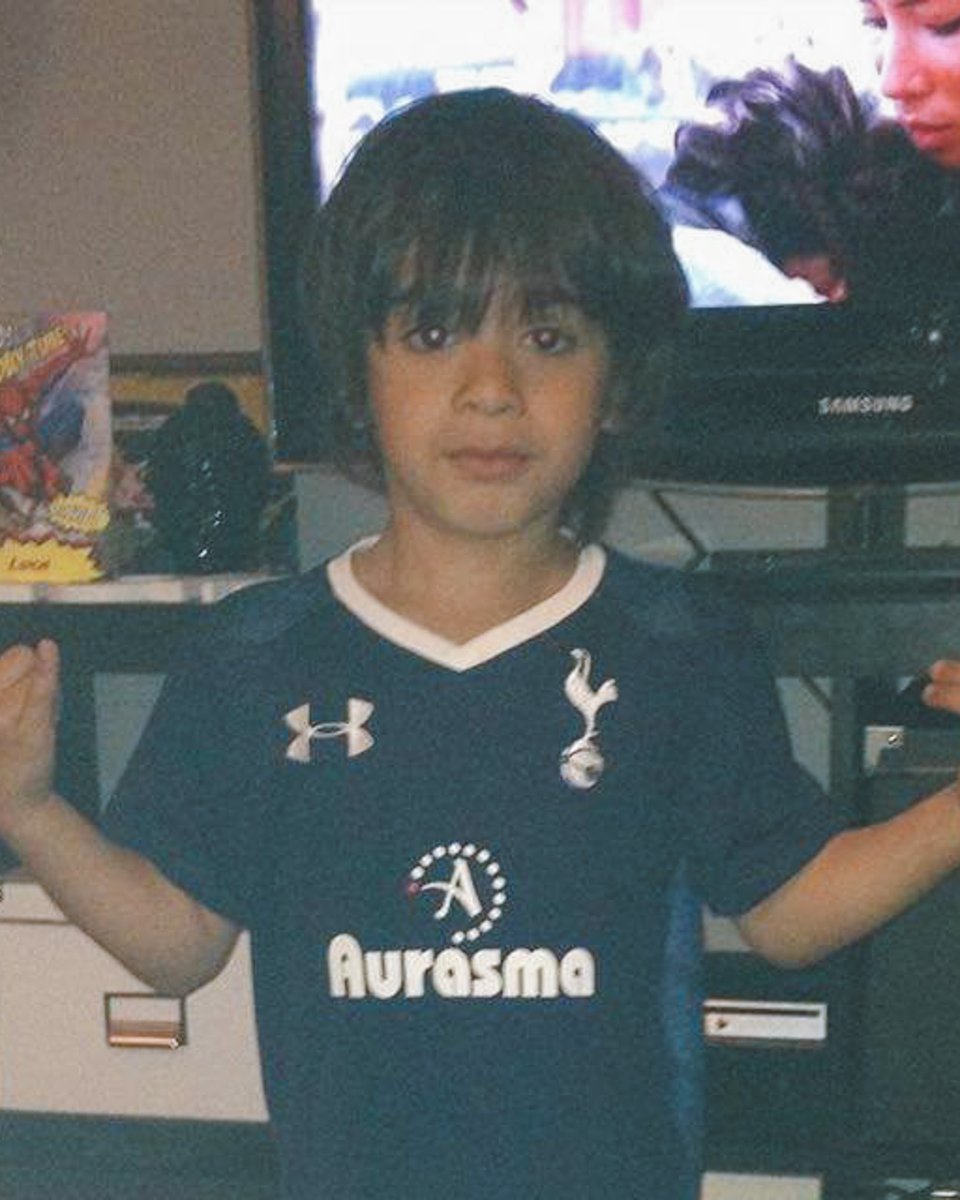
Luca Williams-Barnett is a superstar in the making, but which five Tottenham academy stars could be next to follow him into the senior team? #COYS#THFC
✍️🏼 @NostrabetUK
https://t.co/h57P9Sy0lu
On Saturday, Luca Williams-Barnett became the second-youngest player ever to score AND assist in a Premier League game.
Today, he signed a new deal with Spurs ✍️
The African startup ecosystem has produced more conferences, accelerators and "ecosystem builders" than profitable companies. That should embarrass all of us.
⚪️⭐️ Tottenham 18 year old talent Luca Williams Barnett in the last four days.
✅ First Premier League start.
✅ First Premier League goal.
✅ First Premier League assist.
🆕✅ New contract at Spurs.
No move was ever planned as Spurs management and Roberto De Zerbi all believe LWB is a special talent for the future.