Tau PET is central to Alzheimer's diagnosis and trial selection. But does tracer choice matter? The HEAD study set out to answer that. 682 participants, both Flortaucipir and MK6240, across the Alzheimer's spectrum. Out today in @TheLancet.
Article link: https://t.co/BUCVevtJJ0
Happy to share that the first HEAD study results comparing the most widely used PET tracers for detecting tau pathology in AD are now out in @TheLancet.
Grateful to my co-lead author @guilhermepovala, my mentor @TharickAPascoal, and all collaborators who made this work possible.
We are pleased to announce the publication of top-line results from our HEAD study, on the comparison of tau PET tracers for the detection of tau pathology in Alzheimer’s disease, out now online in The Lancet.
We are grateful to our collaborators on this work, and we look forward to continuing the dissemination of our findings from this large-scale PET comparison study.
https://t.co/iNYnsMORE0
In our new study @NatureComms, Dr Soares et al show that CSF total tau, often used as a marker of neurodegeneration, is more strongly linked to synaptic degeneration than axonal or neuronal loss in Alzheimer’s disease.
Check our paper here🔗https://t.co/AP74CkgmsX
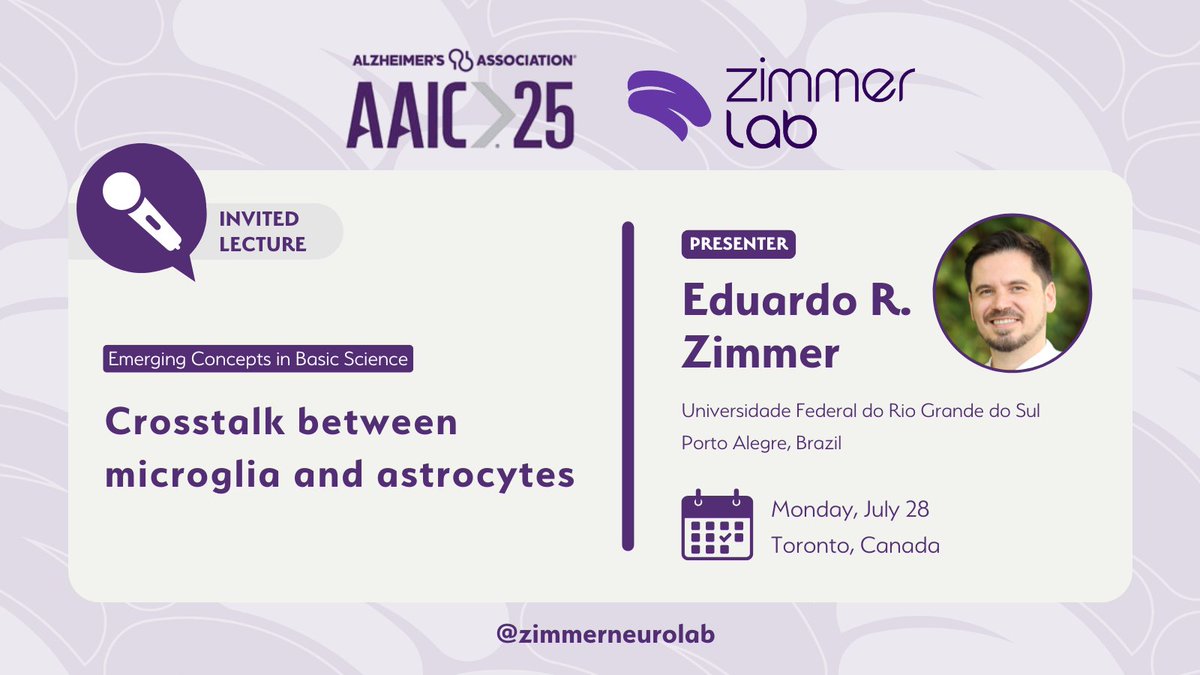
If you're in Toronto for #AAIC25, don’t miss Dr. @erzimmer’s talk this Monday! 🧠🇨🇦
📢Crosstalk Between Microglia and Astrocytes ⭐️
Join us to dive into glial interactions in brain health and disease! @alzassociation
Heading to #AAIC2025? We’re excited to share 9 oral presentations and 16 posters at this year’s conference!
Come find us - we’d love to connect, discuss, and explore opportunities for collaboration.👇
New paper alert🚨
Our new study led by @dtleffa & @guilhermepovala published @alzdemjournals links genetic risk for ADHD to more severe dementia.
Check here: https://t.co/CvRurVUDg9
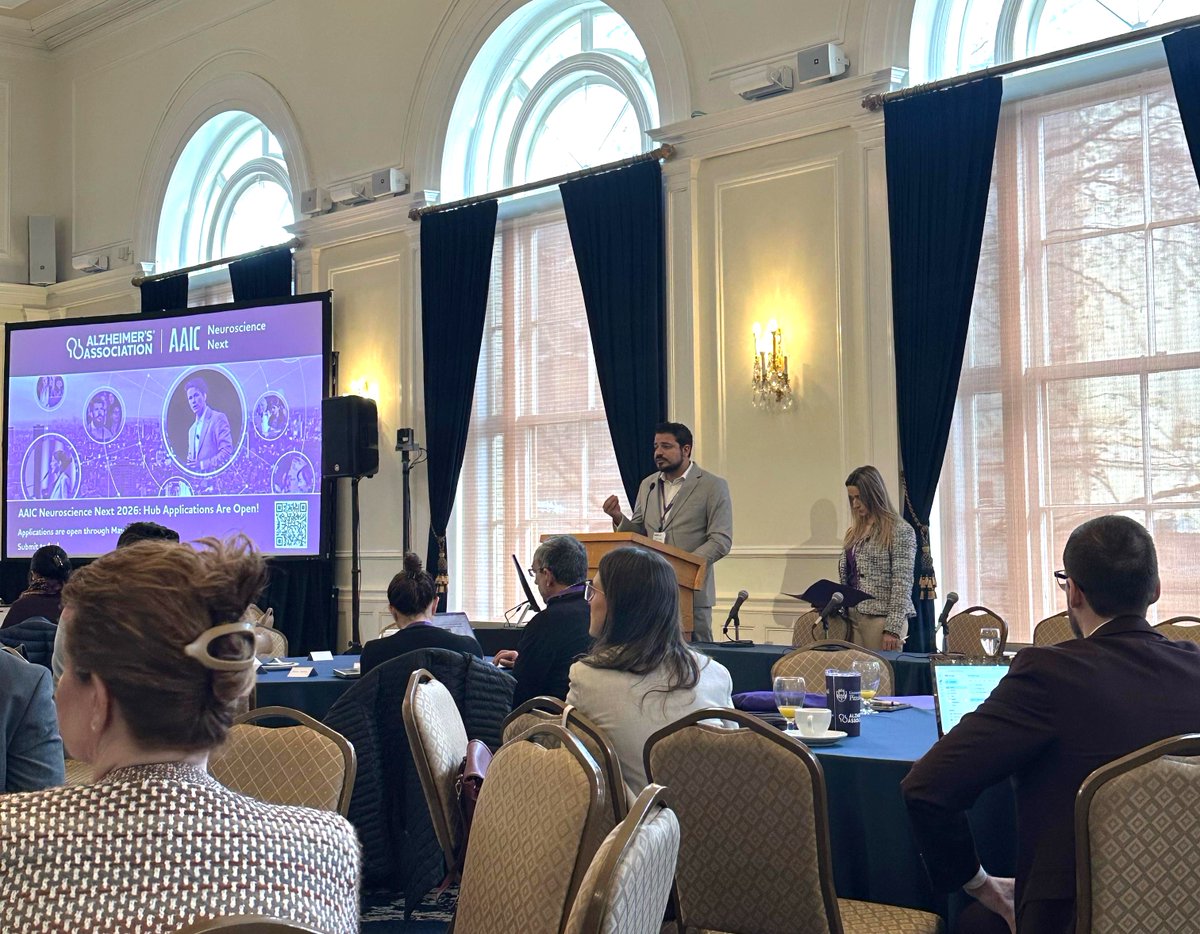
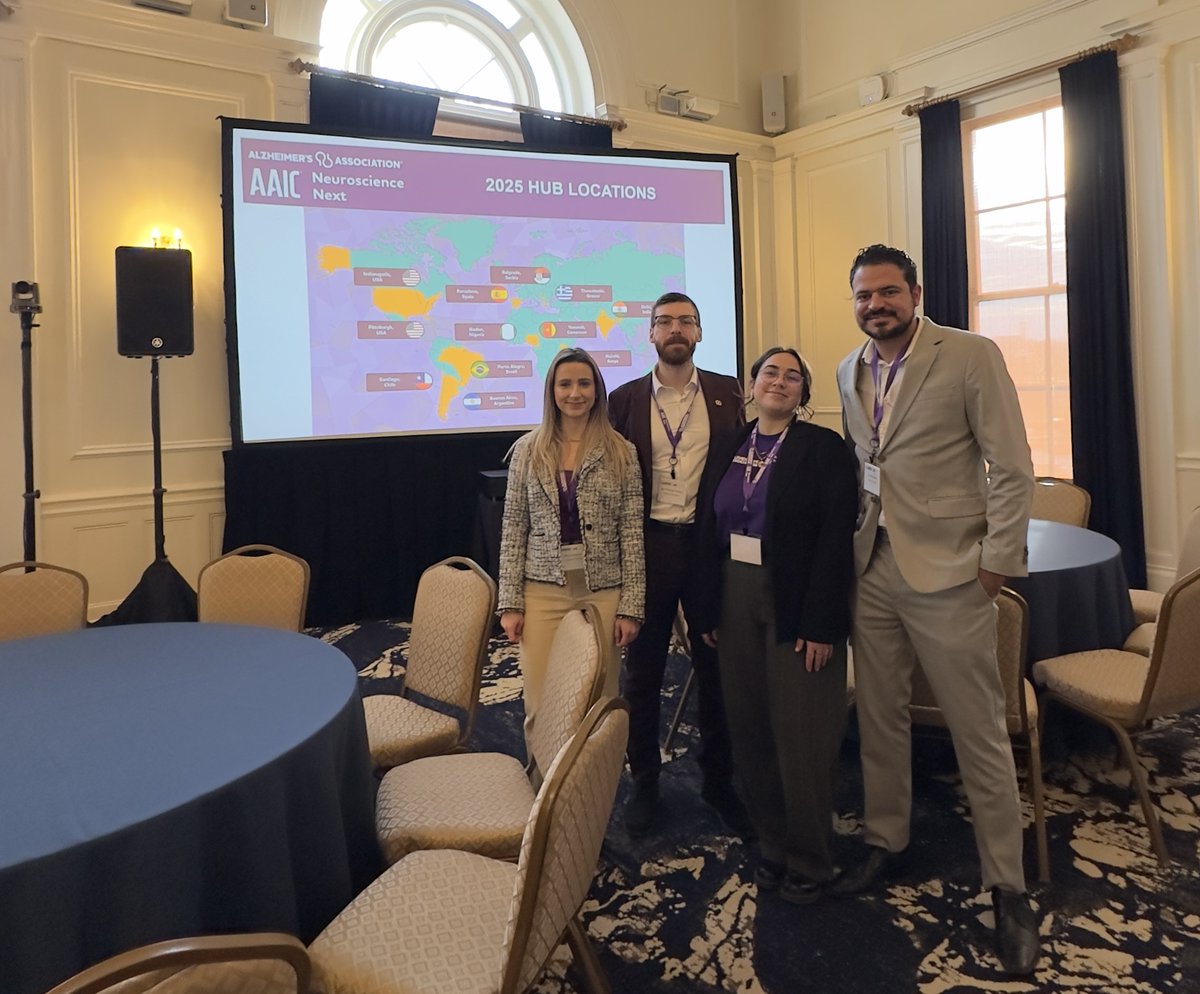
It was a tremendous honor to host the first AAIC Neuroscience Next Hub held in Pennsylvania at the University of Pittsburgh on Monday, as part of the 2025 edition of this global conference!
We are immensely grateful to our all attendees, both in person and online, who participated in this event with us yesterday. A deep appreciation is also extended to our phenomenal speakers, ranging from early-to-senior career academic researchers from multiple institutions, members of the @AlzGPA, representatives of the Allegheny County Health Department and PA Department of Aging, as well as key members from our community fighting for change in dementia care, from persons living with dementia to caregivers.
We were overjoyed to see such a large participation from our community and provide the ability for attendees to network and interact with each other. We hope all found this event informative and welcoming, and we are eager to draw on all the connections built in the near future!
Be sure to follow the rest of the AAIC Neuroscience Next 2025 global, virtual, no-cost programming at other Hubs by going to https://t.co/znTLw8eki0. You can also rewatch our Hub livestream on-demand on the AAIC Neuroscience Next virtual platform!
#AAICNeuro #alzassociation #pittresearch
Join us next week for AAIC Neuroscience Next on Feb. 24. Hear from @PittResearch researchers, dementia experts, community leaders, and caregivers.
💻 Virtual registration: https://t.co/Md7GbTpowe
🏢 In-person registration: https://t.co/VXIS6Ox4fW
In @NatureMedicine, we show:
1. P-tau262 & P-tau356 as markers of pre-tangle tau pathology;
2. Identify a core region that defines soluble tau assemblies (STA); and
3. Validate CSF STA assay in autopsy & tau PET cohorts.
Congrats to all coauthors! https://t.co/7mDwDzvWdj
🚨 New paper out 🚨 Extremely thrilled to the share the Karolinska news release of our 3rd publication in a row! https://t.co/hY0EyIyfgc @filiparocha12@Avishek92@AlzheimrDement Mukesh
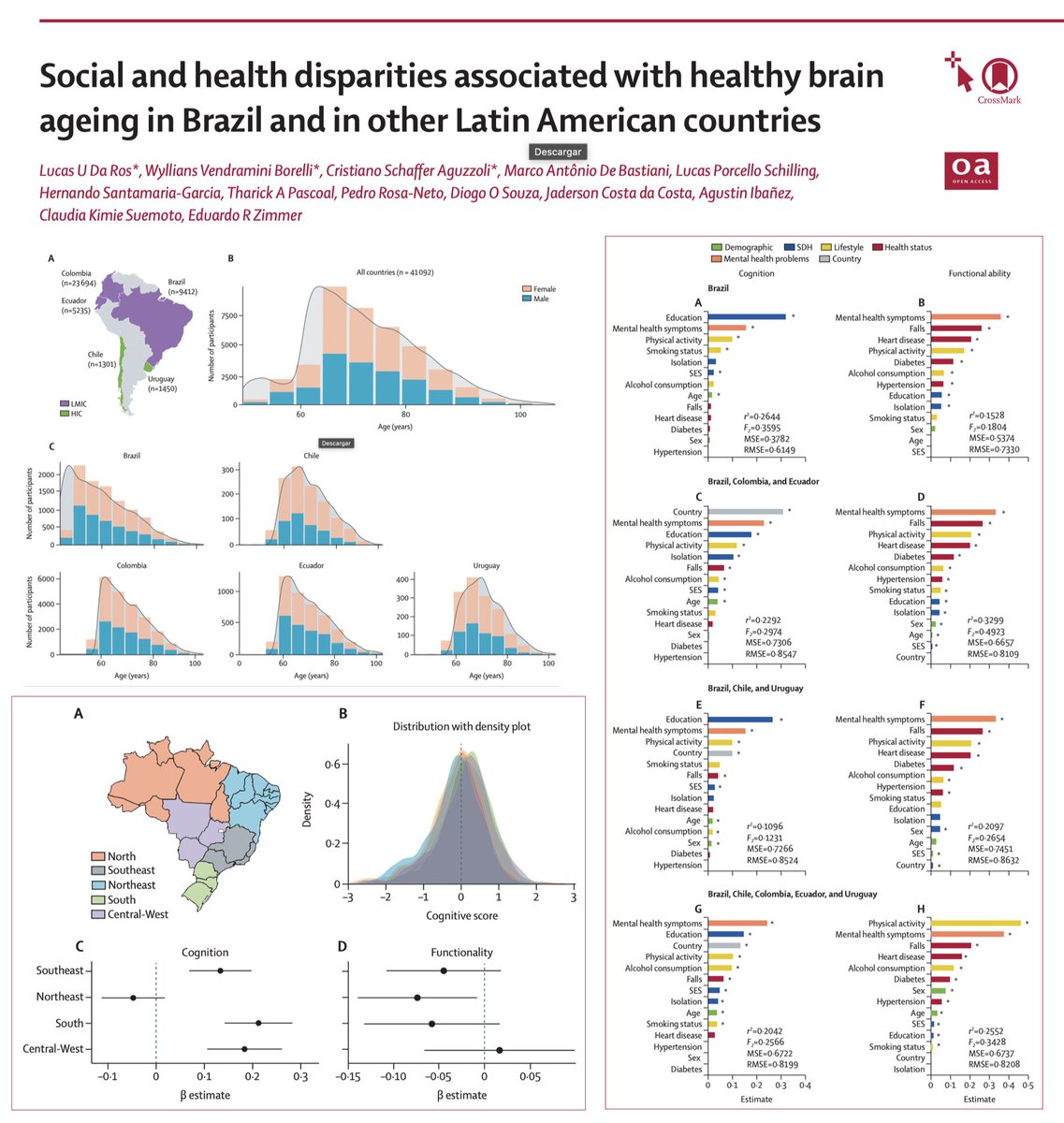
🚨 New Study just out in @LancetGH 🧠 @lucasudaros, @vbwyll, @crisaguzzoli & colleagues used a machine learning model to determine the most important risk factors for cognitive and functional decline in Brazil and other Latin American Countries 🧶1👇 https://t.co/5vlWj2uYLx
Today in @LancetGH: We showed again that social/health disparities outweigh other risks for aging. Education & mental health influence cognition & functionality in Brazil: https://t.co/g7wYUKqDhy. Led by stellar Brazilians @lucasudaros@vbwyll@crisaguzzoli, Lucas Schilling, @clausuemoto & @erzimmer + @nanosanta et al. Tailored brain health science + prevention strategies are urgently required.
We are 4 weeks away from hosting our AAIC Neuroscience Next Hub at the University of Pittsburgh!
Join us for a full day of science and community building on Monday, February 24. Register for free today! https://t.co/uWysquVv8L
Join us and the University of Pittsburgh for AAIC Neuroscience Next on Feb. 24, 2025.
Hear from Pittsburgh researchers, dementia experts, community leaders and caregivers.
Register here: https://t.co/VXIS6OxC5u
Happy to share this study led by @BigioBenedetta@carla_nasca lab @nyulangone and our team @ufrj just published @molpsychiatry. Here, using two cohorts, we show that plasma carnitine levels are reduced in women with cognitive impairment and dementia. https://t.co/Zeys8KzepJ
Yesterday, our clinical blood biomarker study, CliPAD, conducted at the University of Pittsburgh and UPMC, was featured on NBC’s WPXI news. Take a look at our segment!
We are thankful to @wpxi@alzgpa and the UPMC media team for helping with this feature.
Information on the referral of patients to our CliPAD study can be found in yesterday’s WPXI article: https://t.co/JmirjMnSXr