We are pleased to announce the publication of top-line results from our HEAD study, on the comparison of tau PET tracers for the detection of tau pathology in Alzheimer’s disease, out now online in The Lancet.
We are grateful to our collaborators on this work, and we look forward to continuing the dissemination of our findings from this large-scale PET comparison study.
https://t.co/iNYnsMORE0
Check out our lab’s new study in JAMA Psychiatry, showing that ADHD is associated with a fourfold higher risk of MCI/dementia among more than 180,000 US adults participating in the NIH All of Us Research Program.
https://t.co/uDmEFmEZTh
@gbnegrini@dtleffa
Out today in JAMA Neurology: a Pitt–Amsterdam UMC team developed a harmonized method to stage tau PET across four tracers . Our web tool guides consistent visual reads across brain regions:
https://t.co/CdLlnlglW3
https://t.co/9TCdL1kdBU
Two p-tau217-positive people can decline at different rates. In our new six-cohort study (n=3,505), those also GFAP-positive had 62% faster annual CDR-SB progression. GFAP may improve p-tau217 risk stratification. https://t.co/QumAGlfAAF
@BellaverBruna
A lifelong cognitive history matters—even when cognitive concerns are new.
Our study highlights substantial burden in adult-diagnosed ADHD. Previously unrecognized ADHD deserves consideration in the differential diagnosis.
https://t.co/f1SA3uOvMt
🧠 How could plasma p-tau217 transform the way participants are pre-screened and selected for Alzheimer’s disease clinical trials?
At #AAIC26, @Pamlukasewicz (of @LabPascoal) discusses how plasma biomarkers could reduce reliance on costly PET scans and enable recruitment from remote regions.
🎥 Watch the interview: https://t.co/g9pMYw63Kd
#Neurology #Dementia #Alzheimers #Alz
At #AAIC2026, @Pamlukasewicz (of @LabPascoal) discusses a head-to-head comparison of flortaucipir and MK6240, highlighting the stronger association of plasma p-tau217 with MK6240 in early tau regions.
🎥 Watch here: https://t.co/evH2Nehath
#AlzheimersDisease#Dementia #Biomarkers #Tau #Neuroimaging
Could plasma p-tau217 streamline Alzheimer's disease clinical trial recruitment? 🧠
At #AAIC2026, @Pamlukasewicz (of @LabPascoal discusses how plasma p-tau217 could improve the cost-efficiency of AD trials by reducing the need for amyloid PET scans and accelerating participant recruitment.
🎥 Watch here: https://t.co/3HHT6xyOeD
#AlzheimersDisease #Dementia #Biomarkers #ClinicalTrials
GFAP is not just an amyloid story.
In 324 Aβ− patients with vascular disease, @markley_sojr linked plasma GFAP to medial temporal atrophy and worse cognition—supporting neuroinflammation as a potential target in VCI.
In Neurology: https://t.co/pcTRjZXEox
Attending #AAIC2026? We’re excited to share 7 oral presentations and 16 posters at this year’s conference!
Find us at the presentations below - we’d love to connect and explore opportunities for collaboration.👇
Heading to #AAIC2026? Reach out to Dr Beatriz Gomez Perez-Nievas, Senior Editor at The Lancet.
🗓️ Attend the session for the LatAm-FINGERS trial on multidomain lifestyle intervention to prevent cognitive decline across Latin America – July 13, 2pm BST
I enjoyed joining Tania Nikolcheva and Gavin Giovannoni in this The Lancet conversation exploring the intersection of Alzheimer’s disease, Parkinson’s disease, and multiple sclerosis. @TharickAPascoal@guilhermepovala@BellaverBruna
https://t.co/5GPiQtO0IA
In cognitively unimpaired Aβ+ adults, MK6240 detected medial temporal tau in 39% of participants vs 16% with flortaucipir. That's a prevalence ratio of 2.43, which translates to 23 additional cognitively unimpaired Aβ+ individuals identified as tau-positive per 100 scanned.
MK6240 was significantly better at distinguishing Alzheimer's disease from non-Alzheimer's causes of impairment. AUC 0.93 vs 0.86 for Flortaucipir. Differences were largest in the medial temporal lobe, where early tau accumulates first.
Tau PET is central to Alzheimer's diagnosis and trial selection. But does tracer choice matter? The HEAD study set out to answer that. 682 participants, both Flortaucipir and MK6240, across the Alzheimer's spectrum. Out today in @TheLancet.
Article link: https://t.co/BUCVevtJJ0
🧠 New paper out in Nature Communications from the Karikari Lab @PittPsychiatry!
Led by Dr. @TommyKakari, our team,@Yijun8643878478 , Xuemei Zeng & Anirudh Sehrawat, plus Pitt collaborators Drs. Kang, Pascoal, Villemagne & Cohen, developed the streamlined PAβ V2.0 assay: faster, lower-volume & more accurate blood-based Alzheimer's biomarker detection. 🎉
📖 https://t.co/MYhM7j1VTR
#AlzheimersResearch #Biomarkers #NatureCommunications
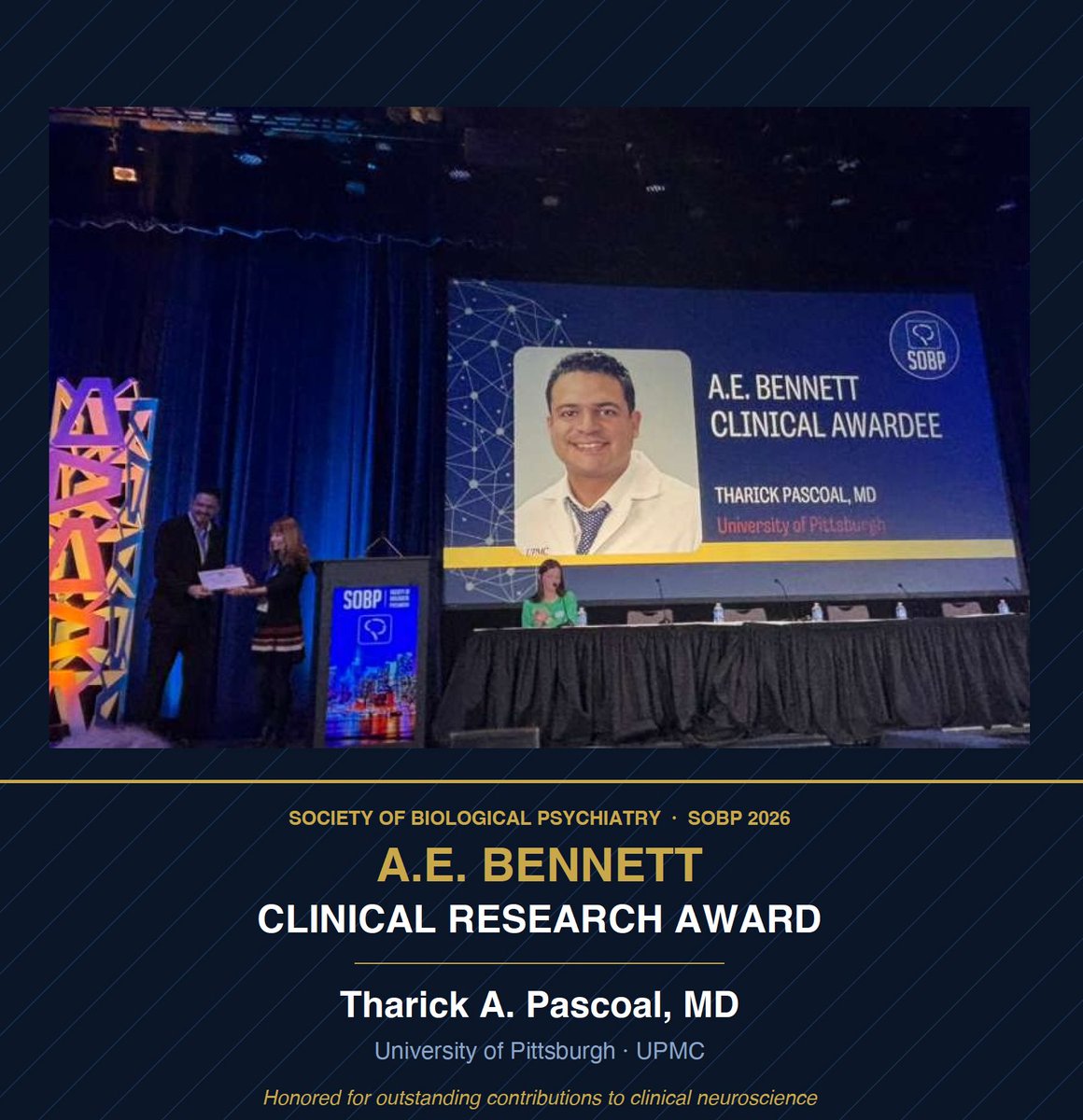
We are thrilled that Dr. Pascoal was honored with the prestigious A.E. Bennett Award by the Society of Biological Psychiatry for his outstanding clinical contributions!
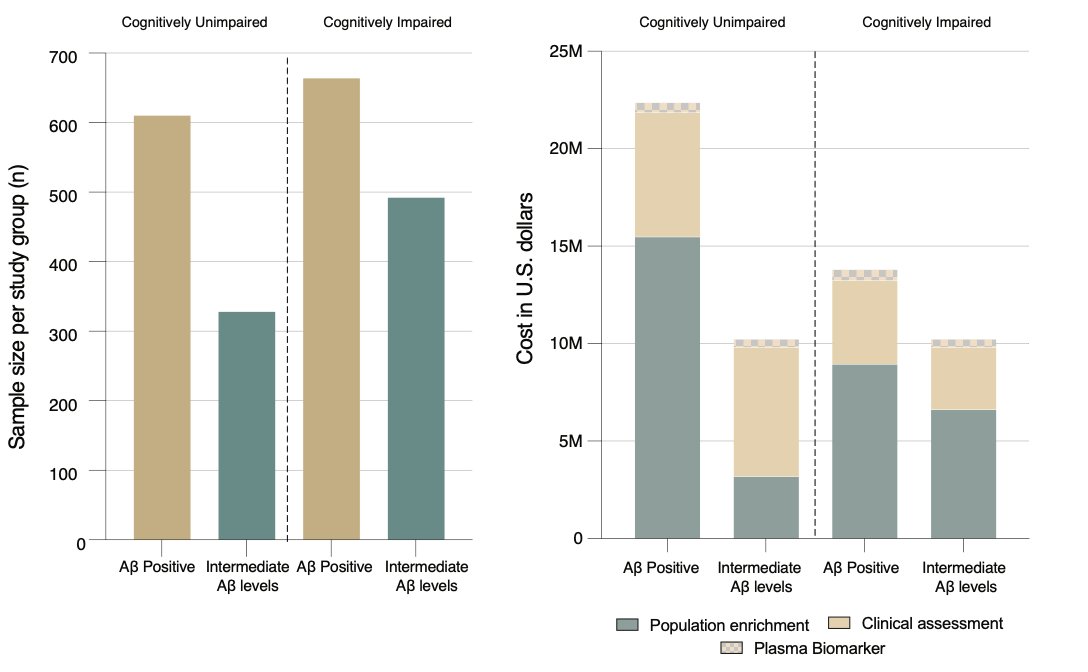
When focusing on individuals with intermediate Aβ levels, effect sizes increase and required sample sizes drop in both cognitively unimpaired and impaired groups—substantially reducing trial costs. These results support plasma p-tau217 as an efficient endpoint for AD trials.
Led by @pamlukasewicz, this multi-cohort study shows that longitudinal changes in plasma p-tau217 represent a robust endpoint for Alzheimer’s disease clinical trials.
https://t.co/Fmyd7mBhHB