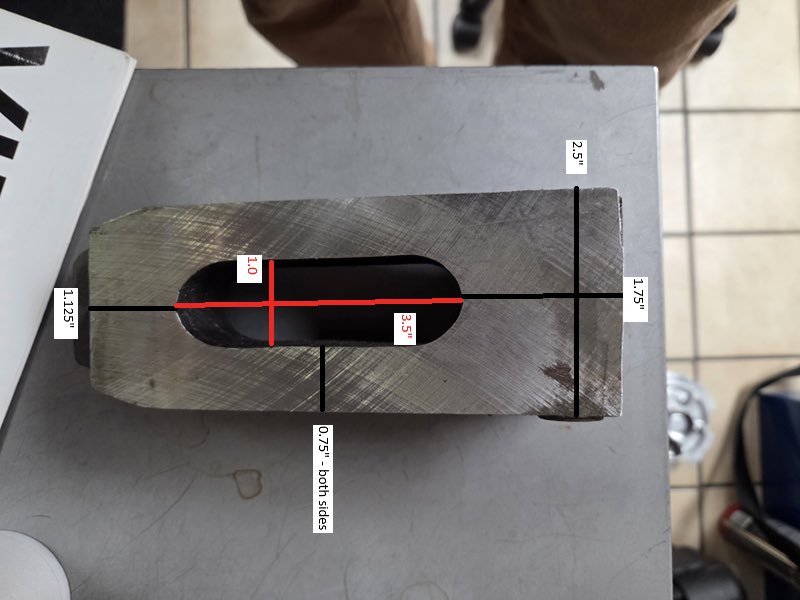
@___Dario_____@lrocket Castings are great in compression and not in tension
3D printed parts take forever, too slow for mass production cycles
3D prints have to follow the same paths for every volume of material, can’t produce complex geometry as fast as metal liquid
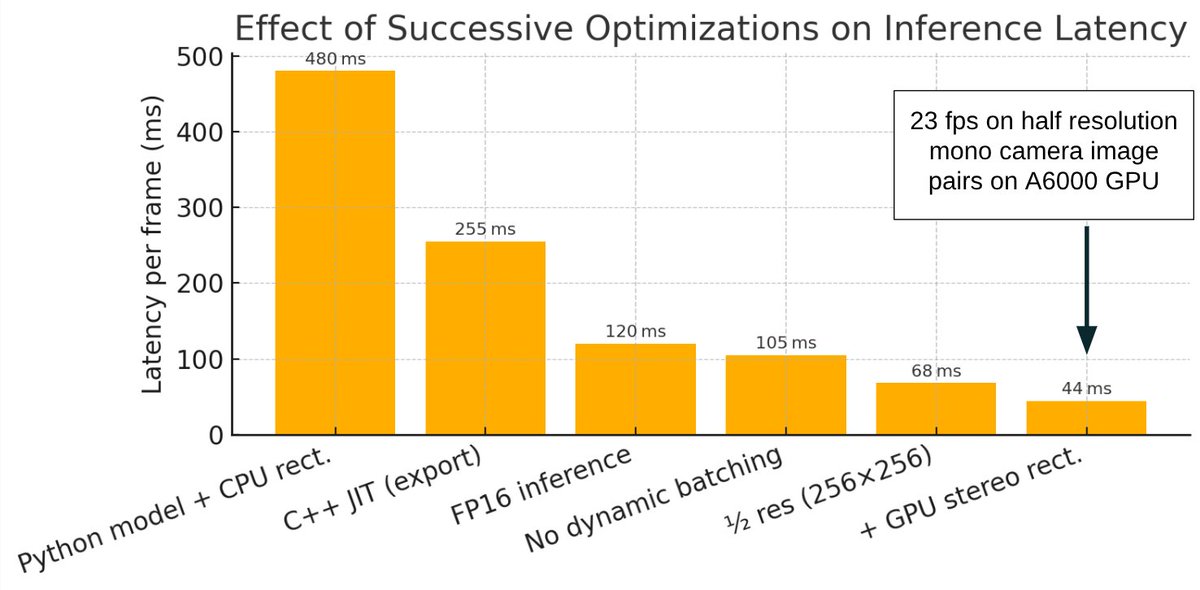
2) Given the stereo overlap in Gen 2 we can leverage a robust stereo model like FoundationStereo to obtain dense correspondences from stereo-rectified images. With some optimizations we were able to get FoundationStereo to run in real-time -- this enables live depth streaming!
Tired of 1B+ parameter VLMs that require massive GPUs and take 1s+ to process an image? Do you miss live demos?
Come to the CVPR Meta booth Friday + Saturday 10am-12pm, I'll be giving a new live demo running on a LAPTOP of our egocentric 3DBB demo of our latest work, Boxer
sometimes you just wanna lay out the nesting manually in vector layers first, drill holes 🕳️ then go back and manually outline the vectors for tool comp, if.. the hole drilling the change to cutting has less rapids.. algo sometimes is never optimal as just step and repeat CAM path arrays.. but it’s faster to generate if you don’t care about cut time
Today, we’re excited to introduce Miso One, the most emotive voice model in the world.
Miso One is an 8-billion-parameter text-to-speech model for highly expressive speech generation. It emotes like a human and responds faster than a human, with just 110 milliseconds of latency.
We’ve open-sourced the model weights, with API access coming soon.
Hear how Miso One sounds in the thread below.
real world run with @NVIDIAAI Cosmos 3
Ran every frame of a 15s highway clip (450 frames @ 30fps) through LocateAnything-3B on DGX Spark:
- 450 frames × 14,105 boxes — every frame, real detections
- 5.2s/frame avg (vs 12.7 BPS on H100) — GB10 holds its own
- 7.8 GB VRAM — fits with room to spare on 128GB unified
- IoU tracking + lane assignment — real trajectories, not synthetic
cc: @PavloMolchanov