Decade for biotech
Would love to chat to anyone working with
- 3d printed organs
- diagnostics
- BCI
- genomics
- sleep and mood disorders
- psychedelics
- optical and sound medtech
A comb with electrified teeth regrew nearly all lost hair on balding skin in a month.
The device, called Detangle, was built by engineers at Beihang University in Beijing and described in Nature Communications. Its teeth carry tiny electrodes set at different heights, plus little pods of medicine, so that each stroke creates an electric field reaching about nine times deeper into the hair follicles than electrodes placed on the skin.
That field gently stimulates the follicles and briefly opens up their cells, letting the comb slip in two treatments: a gene that makes a growth factor called VEGF-A, which builds new blood vessels, and a molecule that silences the enzyme that makes DHT, the hormone that shrinks follicles in pattern baldness.
Mice with this type of hair loss were combed once every three days, and after a month the bald patches regrew nearly 100% of their hair.
Pattern baldness is the most common form of hair loss, and today's options have drawbacks. Pills that block DHT can cause side effects throughout the body, while creams like minoxidil struggle to reach deep enough into the scalp to work well for everyone. A comb that delivers treatment right to the follicle during an ordinary daily habit would sidestep both problems.
That said, every result so far comes from mice whose baldness was induced in the lab, and human scalps and hormones may respond differently.
source: Liu, F., Yao, F., Sun, H., et al. (2026). Combing-triggered electrostimulation synchronizing deep delivery for rapid hair regrowth in androgenetic alopecia. Nature Communications.
We are exploring if we can restore my joints to that of an 18 year old.
Problem
Our joints (i.e. knees, hips, etc.) break down with age. Resulting in pain, stiffness and movement restriction. While I do not have any major joint problems, I do have small aches and pains. We are testing if we can repair normal age related damage, restore vitality, and preventatively lessen future deterioration.
Therapy
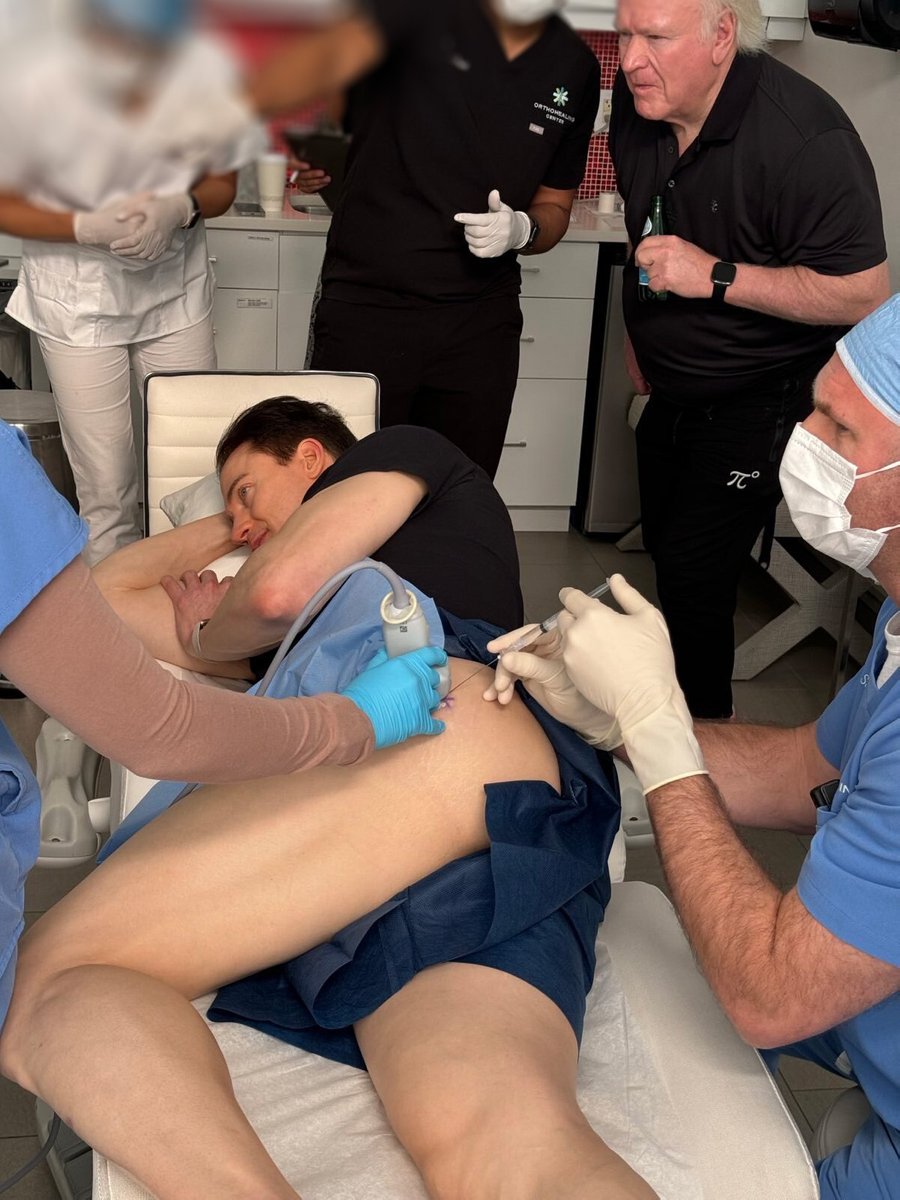
Last week, I had 300 million bone marrow-derived mesenchymal stem cells (MSCs) injected into six joints over two days: both knees, shoulders, and hips as part of a clinical trial in the Bahamas. We may repeat this therapy as needed to achieve the outcome objectives.
MSC’s were manufactured by Cellcolabs. Injections were performed by Dr. Steven Sampson of Physical Longevity.
Measurement
Prior to the therapy, we completed comprehensive baseline analysis of each joint with MRI and musculoskeletal ultrasound. Here were the findings:
Joint & tendon diagnosis
+ Bilateral shoulder labral degenerative tears with paralabral cysts.
+ Tendinosis (degenerated tendons): bilateral supraspinatus rotator cuff (shoulder) with subacromial bursitis (chronic inflammation in R>L shoulders).
+ Bilateral knee chondromalacia patella (cartilage wear beneath the kneecap) with left knee mild to moderate effusion/bursitis. (fluid in knee).
+ Bilateral hip gluteus medius tendinosis (chronic degeneration). Bilateral Hip Cam impingement syndrome. (Can predispose to osteoarthritis)
What we hope we can achieve with this therapy
Improved function, mobility, and athletic performance. Elimination of aches and pains. Potential tissue regeneration and prevention of future degeneration.
Treatment plan
+ Intra Articular injection of bilateral shoulders, hips, and knees.
+ Bilateral supraspinatus rotator cuff and bursa injections.
+ Right shoulder anterior labrum injection.
Bilateral hip gluteus medius tendon injections.
What happened
The injections were completed in the Bahamas in collaboration with Cellcolabs Clinical Ltd. and Dr. Steven Sampson of Physical Longevity. Treatment was under a clinical trial approved by the national stem cell ethics committee in the Bahamas. Cellco Labs provided best-in-class, gold-standard cell manufacturing of allogeneic bone marrow-cultured mesenchymal stem cells (MSCs). 50 million MSCs were injected into each of six joints, shoulders, knees, and hips, over two days. Cells were prepared and shipped from Sweden and were cryopreserved with liquid nitrogen. Cells were checked for viability at the point of care in the Bahamas and injected under ultrasound guidance by Dr Sampson for proper deployment under strict protocol.
One eye drop a day could allow people to ditch glasses forever.
The FDA has approved VIZZ, the first eye drop of its kind to literally fix near vision.
After about age 40, the lens inside the eye stiffens, and reading a menu or a phone gets harder. It's called presbyopia, and it affects almost everyone eventually.
In 2025 the FDA approved VIZZ, a once-a-day eye drop made by LENZ Therapeutics that uses a drug called aceclidine. It works by shrinking the pupil to under 2 millimeters, creating a pinhole effect that brings close objects into focus without blurring distance vision.
In clinical trials with hundreds of adults, near vision improved within 30 minutes and the effect lasted up to 10 hours.
Earlier drops like Vuity mainly worked by squeezing the muscle that focuses the eye, which could cause brow aches and dimmer distance vision. VIZZ acts mostly on the pupil instead, and the company reported no serious treatment-related side effects across more than 30,000 days of use.
That said, the drops don't cure presbyopia, since the effect wears off each day, and they need a prescription. Also, in trials about one in five users had eye irritation, 16% noticed dimmer vision and 13% had headaches, mostly mild and brief. Even so, for millions of people tired of hunting for their readers, it's a real new option worth asking an eye doctor about.
source: LENZ Therapeutics. (2025, July 31). LENZ Therapeutics announces U.S. FDA approval of VIZZ (aceclidine ophthalmic solution) 1.44% for the treatment of presbyopia [Press release].