Medical Oncologist - Sarcoma and Head & Neck Oncology l Assistant Professor - IU School of Medicine | Religion/Spirituality in Medicine l Medical Ethics
Contrasts between positive SARC041 and Brightline-1 abound.
Brightline-1 with an overperforming control arm but a clearly active drug for which development was stopped due to a negative trial. Need to continue discussions about trial endpoints in sarcoma.
https://t.co/KTCKYFczhO
Oncology clinical trials have long relied on RECIST criteria to define progression. In a recent commentary, @MSKCancerCenter researchers propose further study and reporting of how treatment failure is characterized.
https://t.co/uJDtN8nTTm
@EChrisDee@PatelOncology@OncoAlert
Among patients with early age–onset #ColorectalCancer in Texas, treatment delays longer than six weeks were associated with reduced survival, and language barriers represented a major risk factor contributing to delayed initiation of definitive therapy. https://t.co/UxM8trEFcr
“X % of patients found the side effects acceptable” strikes me as far more authentic than “manageable toxicity”, and acknowledges who’s actually experiencing the AEs!
When the patient & oncologist meet, there are 2 experts in the room: one embodied & one necessarily removed
Outstanding presentation of SARC041 data by Dr. Mark Dickson from @MSKSarcoma, during #ASCO26 Plenary Session, showing a statistically significant and clinically meaningful PFS improvement favoring abemaciclib in pts with treatment-naïve advanced dedifferentiated #liposarcoma. Solid and practice-changing results for the DDLPS pt population. To witness a #sarcoma trial exploring a therapeutic vulnerability and going beyond cytotoxic chemotherapy being presented during the Plenary Session is very encouraging for our community. PFS for abemaciclib vs. placebo = 9.7 mo vs. 1.5 mo, HR 0.38, 90%CI 0.25-0.59. Trend towards OS improvement (NR vs. 25.5 mo). @ASCO@MoffittNews@MSKCancerCenter@SARCtrials@ctosociety
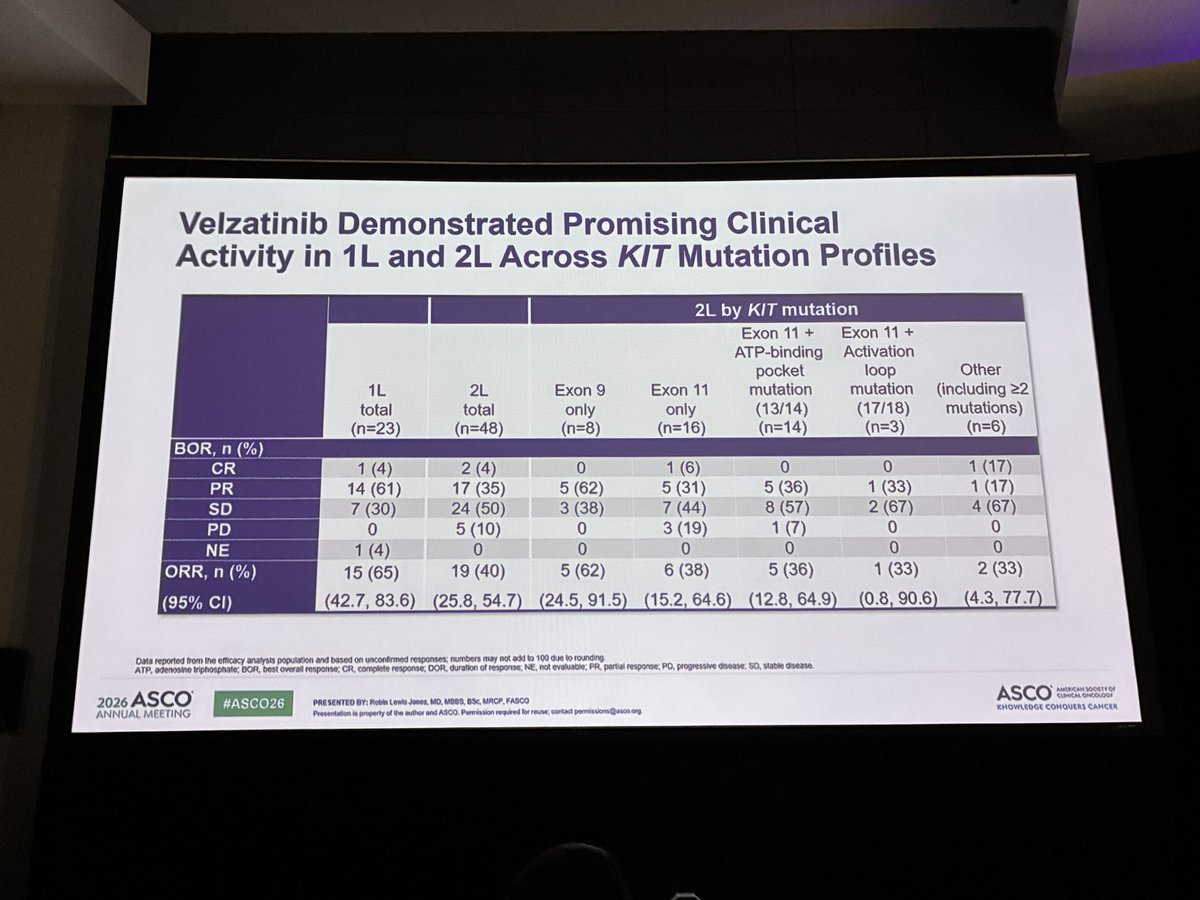
Velzatinib (IDRX-42) as 1L or 2L therapy for advanced gastrointestinal stromal tumors (#GIST s) by KIT mutation status: A subset analysis of the phase 1/1b StrateGIST 1 study. @sylvestercancer#ASCO26
Primary results of the phase 3 peak study of bezuclastinib + sunitinib vs sunitinib monotherapy in advanced gastrointestinal stromal tumors (#GIST) #ASCO26@SylvesterCancer 46 vs 26% ORR
PFS 16.5 vs 9.6 months
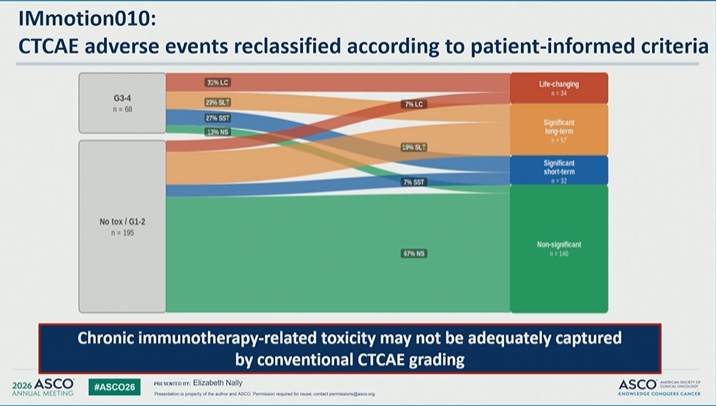
Important survivorship perspective in RCC presented by #ElizabethNally: decision regret after adjuvant pembrolizumab was driven more by chronic low-grade/life-changing toxicity than by recurrence itself, highlighting limitations of CTCAE alone.
#ASCO26#RCC@OncoAlert@ASCO@OncBrothers
🔬 Abstract 4512
Decision regret and toxicity perception following adjuvant pembrolizumab in RCC
Presented by Elizabeth Nally, MBBS
@OncoAlert@ASCO
Adjuvant immunotherapy in renal cell carcinoma is not only a question of DFS curves.
It is also a question of:
➡️ long-term toxicity
➡️ quality of life
➡️ patient perception
➡️ decision regret
➡️ what patients consider a meaningful trade-off
This abstract asks a very timely question:
Are we measuring toxicity in adjuvant RCC the way patients actually experience it?
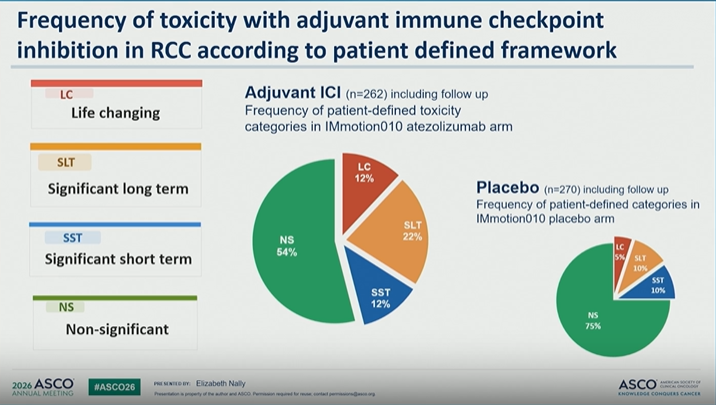
A patient-defined toxicity framework was developed with 4 categories:
🔴 Life-changing
AEs with permanent or long-lasting impact on daily life and functioning
🟠 Significant long-term
Clinically significant AEs persisting beyond 90 days
🔵 Significant short-term
Clinically significant AEs resolving within 90 days
��� Non-significant
Mild or no AEs with minimal impact on daily wellbeing or function
Why does this matter?
Because conventional CTCAE grading may miss chronic, persistent toxicity that affects daily life.
In exploratory analyses from IMmotion010:
• Adjuvant ICI arm: life-changing toxicity 12%
• Significant long-term toxicity 22%
• Significant short-term toxicity 12%
• Non-significant toxicity 54%
In the placebo arm:
• Life-changing toxicity 5%
• Significant long-term toxicity 10%
• Significant short-term toxicity 10%
• Non-significant toxicity 75%
At face value, standard HRQoL analysis suggested minimal long-term QoL impact with adjuvant ICI.
But the patient-defined toxicity framework told a more nuanced story.
📌 Key message
Life-changing and significant long-term toxicities were associated with persistent HRQoL deterioration.
CTCAE grade alone did not adequately capture that long-term QoL impact.
This is critical in the adjuvant setting.
Patients with resected RCC may already be cured by surgery.
So the threshold for accepting chronic toxicity must be different than in metastatic disease.
💬 My take
This is one of the most important patient-centered messages in adjuvant RCC.
We need better ways to discuss benefit and harm.
A DFS benefit is meaningful — but it must be interpreted alongside:
✓ absolute recurrence risk
✓ probability of benefit
✓ chronic toxicity risk
✓ patient values
✓ decision regret
✓ long-term quality of life
Adjuvant RCC decisions should not be based only on trial endpoints.
They should include the outcomes patients live with.
The future of adjuvant immunotherapy will require not only better biomarkers of benefit, but also better tools to predict and capture toxicity that matters to patients.
#ASCO26 #GUOnc #KidneyCancer #RCC #Immunotherapy #AdjuvantTherapy #QualityOfLife #PatientReportedOutcomes #SharedDecisionMaking
And the flip side of this, “well-tolerated”
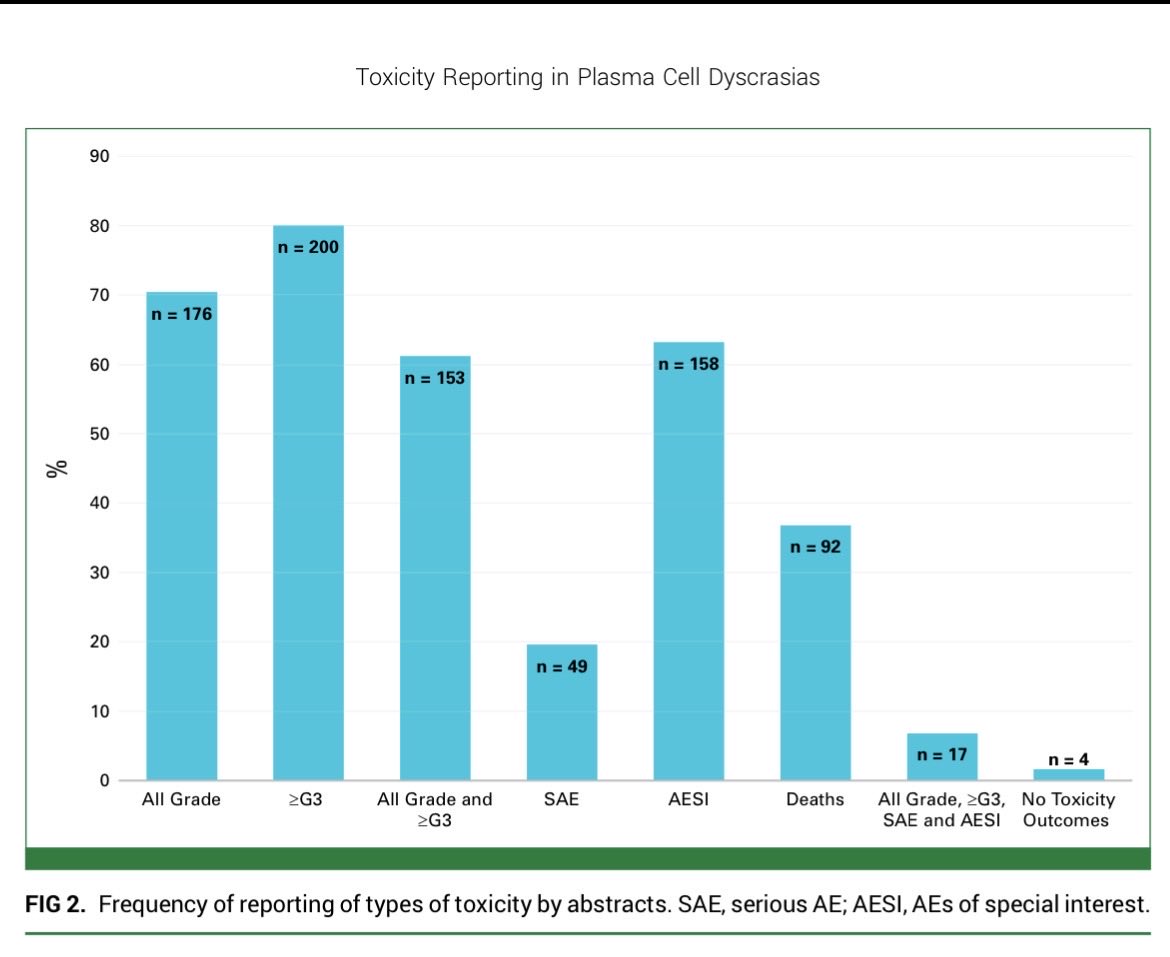
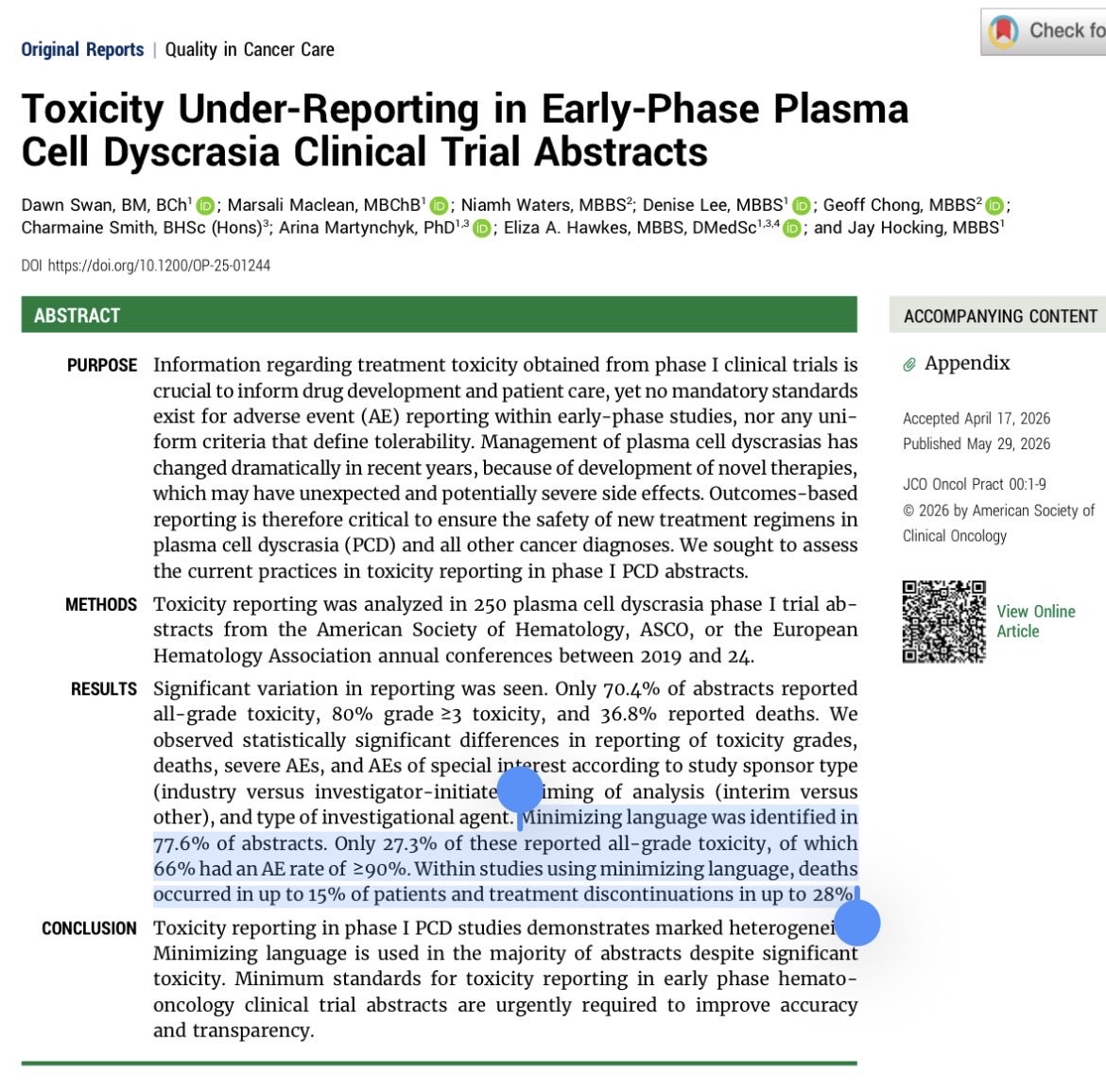
In 250 Ph1 #MMSM ASCO/ASH/EHA abstracts, 194 (78%) used it or similar terms…
In those studies 15% of patients died & 28% had to discontinue tx.
#ASCO26#ASH26
https://t.co/6nKnHpYBUa
A MUST-READ!
This is probably one of my most important papers where I try to teach how to fish rather than offer fish.
How I Read a Clinical Trial Report?
BG’s primer for Busy Clinicians.
Thank you @JCOOP_ASCO@EthicsdoctorP for the kind invitation. I hope the readers will find this useful.
https://t.co/HJhZlsBpU2
🆕 Article in press - DART (NCI/SWOG S1609): comprehensive final results from dual checkpoint inhibition with CTLA-4 and PD-1 blockade in rare cancers @PatelOncology@Dr_R_Kurzrock
https://t.co/2MM2p19FZx
You can be bullish on daraxonrasib, as I am, and still avoid minimizing side effects like this as “manageable toxicity”
We don’t truly understand the visceral experience of taking a medication like our patients do — let’s allow them to be the arbiters of what’s manageable or not
Every oncologist should watch Ben Sasse’s interview with Ross Douthat. I was captivated by his courage, serenity, and his ability to articulate what so many of our patients feel and experience. Ben and I don’t share the same political or religious beliefs, which made it all the more compelling.
A few things stood out:
* His physicians struggled to deliver the “hard facts.” They led with advances in oncology before telling him he had cancer, wanting to stay positive. I’ve been there - it’s incredibly tough to balance truth with hope. We need to be frank with our patients, even when it’s difficult. I also imagine that the story didn’t play out exactly as Ben recollected, but perception is reality for our patients.
* Ben asked for “Oncology 101”: chemo vs. radiation vs. surgery vs. targeted therapy. He kept saying “teach me” - he needed a map. I love that. Every patient deserves this navigation. Cancer is overwhelming without a clear direction.
* He’s on a drug targeting a cancer gene long considered “undruggable.” We’re making real progress and occasionally witnessing “miracles” in clinic - responses grounded in cancer biology. This progress depends on funding and clinical trials. This is how we move the field forward.
* The flip side is that these treatments carry real toxicity. Ben’s face makes this painfully clear. I am constantly amazed at what many patients are willing to endure and the resilience that they show.
* Ben loves his hospice team. They gave him a practical framework for managing four variables: cancer pain, nausea, balancing diarrhea and constipation, and energy/fatigue. He noted that oncologists often steer conversations to their own agenda (scans, treatment, etc). I’ve been guilty of this too. We need to listen more.
* Despite being given a prognosis of a few months, Ben keeps his great sense of humor. After watching this, I feel we could actually be friends. Political labels might once have gotten in the way - and that’s on me. Confronting death strips away differences and magnifies what we share.
* Ben on the digital culture we live in: “These super-devices in our pockets, the largest tools any individual has ever had, allow our consciousness to leave the time and place where we actually live… the places where we break bread, the people we can physically touch and hug.” This is so true.
* Ben doesn’t fear death, but he fears misprioritization. Dinner time is precious. There’s a limit to work trips. Live near family. Cancer forces laser focus on what matters most. When people who are dying share these pearls, all of us need to listen and consider it a gift.
Highly recommended. Wishing you the best, @BenSasse.
https://t.co/TMAlvSSewn
This article is so important and powerful. Doctors are members of a human ecosystem built on relationships in which they occupy the role of teacher and guide, just as much as scientist, rather than cogs in a commercial enterprise. Language is so important!
https://t.co/FRbd4tqc8B
Speaks to the need for better preference assessment and goal alignment between patients and oncologists. Are we really engaging in assessment of preferences and shared decision-making?
Older adults with advanced #cancer mainly prioritized quality of life, but their treatment preferences were not associated with differences in survival, hospitalization, or adverse effects.
https://t.co/YB1fChc5Qn
Extremely practical project providing addressing a question I've entertained many times in fellowship. When there is a chance to "do something" we tend to suspend hope in these inpatient consultation conversations rather than acknowledging the nearness of death.
🗣️See you in clinic after you get stronger at rehab, to restart chemo
��How often does this actually happen?
🚨 My fellowship passion project was just published in @JCOOP_ASCO looking at this question
Tl;dr it depends. A 🧵
https://t.co/CvRL4v2lJ6