“To My Fellow Nigerian Soldiers And Personnel, Please Do Not Shoot Or Open Teargas On Peaceful Protesters. Let Them Exercise Their Civil Rights. Even If An Order Is Given, Still Make Use Of Your Brain. How Will You Feel, Or Even Sleep, If Your Children, Wife, Mother, Father, Or Relative Is One Of The Kidnap Victims In The Bush?”. ~ Nigerian Soldier Warns
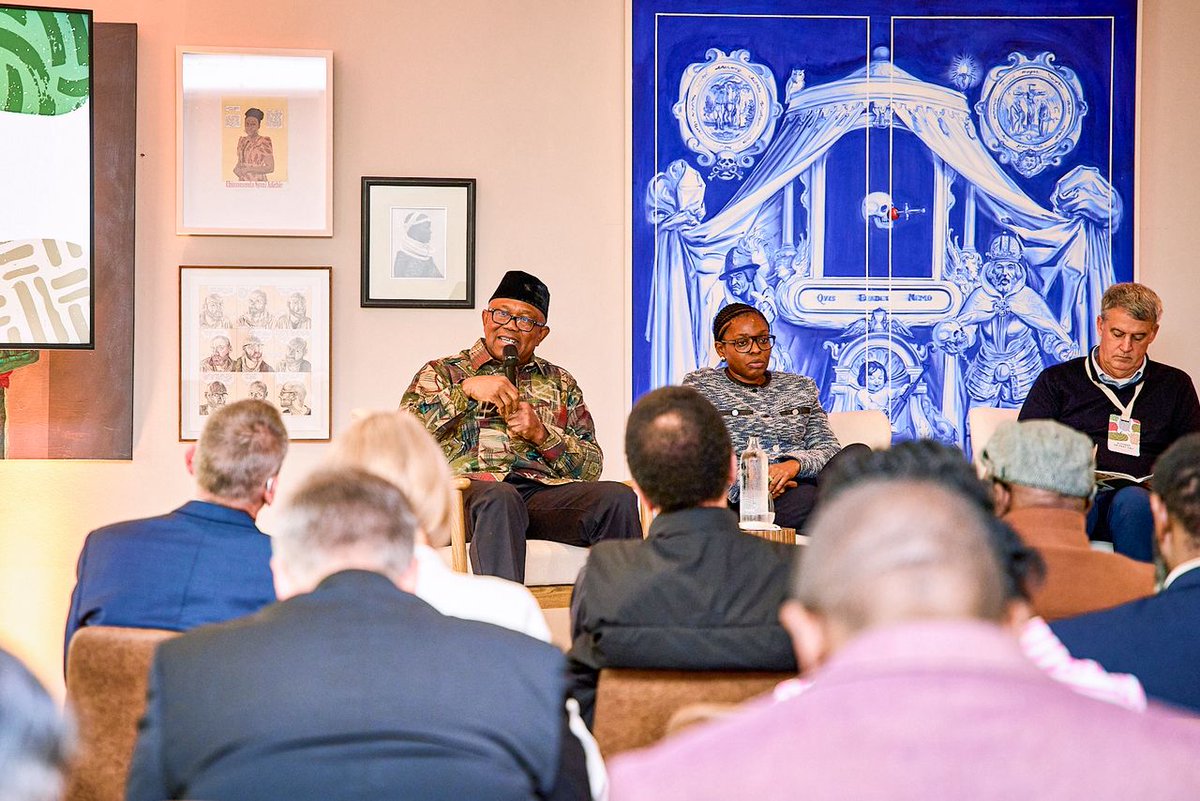
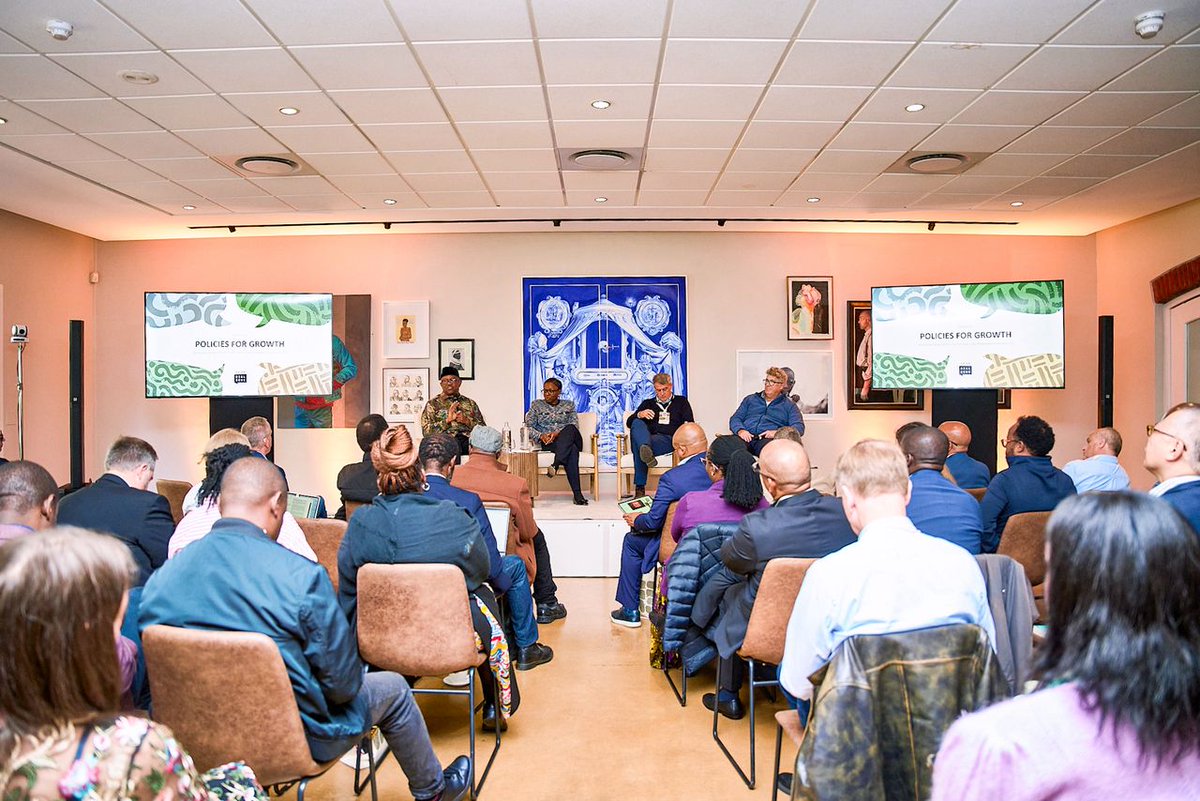
Yesterday in South Africa, after meeting with the ministers in the morning, I delivered a guest speech at the Spier Dialogue Event on “Policies for Growth in Africa” in Cape Town, where I reiterated that Africa has no reason to remain poor. Our continent is blessed with enormous natural and human resources. Africa holds huge mineral reserves, possesses over 60% of the world’s uncultivated arable land, and has the youngest population globally. These are not liabilities; they are strategic assets for economic transformation.
Yet, despite these enormous advantages, Africa continues to lag due to poor leadership, corruption, weak institutions, and the high cost of governance.
Africa must now look ahead and move forward with decisive action. We must shift our focus from politics and endless election cycles to productivity, development, and nation-building. The future of Africa lies in investing aggressively in Human Development Index (HDI) indicators, especially education, healthcare, and lifting people out of poverty.
Today, many African countries still record low life expectancy, high infant mortality, widespread unemployment, and growing poverty levels. Small and medium-scale businesses, which should be the engine of growth, are collapsing under harsh economic conditions, poor infrastructure, and policy inconsistency.
What Africa needs is competent leadership with the capacity, compassion, and commitment to prioritise production over consumption, and development over politics. If we invest in our people, strengthen institutions, reduce the cost of governance, combat corruption, and create an environment where businesses can thrive, we can build a more productive, secure, democratic, and prosperous Africa that works for all its people.
A New Africa is Possible. -PO
Nigeria Democratic Congress (NDC) presidential candidate, Peter Obi, has revealed that he held high-level meetings with top South African ministers and political leaders following recent concerns raised by Nigerians living in South Africa.
According to Obi, the discussions focused on immigration issues, regional cooperation, security concerns, youth unemployment, and the growing tensions affecting African foreigners, especially Nigerians residing in South Africa.
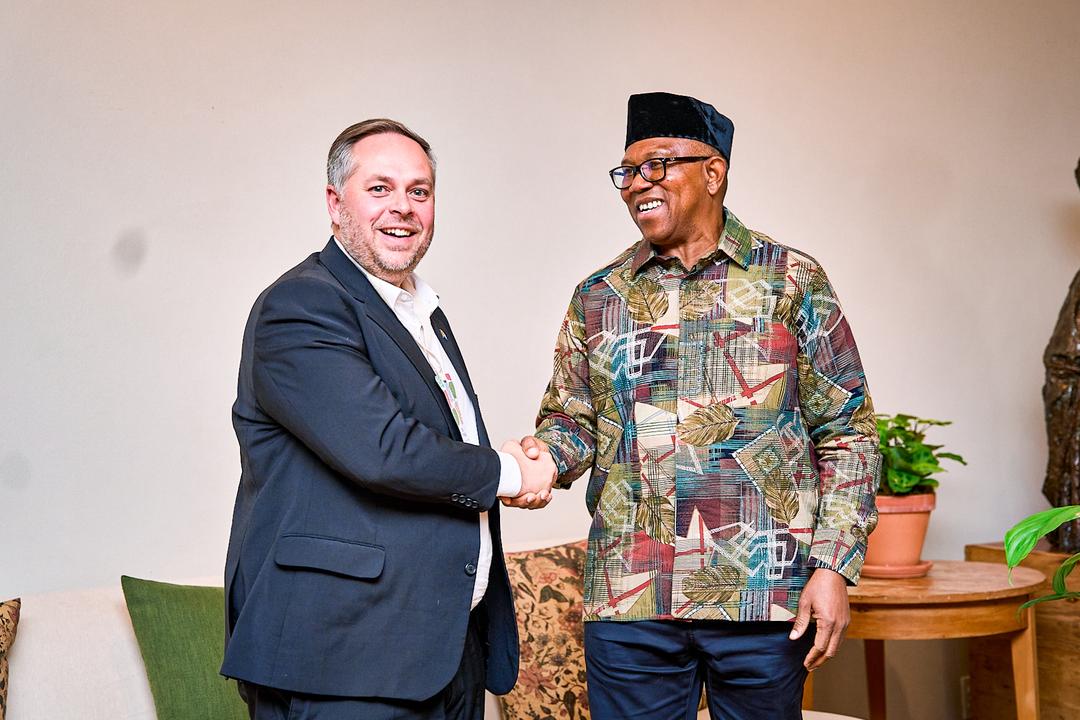
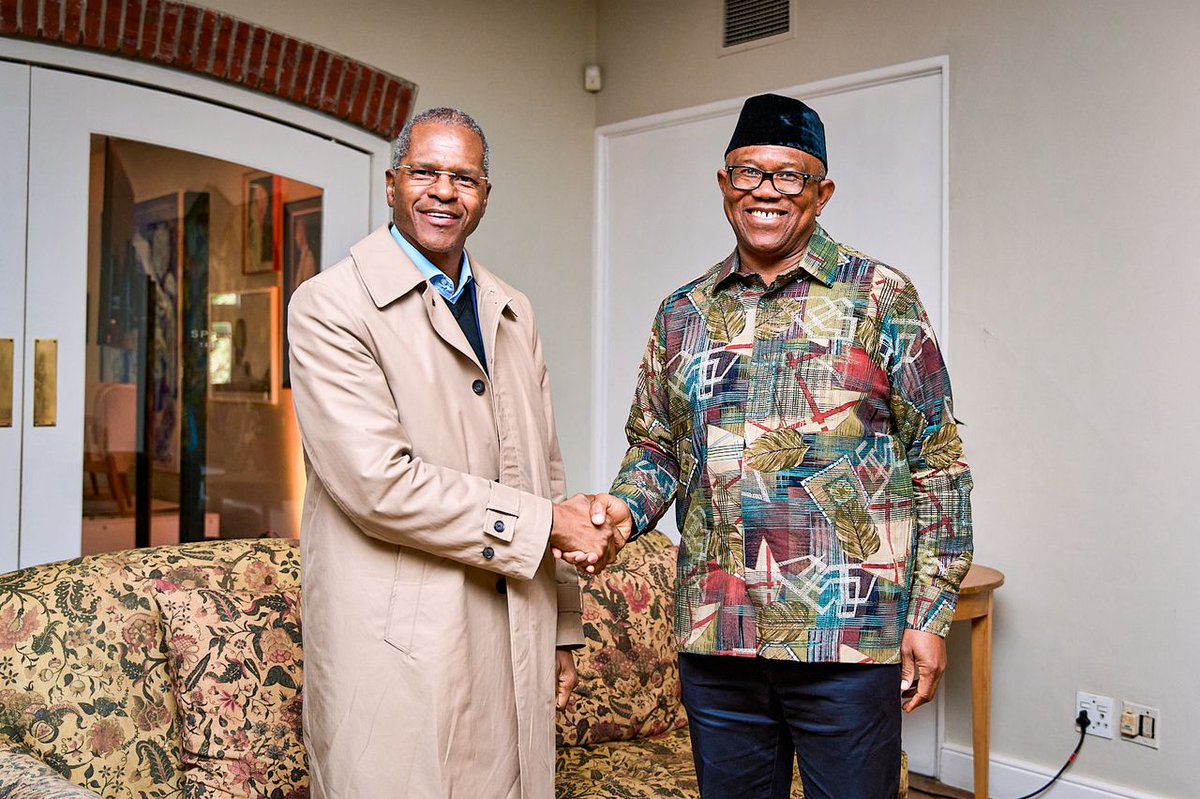
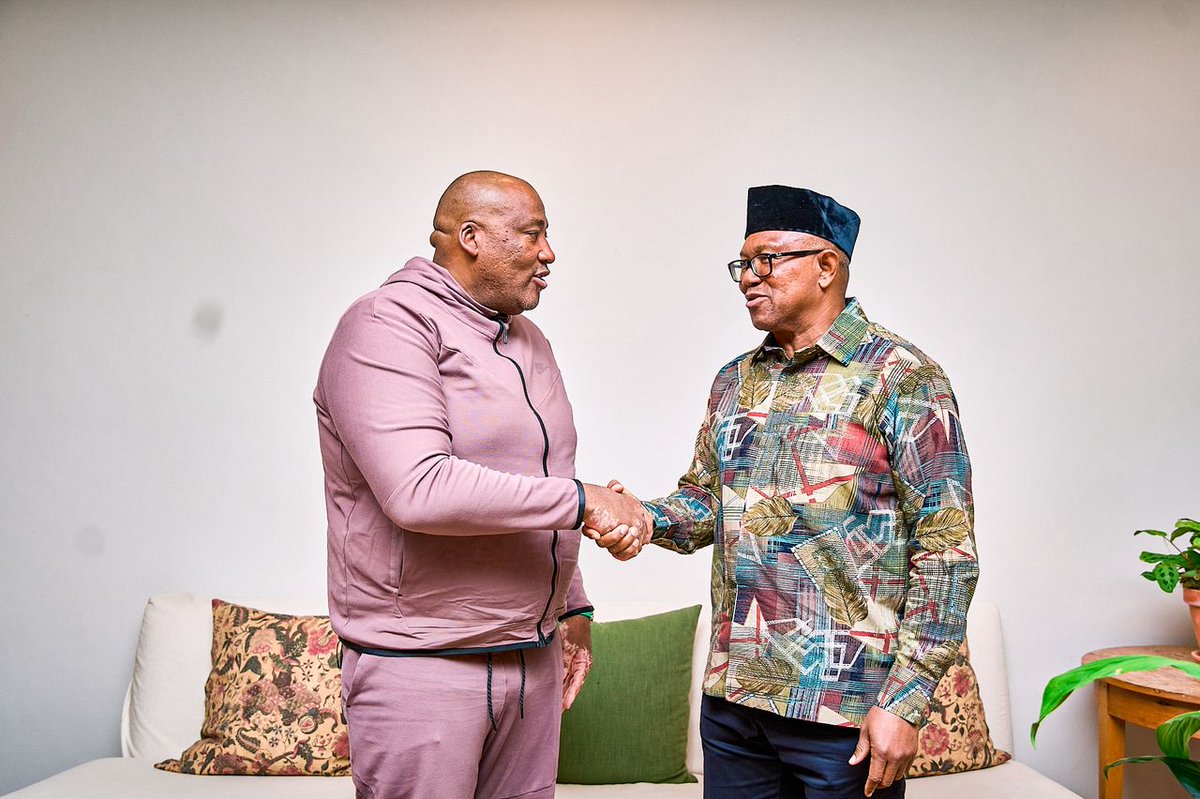
The former Anambra State governor disclosed that he met with South African Minister of Home Affairs, Leon Schreiber; Minister of Cooperative Governance and Traditional Affairs, Velenkosini Hlabisa; and Minister of Sports, Arts and Culture, Gayton McKenzie.
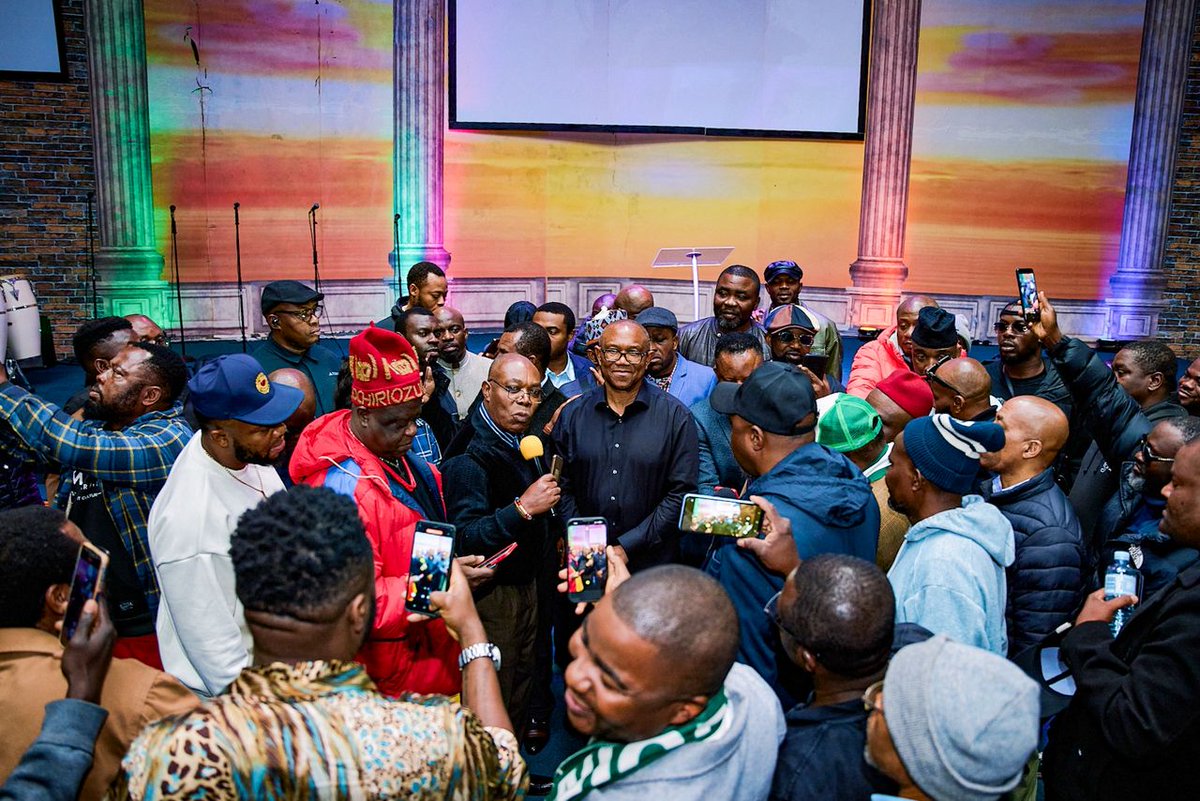
Obi explained that the meetings came shortly after engaging with members of the Nigerian community in Cape Town, where concerns about safety, peaceful coexistence, and the treatment of immigrants were reportedly raised.
He stressed the need for both Nigeria and South Africa to strengthen dialogue, promote mutual respect, and uphold the rule of law in addressing migration and social challenges affecting both nations.
Peter Obi also called for restraint, peaceful engagement, and unity among Africans, stating that violence, hate, and provocation should never replace lawful and democratic solutions.
He further noted that Africa’s progress depends on unity, economic inclusion, and protecting the dignity of every African regardless of nationality or country of residence.
The statement has since generated reactions online, with many Nigerians praising the move as a step toward diplomacy and protecting the interests of Nigerians abroad.
👉🏽 Follow Daily Times Nigeria for more updates
#PeterObi #SouthAfrica #Xenophobia #TrendingNews #DailyTimesNigeria
After speaking with Nigerians in Cape Town yesterday, I was able to have meaningful discussions this morning with three South African ministers and political party leaders regarding the ongoing challenges related to immigration, regional collaboration, and fostering peaceful coexistence between our nations.
I had the pleasure of meeting with Mr Leon Schreiber, the South African Minister of Home Affairs and a prominent figure in the Democratic Alliance; Mr Velenkosini Hlabisa, the Minister of Cooperative Governance and Traditional Affairs and leader of the Inkatha Freedom Party (IFP); and Mr Gayton McKenzie, the Minister of Sports, Arts and Culture and leader of the Patriotic Alliance (PA).
Our conversations were productive and candid, focusing on the current challenges that affect both countries—particularly those related to migration, economic strains, youth unemployment, security issues, and the rising tensions faced by African foreigners in South Africa.
I firmly believe that Nigeria and South Africa, both prominent African nations, must enhance dialogue, bolster cooperation, and seek solutions based on justice, mutual respect, and adherence to the rule of law. In challenging times, leaders and citizens alike need to demonstrate responsible leadership, compassion, and restraint.
We collectively stressed the importance of law-abiding behaviour, avoiding violence, resisting hate or provocation, and allowing lawful institutions to address grievances through democratic and constitutional processes, regardless of the challenges we face.
The progress of Africa hinges on our ability to create unity, foster economic inclusivity, invest in our communities, and uphold the dignity of every African, no matter where they live. -PO
another week, another village in Nigeria massacred and slaughtered by Islamists.
And as always, the world is silent.
No word from the Pope.
No word from the UN.
Nothing from France. UK. Italy. Spain. Anyone.
Just silence. So weird.
Earlier today, I arrived in Cape Town, South Africa, to take part in the Spier Dialogue 2026, an important event centred on the future of Africa and the urgent challenges facing our continent and the globe.
The Spier Dialogue occurs at a crucial time as Africa grapples with significant issues in governance, democracy, economic inclusion, urbanisation, migration, and leadership. However, it also highlights the vast opportunities presented by the energy and creativity of our young population.
As leaders and stakeholders gather from various regions, I look forward to partaking in insightful discussions, especially as I have the privilege of addressing attendees tomorrow on policies geared toward growth.
Africa’s future should not be characterised by poverty amid abundance or by division instead of development. It is time for us to transition from consumption to production, from divisive politics to politics built on competence and compassion, and from mere promises to tangible progress that serves everyday citizens.
Upon my arrival, I had the opportunity to meet with the Nigerian community in Cape Town for a heartfelt discussion about the recent challenges affecting African expatriates in South Africa, resulting in over two hours of fruitful dialogue.
I remain dedicated to advocating for a New Nigeria and a New Africa—one where governance genuinely serves the people, where the youth are equipped with education and opportunities, and where leadership is founded on integrity, service, and sacrifice.
A New Nigeria POssible. -PO
I just watched this disturbing video of nursery school pupils of Community Primary School, Umuora Obulechi, Oriuzor, in Ezza North LGA of Ebonyi State, receiving lessons in their terrible classroom.
The government just suspended the teacher and principal for letting someone show the rot in this school.
This same state spent billions sending a handful of persons to the UK for education while ignoring the poor children and poor families.
Let’s find the suspended teachers and support them.
We can pay them a year salary each and find other ways to support them.
For the government that suspended them, shame on you.
Fix this school for Christ sake and don’t be wicked to these children.
Education Challenge: Not Funding but failure of leadership and Accountability.
The recent comments made by the Minister of Education are quite alarming. Despite receiving nearly 80% of educational donor funding over the last ten years, the North-West and North-East regions still show the lowest literacy and numeracy rates in Nigeria.
This issue goes beyond just a lack of funding; it highlights failures in leadership, accountability, and governance. Financial resources alone do not guarantee proper education. What truly makes a difference in education is the responsible and transparent management of these funds, aimed at achieving tangible results and a genuine commitment to developing human capital.
We cannot continue to commend government budgets, donor contributions, and various intervention programs while millions of children in Nigeria still lack basic reading and writing skills, which are essential for thriving in today's world. The real tragedy lies not just in the numbers, but in the lost potential of countless children whose futures are being compromised by systemic inefficiency and corruption.
Nigeria’s most valuable asset is not its oil, politics, or propaganda. It resides in the human capital of our youth. A country that overlooks education is essentially setting itself up for cycles of poverty, insecurity, unemployment, and instability in the future.
The Minister’s statement should prompt a national dialogue on how public funds and donor contributions are utilised. Every kobo spent on education must lead to clear improvements in literacy rates, school enrollment, teacher performance, and overall learning outcomes. Anything less is unacceptable.
Countries that have developed successfully, or are on the fast track to development, have made substantial investments in education. Nations like China, India, Indonesia, Vietnam, and Bangladesh have recognised the invaluable impact of education on progress and growth.
Now, Nigeria must transition from mere discussions about education to achieving real outcomes. We need to construct schools, train teachers, modernise educational systems, enhance monitoring processes, and ensure every intervention directly benefits the children it is meant to serve, rather than being siphoned off by political intermediaries and bureaucratic systems.
A nation’s progress is closely linked to the quality of its education system.
A brighter future for Nigeria is achievable! -PO
SpaceX is actively hiring world-class engineers/physicists for SpaceXAI, even if you have zero prior experience in AI. Smart humans figure it out fast.
Please send an email with ~3 bullet points demonstrating evidence of exceptional ability to [email protected].
Yesterday, May 19th, in Abuja, I attended the Presidential screening organised by our party, which took over two and a half hours. They carefully reviewed all my documents, including my degree certificates, NYSC credentials, and age declarations.
During the process, I also addressed questions regarding my vision for a new Nigeria and the type of leadership our nation urgently needs right now. Following this, I was cleared and received the presidential nomination form I had previously paid for.
I would like to commend the screening committee, led by former governor Sam Egwu, for their thorough and professional approach. Additionally, I appreciate our party's leadership for upholding the democratic process.
A New Nigeria is POssible. - PO
A Nation Losing Its HUMANITY.
Some events shatter a society so deeply that words are no longer enough to express the shock; the brutal killing of a teacher and the horrific rape and murder of an elderly woman are among such tragedies. These are not isolated incidents but signs of deeper moral and social decay.
How did we get here? How did we reach a point where teachers are hunted and killed, and the elderly—custodians of memory and wisdom—suffer such dehumanising violence?
This is more than a security crisis; it is a failure of collective humanity. We have become desensitised, consuming tragedy briefly and moving on, allowing indifference to normalise the unacceptable.
To the families affected, I share in your grief. But grief alone is not enough.
We must demand accountability and urgent systemic change. If such atrocities no longer move us to action, then we risk losing our shared humanity. -PO
“@WorldBankGroup@WorldBankAfrica@WorldBank, look at what they are doing with the money you are lending Nigeria. Stop lending Nigeria money.”
~Man tells World Bank to stop lending Nigeria money as APC politicians end up sharing the borrowed money among themselves.