For 130 years, one of the most famous Viking warrior graves was assumed to belong to a man. Then someone actually tested the bones.
In the 1870s, a Swedish archaeologist named Hjalmar Stolpe was excavating graves at Birka, a major Viking trading town on an island near modern Stockholm. He dug up more than a thousand burials. One of them, later labeled Bj 581, stood out from all the rest.
It was a chamber grave on high ground near the town's fortress. Inside was a body surrounded by a full warrior's kit. A sword. An axe. A spear. A fighting knife. Armor-piercing arrows. Two shields. Buried alongside were two horses, a mare and a stallion.
And in the lap of the dead was a full gaming set, a board with pieces for a strategy game. Archaeologists read that as a sign of someone who planned battles, not just fought them. Possibly an officer.
It was the textbook example of a high-status Viking warrior grave. It was featured in books and studies for over a century.
Nobody questioned whether the warrior was a man. The weapons were the evidence. Swords meant men.
That assumption is the problem. The sex of the skeleton was decided by what was buried with it, not by the bones themselves.
In the 2010s, an osteologist named Anna Kjellström studied the skeleton. The pelvis and the jaw pointed to a woman. In 2017, a team led by Charlotte Hedenstierna-Jonson ran a DNA analysis. Two X chromosomes. No Y. The warrior in Bj 581 was a woman, probably in her 30s or older when she died, sometime in the 900s.
The reaction online was huge. So was the pushback.
Some critics argued the bones might have been mixed up with another grave during the 1800s excavation. The team went back to Stolpe's original field drawings and published a follow-up in 2019. They matched the skeleton to the grave plan and showed it was the same person found in that chamber.
Other critics made a fairer point. Being buried with weapons doesn't automatically mean someone fought. Maybe the gear was symbolic. Maybe it reflected her family's status. The researchers admitted that's possible, but noted that nobody ever raised that objection back when the skeleton was assumed to be male. For 130 years, the same grave goods were treated as plain proof of a warrior.
That double standard is the real lesson. When the weapons were in a man's grave, the case was closed. When they turned out to be in a woman's grave, suddenly they needed a different explanation.
We still don't know her name or whether she ever swung that sword in battle. What we do know is that she was buried like a commander, with every tool of war a Viking could own, and archaeologists got her wrong for over a century because they never thought to check.
Gökyüzünden Yeryüzüne İnmiş Bir Merdiven: Ur-Nammu Steli
MÖ 2100. Sümerler taşa bir kozmoloji kazıyor. 🪦
En tepede Ay Tanrısı Nanna’nın hilali ve sekiz kollu yıldızı evrenin zirvesi. Altında kutsal hayat ağacı, kökleri yeraltında, dalları gökte.
Ortada bir merdiven. Sıradan bir merdiven değil bu: gök ile yer arasında köprü. İnsan, tanrısal olana tırmanmaya çalışıyor ya da tanrılar, dünyaya iniyor.
Yanında yarı insan yarı hayvan figürleri: Anunnakiler mi, yoksa unutulmuş bir bilginin sembolü mü? Sümer metinlerinde onlar “gökten inenler” olarak geçer. Gözlemciler. Öğreticiler. Ya da sadece mitolojik bir kurgu?
Her katman bir evren katmanı..
4000 yıl önce de bugün de aynı soruyu soruyoruz: Gök ile yer arasında ne duruyor?
Belki de cevap o taşın içinde, sessizce bekliyor… 🪜🌙
#Mezopotamya #sümer
Follow where this travelled.
The shell is a fluted giant clam, which grows on coral reefs in the Red Sea and the Indian Ocean and has never lived in the Mediterranean. Uncarved blanks of the same species found in Palestine and Transjordan point to workshops there.
It was carved around 700 to 650 BC, so roughly 2,700 years ago, and dug out of a tomb at Vulci in Etruria, in Italy.
A reef animal from one ocean, carved in the Levant, buried on the far side of another sea.
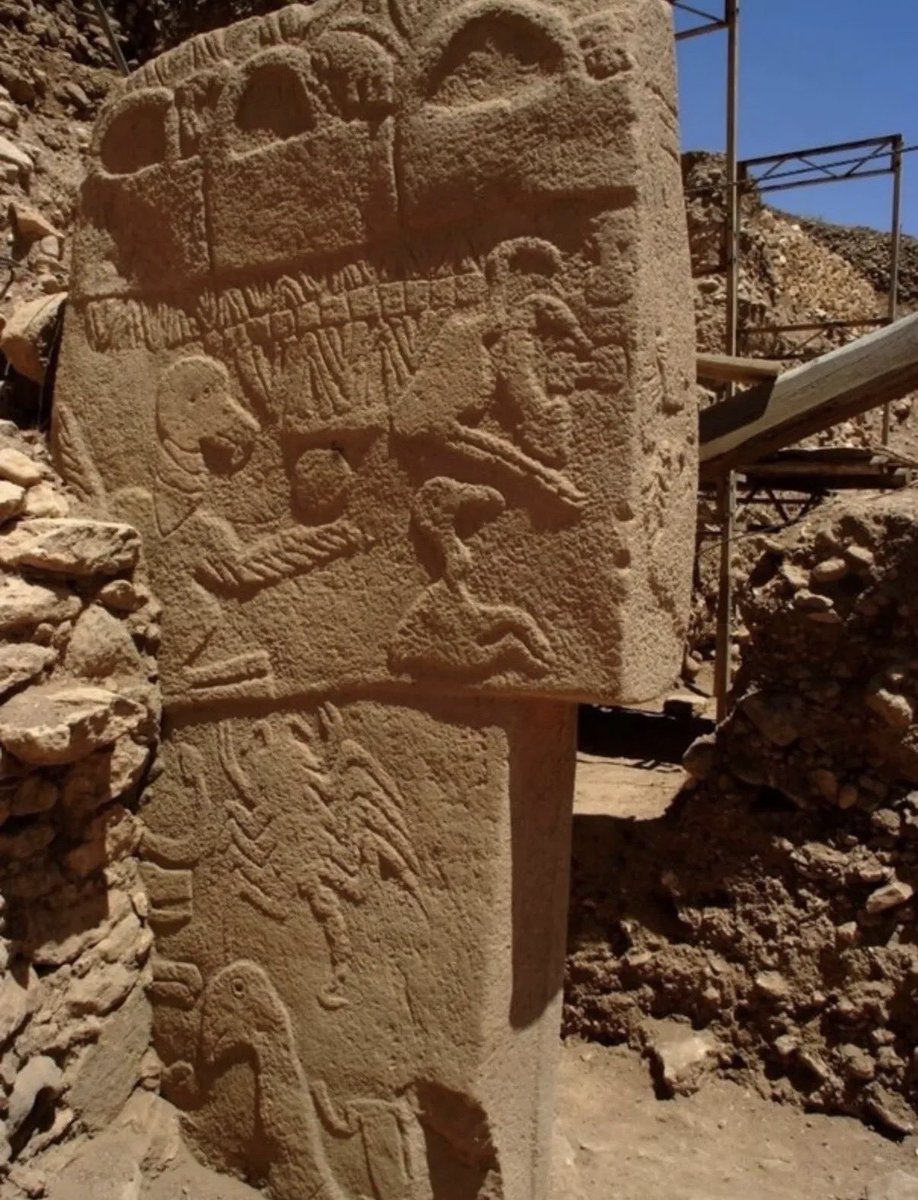
Every animal on these pillars was made by removing everything that wasn’t the animal.
Some of the figures at Göbekli Tepe are carved in raised relief, which means the stoneworkers cut the surface away all around each shape and left the creature standing out from the rock.
That technique gives you no second chance.
Every strike has to land outside the outline, because stone taken off cannot be put back, and the carver has to know where the animal ends before the first blow.
This was being done roughly 11,500 years ago.
The youngest British soldier of WW1 was just 12 years old.
His name was Sidney Lewis, a boy from London who ran away from home in August 1915 without telling his parents.
His parents had absolutely no idea where their young son had disappeared to, until a soldier back from the front lines on leave mentioned seeing him in France.
Sidney easily tricked army recruiters who were more than happy to turn a blind eye to underage boys eager to fight.
By the time he was 13, he was operating heavy machine guns in the 106th Machine Gun Company right in the thick of the Battle of the Somme.
He survived six weeks of hell in the Battle of Delville Wood, enduring some of the most horrific casualties of the entire war.
Desperate to save her child, his mother tracked down his military unit and sent a frantic letter to the War Office demanding his release, attaching his birth certificate as absolute proof.
The army had no choice but to discharge him and send him home to his family.
It wasn't until 2013 that historians and the Imperial War Museum officially authenticated his record, confirming that a 12 year-old boy truly braved the worst of the Great War.
Lest we forget.
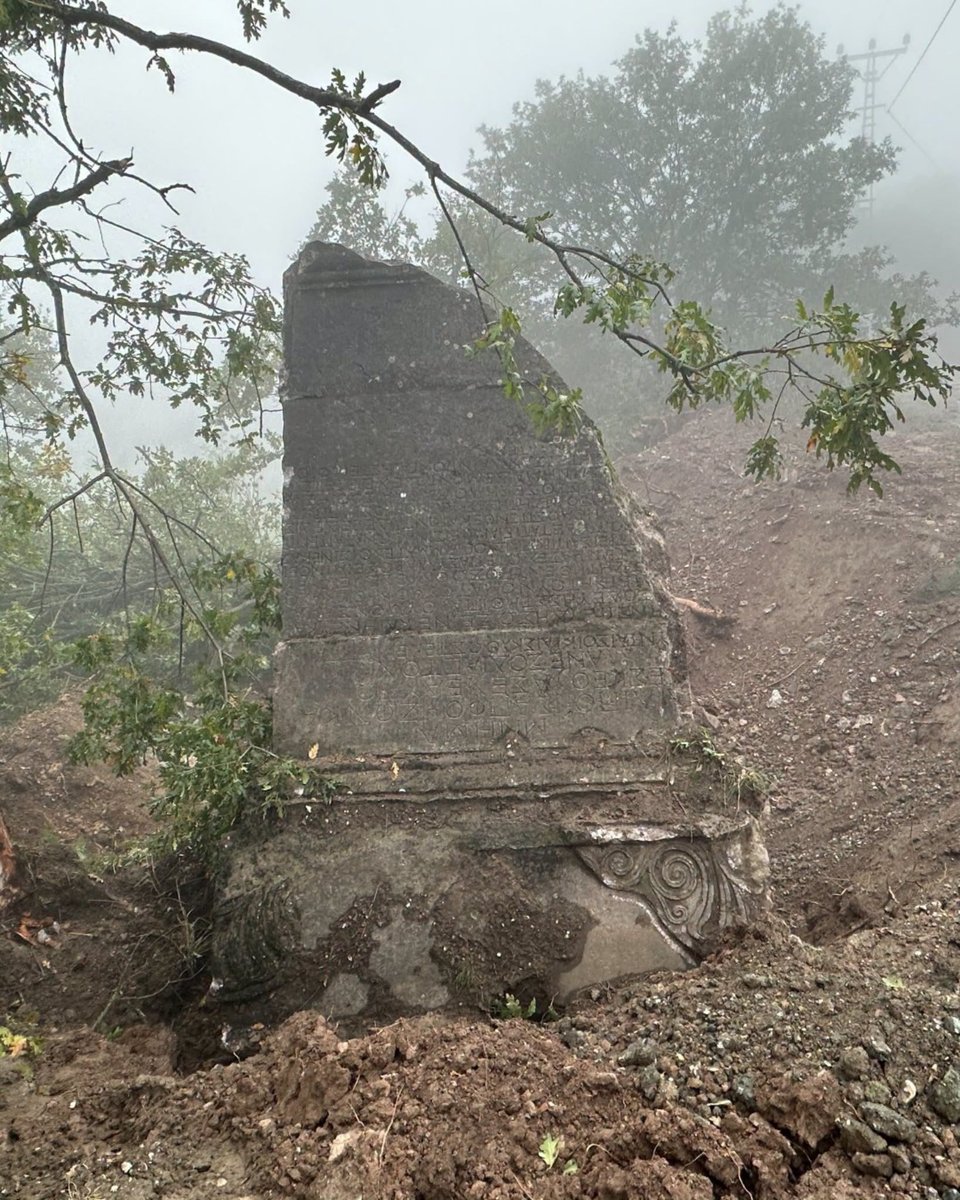
📍 Sakarya’da sürdürülen altyapı çalışmaları sırasında, üzerinde çok satırlı yazıtlar bulunan anıtsal boyutlarda bir taş blok ortaya çıkarıldı.
Grekçe veya Latince harflerle kaleme alınmış yazıtların yanı sıra taş bloğun alt bölümünde kıvrımlı mimari bezemeler ve volüt detayları dikkat çekiyor. İlk değerlendirmelere göre bloğun resmi, idari ya da anıt ve mezar kültüyle ilişkili bir işleve sahip olabileceği düşünülüyor.
Buluntunun tarihlendirilmesi ve işlevinin belirlenmesi, gerçekleştirilecek epigrafik ve teknik incelemelerin ardından netlik kazanacak.
Kaynak: İHA (30.10.2026)
About 22,000 to 23,000 years ago, an individual, most probably a young woman, undertook two perilous journeys separated by several hours, carrying a toddler at least once.
It all happened at Lake Otero, a large Ice Age lake, the shore of which was teeming with wildlife such as mammoths, ground sloths, camels, dire wolves, American lions, and other extinct megafauna.
The trail they left behind, located in present-day White Sands National Park in New Mexico, spans 1.5 km and comprises over 400 human footprints, giving the oldest evidence of human presence in the Americas and reshaping our understanding of when the first humans arrived there.
Look at more amazing historical photos: https://t.co/dQjceOPkrz
"Written in an ancient language". It's called Greek. Imagine being a Turkish archaeologist and nationalist, and in every excavation you do across Turkey, you find Greek inscriptions and antiquities. There is no greater curse. They are forced to live with it.
🏛️ Göbeklitepe bir tapınak değildi. Çok daha fazlasıydı.
43 numaralı sütun Akbaba Taşı 🦅 aslında bir gökyüzü haritası olabilir. Taşa kazınmış o semboller, 12.800 yıl öncesine, Genç Dryas felaketine ışık tutuyor.
Gökyüzünden bir şey çarptı. Kuyruklu yıldızlar ya da asteroid parçaları Kuzey Amerika buzul tabakasına indi. Yangınlar koptu, denizler yükseldi, iklim altüst oldu. İnsanlığın %70’i yok oldu.
Ve hayatta kalanlar… bu kıyameti taşa kazıdı. Akbaba Taşı’ndaki figürler: akbaba, yılan, akrep, aslan gökyüzündeki takımyıldızları temsil ediyor olabilir. O gün gökyüzü alev aldı ve atalarımız bunu unutmamak için en dayanıklı malzemeye taşa işledi.
43 numaralı sütun sadece bir taş değil. Bir uyarı. Bir felaketin kaydı. Ve belki de… bir sonraki döngünün habercisi.
This is the Oxyrhynchus Hymn, dated to the late 200s AD. It is the earliest known Christian hymn manuscript with both lyrics and musical notation. A plain English rendering of the surviving words:
“Let all creation be silent.
Let the shining stars be still.
Let the rushing winds and rivers cease.
While we sing to the Father, Son, and Holy Spirit,
let every power answer: Amen, amen.
Strength, praise, and glory forever to God,
the only giver of all good things. Amen, amen.”
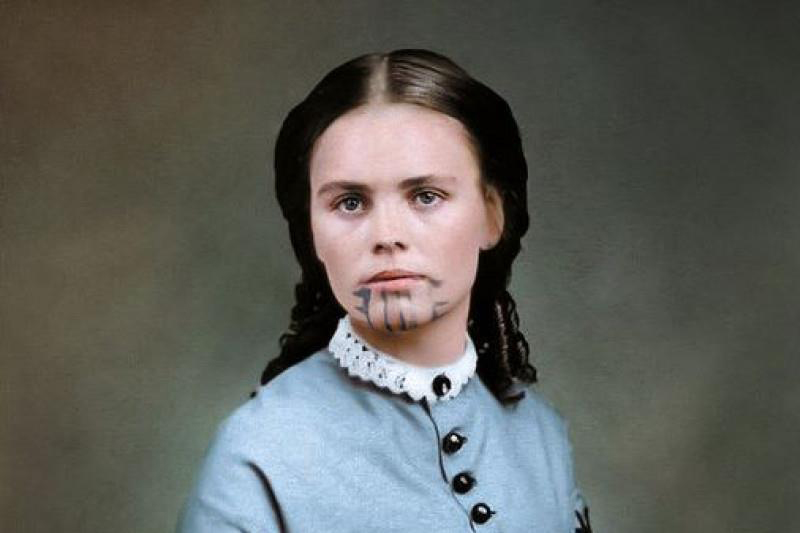
In 1851 a fourteen year old girl named Olive Oatman watched most of her family killed on a trail in Arizona and was taken.
Five years later she walked into an Army fort with a blue tattoo across her chin.
She spent the next forty seven years being asked about it, and the version everybody read was written by somebody else.
The Oatmans were Mormons who had joined a splinter sect called the Brewsterites, following a man who said the promised land lay at the junction of the Gila and the Colorado. The party fell apart in New Mexico, and Olive's father took his own family on alone.
On March 18, 1851, on the Gila River trail, a group of men approached the wagon and asked for food and tobacco. Royce Oatman gave them almost nothing. They attacked.
Her parents and four of her siblings were killed. Her older brother Lorenzo was beaten, thrown down an embankment and left for dead. He survived. Olive, fourteen, and her sister Mary Ann, seven, were taken.
Olive later identified the attackers as Apache. Historians now believe they were almost certainly Tolkepaya, a Western Yavapai group.
The girls spent about a year with them, and that year was slavery. They hauled water and firewood, foraged, and were treated as property.
Then they were traded to the Mohave for two horses, some vegetables, blankets and beads. The trade happened because the daughter of a Mohave leader, a young woman named Topeka, kept pressing for it.
And here is where the story everyone has heard falls apart.
The Mohave did not hold them as slaves. They took them in. Topeka's mother, Aespaneo, looked after both girls and arranged for them to be given plots of land to farm. Olive was given a Mohave clan name, Oach, along with a personal name.
The clan name is the detail that matters. That is not something given to a captive. That is what you give to family.
The Mohave tattooed both girls on the chin and the arms.
Olive would later say it was a slave mark. It was not. Mohave women wore that tattoo. It was given to their own people so their ancestors would recognize them after death, and the pattern on her face is a Mohave pattern.
They were marking her as one of theirs.
Around 1855 a drought came and the food ran out. Mary Ann starved to death, and so did a great many Mohave. Olive nearly died with them. The reason she did not is that Aespaneo made gruel and kept feeding it to her.
In 1856 word got to Fort Yuma that a white woman was living with the Mohave, and the Army sent for her. The Mohave did not want to give her up. It took trade goods and a threat of reprisal to settle it. Topeka walked with her the twenty day journey to the fort.
She was nineteen. Within days she learned that Lorenzo was alive. He had spent five years looking for her.
And then the rest of it happened to her.
A minister named Royal B. Stratton wrote a book about her life, in her voice, published in 1857. It sold around thirty thousand copies and made her famous across the country. It described the people who had raised her for four years as savages, which is what the market wanted.
Stratton took the proceeds and used part of them to send Olive and Lorenzo to university. Then he put her on the road, lecturing, with the tattoo on display, telling the story the way his book told it.
But it kept leaking out around the edges. She spoke of the Mohave by name and with obvious warmth. She grieved for them. When the Mohave leader Irataba came to New York in 1864, Olive Oatman went to see him.
There is no evidence she ever married a Mohave man or had Mohave children, despite a century of rumor. What the record actually shows is a woman who had two families and lost both of them.
In 1865 she married a cattleman and banker named John Brant Fairchild, whom she met after one of her lectures. They moved to Sherman, Texas and adopted a daughter. She stopped lecturing. Stratton was not invited to the wedding and she never spoke to him again.
Fairchild went looking for copies of Stratton's book and burned them.
She had headaches and long stretches of depression for the rest of her life. She died of a heart attack in Sherman on March 20, 1903, at sixty five.
She lived forty seven years after she walked into Fort Yuma, in a country that could not stop staring at her face.
And the only full account of her life was written by a man who needed her to hate the people who kept her alive.
This is a quarter-turn valve, and it is nearly two thousand years old. It was buried at Pompeii in AD 79 and the bronze under the volcanic crust still shows how it worked. Inside the body sits a tapered plug with a hole bored through it.
Line the hole up with the pipe and water flows. Turn it ninety degrees and the hole sits across the flow and stops it. Turn it part way and you throttle it. The tap in a Pompeii display case and the tap in a modern hardware shop work on the same principle.
The part that impresses me is not the design but the consistency. Analyses of Roman water valves report an alloy of roughly 73 percent copper, 18 percent lead and 9 percent tin, holding steady across the empire, and Vitruvius lists ten standard sizes of lead pipe named for their circumference. Somebody wrote the specification and everyone followed it.
Where else do you see that kind of standardization before the modern era?
June 6, 1944. An American paratrooper jumps into Normandy in the dark and lands on the roof of a church.
By the end of the war he had been declared dead, held a funeral he didn't attend, escaped the Nazis, and fought his way toward Berlin in a Soviet tank unit.
His name was Joseph Beyrle. He's believed to be the only American soldier to serve in both the US Army and the Red Army during World War Two.
Beyrle was from Muskegon, Michigan. He joined the 101st Airborne, the Screaming Eagles. His buddies called him Jumpin' Joe.
On D-Day night his plane was hit by flak and he jumped early. He came down on a church roof, slid off, and lost his unit in the chaos. For a few days he fought on his own, blowing up a power station and cutting German communications.
Then he was captured.
Here's where it gets strange. A German soldier ended up wearing Beyrle's uniform and dog tags. That German was killed. When the body was found, the Americans identified it as Joseph Beyrle.
The army told his parents their son was dead. His hometown held a funeral mass for him. His obituary ran in the local paper.
Meanwhile, he was very much alive, being moved from one German prison camp to another.
He escaped more than once. One time he and two other prisoners jumped off a train heading east. They thought they were heading for Russia and freedom. They got lost and ended up in Berlin, where they were caught by the Gestapo, beaten, and tortured.
In January 1945, from a camp in eastern Germany, he finally made a clean escape. He went east, toward the gunfire. Toward the Soviets.
When he found a Soviet tank unit, he walked out with his hands up, holding a pack of Lucky Strike cigarettes, and shouted the only Russian he knew. American comrade.
It worked.
He asked to join them. And they said yes.
For about a month, an American paratrooper rode with Soviet tank crews as they pushed toward Germany. He used his demolition training. He fought. He was reportedly welcomed by a Soviet officer who was one of the rare women commanding a tank battalion.
Then a German dive bomber attacked. Beyrle was badly wounded.
He was evacuated to a Soviet hospital. Soviet Marshal Georgy Zhukov reportedly visited, heard his story, and gave him papers to get to the American embassy in Moscow.
When he showed up, the embassy didn't believe him. As far as the US was concerned, Joseph Beyrle was dead. They held him under guard until his fingerprints proved who he was.
He made it home to Michigan in April 1945.
In 1946 he got married. In the same church where they'd held his funeral.
Decades later, in 1994, he was honored at the White House by President Bill Clinton and Russian President Boris Yeltsin for serving both countries.
And the last twist. His son, Joseph Beyrle II, grew up to become the United States Ambassador to Russia.
Tonight is the first of the three nights of Winterfull, which mark the start of Winter and the dark half of the year. This video from last year shows the weoh of Lord Ingui at a barrow.
Tomorrow night I shall lead a blot at a barrow and hopefully the weather isn’t too awful!
Wishing all who worship a good blot and encourage all to remember the ancestors at this time of year.
The Etruscans said that a weird being emerged from under the ground and brought knowledge that became the foundation of their religious practices.
The account was recorded by Cicero in the first century BCE, but the tradition was considerably older.
According to the Etruscans, a farmer near Tarquinia was ploughing his field when his plough struck unusually deep into the earth. Suddenly, a figure emerged and began speaking.
They called him Tages.
He had the physical appearance of a child but possessed the knowledge and intelligence of an elderly sage.
A crowd gathered, and eventually people came from across Etruria to hear this extraordinary being speak.
Tages reportedly delivered an extensive body of knowledge concerning divination and the interpretation of divine signs. His teachings were written down and became central to Etruscan religious practice.
Archaeologists excavating the ancient ceremonial complex at Tarquinia discovered the burial of an approximately eight year old boy dating to the ninth century BCE.
He was buried beside a natural opening in the ground, at a location that remained sacred for centuries.
Researchers also recovered an Etruscan inscription near the cavity, dating several centuries after the burial. It reads terela, a word associated with extraordinary phenomena or portents.
Archaeologists have seriously considered whether this child inspired the legend of Tages or became associated with him in antiquity.
An ancient civilization saved this story about an bizarre child emerging from the earth and delivering knowledge.
At the actual city associated with the account, archaeologists discovered a child buried beside a sacred opening in the ground.
So seriously, were these simply stories created to explain the origins of human knowledge, or were some of them attempts to preserve encounters with something their ancestors couldn't explain?
We have the ancient testimony and the archaeological discovery.
This third century BCE bronze statuette depicts a seated child with mature facial features. It is traditionally associated with Tages.
The oldest swords ever found came out of this mound. Nine of them, cast from an arsenic-copper alloy around 3300 BC, three inlaid with silver, stacked together with lance tips inside a mudbrick palace at Arslantepe near Malatya.
They predate the next oldest swords known anywhere by roughly a thousand years, and they were sitting in the building where the accounts were kept.
For those of you who thought the visit from a Bedford Borough Council official to investigate our daughter Zoe’s (age 12) pretend teddy bear cafe was too ridiculous to be real, here is the arrival of official. This is totally legit. She really did show up at our property to investigate the illegal teddy bears having their coffee🧸🧸☕️☕️
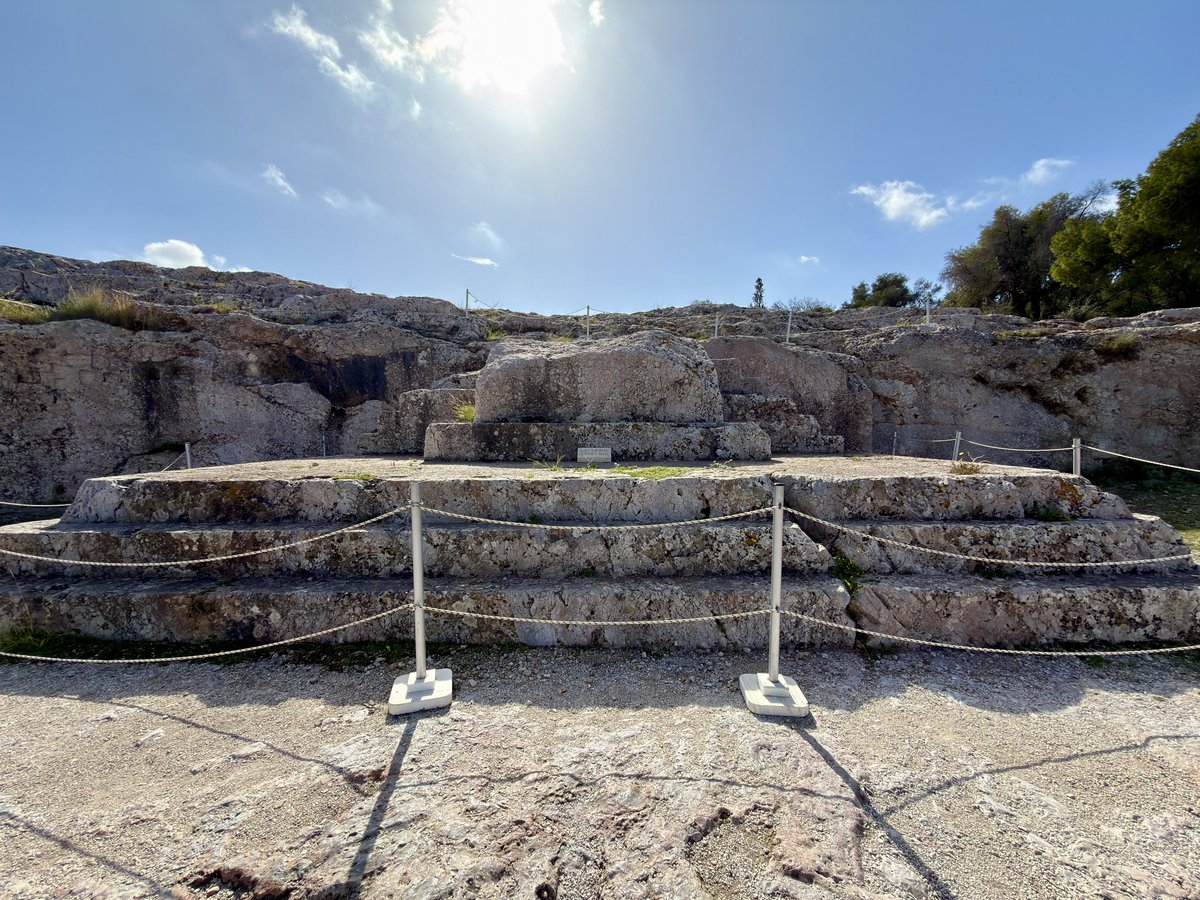
We were all taught that the Ancient Greeks created Democracy 2,500 years ago. But do you want to see something cool af that most people aren’t aware of?
This stone-cut platform located on Pnyx Hill in Athens, is the EXACT SPOT where Democracy was born in ~507BC.
Notice the Acropolis in the background. This is the place where several thousand people first assembled and essentially introduced freedom of speech, and voted on matters with the general public. This is where it happened, and the view they had when they did it. How freaking cool is that?