“This system will leverage the Doudna system architecture and contribute to the DOE’s Genesis Mission by broadening access to advanced computing for current and future machine learning applications. It will help advance human knowledge and accelerate discovery.” – Berkeley Lab Director Kathy Yelick
https://t.co/Nsz5ytiAeL
“It’s exciting to see how far the project has come, from solid rock to a space ready for the detector. After years of preparation, our team is eager to head underground and begin detector installation.” - Berkeley Lab’s Cheng-Ju Lin
@DUNEscience@Fermilab@CERN
https://t.co/iSkD8OywWI
"There appear to be cracks in the standard model," said @berkeleylab's Simone Ferraro. "There's something that doesn't fit. It's certainly enough to make you either uncomfortable or excited." https://t.co/So2sGKeygD via @QuantaMagazine
Researchers using the Advanced Light Source to study ancient teeth found that the nanoscale structure of enamel grew more disordered over time, making teeth stronger. These increases in disorder also correspond to major changes in our diets as we evolved from ancient primates to modern humans.
https://t.co/8KnX40dKaK
How do you build a telescope beneath a mile of Antarctic ice? Berkeley Lab researchers helped solve many of the technical challenges and turn the IceCube Neutrino Observatory from a dream into a reality. @LBNLnuclearsci@LBNLphysics@BerkeleyLabPSA@uw_icecube https://t.co/Gqs4qZvAll
Nearly a mile underground in South Dakota, crews have started assembling large steel beams to form the outer structure of massive detector modules for the Deep Underground Neutrino Experiment. @LBNLphysics@DUNEscience@Fermilab@CERN@BerkeleyLabPSA
https://t.co/p6i4y5HTp5
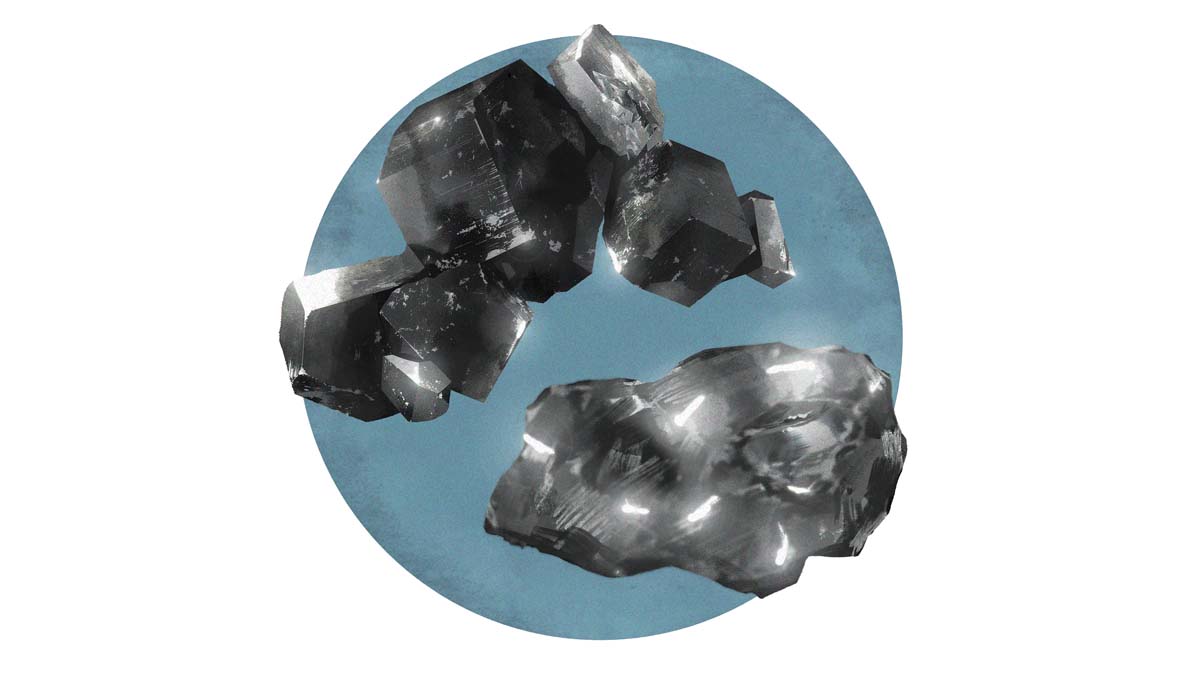
Where other metals crack, this one stays tough. A new alloy from Berkeley Lab scientists can withstand extreme heat and cold, making it a candidate for rugged applications like jet engines and spacecraft. #MaterialsScience
https://t.co/q3d41Uml7L
Can Super Intelligence make particle accelerators smarter and faster?
Through the Genesis Mission, we're advancing tools like @BerkeleyLab's Osprey to transform accelerator operations, advance discovery, & unlock new possibilities. https://t.co/daHbSaqJQ3
“The challenges posed by next-generation EUV lithography demand breakthroughs in nanoscale patterning science and advanced tools and computing," says Jeff Neaton, Berkeley Lab's Interim Deputy Director for Research. The lab is excited to contribute its expertise and facilities to the pilot program.
We're partnering with @NY__Creates and @BerkeleyLab to speed up innovation and the manufacture of semiconductor chips.
This program connects the microelectronics industry with world-class instruments and materials-science expertise from #NationalLabs. https://t.co/3VCGDodrSN
The @KittPeakNatObs is the home of the Dark Energy Spectroscopic Instrument, used to make the biggest 3D map of our universe and world-leading measurements of dark energy.
Learn more about @BerkeleyLab’s @DESIsurvey: https://t.co/k9PhW8fVhB
"By measuring the rarest B meson decay so far, LHCb can access effects it couldn't previously see -that's exciting," says @berkeleylab's Zoltan Ligeti. "Observing increasingly rare decays opens a window to be sensitive to heavier & heaver new particles." https://t.co/qFcXjdBzpo
"The ELI-NP study shows progress in developing filters that can isolate muon signals from unwanted background," says @BerkeleyLab's Davide Terzani. “This is like trying to photograph a partial solar eclipse without a filter on your camera.” @isabelledume https://t.co/uJK2uFYZ6Y
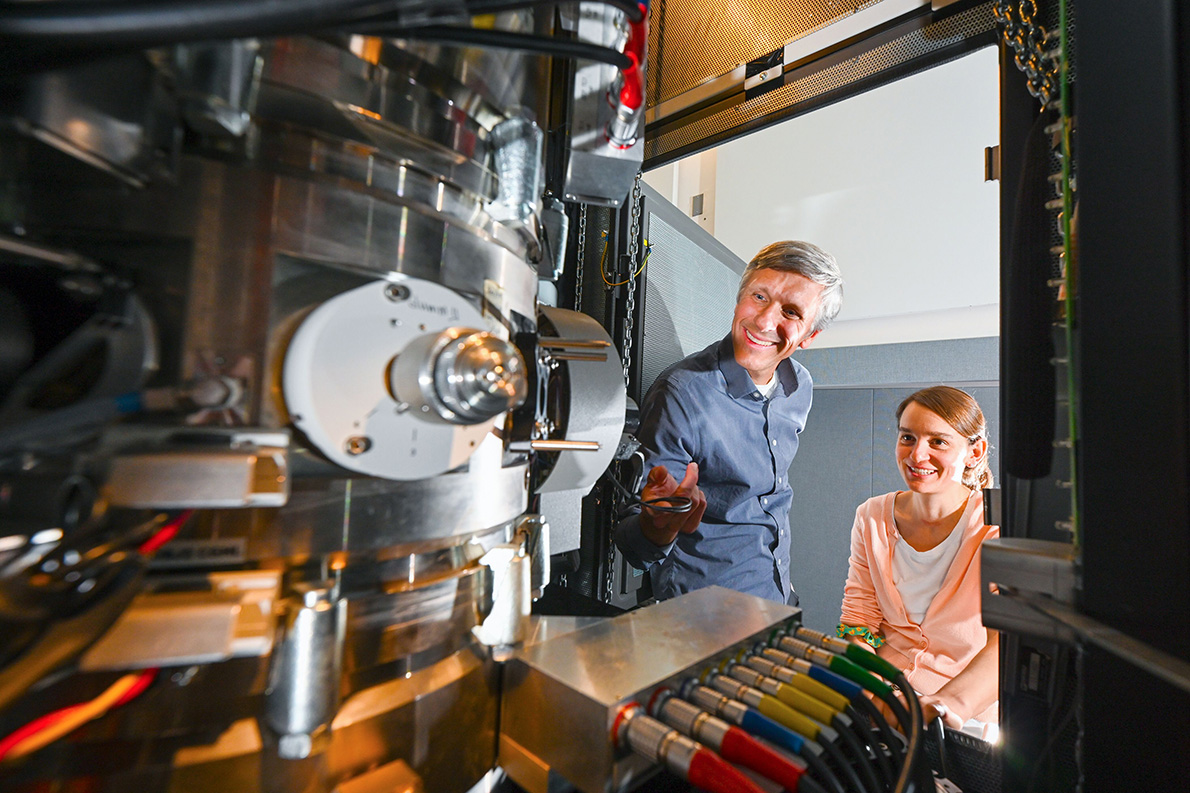
"With TEM Agent, I can just describe what I want in plain language, and it can string those steps together itself: even requests I never specifically programmed for. That means a non-expert can now do things that used to require custom code for every scenario.” - Peter Ercius, @molecularfndry staff scientist
https://t.co/0hysxjmLPq
A recent analysis shows #battery recycling could provide a cost-competitive domestic source of critical battery materials in the future. Investment in large-scale recycling facilities could solve our dependence on foreign imports. #LBNLCriticalMinerals@BerkeleyLabETA
https://t.co/Rha7ZlZxWn
Learn how #desalination and #water treatment technologies can help expand water supplies in the West. @NAWIhub's Peter Fiske appears in the latest Out West podcast episode from @westgov to explore the promise of new approaches to water management.
Listen here: https://t.co/vkQNDyYCXr
Currently, the U.S. relies on imported gallium to make #microchips and LEDs, but a new analysis shows that our demand could be met with gallium recovered from industrial waste. #LBNLCriticalMinerals@BerkeleyLabETA
https://t.co/xeEYFbn09f
Old circuit boards contain precious metal, but how do we get it back out? Sunchem used the MolecularFoundry to develop an amazing process that pulls 99% pure gold and copper from e-waste without toxic chemicals. A pilot facility is coming soon! #LBNLCriticalMinerals
https://t.co/Rha7ZlZxWn
Recycling the #CriticalMinerals in electronic waste is crucial to meet growing demand for new devices & shrinking supply of raw materials. But the processes are far from easy. We're solving the challenge with innovative bio-based separation methods. #LBNLCriticalMinerals
https://t.co/Rha7ZlZxWn
Most metals become brittle and crack in the cold, but new alloys from a team led by Berkeley Lab defy expectations: withstanding high heat and staying intact far below zero. In future, the materials could be used for extreme applications like jet engines and spacecraft. https://t.co/wMODdtuqLB
DYK microbes can help extract #CriticalMinerals? Engineered yeast from the @JGI and the Molecular Foundry grab & store elements like mini collection units. We’re studying how the organisms could pull valuable but dilute elements from mining wastewater. #LBNLCriticalMinerals
https://t.co/Rha7ZlZxWn