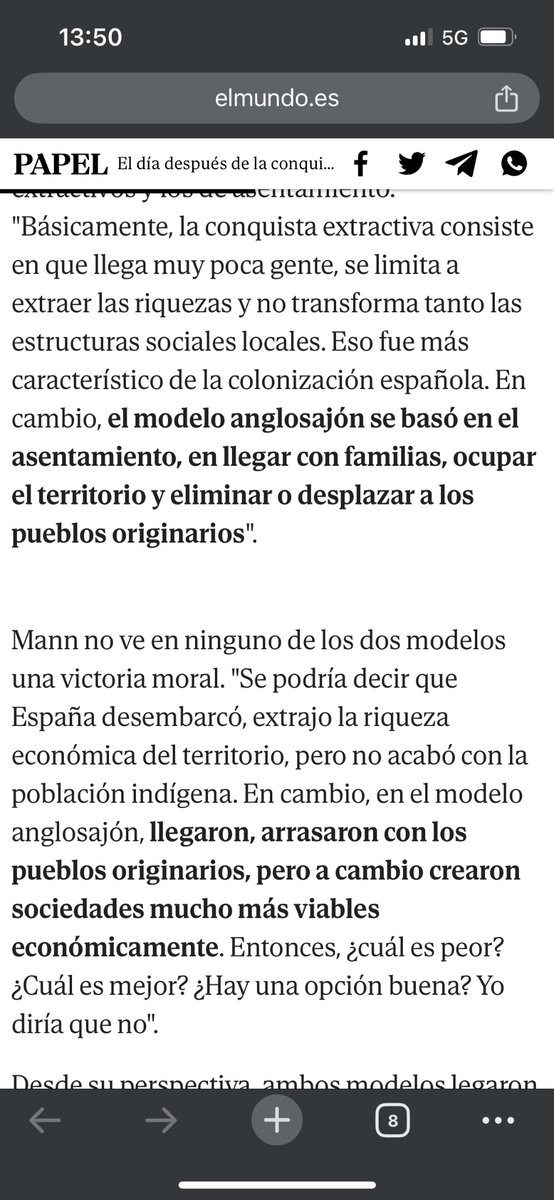
¿Cómo pudo España mantener durante siglos un imperio que se extendía por varios continentes si los españoles eran una minoría demográfica ínfima? Desde luego, no sólo mediante la espada, el oro o la fuerza militar. La respuesta obliga a desmontar muchos tópicos. ¡Hilo va! 🧵👇 https://t.co/L01P6N1TEB
@lachunga_chunga Los hijos son un activo a largo plazo para el Estado, futuros contribuyentes y pagadores de pensiones. Fomentar la natalidad va en su propio beneficio.
Protagonista del día: El abogado de las brujas
La brujería fue un fenómeno que tuvo especial repercusión en la Europa de la Edad Moderna. La histeria llevó a miles de personas a ser perseguidas por este cargo, pero hubo quienes supieron poner freno a esto, como hizo nuestro protagonista.
Alonso de Salazar y Frías (1564 - 1636) nació en Burgos en una familia de comerciantes acomodados. Estudió Derecho Canónico en las universidades de Salamanca y Sigüenza, y fue ordenado sacerdote hacia 1588. Tras servir como vicario y provisor en las diócesis de Jaén y Toledo, fue nombrado inquisidor en Logroño en 1609. En ese momento se encontraba en curso un proceso por brujería contra decenas de personas, en especial del valle de Zugarramurdi. Salazar fue uno de los tres jueces del famoso auto de fe de Logroño de 1610, en el que once personas fueron condenadas, seis de ellas a la hoguera. Sin embargo, ya antes de la sentencia se había mostrado escéptico ante las pruebas presentadas y las confesiones obtenidas bajo presión.
Tras el auto de fe, fue encargado de realizar una investigación en Navarra. Durante meses recorrió aldeas recogiendo declaraciones de cientos de personas. Su informe de 1613 desmontó la mayoría de las acusaciones, al demostrar que se basaban en suposiciones, confesiones inducidas, y efectos del miedo colectivo. Afirmó que no había encontrado una sola prueba de brujería real y que la mayoría de los relatos eran inverosímiles, contradictorios o fantasiosos. Gracias a su trabajo, el Consejo de la Suprema Inquisición dictó en 1614 unas nuevas instrucciones que limitaban drásticamente los procesos por brujería, prohibían la tortura en estos casos y establecían criterios racionales.
Salazar sirvió después en otros tribunales, fue nombrado fiscal del Consejo Supremo de la Inquisición y, después, también consejero. Murió en Madrid en 1636.
Su figura ha sido reivindicada por haber evitado que España siguiera el histeria que se desató en Europa con la brujería.
@Errazkin Poner como ejemplo de nada al sindiós que fue la I república es de traca.
Empiezas por el federalismo y acabas en el cantonalismo. El federalismo nunca funcionará en España.
"What the Hell is Going On in Spain?"
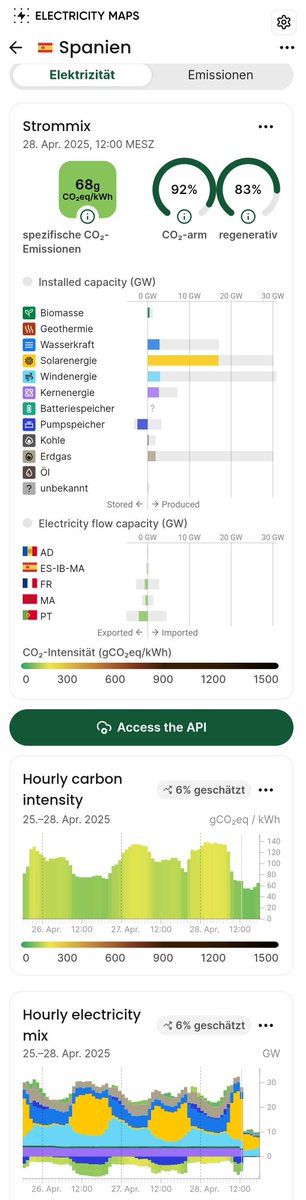
At around half past eleven today, Spain and Portugal experienced an almost nationwide blackout.
Small parts of southern France were also briefly affected but reportedly regained power quite quickly.
The Portuguese grid operator currently attributes the likely cause to weather-related oscillations in power lines, which caused the grid to collapse.
At the time of the load shedding, Spain’s electricity supply was in a very fragile state: 70% of the electricity was generated by producers without grid-synchronous inertia.
Grid-synchronous inertia refers to turbines in nuclear, coal, gas, or hydroelectric power plants that drive the generators of these plants.
The rotational speed of these turbines is synchronized with the frequency of the power grid.
Thus, the grid frequency is directly linked to the rotational energy of the turbines.
If the frequency drops, it means that the load on the grid exceeds the output of the power plants connected to it.
In such a case, the rotational energy of the turbines is converted into electricity to stabilize the grid.
The valves on the turbines respond by opening further to support the grid.
The opposite situation can also occur: if there is excess generation, that energy is absorbed as rotational energy, and the turbine valves close accordingly to adjust to the new load.
Although the rotational energy compared to the grid’s power consumption is not large, it is sufficient to stabilize excessive load fluctuations or absorb surplus generation until the valves have time to react.
This principle of grid-synchronous rotating masses has been the foundation of our power grids for over 100 years, ensuring that at every moment exactly as much electricity is produced as is consumed.
Over the past two decades, Europe has been rapidly building power generation facilities that do not use grid-synchronous turbines, but instead produce direct current, which is converted to alternating current via inverters:
Wind and solar energy.
These inverters can generate high-quality alternating current, but they cannot replace the function of grid-synchronous inertia.
The more wind and solar power is integrated into the grid, the fewer conventional power plants with grid-synchronous turbines remain.
The fewer grid-synchronous turbines there are, the less inertia there is to buffer instantaneous fluctuations in load.
If there is insufficient buffering, even small fluctuations can quickly cause the grid frequency to deviate dangerously from the ideal value of 50 Hz.
Consumers and producers alike respond to this by disconnecting from the grid for self-protection, which can trigger a cascading collapse.
What exactly tipped the balance in Spain remains unclear.
However, we do know that the Spanish grid was in a highly volatile state at the time of the collapse.
Please note:
This text is an AI translation of my orginal German language Tweet.
@elmundoes Esto es una fantasía, el modelo anglosajón no extraía nada porque se quedaron la parte del continente donde no había nada que extraer. Además, se obvia que buena parte de la riqueza extraída por España reinvertía en el propio territorio. Ya basta de propaganda anglófila.
Hay patriots (patriotas son pero no sabemos de dónde) ofendidos porque el Perro esté buscando jugar a varias bandas y abrir nuevas rutas comerciales para nuestro país.
Probablemente lo más decente que haya hecho en los últimos años.
Tenemos la Derecha más NEFASTA de Occidente.
@volatilitysfray Veo tu punto, pero sigo pensando que la tecnología es una herramienta más, que puede utilizarse para bien o para mal. El problema de fondo es el mismo, la gente valora mucho más la seguridad que la libertad real, porque ésta exige responsabilidad
Se habla mucho sobre si somos más ricos o más pobres que antes
El INE lleva publicando los datos casi 20 años y parece que nadie los mira, así que aquí hoy vemos:
¿Cuánto gastamos de media al año?
¿Gastamos más en ocio que antes?
¿En qué gastamos más? ¿En qué menos?
Vamos allá
🚨 Bybit just delivered a masterclass in crisis communications after experiencing the largest hack in crypto history. The situation is still live, but they’ve already succeeded in calming markets.
It’s a teachable moment for the rest of us. Here’s what they did right—and why it matters. 🧵👇
🚨 Bybit just delivered a masterclass in crisis communications after experiencing the largest hack in crypto history. The situation is still live, but they’ve already succeeded in calming markets.
It’s a teachable moment for the rest of us. Here’s what they did right—and why it matters. 🧵👇
En marzo de 2022, una intensa calima sahariana tiñó de naranja los cielos de Europa occidental. Investigadores liderados por Germán Orizaola @GOrizaola, de la Universidad de Oviedo @uniovi_info, analizaron 110 muestras de polvo tomadas en seis países europeos. Detectaron isótopos radiactivos como cesio-137 y plutonio-239 y plutonio-240, con una actividad media de 14 Bq/kg (bequerelios por kilogramo), muy por debajo del límite europeo de 1000 Bq/kg para alimentos.
Para ponerlo en perspectiva, el cuerpo humano contiene de forma natural isótopos radiactivos como el potasio-40 y el carbono-14, que contribuyen a una actividad interna total de aproximadamente 120 Bq/kg. Esto significa que una persona de 70 kg tendría una actividad interna total de alrededor de 8400 Bq, unas 600 veces la del polvo sahariano.
Los análisis de la invesgiación indicaron que estos isótopos no provenían de las pruebas nucleares francesas en Argelia en los años 60 como se había publicado, sino de los ensayos nucleares globales de EEUU y la URSS en las décadas de 1950 y 1960.
Esta investigación sobre las tormentas de polvo sahariano que llegan a Europa demuestran que los niveles de radiactividad presentes en estas calimas son extremadamente bajos y no representan un riesgo para la salud humana. Por lo tanto, es importante no difundir información alarmista que pueda generar preocupaciones infundadas en la población. Confiemos en la evidencia científica y evitemos propagar el miedo sin fundamento.
📖 Artículo científico: https://t.co/64izSg4dlq
📖 Nota de prensa: https://t.co/HJqHh4OezI
🎙️ Audio de Germán Orizaola: https://t.co/zU4aI9Pqbw
Just a counter view to @blknoiz06 here
We think everyone overestimating both the likelihood of tariffs or at least the size (Trump goes big as negotiation tactic and likely delivers much less)
It’s a bit too textbook to assume tariffs are inflationary. We didn’t see any substantial inflationary impact from last time Trump was in power (particularly if tariffs offset by China led global disinflation and a stronger dollar)
Under Trump, evidence of on shoring was weak, more reorganising of supply chains with likes of Vietnam and India beneficiaries. We also saw a move towards more automation rather than employ more expensive US workers
Market reacted this way last time Trump got elected and quickly the dollar topped out. We expect the same again
We also think the recent strong data in the US is a sugar high for the pre-election spending which will fizzle out
We’re seeing a deflationary spiral in China which is pulling global growth down and the US won’t be immune from that
So expect we see far more rate cuts than priced, inflation likely continues lower with whatever tariffs do land, having little impact on that dynamic
The US have also got to refinance over $7trn in debt this year. Ultimately the Fed will need to help keep rates low and likely start to flood the market with liquidity
These insane deficits the US has been running have largely been funded via the pivot to bill issuance and draining the RRP to the tune of $2trn
There’s little over 200mio left in the RRP. Once that’s drained, Fed will have to end QT
The debt ceiling gives some reprieve and brings more liquidity as the TGA gets drawn down, but after that, the Fed will need to do some form of “not QE QE” to stop another repo blow up a la 2019
So base scenario is US data rolls over from here (eco surprises have started to turn negative) and the dollar and yields top out
Liquidity floods the market in Q1 with the RRP drain followed by the TGA drawdown alongside the necessary end of QT, all the while the Fed will need to start some “not QE QE” monetary operations to stop another repo funding blow up
China will flood the market with liquidity also in an attempt to reflate and rest of world will be cutting rates and increasing liquidity
Events this week are all bringing us closer to the liquidity damn breaking and flooding markets
This bull market not close to being done 🚀
Qué puta barbaridad. Llegamos a Catarroja al día siguiente y la Local del pueblo estaba completamente desbordada, no había NADIE. Así fue durante DÍAS.
Los palmeros mercenarios se pueden ir a la mierda.