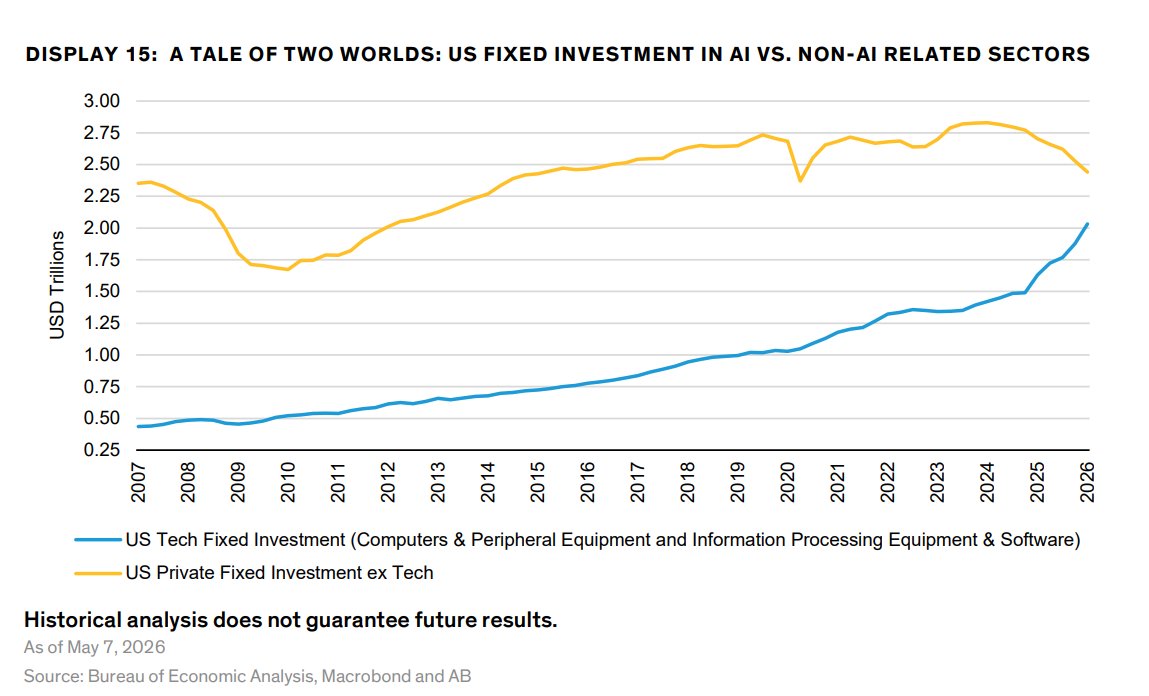
The AI bubble is primarily an earnings bubble rather than a valuation bubble. My report this week discusses the metrics investors should monitor to know when this bubble is about to burst.
Clients can read it here:
https://t.co/nPpZ5E1mas
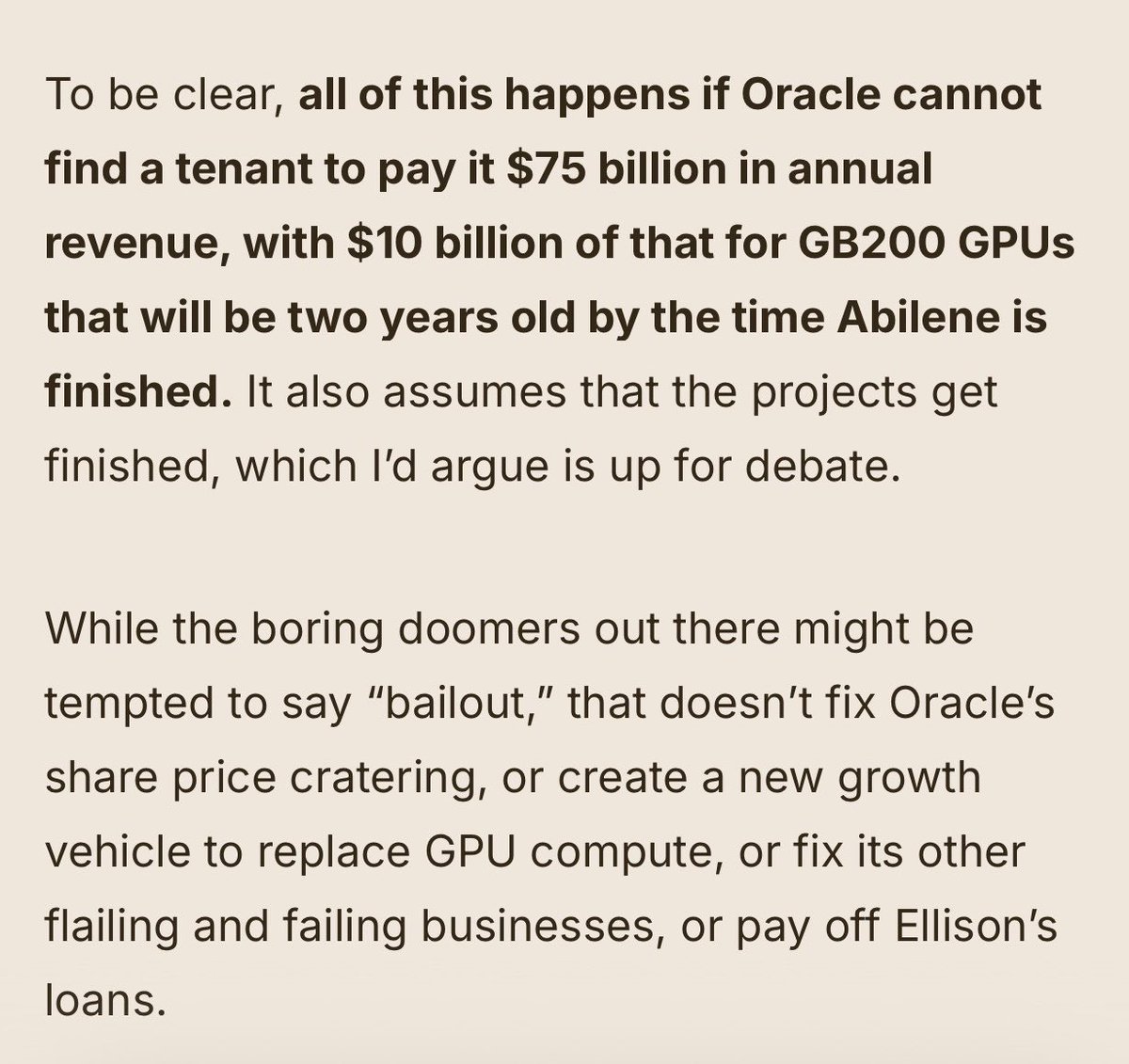
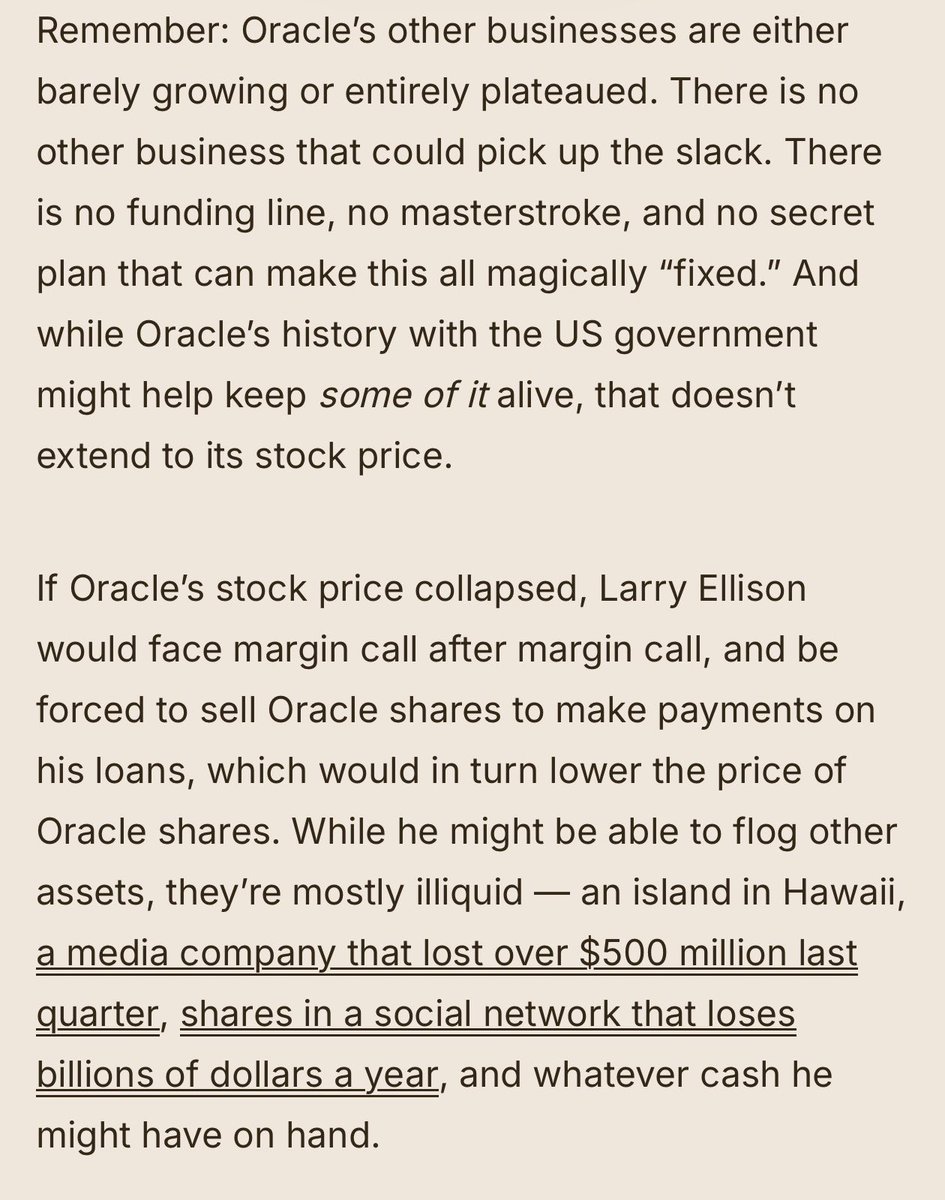
Larry Ellison has pledged 30% of his Oracle shares for roughly $21bn of personal loans. The future of Oracle and the Ellison family hinges on its ability to build 7.1GW of data center capacity and for OpenAI to pay it $300 billion over 5 years.
https://t.co/fmxKU8v0bi
Hot take on what comes next, after the sudden decline of tokenmaxxing:
- OpenAI will struggle
- with the decline of tokenmaxxing Anthropic will struggle (aside from this quarter) to make a profit
- Google will catch up to Anthropic
- some Chinese companies might, too
- LLMs will become commodities; margins will be very very thin
- Most of the companies that invested massively in them will struggle to make back their investments
- SpaceX’s AI efforts will flail
- Nvidia will eventually decline, once all of the above becomes widely recognized.
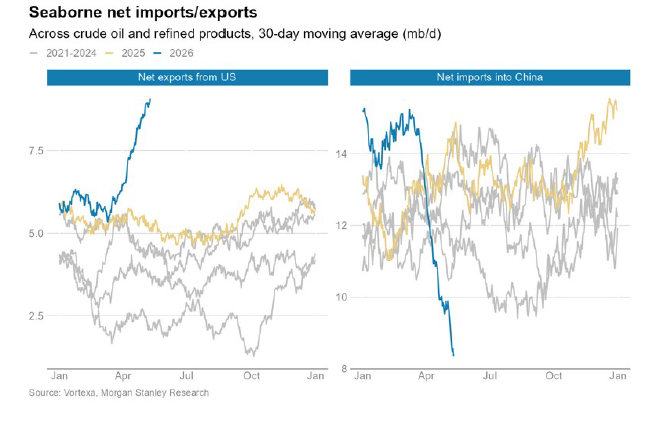
Why are oil prices not higher ?
Via Morgan Stanley's Martijn Rats & team
1) market had significant buffers before the start of the war
2) market expects the Strait to re-open soon
3) seaborne oil exports from the US have surged unexpectedly
4) China has (also unexpectedly) cut its imports of seaborne oil , down 5.5mbd in the last month- drawing down on inventories instead
=> The rise in seaborne exports from the US and decline in imports into China has absorbed 9.3 mb/d of the 12.3 mb/d YoY Middle East decline, shielding the rest of the world
But: analysts warn a 'sustained closure could cause renewed tightness'. Bull Case $130-150
JPMorgan just published the scariest oil chart I’ve ever seen.
World inventories are in freefall.
And when this line hits 6.8 — the global energy system doesn’t slow down.
It breaks. 🧵
The world is calling on the barrel of last resort — and it’s brutal for the US.
American total petroleum exports (crude and refined products) surged last week to an all-time high >14m b/d.
The price? US total inventories plunged at ~3.5 million b/d last week. Unsustainable.
Great piece from Goldman: This Time is Different (from 2022). The Impact of Higher Energy Prices on European Manufacturing Industries. https://t.co/k1bbC6l67Q
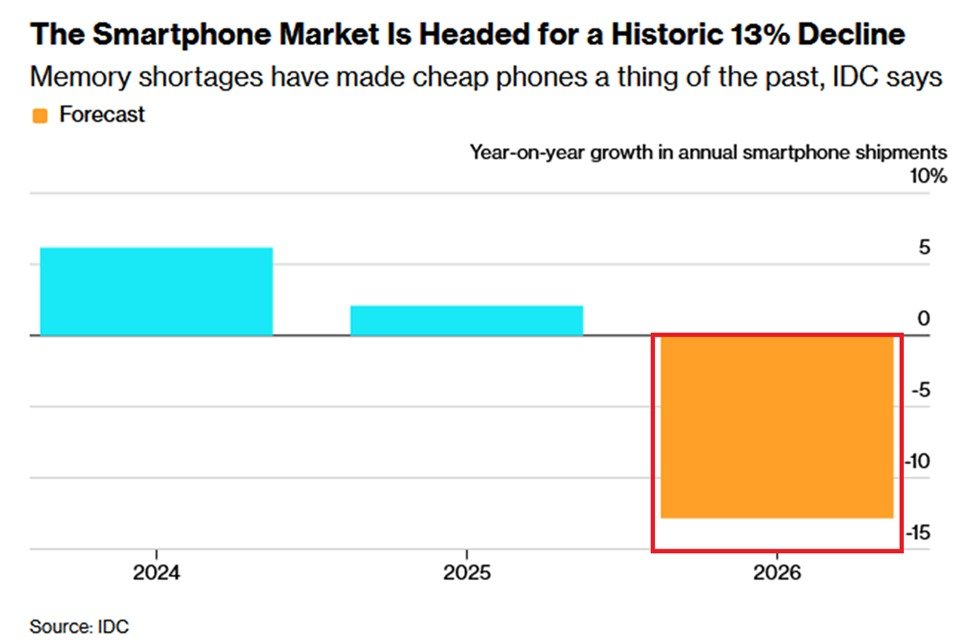
The global smartphone market is facing a historic decline:
Global smartphone shipments are set to fall -13% YoY in 2026, or -160 million units, to ~1.1 billion, according to IDC.
This marks a sharp drop from a +2% growth in 2025 and +6% in 2024.
The decline is being driven by an unprecedented memory chip shortage that is inflating component costs across the industry.
As a result, smartphone makers are discontinuing unprofitable entry-level models and pushing consumers toward higher-priced devices.
Last year, ~170 million smartphones shipped for under $100, a segment currently uneconomical to maintain.
The shortage is expected to persist into mid-2027, and even when supply returns, memory prices are unlikely to fall back to 2025 levels.
The days of cheap smartphones are over.
"The richest 0.001% don't wear luxury."
Yes they do. You're just too poor to know what these brands are.
Forget Dior. Forget Louis Vuitton.
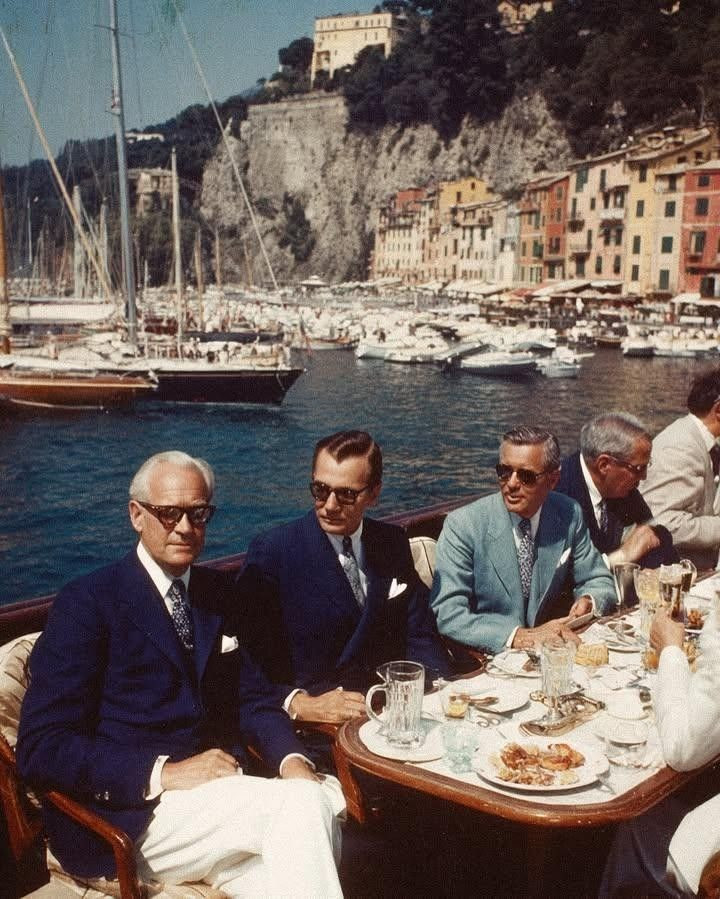
Old money wears quiet luxury.
Here are six brands that billionaires, world-leaders, and royalty actually wear:
𝟭) 𝗭𝗘𝗚𝗡𝗔
Clients:
• Lewis Hamilton
• Cillian Murphy
• Tom Cruise
Ermenegildo Zegna founded the company in 1910 in Trivero, starting as a wool mill before evolving into the world's largest men's luxury fashion group. Unlike any other house on this list, ZEGNA controls the entire supply chain.
Best known for suiting fabrics so refined that rival luxury houses source from them.
𝟮) 𝗟𝗼𝗿𝗼 𝗣𝗶𝗮𝗻𝗮
Clients:
• Jeff Bezos
• European aristocracy
• Middle Eastern oil heirs
Founded in 1924 by Pietro Loro Piana as a high-quality wool mill in Italy. His grandson, Franco, revolutionised the brand in the 1960s-70s by pioneering rare fibres like baby cashmere and vicuña.
Today, they're best known for sourcing the world's rarest natural fibres and creating ultra-soft cashmere coats starting.
𝟯) 𝗕𝗿𝘂𝗻𝗲𝗹𝗹𝗼 𝗖𝘂𝗰𝗶𝗻𝗲𝗹𝗹𝗶
Clients:
• Daniel Craig
• Prince William
• Silicon Valley billionaires
Brunello Cucinelli borrowed money in 1978 to launch a small cashmere workshop in Umbria. He restored a 14th-century castle as headquarters in 1985 and built a $3 billion empire through artisan ethics and discretion.
The "King of Cashmere" is best known for Zuckerberg's custom grey T-shirts, which cost between $400-600 each.
𝟰) 𝗕𝗿𝗶𝗼𝗻𝗶
Clients:
• Donald Trump
• Barack Obama
• Pierce Brosnan
Established in 1945 in Rome by master tailor Nazareno Fonticoli and entrepreneur Gaetano Savini. The brand gained international fame dressing Hollywood stars and world leaders throughout the 1950s-60s.
𝟱) 𝗞𝗶𝘁𝗼𝗻
Clients:
• Vladimir Putin
• David Beckham
• George Clooney
Ciro Paone, from generations of Neapolitan fabric makers, started a tailored clothing workshop in 1956. He rebranded to Kiton in 1968 and founded a tailoring school to preserve traditional techniques.
Best known for featherlight suits with up to 25,000 stitches per jacket.
𝟲) 𝗖𝗲𝘀𝗮𝗿𝗲 𝗔𝘁𝘁𝗼𝗹𝗶𝗻𝗶
Clients:
• Al Pacino
• Denzel Washington
• Unnamed UHNW individuals
Vincenzo Attolini pioneered the light, unstructured Neapolitan jacket in 1930s Naples, ditching British padding for shirt-like comfort. His son Cesare opened a workshop in 1987 with his own sons to scale production.
Traditional hand techniques create lightweight, unstructured jackets with extended darts and minimal lining.
—
Thanks for reading! Enjoyed this post?
I built an 8-figure music label from scratch and host luxury events.
Follow me @averyx99 for more content like this.